

UNCTAD's Investment Policy Reviews (IPRs) aim to help countries improve their investment policies with a view to achieving the Sustainable Development Goals (SDGs). They also help to familiarise governments and the private sector with the investment climate of these countries.
The analysis is based on the key principles and guidelines of the Investment Policy Framework for Sustainable Development.
IPR recommendations promote transparent, effective and predictable strategic, legal and institutional investment frameworks. They can be implemented over several years with the assistance of development partners, including UNCTAD.
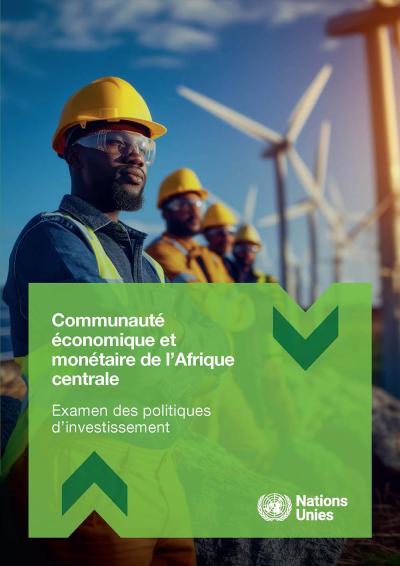
The CEMAC Investment Policy Review was conducted at the request of the CEMAC Commission. It includes a detailed analysis of national, community, continental and international legal texts relating to investment. A regional workshop to present and validate the preliminary EPI report was held from 27 to 29 October 2025 in a hybrid format.
This report takes into account the comments received from the CEMAC Commission and Member States during this workshop. The information contained in this EPI is current as of 31 October 2025.
Key messages
- The economy of the Central African Economic and Monetary Community (CEMAC) benefits from abundant natural resources, including both mineral reserves and agricultural potential.
- The region has experienced a recovery in growth following the COVID-19 pandemic; however, its dependence on raw materials makes it vulnerable to the volatility of global markets. Other challenges persist, such as inadequate infrastructure, a large informal sector, high public debt, gender inequalities, and limited access to digital technologies, with significant disparities between member countries.
- The regional development strategy aims to foster an integrated and competitive economy by focusing on the development of local resources and economic diversification. In this context, the CEMAC Commission has initiated a program of reforms to improve the business climate and implement an industrialization strategy through the Master Plan for Industrialization and Diversification in Central Africa. This includes revising the Community Investment Charter.
- The investment framework is generally receptive to foreign investment. However, the legal and institutional frameworks that facilitate investment vary from one country to another and are not always aligned with international best practices.
- The investor's experience is often marked by administrative complexities and uncertainties, particularly regarding entry, establishment, and business creation. Foreign exchange regulations, overseen by the Bank of Central African States, require authorizations for foreign direct investment based on criteria that can be unclear. Additionally, issues such as expropriation and commercial justice could be improved, while the limited digitization of procedures restricts access to necessary information.
- Although corporate taxation is a key area for integration, the principles that govern the common market—particularly free movement and freedom of establishment, as well as community competition rules—are poorly integrated into national legislation. Not all member countries have established competition authorities, leading to the prevalence of monopolies and public enterprises.
- The ongoing reform of the Community Investment Charter represents an opportunity to enhance the region's attractiveness by harmonizing national legislation and implementing principles of the common market. The recommendations proposed in this report regarding the content of the new charter are based on international best practices in investment policy. The desired scope and level of integration, as well as the potentially binding nature of the charter, will need to be determined in consultation with member countries and relevant stakeholders, while ensuring consistency with existing national, regional, and international legislation.