
UNCTAD supports developing countries in addressing the links between trade, climate change and sustainable development. Its work helps countries align trade and climate policies, strengthen resilience, promote low-carbon economic diversification and support just and inclusive transitions.
Areas of work
UNCTAD's work on trade and climate change focuses on:
- Research and analysis of the trade and development implications of climate change and climate action.
- Support for international cooperation, including relevant processes under the United Nations Framework Convention on Climate Change (UNFCCC) and other regional and global initiatives.
- Technical assistance to help developing countries use trade as a driver of climate action, resilience and sustainable economic transformation.
This work is closely linked to UNCTAD's broader activities on trade and environment, including green export strategies, the circular economy, the blue economy, voluntary sustainability standards and BioTrade.
Mandate and alignment
UNCTAD's work is guided by the Geneva Consensus and supports international efforts to integrate trade into climate action.
This includes contributions to initiatives related to nationally determined contributions (NDCs), climate resilience, low-carbon economic diversification, the UNFCCC Dialogues on Trade and Climate Change, and the Integrated Forum on Climate Change and Trade (IFCCT).
Related
Area of work
Projects
News

Publications
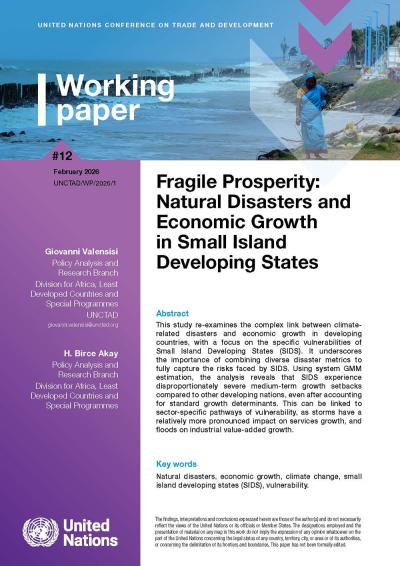
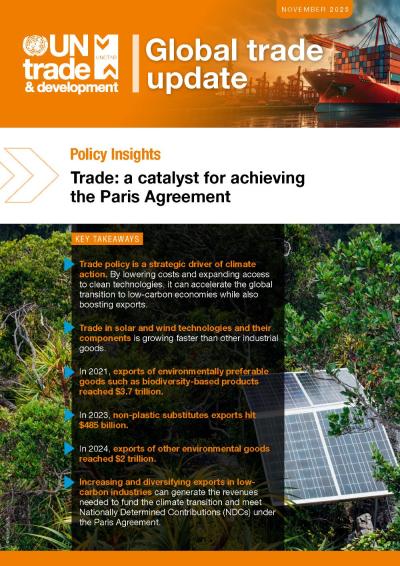
Podcast


COP29 : en quoi le commerce et l'investissement sont les clés d'un avenir plus vert
Alors que le sommet mondial sur le climat COP29 est en cours, The Weekly Tradecast se penche sur le rôle du commerce et de l'investissement dans l'avènement d'un avenir plus vert avec Chantal Line Carpentier, d’ONU commerce et développement (CNUCED)
14 Nov 2024
Events and meetings
10 – 12 février 2026
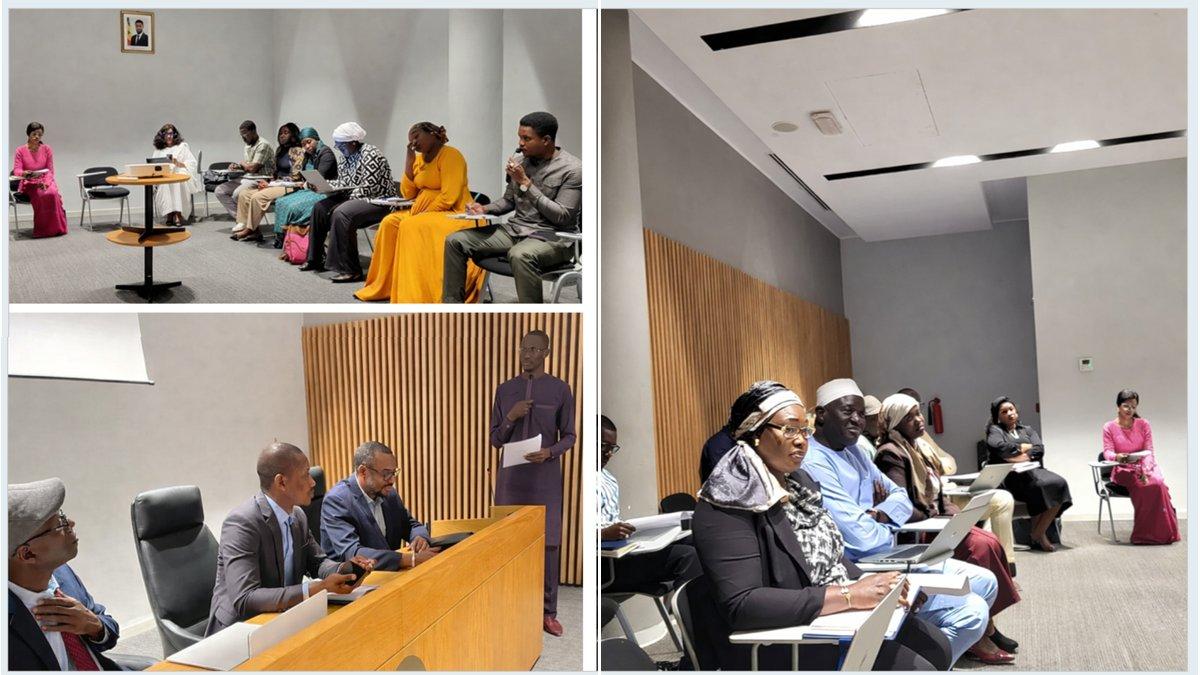
Au Sénégal, des consultations techniques mettent en avant le potentiel du commerce comme outil d’action climatique
Diamnadio, Sénégal
3 – 5 mars 2025
5ème Forum des Nations Unies sur les océans et les aspects commerciaux de l'Objectif de développement durable 14
Genève, Suisse
31 janvier 2025
Réunion d'experts ad hoc sur le commerce, l'investissement, le climat et le développement durable
Genève, Suisse
Documents
24 Feb 2026