

Database and Analytical Tools
The UNCTAD Trade Analysis and Information System (TRAINS) is a trade and market access information system combining data on trade, customs tariffs, and non-tariff measures. TRAINS contains HS-based tariff data for over 170 countries and for several years.
TRAINS is both a data depository and an analytical tool designed for policy-makers and economic operators engaged in international merchandise trade. It is also a powerful tool for multilateral or bilateral trade negotiations as well as for general research on international merchandise trade.
TRAINS tariff and trade data are disseminated through the World Integrated Trade Solution WITS application (developed and maintained jointly by UNCTAD and the World Bank).
TRAINS data on non-tariff measure are disseminated through different platforms.


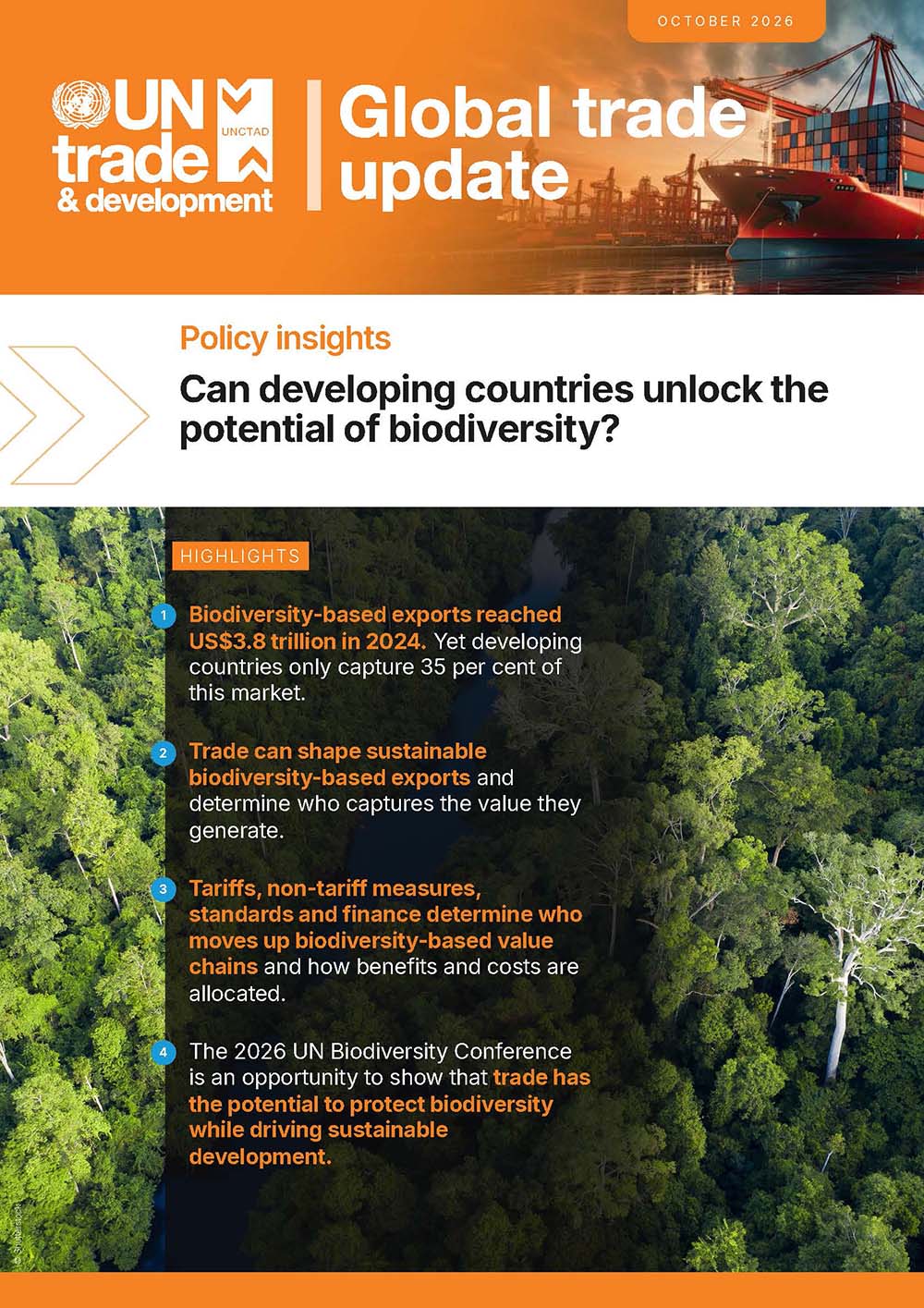

International Trade and Development

Report on the developments in the international trading system, including concrete recommendations to accelerate the implementation of the Addis Ababa Action Agenda in this regard.
The Report is prepared by the secretariat of UNCTAD, for submission to the General Assembly at its annual session.
Trade-related Indices
- Revealed Factor Intensity Index (RFII) provides a unique number that suggests the factor intensity of a traded good at the most disaggregated level of product classification (at SITC 5-digit and HS 6-digit)
Data in EXCEL format is available for download here
Data in STATA format is available upon request (Write to: [email protected])
- Maritime Connectivity Index/Liner Shipping Bilateral Connectivity Index (LSBCI) provides bilateral Liner Shipping Connectivity Index (LSCI)
- Regulatory Distance Index compares patterns of NTM regulation in countries, i.e. if different countries apply the same types of NTMs to the same type of imported products.
- The ad valorem equivalent (AVE) of non-tariff measures (NTMs) provides an estimate of the average trade costs due to the presence of NTMs. AVEs are provided at the bilateral level covering the Global Trade Analysis Project (GTAP) sectors.
 | AVEs of border measures: These are measures implemented at the border and/or at customs Download: Version 11 | Version 10 | Version 9 |
| AVEs for technical and non-technical measures: Definition of such measures follows the international classification of non-tariff measures at UNCTAD Download: Version 10 | Version 9 |
 | Note for the use of the database on ad-valorem equivalents of non-tariff measures Download: Guidelines |
Texts of Trade Agreements (ToTA)
In collaboration with researchers from The Graduate Institute, University of Ottawa and European University at St. Petersburg, UNCTAD has prepared a repository of trade agreement texts in HTML format.
The project makes a machine-readable and annotated full text corpus of preferential trade agreements publicly available to scholars and policy-makers and uses state-of-the-art text-as-data techniques to analyze it.
Quick link: The Texts of Trade Agreements (ToTA) project