

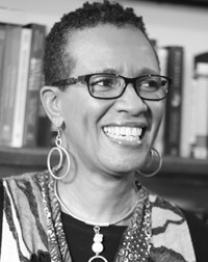
Dr. Annalee C. Babb is co-lead organiser of UNCTAD 15’s Creative Industries Trade Digitisation Forum, and she chairs the Digital Transformation and Solutions Committee of the Prime Minister of Barbados’ Jobs and Investment Council.
Annalee an international consultant specialising in technology, innovation, investment | export promotion, and the development of small island developing states (SIDS).
She is a member of the CivTech Alliance, a global grouping that shares best practice on the most effective ways to nurture local innovation for the delivery of digital public services and govtech solutions. She is an expert member of the United for Smart Sustainable Cities (U4SSC) Simple Ways to be Smart Initiative of the International Telecommunication Union.
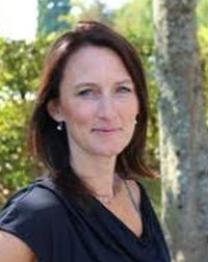
An agronomist by training, Ms. Babin-Pelliard previously worked for 15 years on food security issues and food systems and environment linkages at the United Nations and in the French Ministries of Agriculture and Foreign Affairs, and contributed to the development of FAO's climate change and biodiversity strategies, among others, in the French Mission to FAO.
She started her career working for 10 years in Asia and Africa on agricultural value chains and food systems issues.
Throughout her career she has facilitated multi-sectoral and multi-stakeholder processes. She joined the FAO liaison office in Geneva in September 2022 to work as a senior liaison specialist on food systems and the environment.

Mark Babington is the Executive Director of Regulatory Standards at the Financial Reporting Council.
He leads the division responsible for the FRC’s technical and public policy work covering audit, corporate reporting, corporate governance and stewardship, actuarial and digital and taxonomies.
Prior to joining the FRC’s Executive Committee, Mark led the FRC’s UK Audit Policy programme, to set measures to support greater competition in the UK audit market and work to support the reform of international standard setting for auditors, by global regulatory authorities. Before he joined the FRC, Mark had a twenty-year career in audit and was a Director at the UK National Audit Office.
Mark is an Independent Governor, Board Member and Chair of the Audit and Risk Committee of the Westminster Foundation for Democracy, which is the UK public body dedicated to supporting democracy around the world. He is also a member of the International Ethics Standards Board for Accountants, which sets the global Code of Ethics for the accountancy profession, and chairs IESBA’s Sustainability Task Force, tasked with developing revisions to the International Independence Standards. He also represents the FRC on the International Sustainability Standards Board’s Sustainability Standards Advisory Forum.

Maame Araba Baboa Opoku is a multidisciplinary artist and collaborator. Her body of work ranges from abstract paintings to more specific projects an example of such a project is her Children of the Motleys cycle, painted with acrylic on skiagraph (Xray films sewn together with cotton threads)
Araba works have been exhibited at the Fullmoon Exhibition, Artemartis (August 2019), Afrifem artxfeminism, Nubuke Foundation (March 2020), Stations of Protest, Cult Meraki/Nubuke Foundation (December 2020), among others. She has also collaborated with artists as well as established firms and organisations, an example being Vlisco International, on a three-month residency project on fashion and art, which ended in March 2021.
She belongs to an art collective based in Accra, Artemartis, where she serves as both an artist and its creative director. She is currently undergoing a fellowship at the Noldor Artist Residency in Ghana.
In her spare time, she works on charity projects with organizations, individuals and other artists, where she educates children in orphanages on art and helps them nurture their talents.
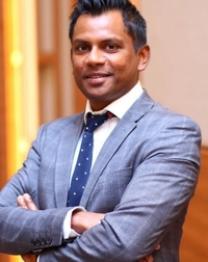
Rajiv Babooram serves as the Adviser and Head of the Commonwealth Connectivity Agenda at the Commonwealth Secretariat, where he leads the strategic initiative to increase intra-Commonwealth trade to USD 2 trillion by 2030 — a target endorsed by the Commonwealth Heads of Government Meeting (CHOGM) in 2018.
With over 14 years of distinguished experience in international trade and investment, economic development, financial services, trade and investment promotion, and economic diplomacy, Rajiv has consistently demonstrated a commitment to inclusive growth, with a particular emphasis on sustainable development.
Prior to his current role, Rajiv dedicated 12 years to the trade, investment, and financial services promotion agency of the Government of the Republic of Mauritius. He also undertook a three-year diplomatic assignment as Economic Counsellor at the Mauritius High Commission in Canberra, Australia, where he spearheaded efforts to strengthen economic relations between Mauritius and Australia/New Zealand.
Rajiv acquires deep expertise in navigating the complexities of doing business in emerging markets, with a particular focus on Africa. He is acutely aware of the geopolitical dynamics that influence global trade and investment flows. His professional interests include the digital transformation of economies and the strategic implications of evolving geopolitics on the international economic landscape. He holds an MBA from Roehampton University, London, a first class degree in Banking with Economics and Law from London Metropolitan University and has numerous qualifications related to Blockchain and Artificial Intelligence from RMIT University, Australia.
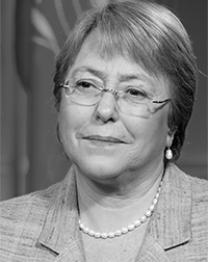
Michelle Bachelet is the current United Nations High Commissioner for Human Rights.
Ms. Bachelet was elected President of Chile on two occasions (2006 – 2010 and 2014 – 2018). She was the first female president of Chile. She also served as Health Minister (2000-2002) as well as Chile’s and Latin America’s first female Defense Minister (2002 – 2004).
During her presidential tenures, she promoted the rights of all but particularly those of the most vulnerable. Among her many achievements, education and tax reforms, and the creation of the National Institute for Human Rights and the Museum of Memory and Human Rights stand out. So do the establishment of the Ministry of Women and Gender Equality, the adoption of quotas to increase women’s political participation, and the approval of Civil Union Act legislation, granting rights to same sex couples and thus, advancing LGBT rights.
Since the early 1990s, Ms. Bachelet has worked closely with many international organizations. In 2010 she chaired the Social Protection Floor Advisory Group, a joint International Labor Organization (ILO) and World Health Organization (WHO) initiative, which sought to promote social policies to stimulate economic growth and social cohesion.
In 2011, she was named the first Director of UN Women, an organization dedicated to fighting for the rights of women and girls internationally. Economic empowerment and ending violence against women were two of her priorities during her tenure. She has recently pledged to be a Gender Champion, committing to advance gender equality in OHCHR and in international fora.
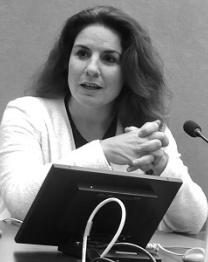
Celine Bacrot is Senior Economic Affairs Officer, Trade Facilitation Section in the Division of Technology and Logistics in UNCTAD. She has over 25 years of work experience with a focus on trade and economic development, regional integration and political economy. From 2003 until 2008, she worked in UNCTAD as focal point of the Enhanced Integrated Framework (IF) for the Least Developed Countries (LDCs) on the formulation of trade development strategies.
Afterwards, she spent more than 10 years based in East Africa working for several UN agencies (UN-Habitat and UNICEF) and set up a consultancy firm in Arusha, Tanzania, working on trade projects, mainly regional integration, trade development strategies, and trade facilitation in the EAC region and Asia-Pacific. From 2014 until 2020, she was the regional coordinator for the UNCTAD Trade Facilitation project in East Africa.
She is now based in Geneva and works as senior trade advisor in UNCTAD HQ on trade facilitation, trade logistics and regional integration issues at global level. She has a Master in Economics with a specialization in Economic Development as well as a Degree in Political Science, Development and Co-operation from the University of Paris-La Sorbonne.

Christine Bader studied law at the Johann-Wolfgang Goethe University in Frankfurt and worked as a legal researcher at the law faculty. She obtained the Certificate of International Law at the Graduate Institute of International and Development Studies (HEI) in Geneva and joined the International Labour Organization (ILO) in 2001.
At the ILO, Ms. Bader has been involved in the supervision of the application by member States of ILO Conventions specific to the maritime and fishing sectors, has contributed to the development of the Maritime Labour Convention, 2006 (MLC, 2006) and the Work in Fishing Convention, 2007 (C.188), and is currently actively promoting the MLC, 2006 and C.188, and providing technical assistance with a view to achieving their wider ratification, better implementation and effective enforcement.
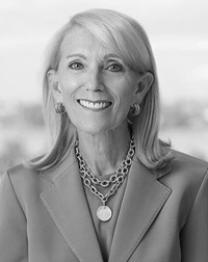
A highly regarded leader in both business and civil society, Dr Baderschneider brings 35 years of extensive international experience in supply chain operations and procurement, strategic sourcing and logistics management, along with a deep understanding of high-risk operations and locations and complex partnerships. She also has global experience in safety, security and environmental operations and sustainability stewardship.
Dr Baderschneider retired from ExxonMobil in 2013 where she was Vice-President of Global Procurement. During her 30-year career, she was responsible for operations all over the world, including Africa, South America, the Middle East and Asia.
A past member of the Board of Directors of the Institute for Supply Management and the Executive Board of the National Minority Supplier Development Council, Dr Baderschneider also served on the boards of The Center of Advanced Purchasing Studies and the Procurement Council of both The Conference Board and the Corporate Executive Board.
Dr Baderschneider is a member of the International Advisory Committee to the 2024 Conference of the Parties (COP29) to the United Nations Framework Convention on Climate Change (UNFCCC). She is also the President of the Board of Trustees of The President Lincoln’s Cottage and a member of the Abraham Lincoln National Council of Ford Theatre. In addition, she is on the Board of Directors of the Nizami Ganjavi International Center, the Board of Directors of the McCain Institute and is a Commissioner on the United Nations and Liechtenstein Financial Sector Commission on Modern Slavery. With over 17 years of experience working on anti human trafficking efforts globally, she served on the Board of Directors of Polaris, Made in a Free World and Verité and is a Founding Board member and Chair of the Global Fund to End Modern Slavery.
Dr Baderschneider was a Presidential appointee to the US Department of Commerce National Advisory Council on Minority Business Enterprises and is a past recipient of Cornell’s Jerome Alpern Award and Nomi Network Corporate Social Responsibility Award. She holds a Masters Degree from the University of Michigan and a PhD from Cornell University.
Committee memberships:
Audit, Finance and Risk Management Committee (Member),
People, Remuneration and Nomination Committee (Member)
Safety and Sustainability Committee (Chair)
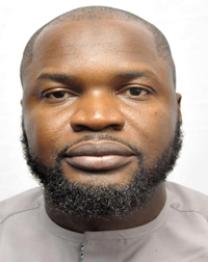
Mr. Omar Badjie has been working for the Government of The Gambia since 2007 and for the ministry for over 13 years.
Mr Badjie has overseen the development of several policies and strategies in The Gambia notably the industrial, trade, investment and entrepreneurships policy. Over the years, he extensively represented The Gambia at various forum as a negotiator, expert or lead delegate. Mr. Badjie has an extensive experience of working with UNCTAD in their efforts to support The Gambia especially on the investment reforms – IPR, the review and update of the Investment Promotion Act, green value chain strategies for MSME integration into AfCFTA and the development of the entrepreneurship policy.
He also serves as the National Project Coordinator of the UNDP’s support to entrepreneurship and private sector development and currently serving as the National Coordinator of the UNIDO-Gambia country program.
He holds a Bachelors degree from the University of The Gambia specializing in economics, and a Masters degree in economic policy from The Australian National University.