

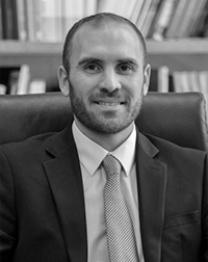
Martin Guzman is Professor of Professional Practice at the School of international and Public affairs (SIPA), Columbia University.
Previusly he served as Minister of Economy of the Republic of Argentina (December 2019- July 2022).
He is a leading global expert in the fields of sovereign debt and debt crises resolution. His research focuses on the emergence, propagation, and resolution of macroeconomic disequilibria, monetary economics, and economic development. His research has been published in leading international journals and books.
He is the co-President of the Initiative for Policy Dialogue (IPD), an academic center at Columbia University Business School established in 2000 by Nobel Laureate Joseph E. Stiglitz, which works to broaden dialogue and explore trade-offs in development policy by bringing the best ideas in development to policymakers facing globalization’s complex challenges and opportunities, and that strives to contribute to a more equitably governed world by democratizing the production and use of knowledge. At IPD, he is also the Director of the Sovereign Debt Management and Restructuring Program.
He has served as editor-in-chief of the Journal of Globalization and Development and is a member of the editorial board.
He is a member of the Pontifical Academy of Social Sciences in the Vatican, a member of the Scientific Board of the Trento Summer School in Adaptive Economic Dynamics at the University of Trento, Italy, and a Young Global Leader of the World Economic Forum. He is also a Commissioner of the Independent Commission for the Reform of International Corporate Taxation (ICRICT).
He holds a PhD. In Economics from Brown University, United States (2013). Prior to his doctoral studies, he received a B.A. in Economics (2005) and a M.A. in Economics (2007) from the National University of La Plata, Argentina.

Martin Guzman is the current Minister of Economy of the Republic of Argentina.
He was a researcher at the Columbia University School of Business and Director of the Public Debt Restructuring Program of the Policy Dialogue Initiative of the same School. Together with Nobel laureate Joseph Stiglitz, he has directed the academic training program of the Columbia University Initiative for Policy Dialogue.
He is Full Professor at the Faculty of Economic Sciences of the National University of La Plata and Associate Professor at the Faculty of Economic Sciences of the University of Buenos Aires. Professor Guzman is also editor in chief of the Journal of Globalization and Development and has published numerous academic articles in specialized journals and books.
He graduated as a Doctor of Economics (PhD. In Economics) from Brown University, United States.

Mathias Haas is Founder and CEO of SuperSocial a Social Media and Event Experience Design Agency. As a social entrepreneur, he curates and moderates TEDx events and initiated the Charity Art and Journalism Project Findia and the Digital Participation Camp and Summit.
Mathias teaches Social Media Communication, Digital Storytelling and eCommerce at several Universities such as the Austrian Marketing University for applied Sciences, the EPFL and the University of Vienna and Zürich.
For his projects, among them ZIAG Refugee platform, Facebook Application Intercultural, Findia, Popedu, and the YA!Friends Platform, he has already won many international awards such as the Austrian Youth Award, European Youth Award, United Nations World Summit Youth Award and the Social Impact Award. Meanwhile, Mathias serves as National Expert for Austria for the World Summit Awards.
Mathias lives for his passion: off-beaten-track travelling, youth work, social media and digital competence, technological innovations, learning about new cultures, and adventures.

Lauraine Habib is a Senior Policy Analyst at the Sustainable Development Unit in the Egyptian Ministry of Planning and Economic Development.
She received a Bachelor’s degree in Political Science in 2018 from both the Faculty of Economics and Political Science at Cairo University and Paris 1 Panthéon-Sorbonne University. She has taken part in different volunteering missions around Egypt to raise awareness on Sustainable Development and Egypt Vision 2030, but also for humanitarian and social development causes.
Ms. Habib is an active member in the Ship for World Youth Alumni Association (SWYAA-Egypt).
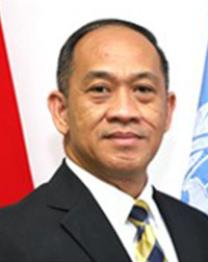
Ambassador Achsanul Habib is currently a Vice President of the Trade and Development Board 2025-2026. He leads Indonesia’s engagement across a wide spectrum of multilateral issues, ranging from economic development, trade, and global health to human rights, humanitarian affairs, migration, disaster reduction, disarmament, and environmental matters at key institutions including the UN, WHO, UNCTAD, WIPO, and the Conference on Disarmament. He previously served as Director for Human Rights and Humanitarian Affairs (2018–2023), Political Coordinator at Indonesia’s Mission to the UN in New York (2015–2018), and posted in Geneva (2008–2012) and Pyongyang (1999–2004). He holds degrees from Padjadjaran University and GRIPS Tokyo, specializing in regional and East Asian security studies.

H.E. Ms Beata Uwamaliza Habyarimana is the Minister of Trade and Industry of Rwanda since March 15, 2021. She is an economist and financial advisor by profession with over 19 years of experience in the financial industry in both domestic, Pan-African and international institutions.
Prior to her appointment, Minister Béata Uwamaliza Habyarimana served as Deputy Managing Director of Bank of Africa, Chief Executive officer of Agaseke Bank and Head of Compliance at Banque Populaire du Rwanda. Her area of expertise covers business reshuffling and organizational change. She also played a key role in establishing the Financial Ethics and Compliance function within the financial industry by setting up the first Compliance forum under the Rwanda Bankers association.
Having been among the first female managing directors in the Rwandan banking sector and following her experience in SMEs financing, her personal action focuses on the persistent issue of women financial empowerment. Minister Béata is a founding member of New Faces New Voices Rwanda Chapter - a Pan-African advocacy group that focuses on expanding the role and influence of women in the financial sector- and a founding member of Rugori Investment Network, a new Trust Fund created by women and for women investment products. Minister Béata also sits on various Governance Bodies.
Minister Béata Uwamaliza Habyarimana holds a Master of Business Administration majoring in Finance from Maastricht School of Management in Netherlands and a Bachelor degree in Public Economics from the University of Rwanda.

Carla Haddad Mardini became Director of UNICEF’s Private Fundraising and Partnerships Division in Geneva in January 2021. Here she leads the organization's global strategy to leverage the private sector to generate sustainable income for UNICEF and drive partnerships for children worldwide. This includes engaging with the general public (UNICEF’s supporters and donors), philanthropists, foundations, and business to achieve the Sustainable Development Goals for children. She also oversees the coordination, strategic planning and governance with UNICEF’s 32 National Committees that actively engage in child rights advocacy, communication, fundraising and brand positioning.
From 2018 to 2021, Carla served as UNICEF’s Director of the Public Partnerships Division in New York, leading the organization's resource mobilization from the public sector and overseeing its engagement with permanent missions and governments on multilateral affairs in the inter-governmental space.
Prior to joining UNICEF, Ms. Haddad Mardini had served at the International Committee of the Red Cross over a period spanning 17 years. Until the end of 2017, she was the Head of the Resource Mobilization Division, leading donor relations, fundraising and government affairs. She previously held the position of Chief Spokesperson and Head of the Public Communication Division. She spent the early years of her career in the field, covering protection and family links programmes in the Middle East and Africa, serving in Kurdistan and Baghdad in Iraq, in the Democratic Republic of the Congo and in Ethiopia.
She holds a Bachelor of Arts in Philosophy and Political Science from the American University of Beirut, Lebanon; a Master's Degree in Comparative Literature from Dartmouth College in the United States, and a Master's Degree in International Relations with a focus on international negotiation, mediation and conflict resolution from the Fletcher School of Law and Diplomacy at Tufts University, in the United States.
Born and raised in Lebanon, she is a Lebanese and Swiss national. She is fluent in Arabic, French and English. She is married and has two daughters.
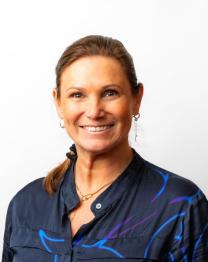
Prof. dr. Elvira Haezendonck (Vrije Universiteit Brussel and Solvay Business School) is Full Professor (Gewoon Hoogleraar) at the Vrije Universiteit Brussel (VUB) and Visiting Professor at the University of Antwerp (UA), as well as at Erasmus University of Rotterdam (Maritime Economics and Logistics). Her research covers topics in the field of sustainable strategies and management, applied to infrastructure, (port) clusters and complex projects.
She has published various articles, books and book chapters in relation to sustainable strategies, project evaluation, competitive strategy and stakeholder management, and since 1996, she has been involved in over 100 national and EU research projects on for example strategic analyses and impact assessments in/for ports and infrastructure, and on complex project management. She teaches several strategy and (project) management courses on both bachelor and master level.
She also takes up multiple board positions within and beyond academia. In 2022 Prof. dr. Elvira Haezendonck was elected as first female president of the International Association of Maritime Economists (IAME), the global academic association of maritime economists, and re-elected in 2024 for a second term. Since 2010 she held four consecutive Research Chairs at VUB on Public-Private Partnerships (2010-14 and 2015-2018), on Infrastructure Asset Management (2019-2023) and currently one on Agile and Futureproof Infrastructure for Transport. Another 2 chairs have recently been appointed to her on Circular Monitoring for Ports, and Masterclasses in Futureproof Leadership and Strategy.
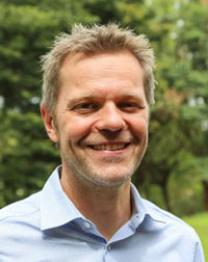
Niklas Hagelberg is a Senior Programme Officer at UN Environment where he is the Coordinator of UN Environment's subprogramme on Climate Change. Niklas work includes setting the strategic direction of the subprogramme, programme oversight and progress review and fundraising.
Previously Niklas worked as Coordinator for the Healthy and Productive Ecosystems subprogramme. In the Natural Resources Branch at UN Environment, his responsibilities included building a project portfolio on forests and integrated landscape management. Niklas was also part of the team that established the global UN-REDD programme and UN-REDD country programmes in Tanzania and Vietnam.
Prior to joining UN Environment, Niklas worked with various organizations in the development sector including a small NGO, a consultancy company and WWF. His work included forest certification, forest conservation, good governance, rural development, monitoring & evaluation of development programmes and projects. He worked in Tanzania and Ghana before moving to Kenya.
Niklas has a M.Sc. in Forestry.
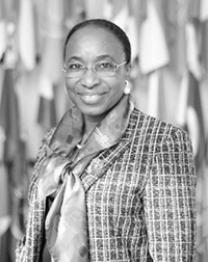
Ms. Fatou Haidara is Deputy Director-General of the United Nations Industrial Development Organization (UNIDO).
She has had an extensive career as a strategic partnerships and policy envoy. Prior to joining UNIDO, she served the Government of Mali for eight years in several ministerial positions, including as Minister of Employment and Vocational Training and Minister of Industry, Trade and Private Sector Development.
At UNIDO, Ms. Haidara led and coordinated UNIDO's contribution in a number of multilateral negotiations culminating in resolutions that have set the foundation for inclusive and sustainable industrial development (ISID).
She has promoted and contributed to UNIDO's programmes in Africa, cooperation with Least Developed Countries, expanding South-South Cooperation as well as initiating and leading programmes for Human Security, Youth Employment and the Economic Empowerment of Women.