

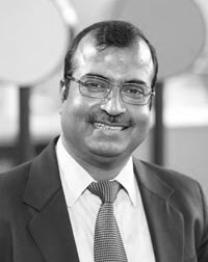
Mr. Niranjan Sarangi is the Leader of the Shared Economic Prosperity Cluster of the United Nations Economic and Social Commission for Western Asia (ESCWA)
He previously served as Senior Economic Affairs Officer and Lead Economist on Debt and Fiscal Policy at ESCWA, spearheading transformative initiatives to address critical economic challenges in the Arab region. His work in global and regional economic policy has made a significant contribution to the United Nations' strategies on debt solutions and sustainable financing for developing countries.
Mr. Sarangi's leadership extends to the production of flagship reports, research on public finance and the Sustainable Development Goals, and the implementation of projects and data-driven insights tailored to policymakers' needs.
Mr. Sarangi also served as an economist at the United Nations Development Programme Asia-Pacific Regional Centre from 2007 to 2012. Before joining the United Nations, he had a robust career in research and the private sector (2002-2007). Mr. Sarangi is of Indian nationality.
He holds a PhD in Development Economics from Jawaharlal Nehru University in Delhi, India.
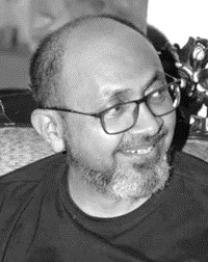
Irfan Sarfraz has spent more than a decade in designing and implementation of modern trade facilitation solutions for cross-border agencies in many countries.
During COVID, as a Master Trainer of UN-ITC, he has interacted with, trained and oriented border agencies management and officials on how to facilitate trade in difficult time and put their acts together to meet WTO-TFA commitments creating some real benefits to the end user in business and trade.

Maria Florencia Sarmiento is a policy advisor within the Economic Law and Policy Program at the IISD. Her primary focus is the dynamic intersection of international trade and voluntary sustainability standards, as well as investment law policy in the context of sustainable development.
She has experience in mapping and analyzing sustainability initiatives, as well as examining provisions included in trade agreements and domestic public policies related to social and environmental issues. At IISD, she provides training courses, workshops, and a range of advisory services for developing country officials, covering sustainability standards, investment treaties, negotiations, and dispute prevention and management.
Before joining IISD, Florencia was an independent consultant specializing in trade and investment matters. In this context, she has worked on sustainable trade and investment governance projects with the United Nations Conference on Trade and Development and the Columbia Center on Sustainable Investment.
Florencia holds a PhD in international law from the Geneva Graduate Institute of International and Development Studies and an LL.M. in international dispute settlement, a joint program offered by the Geneva Graduate Institute and the University of Geneva in Switzerland.

Renaldi Satari currently serves as the Special Assistant to the Minister of Marine Affairs and Fisheries of the Republic of Indonesia. In this capacity, he provides strategic support and policy advisory in areas related to marine spatial planning, blue carbon ecosystem conservation, and international cooperation.
He plays an active role in strengthening Indonesia's engagement in global marine and fisheries forums, as well as securing innovative sustainable financing to advance the Ministry's strategic programs and national priorities in marine affairs.
Mr. Satari holds a Master of Science in Japanese Business Studies from Chaminade University, Hawaii, and a Bachelor's degree in Civil Engineering from Institut Teknologi Bandung. His multidisciplinary background in engineering, business, and public policy underpins his long-standing commitment to sustainable ocean management and the development of Indonesia's blue economy.
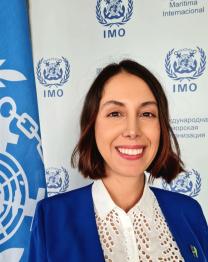
Aideé Saucedo Dávila is a Technical Officer at the UN International Maritime Organization where she focuses on global regulations to reduce greenhouse gas emissions from international shipping and their potential impacts on States. She has 15 years of professional experience, including on global climate governance, international climate negotiations and international cooperation to address climate change and other environmental issues
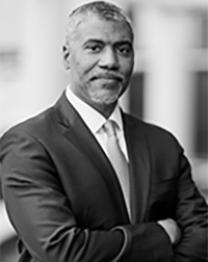
Ian Saunders is Secretary General of the World Customs Organization (WCO). He took office on 1 January 2024.
Prior to joining the WCO, Mr. Saunders worked as Deputy Assistant Secretary for the Western Hemisphere at the U.S. Department of Commerce. In this role, he was responsible for developing programmes, policies and strategies designed to strengthen the United States’ commercial position in this region of the globe.
Mr. Saunders spent most of his career with U.S. Customs and Border Protection (CBP), where he held several senior positions including Assistant Commissioner for International Affairs, Deputy Assistant Commissioner for International Affairs, and Acting Deputy Executive Assistant Commissioner for Operations Support. Earlier in his tenure at CBP, he was Director of International Policy and Programs, Director of International Training and Assistance, and held several staff positions working on bilateral, regional and multilateral portfolios. Mr. Saunders entered the U.S. Government Senior Executive Service in 2008.
He has undergraduate and graduate degrees in International Affairs from Georgetown University in Washington DC, and has attended executive courses at Harvard University’s Kennedy School of Government and the American University.
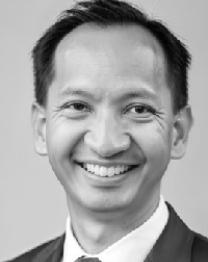
David Sauv is a dedicated leader in the air cargo industry with a passion for digitalization. With over 15 years of experience, he currently serves as Senior Manager of Digital Cargo at the International Air Transport Association (IATA).
David's work focuses on advancing the industry through initiatives like ONE Record, a groundbreaking data sharing standard. He firmly believes that data sharing can revolutionize risk management practices in the air cargo sector. By providing real-time visibility and traceability, it enables more efficient and adaptable risk mitigation strategies.
He is also involved with global authorities and various PLACI (Pre-loading Advance Cargo Information) regimes. These partnerships are integral to enhancing risk management practices and ensuring the secure and efficient movement of goods worldwide.
David looks forward to sharing his vision and insights during Session 4, "Risk Management – Embracing Adaptability," at the Trade Facilitation Innovation Days, where he aims to inspire innovative solutions for the industry's challenges.
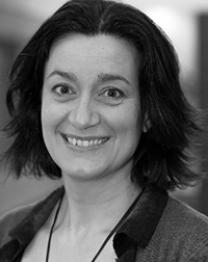

Dr. Azra Talat Sayeed is the Executive Director for Roots for Equity, an organization working for the rights of small and landless farmers, that include the rights of women farmers and agriculture workers.
She has taken part in developing and implementing political education centered on equity and equality of marginalized communities especially women and girls in the rural communities and urban squatter settlements. She is currently the Chairperson for the Asia Pacific Research Network (APRN) as well as the International Women’s Alliance (IWA).
Azra has served on the regional council of Asia Pacific Forum on Women Law and Development for many years. She is also one of the two facilitators for the Women’s Constituency of the Civil Society Mechanism (CSM) lodged in the United Nation’s Committee on World Food Security (CFS).
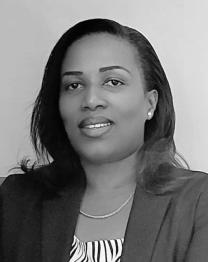
Mrs. Diane SAYINZOGA is a Rwandese with extensive work experience in development related areas such as trade and Investment promotion, Special Economic Zones (SEZs), SMEs support and gender promotion etc. Before joining UNCTAD, she was the Head of the Special Economic Zones and Exports facilitation Department at Rwanda Development Board (RDB). She also previously served as Advisor in the office of the Executive Director at the International Trade center (ITC), under the Mo Ibrahim Leadership Fellowship program. She also worked for the Ministry of Finance and Economic Planning in Rwanda. Diane was a Board Member of different institutions in Rwanda such as the University Teaching Hospitals, the Local Administrative Entities Development Agency (LODA), and the Rwanda Standards Board (RSB). She has a Masters degree in International and Development Economics from the Economic School of Louvain – Belgium