


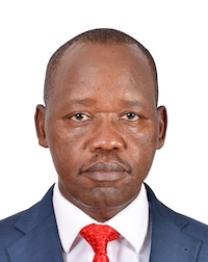
Capt. William K. Ruto is the Managing Director of Kenya Ports Authority. He is also an Associate Fellow of the Nautical Institute and a Member of the International Harbour Master’s Association. He also oversees the Port of Lamu, Kisumu port in Nyanza region of Kenya and Inland Container Depots Nairobi and Naivasha among other port facilities.
His career spans over three decades in the maritime transport and logistics industry. As an accomplished professional, he has practiced and worked both in the private and public sectors. During this period, he has served in various positions that has seen him rise through the ranks from a Marine Deck Officer to a Ship Master commanding various cargo vessels. In the port industry, his career started as a Senior Pilot where he rose through the ranks serving as a Harbour Master and General Manager Port Operations.
He is a class 1 Master Mariner having trained in South Tyneside college of Nautical Science, United Kingdom. He holds a Master of Business Administration, Strategic Management option, from Jomo Kenyatta University of Agriculture and Technology in Kenya. He is a recipient of Kenya state commendation of Order of the Moran of the Burning spear (MBS) for his distinguished services to Kenya and his contribution to the maritime industry in the region.

George-Ann Ryan is currently Chief Operating Officer at Ryan Group of Companies, working toward building and modernizing one of Antigua’s largest indigenously owned retail and development empires. She is an economist and entrepreneur with a focus on economic and enterprise development, and building better business practices.
Prior to this role, she has held numerous prestigious roles in nonprofits, economics, and policy. She was a founding executive member and Chief Financial Officer at The Sadie Collective. She also flexed her data science and organizational management skills as a Summer Research Associate at The Hamilton Project at Brookings Institution and a Research and Administrative associate at the Economic Security Project. She also serveson the Board of Directors of The Sadie Collective — chairing the finance committee.
George-Ann has appeared in BBC World Service's World News Have Your Say, the World Bank's International Finance Corporation Insights Magazine, and the Mathematica On the Evidence Podcast. She has also written for publications such as the Antigua Observer, Tremor and The Financial Diet.
She is an alumna of both Pace University, NYC and Columbia University | SIPA where she was awarded a Bachelor of Arts degree in Economics, magna cum laude and a Masters of International Affairs (MIA) with a concentration in Economic and Political Development and specialization in Data Analytics and Quantitative Analysis respectively.
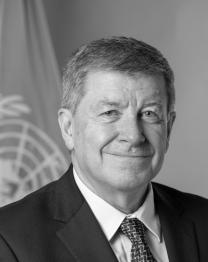
United Nations Secretary-General António Guterres announced on 7 October 2022 the appointment of Guy Ryder of the United Kingdom as Under-Secretary-General for Policy in his Executive Office. He will succeed Volker Türk of Austria who has been appointed as United Nations High Commissioner for Human Rights.
Mr. Ryder was most recently Director-General of the International Labour Organization (ILO) in Geneva after serving two successive terms since October 2012. He first joined the ILO in 1998 as Director of the Bureau for Workers’ Activities and from 1999, served as Director of the Office of the Director-General.
Mr. Ryder started his professional career in 1981 as an assistant at the International Department of the Trades Union Congress in London. From 1985, he held the position of Secretary of the Industry Trade Section of the International Federation of Commercial, Clerical, Professional and Technical Employees (FIET) in Geneva. In 1988, he became Assistant Director and – from 1993 - Director of the Geneva office of the International Confederation of Free Trade Unions (ICFTU). In 2002, he was appointed General Secretary of the ICFTU and was elected as the first General Secretary of the International Trade Union Confederation (ITUC) when it was created in 2006. He returned to the ILO in 2010 as Executive Director, responsible for international labour standards and fundamental principles and rights at work.
Mr. Ryder studied Social and Political Sciences at the University of Cambridge and Latin American Studies at the University of Liverpool. He speaks English, French and Spanish.

Miryam Saade Hazin is a Mexican economist with more than 26 years of experience in macroeconomics, public policy, sustainable development, monetary policy, econometrics, natural resources governance, infrastructure, transportation, and logistics.
She worked for nearly 16 years at the Central Bank of Mexico, two years at Simbiosis Económica and has worked in different divisions at ECLAC: Economic Development, Natural Resources, Sustainable Development and Human Settlements, and currently at the International Trade and Integration Division (ITID).
Miryam has several publications and has provided technical assistance to several countries in Latin America. She holds a master’s degree in economics with specialization in international economics, public policy and advanced econometrics from the University of Warwick, England.
Since September 2022 she has served as Officer in charge of the Infrastructure and Logistics Unit at ECLAC.
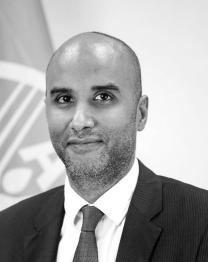
Roble Sabrie is an Economist of the Food and Agriculture Organization (FAO) with over fifteen years of experience related to agriculture economics and rural development including assignments focused on value chain development, agribusiness development, market linkages, food systems analysis, regional trade, and rural poverty reduction in Latin America, Caribbean, Africa and Eastern Europe. He has contributed to numerous publications and supported projects on these critical topics.
Recent analysis work include: Study for the establishment of a maritime service to improve agrifood trade and food security between Guyana, Trinidad and Tobago, Grenada and Barbados; Identification of a pipeline of potential agrifood borrowers in the Caribbean (for the AGRiFi EU financed impact fund); Priority areas for irrigation investments in Belize; Study on the State of Agriculture in the Caribbean.
Roble holds an MA in development economics from the University of Sussex (UK) and a BSc in economics from Roma Tre University (Italy).

Lisa Sachs is the Director of the Columbia Center on Sustainable Investment (CCSI), a joint Center of Columbia Climate School and Columbia Law School. Since joining CCSI in 2008, she established and oversees CCSI’s interdisciplinary research and advisory work on the alignment of investment law, practice, and policy with the Sustainable Development Goals. She is a globally recognized expert in the ways that laws, policies and business practices shape global investment flows and affect sustainable development. She works with governments around the world, regional and international development organizations, financial institutions, companies, civil society organizations and academic centers to understand the inter-relations of investment flows and sustainable development, and to influence investment policies and practices to promote the SDGs and the Paris Agreement. She received a Bachelor of Arts in Economics from Harvard University, a Master’s degree in International Affairs from Columbia’s School of International and Public Affairs, and a Juris Doctor degree from Columbia Law School, where she was a James Kent Scholar and recipient of the Parker School Certificate in International and Comparative Law.
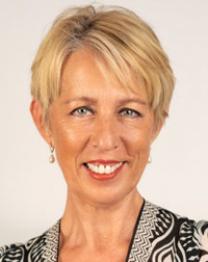
Debra Sadranu first came to Fiji in the 1990s and established a Spa School and chain of nearly 20 spas in luxury hotels and resorts across the island. Debra’s passion is helping women in Fiji gain access to training and employment to improve their quality of life.
In 2014 Debra took her passion for skin care introducing skincare formulas, founding Essence Group Fiji, a health and wellness business centred around supporting local economic development goals. Debra’s extensive knowledge of the benefits of sea minerals for the skin led her to explore the various types of local seaweed. Through her partnership with ACIAR - James Cook University in Australia, Debra learned that Nama, a long-time local Fijian delicacy, has incredibly beneficial properties for the skin due to its high concentration of minerals and vitamins.
Debra then embarked on a journey to figure out how best to sustainably harvest and incorporate Nama into her skincare formulas. Being mission driven, Essence Group built the world’s first sustainable Nama harvesting program alongside the Australian Government funded Market Development Facility.
The sustainable Nama harvesting program was designed to create opportunity for the women of the Yasawa islands. It generates a new income source to compliment that of the traditional village system and safeguards an important natural resource in a pristine environment.
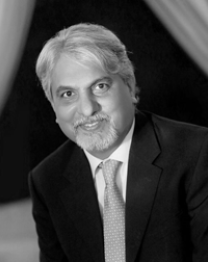
Dr. Mohammad Saeed is Chief of Trade Facilitation and Policy for Business Section of the International Trade Centre (ITC) Geneva where he leads trade policy, trade facilitation and Quality for trade teams. He also served as Senior Technical Adviser on Trade and Transport Facilitation with UNCTAD. He has vast experience of working on trade facilitation issues at national, regional and multilateral level. He also worked as lead negotiator for Pakistan in WTO negotiations for the Trade Facilitation Agreement for six years. His work experience of over 15 years with Pakistan Customs has contributed towards his pragmatic approach based on the ground realities in the TF area. He has enriched his experience by working with many developing countries for identifying their TF needs assessment and developing their national implementation plans.
International Trade law and Procedure is the area of his prime interest. He has the honour to be Chairman and Panelist six dispute settlement cases in the WTO, including chairing four. He has also been Chairman of WTO Committee on Market Access for consecutive three years and Chairman of WTO Customs valuation Committee. He also served as Vice Chairman of General Assembly of Advisory Centre on WTO Laws (ACWL) for consecutive five years. He is visiting faculty to many institutes of academics and professional development including LLM programme of University of Barcelona. He is also UNNEXT expert on SME and Paperless Trade.
He holds Masters in Public Administration from Harvard Kennedy School and LLB from University of London. Besides having a postgraduate degree in Economics from University of London, he has his specialized training in International Trade Law from Harvard Law School.
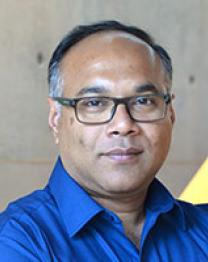
Brian Sagala is a Communications and Sustainability Consultant currently supporting Yajayo Limited in establishing its plastic recycling plant and implementing circular economy programs. He brings over 15 years of experience in strategic communications, with five years dedicated to the waste management and recycling sector.
Brian previously served as Head of Marketing & Communications at TakaTaka Solutions, one of Kenya’s largest plastic recyclers, where he led community engagement with waste pickers, policy advocacy, and compliance initiatives.
His work spans stakeholder engagement, ESG communication, and behavioural change campaigns, positioning him as a key voice in advancing sustainable waste management in East Africa.