


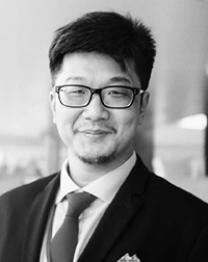
Yin Shao Loong is the Deputy Director of Research at Khazanah Research Institute, Kuala Lumpur, Malaysia. He focuses on industrial policy, climate change, and future technologies. He spent a decade working in federal and state government, and another decade in civil society and academia. Shao Loong holds a BSc in Chemistry and an MSc in Environmental Technology from Imperial College, London and an MA in Cultural Studies from Goldsmiths College, London.
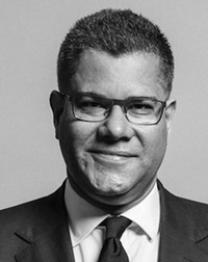
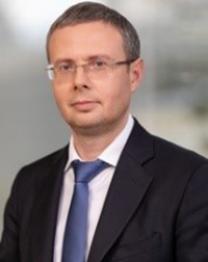
Maxim Shaskolsky was appointed Head of the Federal Antimonopoly Service (FAS) of Russia on 11 November 2020.
He began his professional career in 1996 as Head of the Securities Department at Yuganskneftebank. Between 2000 and 2001, he served as an adviser to the Governor of the Leningrad Region, Valery Serdyukov. From September 2001 to February 2005, he held the position of First Deputy General Director of CJSC Petroelektrosbyt.
Following this, Mr. Shaskolsky became Deputy Director for Consumer Relations in the Sales Department of JSC "Lenenergo". In October 2005, this division became the foundation for the Petersburg Sales Company, where he served from 2005 to 2010 as Deputy General Director and Director for Consumer Relations. From April 2010 to March 2013, he was Managing Director and First Deputy General Director of the same company, and from 2013 to 2019, he served as its General Director.
In January 2019, he was appointed Advisor to the Acting Governor of St. Petersburg, Alexander Beglov. Shortly thereafter, from January 23, 2019, to November 10, 2020, he served as Vice Governor of St. Petersburg, overseeing energy policy and tariff regulation. He coordinated the activities of key city committees related to tariffs, energy, and engineering support.
He graduated in 1997 from the Faculty of Economics at St. Petersburg State University with a degree in economics and qualification as a teacher of economic disciplines.
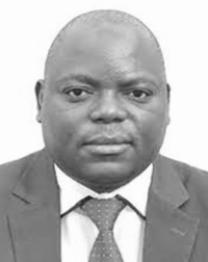
Mr. Ken Shawa, Senior Economist for Africa, International Labour Organization on Youth and Social Inclusion is a Malawian national.
Ken Chamuva Shawa is a Senior Economist at the ILO's Regional Office for Africa in Abidjan, Cote d’ Ivoire and a member of the ILO’s Research Department.
He supports the development and implementation of policy frameworks, leads the work on future of work, and coordinates regional research for the Africa region. His research interests include the economics of labourmarkets, saving and investment, industry and trade, debt, the growth-environment nexus, and agricultural policy. His current research is on health shocks and labour market outcomes.
Prior to joining the ILO, he worked for a number of international organisationsincluding the Common Market for Eastern and Southern Africa (COMESA) and the African Union (AU). He holds a PhD in Economics (Financial economics and econometrics) from the University of Nairobi and is currently pursuing another PhD in Health Economics and Policy with the University of Lancaster, in the UK. He also holds an MSc degree in International Environmental Management from the University of Northampton, UK and a Master of Arts in Economics from the University of Malawi. Recently he successfully completed the Agriculture, Economics and Nature course of the University of Western Australia and the International Monetary Fund’s Financial Development and Financial Inclusion course.

Dr. Manal Shehabi is an applied development economist with recognized expertise in the economics-energy-climate nexus and policies in resource developing economies. She is Senior Research Fellow at Oxford’s Institute for New Economic Thinking at the Oxford Martin School, Seminar Leader for Economics at Blavatnik School of Government, the University of Oxford. She is Member of the Institute for Energy, Climate, and Disaster Solutions at the Australian National University; Research Fellow (elected) of the Economic Research Forum; and Founding Director of SHEER Research & Advisory. She is a consultant to the International Energy Agency and an expert of the UNFCCC on just energy transitions, response measures, and economic diversification.
Her interdisciplinary work offers important contributions to the understanding and modeling of diversification, just transitions, fiscal space, people in vulnerable situations, energy and climate policy alternatives in developing countries and petrostates.
Her research has global impact on debates for solutions for energy, climate, and economic challenges. She addressed by invitation the 1st High-Level Ministerial Roundtable on Just Transition at COP28 to help ministers and delegates with the Just Transition Work Programme (JTWP) (operationalized at COP28). She addressed by invitation the 1st JTWP Dialogue at the SB60 2024 Bonn Climate Conference along with the Chair of the IPCC. Her economic models are used for policymaking and she reviewed and advised on hydrogen and green industrial policies.
She was also lead author of various policy briefs/reports (T7 (G7), T20 (G20), UNFCCC, UNICEF). She co-authored, among others, the IPCC Special Report on the Ocean, Kuwait Energy Outlook 2020, a UNFCCC report on modeling impacts of response measures in developing countries (presented at COP26), and a roadmap on cement decarbonization in Saudi Arabia. She advised PWYP and the Open Society Foundation on just energy transition in the MENA region. She is an Advisory Board Member for the EFI-KAPSARC energy transitions research project and the Natural Resources Governance Institute MENA platform. She taught undergraduate and graduate university courses and conducted capacity building for policymakers in developing countries in four continents.
Having lived in four continents, she gained professional experiences in public policy and industry working on projects spanning six continents. She regularly advises policy makers, firms, and international institutions. She is cited and appears in media in different languages.
Dr. Shehabi received various honors, grants, and awards. A polyglot, she is fluent in English, Arabic, French, proficient in Spanish, and speak intermediate Mandarin Chinese and basic Italian and Hebrew.

Based in Washington, DC, Amgad Shehata has responsibilities for Global Public Affairs and Strategy. In recent years, as global supply and value chain issues have risen in strategic importance, Amgad has facilitated a wide-ranging dialogue between the public and private sectors on trade, borders, continental competitiveness, and security. As Senior Vice President of Global Public Affairs and Strategy, Amgad works with a UPS team of customs and border experts that design and drive implementable policy and regulatory solutions that enhance global supply and value chains, including business-to-business and business-to-consumer e-commerce. UPS is a proponent of reducing and removing trade barriers by leveraging the new digital economy, which supports our customers’ growth and improves the efficiency and cost-effectiveness of global supply networks.
Amgad serves on the board of the Global Express Association in Geneva, Switzerland, and the steering committee of the Paris-based Global Alliance for Trade Facilitation, working to assist countries in implementing the World Trade Organization’s (WTO) 2017 Trade Facilitation Agreement. Previously, Amgad served as co-Chair of the U.S. private sector Trans-Pacific Partnership (TPP) negotiations coalition and co-Chair of the U.S. State Department-led Americas Business Dialogue. Throughout 2018-19, Amgad led UPS’ Washington, D.C., efforts on the renegotiation of the North American Free Trade Agreement (NAFTA).
During his over 30-year tenure at UPS, Amgad has held several senior management roles in various functions, including strategic planning, mergers and acquisitions, accounting, and marketing. He has leveraged his transportation experience and cross-border knowledge to help develop and launch numerous new innovative product, policy, and process solutions for UPS that reduce friction points in global commerce.
Amgad started as a delivery driver with UPS after finishing his degree at York University in Toronto, Canada.
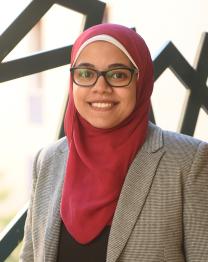
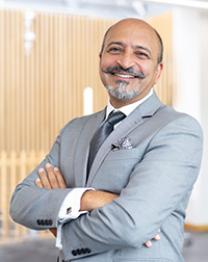
Professor Kasim N Sheikh is the Dean of the School of Business and Creative Industries at the
University of the West of Scotland. He is an international and published expert in human rights
and justice, and a United Nations Expert in Law. He has advised cabinets, parliaments,
legislature, and judiciary for states in the Middle East, Central Asia and Asia having spent over 20
years supporting developing economies with collaborative and consultative partnerships.
Prof. Mohammed Sheikh received a Ph.D (Marine Sciences) from the National University of the Ryukyus, Okinawa Japan between 2005 and 2008.
He was awarded a Post Doc by the Japan Society for Promotion of Science (JSPS) from 2008-2010. He was a senior research fellow under the CV Raman program at University of Bangalore, India (2012). He is also an alumnus of Harvard Kennedy Governance School alumnus of Innovation for economic development training (2014) and scientific translation to policy issues (2019) from Harvard University (USA) and the Institute of Development Studies (IDS), Brighton UK, respectively.
Sheikh is currently a Director of Fisheries of the Ministry of Livestock and Fisheries of the United Republic of Tanzania. He also served as a Director of Research (Physical Sciences) at the Tanzania Commission for Science and Technology (COSTECH) from 2017-2020. Sheikh is a Professor of Marine/aquatic ecosystem health and Ecotoxicology. Much of his work has been on analyzing toxicological effects of hazardous chemicals in marine and aquatic ecosystems. He has given numerous invited talks in the topic of marine pollution and eco-toxicology. Prof Sheikh has been working with renowned research groups from Denmark, Japan, Germany, Belgium, Malaysia, UK etc.
Prof. Sheikh is an author or co-author of over 50 refereed scientific papers appeared in reputable journals such as Marine Pollution Bulletin, Geochimica et Cosmochimica Acta, International journal of environmental Analytical chemistry, Regional studies in Marine Science Journal and Remote sensing to mention a few. He served as a team leader or an active team player of various multinational funded research projects such as BSU (DANIDA), HDIF (DFID), VLIR-UOS South Initiative among selected projects.
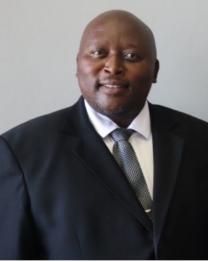
Mr. Mokhethi Shelile was appointed as the Minister of Trade, Industry and Business Development on 30th October 2022. He is committed to leveraging his 20 years of experience in the trade fraternity, along with his leadership and management skills, to steer the Ministry toward achieving its mandate.
He is a Member of Parliament representing the Revolution for Prosperity (RFP), Lithabaneng Constituency (40). He is also a founding member of the Revolution for Prosperity Party (RFP) and the member of the Executive Committee as the Public Relations Officer of the party.
Before assuming ministerial role, he was the Investment Promotion Officer at Lesotho National Development Corporation (LNDC) and was later appointed as the Head, Investment Promotion within the LNDC. He has earned few accolades during his tenure at LNDC; UNCTAD Investment Promotion agency of the year 2016 winner. He has led International Investment Promotion and had successful promotion missions in SACU region, Kenya, Tanzania, Libya, Egypt, United Kingdom, and Germany, among others.
He studied BA Economics at the National University of Lesotho and graduated in 1995.