


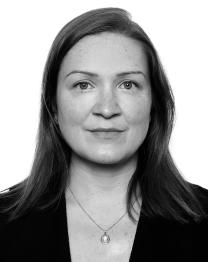
Victoria Tuomisto is a trade facilitation and policy adviser at the International Trade Centre. Since 2016, she has conducted ITC's technical assistance programmes towards the implementation of trade facilitation and policy reforms, notably the WTO Trade Facilitation Agreement, in Africa and Asia, with a focus on regional integration. Victoria also manages the editorial development of ITC's trade facilitation and policy for business section.
Prior to joining ITC, Victoria worked as an editor and analyst for The Economist Group, where she managed research projects on industry, economics and business topics as well as forecasting for emerging markets across Europe, the Middle East and Africa. She holds an MSc in Political Economy and a BSc in Economic History from the London School of Economics.
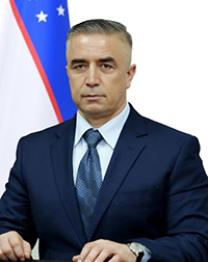
Khalilillo Sobirjonovich Turakhujaev was elected Chairman of the Competition Promotion and Consumer Protection Committee of Uzbekistan on 21 June 2024, upon the recommendation of the President of the Republic of Uzbekistan, the Senate of the Oliy Majlis.
Between 2021 and 2024, Mr. Turakhujaev served as the Deputy Chairman of the Supreme Court of the Republic of Uzbekistan and Chairman of the Judicial Collegium for Civil Cases, overseeing significant developments in civil justice.
From 2017 to 2020, he was appointed as Director of the Public Services Agency under the Ministry of Justice, leading key reforms to improve government service delivery. He subsequently served as the First Deputy Chairman of the State Tax Committee and Director of the Cadaster Agency under the Committee from 2020 to 2021.
Between 2008 and 2017, he served in the Office of the President of the Republic of Uzbekistan, where he held senior roles including Deputy State Adviser and First Deputy Adviser.
From 1992 to 2008, Mr. Turakhujaev held various positions within the judicial system, including serving as a judge of the Supreme Court and later as Chairman of the Tashkent City Court for Civil Cases from 2014 to 2017.
He holds a higher legal education and is a 1st Class Counselor of Justice, with a distinguished career in the judicial and public administration sectors of the Republic of Uzbekistan.
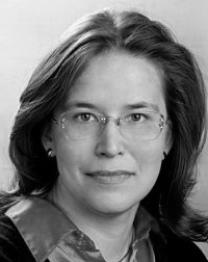
Natalia Turdyeva is the Head of the Regional and Industry Research Unit in the Department of Forecasting at the Bank of Russia, a position she has held since 2018.
Prior to this, she was a Leading Researcher at the Center for Economic and Financial Research at the New Economic School in Moscow. Ms. Turdyeva holds a Master of Computer Science degree from the Russian National University of Science and Technology MISiS and a Master of Arts in Economics from the New Economic School.
Her main areas of research include climate economics and trade policy. Ms. Turdyeva is among Russia's leading experts in computable general equilibrium (CGE) models and currently applies her expertise in CGE modeling as part of the Bank of Russia's climate stress-testing initiatives.
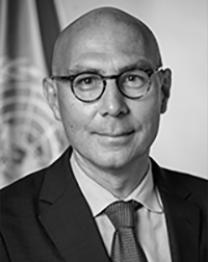
Mr. Türk is the current United Nations High Commissioner for Human Rights. He took up his official functions as High Commissioner on 17 October 2022.
Prior to this, Mr. Türk was the Under-Secretary-General for Policy in the Executive Office of the United Nations Secretary-General where he coordinated global policy work. He also ensured UN system-wide coordination in the follow-up to the Secretary-General’s “Call to Action for Human Rights” and his report, Our Common Agenda, which sets out a vision to tackle the world’s interconnected challenges on foundations of trust, solidarity and human rights.
He previously served as Assistant Secretary-General for Strategic Coordination in the Executive Office of the Secretary-General (2019-2021). As Assistant High Commissioner for Protection in the Office of the United Nations High Commissioner for Refugees (UNHCR) in Geneva (2015-2019), Mr. Türk played a key role in the development of the landmark Global Compact on Refugees.
Over the course of his career, he held a number of key positions including at UNHCR headquarters where he served as Director of the Division of International Protection (2009-2015); Director of Organizational Development and Management (2008-2009); and Chief of Section, Protection Policy and Legal Advice (2000-2004). Mr. Türk also served UNHCR around the world, including as Representative in Malaysia; Assistant Chief of Mission in Kosovo and in Bosnia and Herzegovina, respectively; Regional Protection Coordinator in the Democratic Republic of the Congo; and in Kuwait.
Mr. Türk holds a doctorate in international law from the University of Vienna and a Master of Laws degree from the University of Linz, Austria. He has published widely on international refugee law and international human rights law.

Lord Turner chairs the Energy Transitions Commission, a global coalition of major power and industrial companies, investors, environmental NGOs and experts working out achievable pathways to limit global warming to 1.5C – or well below 2˚C – by 2040 while stimulating economic development and social progress.
In addition, he is Chairman of Chubb Europe and on the Advisory Board of Envision Energy. From 2008-2013, Lord Turner chaired the UK’s Financial Services Authority, and played a leading role in the post crisis redesign of global banking and shadow banking regulation.
Lord Turner has held high profile roles in public policy: he was Director General of the Confederation of British Industry (1995-2000); chairman of the Pensions Commission (2003-2006); he was the first chairman of the Climate Change Committee (2008-2012) an independent body to advise the UK Government on tackling climate change. The recommendations set out in their first report "Building a low-carbon economy” were adopted in 2009.He became a cross bench member of the House of Lords in 2006.
Amongst his business roles, Lord Turner was at McKinsey&Co (1982-1995); was Vice-Chairman of Merrill Lynch Europe (2000-2006) and a Non-Executive Director of a number of companies, including Standard Chartered plc (2006-2008).
He is honorary fellow of the Royal Society and holds an Honorary Degree from Cambridge University. He is the author of “Between Debt and the Devil” (Princeton 2015), and “Economics after the Crisis” (MIT 2012).
Lord Turner has advised climate and government bodies including the COP Presidency and ministers in the EU, UK, and Australia and is often featured in top-tier global media as an expert on the energy transition, including in the Financial Times, Economist, BBC, CNN and Bloomberg.
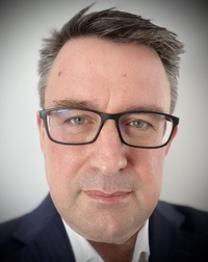
John Turner leads XBRL International, the not-for-profit standards development organisation behind XBRL, the business reporting data exchange standard. He works with regulators, governments and the private sector right around the world to help the shift from a paper-based to a data-centric reporting paradigm. He has been involved in the XBRL standard, in a number of different capacities, since 1999.
Since 2017 he has been focused on the role that mandatory digital statutory disclosure will play in the sustainability sphere.
Prior to taking on his current role, at the end of 2013, he had served as the CEO of CoreFiling, an XBRL software firm, before that, led the global XBRL activities of KPMG LLP, and prior to that, worked as a prudential regulator, running off-site surveillance and leading the revamp of data collection systems at APRA in Australia.
Based in Oxford in the United Kingdom he holds degrees in Law and Arts from the University of Queensland, with majors in computer science and government.
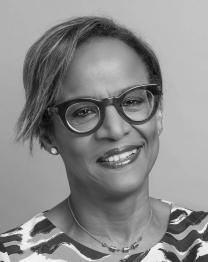
Therese Turner-Jones is the Director of the Projects Department of the Caribbean Development Bank after managing MaxGwen Ltd, a consulting firm she founded in 2022. Between 2013 and 2022, she worked at the Inter-American Development Bank, where she served as general manager of the Caribbean Group (CCB). Her purview spanned IDB operations in Barbados, Guyana, Jamaica, Suriname, Trinidad and Tobago and her home country, The Bahamas.
Previously, she served the International Monetary Fund (IMF) for over 20 years both at a staff and Board level.
She holds a master's degree in Economics from the University of East Anglia. Her publications include a book on Caribbean Fiscal Challenges. A member of the International Women's Forum, Therese is passionate about financial inclusion, gender equity, children, vulnerable communities and the environment.
She is an ardent champion of development issues facing small island developing states and considers climate change one of the most existential threats of our lifetime.
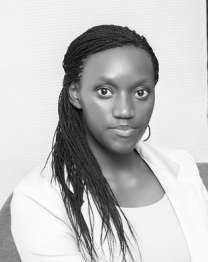
Chantal TUYISHIMIRE is an acting coordinator of Rwanda National Trade Facilitation Committee since July 2021 and she also serves as an AfCFTA Implementing Officer in the Ministry of Trade and Industry. She previously served as an Economist through TMEA Young Professional Program in the Ministry from 2019 to 2021. Before then She was an Executive Assistant for Mineral Trading Company called Gisande Trading Ltd
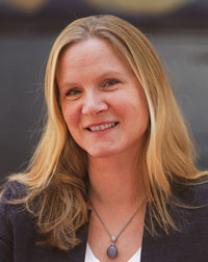
Dr. Mari Sundli Tveit is the Chief Executive of the Research Council of Norway and is President of Science Europe. She has previously been rector of the Norwegian University of Life Sciences (NMBU) and Deputy Director-General of the Confederation of Norwegian Enterprise.
Sundli Tveit is a professor of landscape architecture. She serves on the board of the Global Research Council and has also been a board member of the European University Association and of Chalmers University of Technology in Gothenburg.
She holds a PhD in Landscape Ecology and a master’s degree in Nature Management from the Norwegian University of Life Sciences.
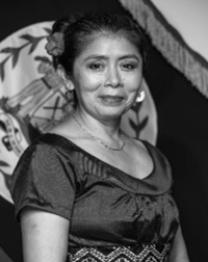
H.E. Froyla Tzalam is the Governor General of Belize. She is a Mopan Maya woman from San Antonio, Toledo, standing with a foot in both the Maya and western worlds.
As a Mopan Maya leader, she strives to forge understanding and tolerance between the indigenous and industrialized worlds. This requires ever more urgency under the shadow of climate change. Her Excellency believes that all people must know their history in order to promote and protect their identity and culture. In particular, she believes that the modern descendants of the ancient Maya have many reasons to be proud of their heritage and that our knowledge can contribute to the solutions of modern day challenges.
From a young age she has worked in the fields of culture, history and indigenous rights. She authored “Learning to Read and Write in Mopan Maya”, a grammar book on Mopan Maya, as well as numerous articles on culture and identity.
Her Excellency Ms. Froyla Tzalam was co-director of the African Maya History Project, for which she co-authored the book “Belize New Vision, African and Maya Civilizations”. During her time with the National Institute of Culture and History, she curated numerous exhibitions on Belize’s culture and history. Her Excellency was a part of the task force for the Belizean Studies programme that is now being implemented nation-wide in secondary schools.
Before taking the helm at the Sarstoon Temash Institute for Indigenous Management (SATIM), an NGO that promotes the rights of indigenous people while preserving the natural heritage of our country, she completed a report on Gender Equity among Q’eqchi Maya Women. Her findings have deeply influenced her work as the first woman to lead SATIIM. Her Excellency has served as the chair of two umbrella organizations; her work resulted in formal participation of NGOs on national committees and the strengthening of community-based organizations’ governance to ensure accountability.
H.E. Ms. Froyla Tzlam holds a Master’s Degree in Rural Development from the University of Sussex, England and a Bachelor’s Degree in Anthropology from Trinity University, Texas. Her many interests include farming, forest vegetables, cooking, sewing, DIY projects and current affairs. Her Excellency is married with two children, Yasil and Yanil Tz’ak.