


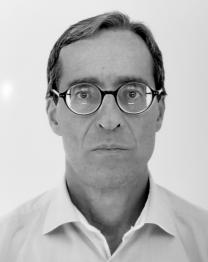
Rolf Traeger is Chief of the Least Developed Countries Section of the United Nations Trade and Development (UNCTAD). He coordinates the research and writing of the UNCTAD flagship publication The Least Developed Countries Report and of the Vulnerability Profiles series on the least developed countries pre-qualified for graduation.
He manages projects of technical assistance on development policies directed at governments and policymakers of developing countries. Based on his research work, he undertakes capacity-building and training activities for government officials, researchers and students in both the public sector and in academic institutions. He has worked at the United Nations for more than 30 years, in UNCTAD and in the Economic Commission for Europe.
He holds a PhD in economics from the Graduate Institute of International and Development Studies and a Master of Science in Economics from the University of Lausanne, a Bachelor of Arts in economics and public affairs from the Getúlio Vargas Foundation in São Paulo (Brazil), and a Bachelor of Laws from the University of São Paulo (Brazil).
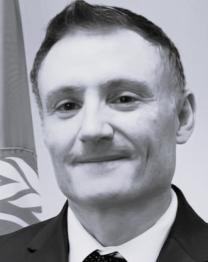
Mr. Trebucq brings more than 24 years of experience in sustainable development, climate change, social cohesion, peace and development, crisis prevention and humanitarian action with the United Nations and International Organizations. He previously served as the UN Resident Coordinator for Barbados and the Eastern Caribbean states, covering 10 countries and territories and leading a sub-regional team of more than 20 UN Agencies Funds and Programmes. His extensive experience with the UN also includes serving as the UNDP Country Director in Brazil, the UNDP Deputy Resident Representative respectively in Peru and Guyana, and the Team Leader for Crisis Prevention and Recovery with UNDP India.
Before joining the United Nations, he worked as Head of Delegation of the French Red Cross in Colombia and Ecuador, with Doctors Without Borders in Kyrgyzstan and Tajikistan, and the private sector in France.
He holds a Master’s degree in Sustainable Development with a specialization in environmental economics from Imperial College London (UK), and a Maîtrise in Business Administration and Management from the Institut Français de Gestion (France).
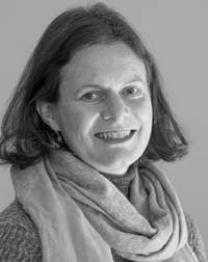
Fiona Tregenna holds the DST/NRF South African Research Chair in Industrial Development and is a Professor of Economics at the University of Johannesburg.
She has a Ph.D. in Economics from the University of Cambridge, a Master’s degree in Economics from the University of Massachusetts, and earlier degrees from the Universities of the Witwatersrand and Natal (now KwaZulu-Natal).
Her primary research interest is in issues of structural change, deindustrialisation and industrial development. She has also published on poverty, inequality and unemployment. Fiona has received a number of awards and grants for her research, she holds a B rating from the NRF is an elected member of the Academy of Science of South Africa (ASSAf).
She is a part-time Member of the Competition Tribunal where she adjudicates competition cases, and she serves on a number of boards and advisory panels and councils. In the past she has worked for among others the National Labour and Economic Development Institute, the Congress of South African Trade Unions and several universities.
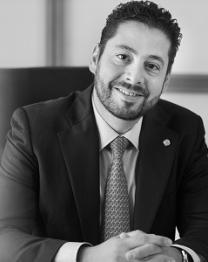
Since January 2018, Mr. Ricardo Treviño Chapa has been the Deputy Secretary General of the WCO. Prior to this, with a public sector career spanning 20 years, he was appointed as General Administrator of Customs by the President of Mexico in 2015, with ratification by the Senate.
Mr. Ricardo Treviño Chapa holds a Bachelor’s degree in Finance from the Instituto Tecnológico y de Estudios Superiores de Monterrey (Monterrey Institute of Technology and Higher Education) in Mexico and a Master’s degree in Global Banking and International Finance from the University of Birmingham in the United Kingdom.
Mr. Ricardo Treviño Chapa has driven an important change in WCO through the implementation of the Strategic Plan 2019-2022. With a strong commitment to transparency, to Member engagement in the decision-making process and to continually seeking out innovative processes, he has been working together with the WCO Secretariat team to implement actions during the current health crisis enabling the WCO to keep moving forward, while at the same time promoting the international flow of legal trade, essential goods and vaccines.
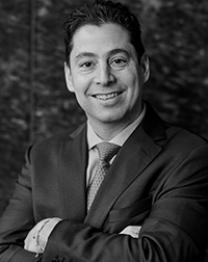
With a public sector career spanning over 20 years, he held several positions within the Mexican Government. In 2015 he was appointed as General Administrator of Customs by the President of Mexico, with ratification by the Senate. During his tenure, Mr. Treviño Chapa promoted digitalization of Customs procedures as well as cooperation with other border agencies and with the Customs administrations of Mexico's main trading partners.
Since January 2018, after being elected and re-elected in 2022 by the WCO Council, Ricardo Treviño Chapa has held the post of Deputy Secretary General. During this time he has driven an important change in the Organization through the definition and implementation of the Strategic Plans 2019-2022 and 2022-2025.
He is now leading the process to define a Modernization Plan, which is an ambitious process to reform WCO governance and accountability to adapt to current global realities and emerging Customs needs.
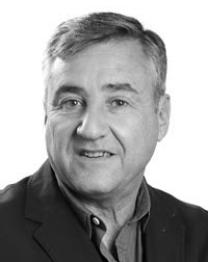
Marcelo Tricarico is a Senior Debt Management Expert with over 25 years of experience in public administration, debt management, debt auditing, and related systems development. He has led numerous technical assistance missions with international organizations, including the World Bank, UNCTAD, the Inter-American Development Bank, the IMF, the U.S. Treasury's OTA, and INTOSAI.
At the DMFAS Programme, Marcelo worked from 2002 to 2012, initially serving as the User Representative for Latin America, then as the Leader of the IT team, and later as Deputy Chief of the Programme. During this period, he spearheaded the development and rollout of DMFAS 5.3 and DMFAS 6.
In his home country of Argentina, Marcelo has held key positions such as Senior Advisor at the National Internal Control Office, Director of the Debt Management Office at the Ministry of Finance, and Project Coordinator for the implementation of DMFAS and its integration with other Public Financial Management (PFM) components. He is also a professor at the National Technological University in Argentina and has authored several papers on Public Debt, Public Debt Management in Federal Countries, and Public Debt Management within the context of Public Financial Management.
Marcelo is also a member of the Panel of Experts for the Debt Management Facility (DMF).
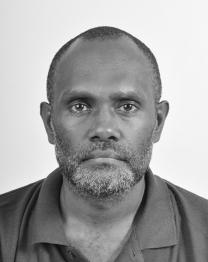
Stanley Trief is currently the Manager of the Vanuatu electronic Single Window (VeSW) Project. The VeSW Project is funded by the Enhance Integrated Framework (EIF) and the Australian Government with support from the Vanuatu Government. Using ASYCUDA World as the system’s platform, the VeSW Project commenced in 2019.
Prior to managing the VeSW Project, Stanley was the Manager of Vanuatu’s ASYCUDA World Project from 2016 – 2018. The Project was to upgrade the Customs system in Vanuatu from ASYCUDA++, which Vanuatu was using since 1999, to the latest version of ASYCUDA.
Stanley is a customs manager by profession, managing the Customs Border Control and Enforcement unit of Vanuatu Customs from 2011 to 2015. He is also a qualified Computer Science graduate and was managing the Information, Communication and Telecommunication unit of Vanuatu since 2004 prior to moving to Customs operations.
In the Pacific region, Stanley has conducted multiple Customs modernization assessments in Pacific Island countries since 2006 to 2019, before the borders closed due to the pandemic.
Stanley holds a Bachelor of Science from the New Zealand University of Waikato and a Master of International Customs Law and Administration from the Australian University of Canberra. He is passionate about implementing reform and modernization initiatives in both Customs and in the areas trade of facilitation.
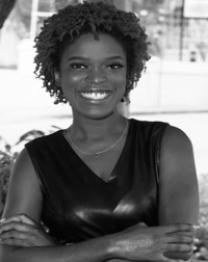
Roshanna Trim, activist and social development consultant. Roshanna is a Guyanese born, Bajan raised, she has been involved in youth-led organisations for over eight years and in January 2020 became the first woman to chair the Caribbean Regional Youth Council. She is the President of the Barbados Youth Development Council and a 2019 IMF Youth Fellow.
She served formerly as the Prime Minister of the Barbados Youth Parliament and in 2019 she co-founded Pink Parliament an initiative which aims to increase the number of women in parliament by providing mentorship to girls ages 14-20 through education and mentorship.
Roshanna is passionate about the capacity of young people to transform, innovate and create and has over the years gained experience in several fields such as personal and professional development, communication, education, coaching, project management to create opportunities that empower young people to thrive. She is a public speaking coach and mentor and an avid reader.
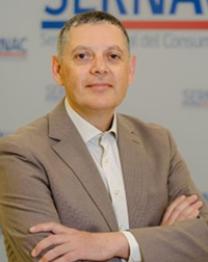
Andrés Herrera Troncoso is the National Director of the Chilean National Consumer Service (SERNAC).
A lawyer from the University of Chile, he holds postgraduate degrees in consumer law, telecommunications law, and information technology law, pursued in Chile and Spain.
He has held senior positions at SERNAC, the Undersecretariat of Telecommunications, and the Council for Transparency.
He is also the author of publications on consumer rights, data protection, and digital regulation.
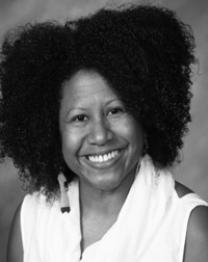
Dr. Maya Trotz is a professor of Civil and Environmental Engineering at the University of South Florida. She directs STRONG Coasts, a National Research Traineeship program to foster food, energy, and water solutions with coastal communities, and leads the knowledge management component of a Green Climate Fund project, Water Sector Resilience Nexus for Sustainability in Barbados.
She is Guyanese born and the past President of the Association of Environmental Engineering & Science Professors and a board member of Fragments of Hope Corp, a coral restoration NGO in Belize. She holds a BS in Chemical Engineering from MIT, and MS and Ph.D. degrees in Environmental Engineering from Stanford University.