

La Réunion d’experts pluriannuelle sur les produits de base et le développement vise à suivre l’évolution, les défis et les opportunités sur les marchés des produits de base, en accordant une attention particulière aux secteurs qui concernent les pays en développement tributaires des produits de base.
Les discussions servent à informer les États membres des évolutions importantes touchant les principaux secteurs et marchés des produits de base, dans une perspective de développement.
Volatilité des prix des produits de base : implications pour le commerce et le développement
La réunion d’experts portera sur la volatilité des prix des produits de base et ses implications pour le commerce et le développement, en réponse aux priorités exprimées par les États membres. Elle examinera les tendances récentes de la volatilité des prix, tant pour les produits agricoles qu’extractifs, et évaluera leurs effets économiques, sociaux et commerciaux sur les pays en développement.
La discussion mettra en lumière la vulnérabilité croissante des économies dépendantes des produits de base face aux chocs mondiaux, aux changements climatiques et aux perturbations géopolitiques. À partir de données factuelles et d’expériences provenant de différents pays, la réunion identifiera des options de politique pratiques à court et à long terme pour gérer et atténuer la volatilité, tant pour les exportateurs que pour les importateurs. Ces options peuvent inclure des mesures de soutien national, des instruments financiers et de gestion des risques, la valorisation, des stratégies de diversification, l’adaptation au climat, ainsi que le renforcement de la production intérieure et régionale.
La réunion a pour objectif de contribuer à un programme prospectif visant à renforcer la résilience et à soutenir un développement inclusif et durable dans les économies tributaires des produits de base. L’objectif est de promouvoir la valorisation, la diversification économique et une meilleure intégration des pays en développement dans les chaînes d’approvisionnement et de valeur.
Participation
Cette session est ouverte à tous les États membres de la CNUCED. D’autres organisations, notamment les institutions spécialisées, les organismes intergouvernementaux et les organisations non gouvernementales des catégories générale et spéciale, ainsi que les milieux universitaires et le secteur privé, peuvent participer en tant qu’observateurs.
Inscription
L’inscription en ligne est obligatoire pour toutes les personnes souhaitant participer à la réunion et est nécessaire pour figurer sur la liste des participants.
Logistique
La session se tiendra en présentiel au Palais des Nations. Les personnes qui ne peuvent pas assister à la réunion en présentiel pourront écouter la retransmission audio en direct dans les six langues officielles de l’Organisation des Nations Unies.
Le lien pour écouter en direct sera envoyé aux participants inscrits, à l’adresse électronique utilisée lors de l’inscription, un jour avant l’ouverture de la session.

Mr. Pedro Manuel Moreno of Spain is the Deputy Secretary-General and Acting Secretary-General of UN Trade and Development (UNCTAD).
He has over 20 years of experience of working for multilateral and intergovernmental organizations in programme, management and strategic positions both in the field and at headquarters.
He was Deputy Secretary-General of the Communication for Development Committee at the Spanish National Commission with the United Nations Educational, Scientific and Cultural Organization (1999-2004), and for the United Nations Development Programme, at the Country Office in Ecuador and, in New York City, as part of the Human Development Report team, at the Regional Bureau for Latin America and the Caribbean and at the Executive Office.
In 2014, he was appointed Chief of Staff of the Ibero-American Conference in Madrid, where he coordinated key political processes and South-South cooperation projects.
In September 2021, he was named Chief of Staff and Director of the Office of the Secretary-General of UNCTAD.
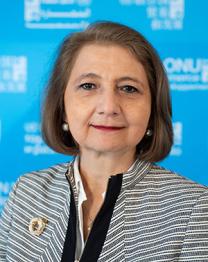
Luz Maria de la Mora is the Director of UNCTAD's Division on International Trade and Commodities. As a former Vice-Minister for International Trade and decades of government and private sector positions, Ms. de la Mora developed a career in international trade policy, negotiation, operations, and trade promotion.
During her tenure as Vice-Minister for International Trade of Mexico from 2018 to 2022, Ms. de la Mora led Mexico's trade and investment policy, overseeing fourteen free trade agreements with 51 countries. To bolster Mexico's development, she steered discussions in the World Trade Organization, the United States-Mexico-Canada Trade Agreement, Comprehensive and Progressive Agreement for Trans-Pacific Partnership, and Pacific Alliance, among others. She also coordinated policy dialogues and handled private sector consultations.
Ms. de la Mora holds a PhD in Political Science from Yale University, USA, a Master's degree in International Affairs from Carleton University, Canada, and a Bachelor's degree in International Relations from El Colegio de México, Mexico.
She is fluent in English and Spanish, and proficient in French.
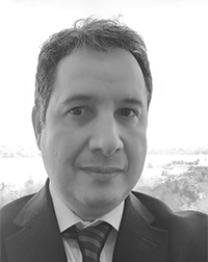
Rodrigo Cárcamo Díaz is Chief (a.i.) at the Commodities Policy Implementation Section of United Nations Trade and Development (UNCTAD) in Geneva, Switzerland.
During his more than two decades of experience working on different development issues, he has authored different publications on development issues, including journal articles, a book, book chapters and research papers. His current research interests are focused on sustainable agricultural value chains for export in developing countries.
He also leads capacity-building projects on this topic in different developing countries, organizes international policy dialogue events, and represents UNCTAD in different international fora linked to agricultural commodities, trade and development issues.
He holds an MPhil in Economics from the University of Oxford, and a Diploma in Statistics from the Universidad Católica de Chile.
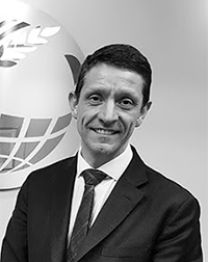
Arnaud Petit was appointed Executive Director of the International Grains Council (IGC) in February 2018. IGC is an intergovernmental organisation based in London offering independent analysis on grains, oilseeds and rice markets to its member governments to promote international trade in grains. It also provides information to non-government subscribers.
IGC provides an important international platform for discussions between policy makers and the private sector. It also serves as the Secretariat for the Food Assistance Committee helping to facilitate networking within the donor community to improve the efficacy of food assistance.
From 2005- 2017 Mr. Petit worked at the European Farmers and agri-cooperatives Union (Copa-Cogeca), as Director for Commodities and Trade. He was also a Member of the Executive Committee of the European Technology Platform “Plants for the future” (2009-2017) and a Member of the Experts Group on EU-US trade negotiations at the European Commission (2014-2017).
From 2000 -2005 he served as Policy Advisor for European Affairs at the National Chamber for Agriculture in Paris, and Deputy Member of the European Economic and Social Committee (2000-2005).
He holds an M.A. in Agricultural Economics from the International Center for Advanced Mediterranean Agronomic Studies, Montpellier – France.
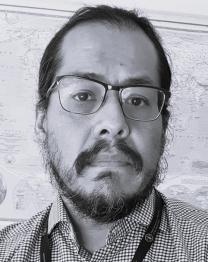
Mr. Sergio René Araujo-Enciso is an Economist at the Medium-Term Outlook and Market Analysis Team at the Food and Agriculture Organization of the United Nations (FAO). Mr. Araujo-Enciso contributes with market and policy analyses to various pieces of work and publications, including the OECD-FAO Agricultural Outlook. In addition, he also has sound experience in economic modelling. Before joining FAO, Mr. Araujo-Enciso was a research fellow at the European Commission Joint Research Centre (EU-JRC) based in Seville Spain, and a research assistant at the George August Gottingen University in Germany, where he gained his PhD degree.
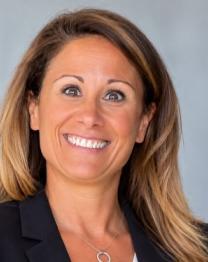
Alexandra Laurent has worked on commodity-related issues at the Commodities Branch, Division on International Trade and Commodities, UN Trade and Development (UNCTAD) since 2001. Her work has focused on improving transparency and access to information on agricultural, mineral and energy commodity markets, supporting evidence-based policymaking in commodity-dependent developing countries. She initiated UNCTAD's Commodities at a Glance series and the State of Commodity Dependence Report series. In 2026, she led the development of the State of Commodity Dependence Dashboard, an interactive platform designed to improve access to data and analysis on commodity dependence worldwide.
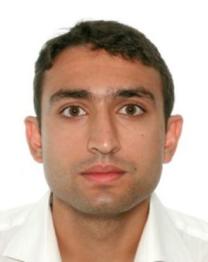
Stefan Csordas is an Economic Affairs Officer in the Extractive Commodities Section of the Division on International Trade and Commodities at UNCTAD. He has more than 15 years of experience in economic research, development finance and international cooperation with a focus on international trade and commodity markets. Before joining UNCTAD he held staff positions at the World Bank in Washington DC, GIZ in Berlin and the United Nations Economic Commission for Africa in Addis Ababa. He holds a PhD in economics from the University of Basel and master’s degrees from the University of Vienna and the Vienna University of Technology.
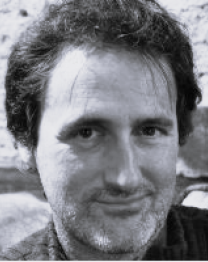
Guillaume Albasini is an independent consultant in the mining, metals and energy sectors. Previously, he was a research officer at the CRES Foundation in Geneva where he carried out various studies on the geopolitics of energy and raw materials and the challenges faced by producing countries. He is a graduate in political science from the University of Lausanne and holder of a Master in international relations from the Graduate Institute of International and Development Studies in Geneva. His most recent research focuses on the impact of the energy transition on demand for energy and mining commodities.

Alexander Bressers is a Senior Oil Market Analyst at the International Energy Agency (IEA), where his primary focus is on global oil demand and prices. Before joining the IEA in 2022, he worked for fifteen years as a commodity portfolio manager and futures trader for a number of banks and investment funds, developing quantitative trading strategies in the energy and agricultural markets. He holds a Master’s degree in economics from the Erasmus University in Rotterdam.
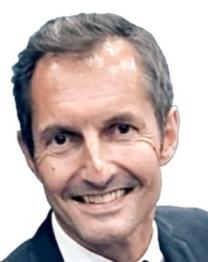
Jean-Christian Heintz is Managing Director at Wideangle LNG. He has a 25-year technical and commercial experience in Natural Gas and LNG. He spent the first 15 years of his career with Engie (formerly known as GDF Suez) where after a pipeline infrastructure background he held various LNG trading and contract management roles involving Norway, Trinidad, Algeria and Chile. He then became Head of LNG at Lugano-based DXT Commodities (2013), Geneva-based SCB Brokers (2019) and Swiss power producer Alpiq (2020), each time building desks from scratch. Jean-Christian is now working full time as an independent advisor for a variety of customers worldwide. He regularly organises training courses for LNG majors and new entrants in Europe, Africa and Asia. Jean-Christian is a member of Gastech Governing Body, a regular speaker and panelist at conferences worldwide.
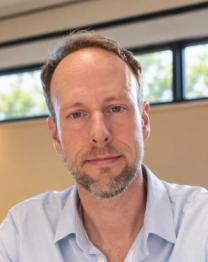
Marnix van Holland is an energy and climate expert at the Netherlands Enterprise Agency (RVO). Marnix’ career started in the creative industries running a youth hub and setting up various business initiatives in the Netherlands (most of which failed). After a short career at the Netherlands Embassy in Malaysia, he joined international NGO Hivos in 2012 and developed himself as an expert on Entrepreneurship Ecosystems, innovative finance solutions and support in the Global South. He has experience as a Program Development Manager in various sectors of business support throughout the African continent and Southeast Asia. After living out of his suitcase for a couple years and living in a variety of countries across the African continent, he migrated to Zimbabwe where he developed and managed a variety of programs in the food and (renewable) energy sector for 4 years. In 2021 he moved back to the Netherlands to work for the Netherlands Enterprise Agency (RVO) on the universal access to energy agenda (SDG 7).
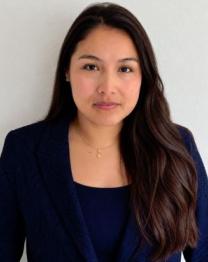
Fiama Angeles Bonelli is a Senior Trade Policy Analyst at the St.Gallen Endowment. For the Global Trade Alert initiative, she publishes trade and industrial policy changes across the world, authors policy briefs, provides operational support and participates in outreach activities. She previously served as an official and economic analyst in the Peruvian government, including the Ministries of Economy and Finance, Industry, and Foreign Trade and Tourism. Fiama holds a master's degree in International Affairs from the Geneva Graduate Institute (IHEID), with a specialisation in trade, and a Licentiate degree in Economics and International Business (Universidad ESAN).
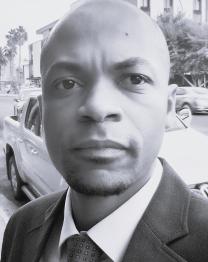
Julio Kunda Muya is Acting Head of Division in charge of commodities at the Department of Multilateral and Regional Trade Agreements, Ministry of Foreign Trade, Democratic Republic of the Congo. Julio has worked for several years at this Ministry and officially hold the position of Chef de Bureau. He holds a Master's degree in Global ICT Policy from PUSAN National University in South Korea, an advanced postgraduate diploma in Trade Policy and international trade law from the African Trade Policy Training Center in Arusha (Tanzania) and Lund University in Sweden, as well as a Licence (BAC+5) in applied computing from the Higher Institute of Computer Sciences, Programming and Analysis in Kinshasa. Julio represents his country to various international and regional organizations (such as the WTO, UNCTAD, UNCITRAL, SADC, etc.)
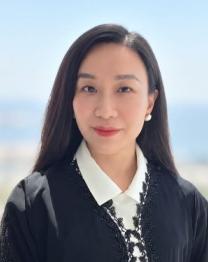
Maggie Xu is Chief Executive Officer of the Zayed Private Office in Abu Dhabi, a Belgian national recognised under the UAE’s Special Talents category in investment. She has extensive experience in finance and energy strategy, engaging with state-owned enterprises, government shareholders and financial institutions. Her work focuses on long-term energy procurement, cross-border trade finance and investment operations between the Gulf and Asia. She holds a Global Executive MBA from INSEAD and is a member of the Chartered Institute of Arbitrators (CIArb).
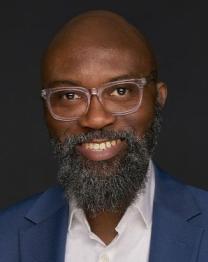
Dr. Ekpen Omonbude is a Senior Policy Advisor focused on the financial benefits of mining within the IGF’s Global Mining Tax Initiative. Ekpen is a trained economist specializing in the energy and extractives sector, with more than 15 years of providing advice and expertise in various roles. Before joining the International institute for Sustainable Development (IISD), he held positions with the Commonwealth Secretariat, as well as in academia and industry. Ekpen holds a doctorate in petroleum policy and economics and a master's in energy studies, both from the University of Dundee, Scotland. He also has a master's of business administration from the University of Abertay, Scotland, and a bachelor’s of science in economics and statistics from the University of Benin, Nigeria.
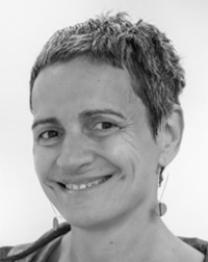
Dr. Anabel Marín is a Research Fellow and Leader of the Business, Markets & State Cluster at the Institute of Development Studies (IDS) and a researcher at CONICET in Argentina (currently on leave). She holds a PhD in Science and Technology Policy from the University of Sussex, a Master’s in Development from the University of General Sarmiento, and a degree in Economics from Córdoba University.
Her research focuses on the political economy of natural resources, sustainability transitions, and green industrial policy, combining academic leadership with high-level policy engagement in Latin America, Europe, and Africa. She has led multi-country research and impact projects funded by organisations such as ESRC, the Global Consortium for Sustainability Outcomes, and the Conservation Food and Health Foundation, and has advised institutions including the World Bank, ECLAC, IDB, UNCTAD, UNESCO, and UNIDO.
Her recent publications include a contribution to the Oxford Research Encyclopedia of Climate Science on sustainable development in Latin America (Marin, Möhle & Aneise, 2025), as well as articles on civic resistance, governance, and green industrial policy in the IDS Bulletin (2025), IDS Working Paper (2025), and Environmental Research Letters (2025). In 2025, she was awarded the Premio RAÍCES by the Argentine Ministry of Science, Technology and Innovation for her contributions to science and international cooperation.
