

The measurement of gross domestic product (GDP), while useful for economic analysis, is not a comprehensive measurement of progress that fully aligns with the 2030 Agenda for Sustainable Development. Through an excessive policy focus on income per capita and GDP levels, progress on all three dimensions of sustainable development has been obscured, distorting international development cooperation, and eroding trust in governments and institutions due to a growing disconnect between economic growth and perceptions of peaceful society, well-being and living conditions.
Efforts to move beyond GDP have gathered steam. The development of the Sustainable Development Goal (SDG) indicator framework, and many well-being and environmental indicator frameworks at national and international levels, show that there is a growing richness of data covering human progress and environmental sustainability. SDG target 17.19 of the 2030 Agenda aims to “build on existing initiatives to develop measurements of progress on sustainable development that complement GDP and support statistical capacity-building in developing countries” by 2030.
The Pact for the Future, adopted by Heads of State and Government in September 2024, provided further political momentum to develop metrics beyond GDP (A/RES/79/1). Member States mandated the SG to establish an independent high-level expert group (HLEG) to develop recommendations for a limited number of country-owned and universally applicable indicators that go beyond GDP. The work and recommendations to be developed by the HLEG constitute a pivotal moment for the statistical community to lead the way in delivering on the Beyond GDP metrics and facilitating their uptake by policymakers. The HLEG is converging on a tripartite conceptual framework comprising three pillars, namely: wellbeing, inclusiveness and equity, and sustainability. At the heart of this framework is to make the invisible visible (e.g. the destruction of the environment) and give voice to the voiceless (e.g. assessing the well-being of those left behind and future generations). They identified several domains that will be at the core of their conceptual framework and suggested criteria for the selection of related outcome indictors.
In the meantime, many countries have also proceeded to develop Beyond GDP dashboards and indicators and to insert a well-being lens in their policymaking. Their experiences, including in developing national wellbeing measurement frameworks, provide valuable insights to other countries and policy makers. They also informed the deliberations and thinking of the HLEG.
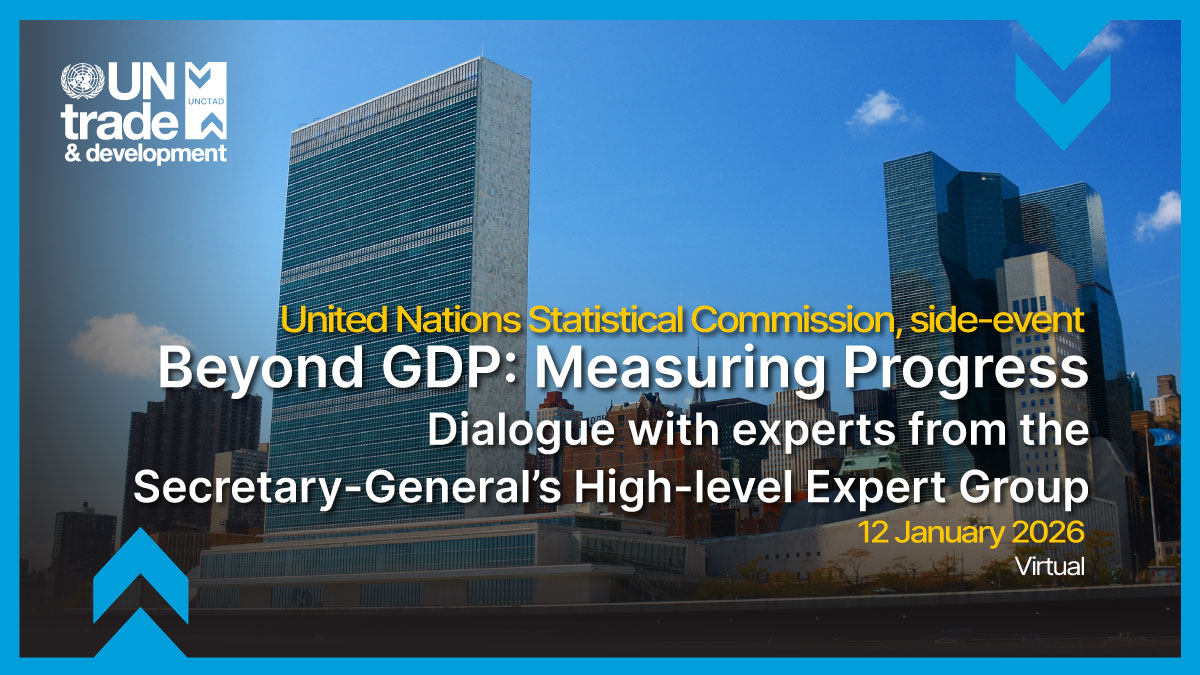
The Special Event will provide an opportunity for the chief statisticians and a broader set of stakeholders of the Statistical Commission to get abreast with the latest state of thinking by the HLEG to develop a beyond GDP framework and validate thinking on metrics. It will provide a valuable and timely opportunity to engage in a dialogue with the experts of the HLEG, including on how NSOs can respond to and support this global call and UN initiative, as well as sharing country experiences.
Expected Outcomes
- An updated knowledge and awareness by the Statistical Commission’s Member States and stakeholders of the state of conceptual and measurement thinking on the beyond GDP framework developed by HLEG.
- Promoting engagement and cross-fertilizing thinking with the HLEG on beyond GDP framework and measurements, including from country experiences.
- Initiate thinking about the role of NSOs and the Statistical Commission in supporting and carrying out implementation of beyond GDP metrics, and on possible challenges relating to data availability and capacity.
