

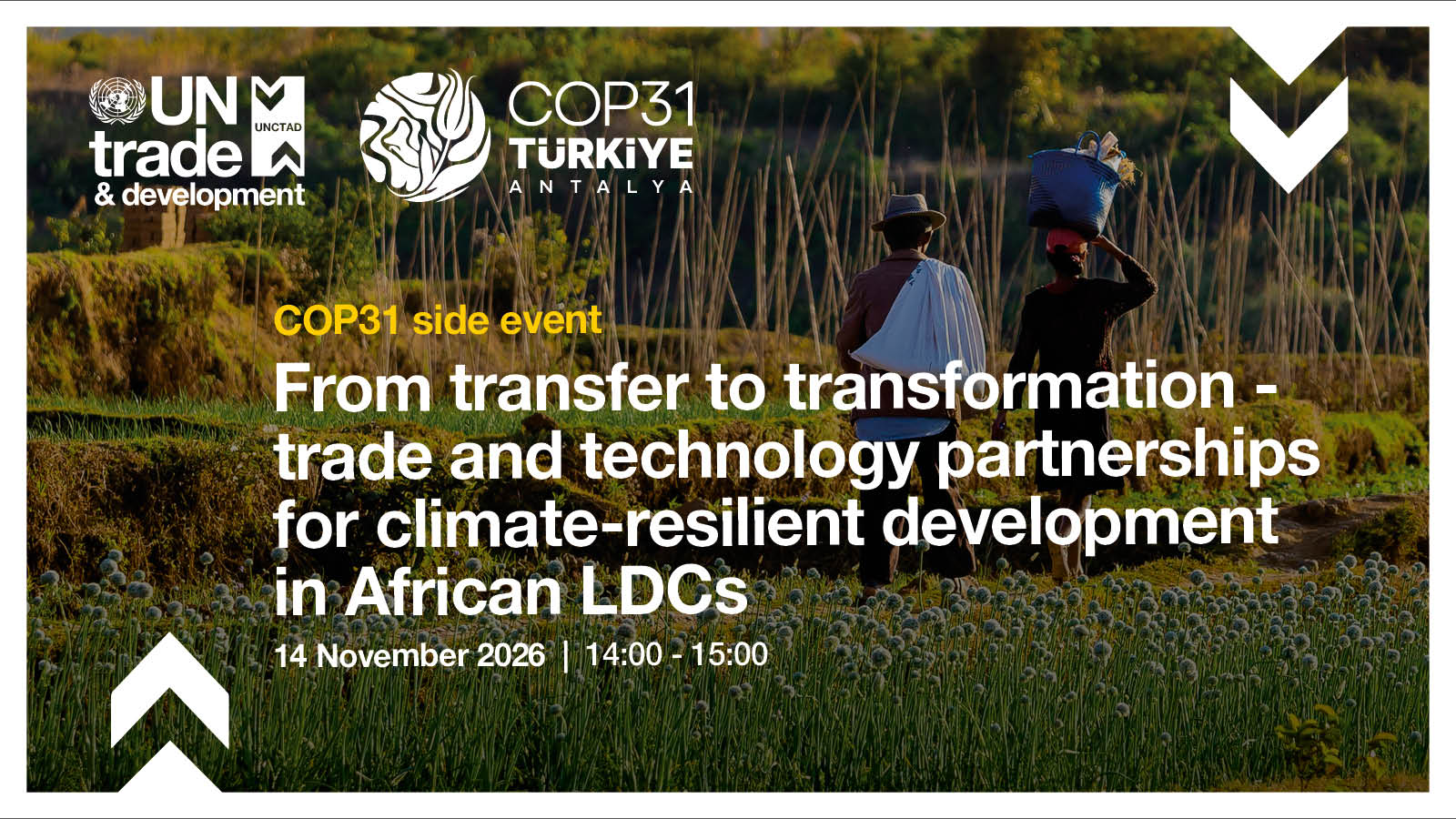
African least developed countries (LDCs) require affordable climate technologies to implement their nationally determined contributions. Yet, they face debt distress, limited fiscal space, expensive capital, and broader macroeconomic constraints, and technology gaps identified in the UNFCCC Technology Mechanism and its Technology Needs Assessments rarely translate into funded projects, sustained technical assistance, or long-term capacity development. Trade cooperation and climate diplomacy can help enable technology transfer, joint research and innovation, and skills partnerships between local firms and international technology providers. A growing range of initiatives, including the LDC Green Industrialisation Facility (LDC-GIF), the Africa Green Industrialisation Initiative (AGII), the African Continental Free Trade Area and its industrial policy priorities, and the Belém Technology Implementation Programme, provides useful ground for exploring innovative cooperative approaches. Against this backdrop, APRI and TESS will convene a side event to explore how trade and technology partnerships can better support the transfer, co-development, and deployment of technologies for climate-resilient development.
Objectives
- Identify the kinds of trade and technology partnerships that can best respond to LDC priorities for technology development, transfer, adaptation and deployment, while strengthening local technological and productive capabilities.
- Unpack how initiatives such as LDC-GIF, AGII and the AfCFTA work together to support technology diffusion, knowledge and skills transfer, cross-border partnerships, regional capabilities and participation in climate-related value chains.
- Identify the practical design features that can make technology partnerships more durable and effective, and explore how COP31 and relevant UNFCCC processes help connect LDC technology priorities with wider trade and technology partnerships without duplicating existing initiatives.
Link to COP32
The event will highlight the implementation hurdles that Least Developed Countries in Africa face in accessing technology, and weaknesses in the UNFCCC’s Technology Mechanism in translating needs assessments into real projects. The discussion will highlight how trade and technology partnerships could close this gap. Moreover, the discussions will unpack how existing mechanisms, including AfCFTA, the Belém Technology Mechanism, and the LDC Green Industrialisation Facility offer innovative cooperation approaches. The outcome of the event provides a strategic blueprint and priorities for Ethiopia’s Presidency on how trade and climate diplomacy offers an alternative pathway to accelerating technology transfer in Africa.
Panelists
- H.E Muhammadou M.O. Kah, Ambassador Extraordinary & Plenipotentiary of The Gambia to Switzerland and other international organizations in Geneva
- Luz Maria de la Mora, Director Division on International Trade and Commodities, UNCTAD
- Christophe Bellmann, Head of Policy Analysis and Strategy, Forum on Trade, TESS
- Nompumelelo Obokoh, Head of Climate Change and Food Security Unit (CCFSU), WIPO Green
- Serwah Prempeh, Head, Just Green Technology Transitions Programme, APRI (Moderator)
