Trade policy has historically shaped development during global resource booms, from coal in the Industrial Revolution to oil in the twentieth century, and earlier cycles in copper and rubber. Each reconfigured trade patterns, market access, and economic power. Today, critical minerals -lithium, copper, nickel, cobalt, graphite- and rare earths are playing a similar role. As core inputs to the energy and digital transitions, they are reshaping trade regimes, standards, and value chains, creating new opportunities and challenges for developing economies to access export diversification and integration into regional and global value chains.
Trade regimes, however, are not gender-neutral. Past shifts driven by trade liberalization, structural adjustment, and technological change have consistently determined who has access to markets, finance, technology, and standards certification, to name a few, and who remains excluded. Gender-responsive trade provisions cannot be optional add-ons; they directly influence export performance, competitiveness, and long-term development outcomes.
As countries negotiate tariffs, non-tariff measures, investment provisions, standards, and export strategies for critical minerals, these rules will shape development paths for decades. Without intentional design to ensure trade policies are gender-responsive, women risk exclusion from higher-value, trade-intensive segments of critical mineral value chains, including processing, recycling, logistics, certification, and digital traceability, among others. With the right mix of trade and investment, policies, critical minerals can support inclusive, trade-led structural transformation.
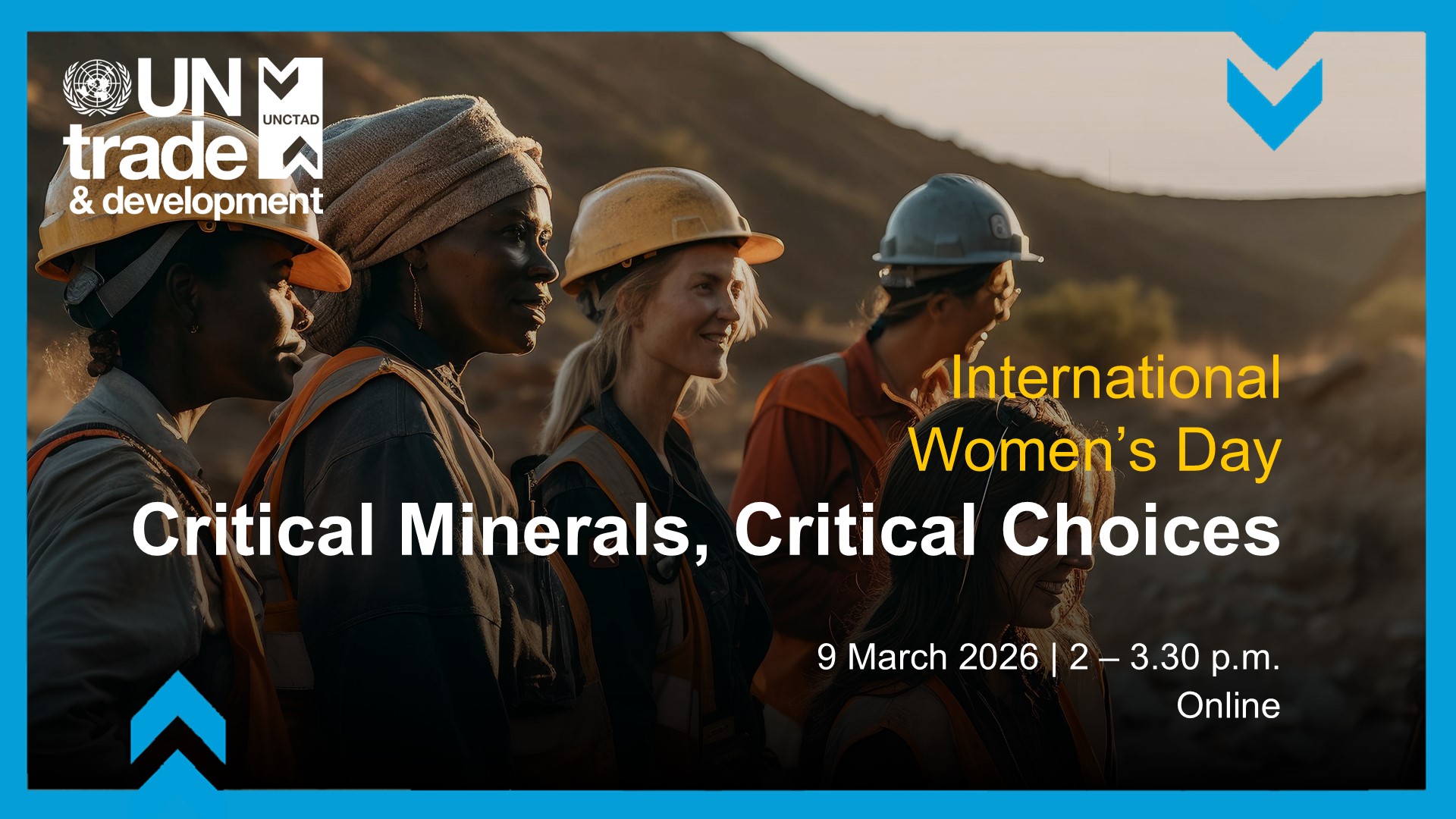
Against this backdrop, UNCTAD is convening an online International Women’s Day event.
Objective
This International Women’s Day event aims to address a central question: How can international trade frameworks be leveraged to close gender gaps in critical mineral value chains rather than reinforce them?
By bringing together policymakers, regional organizations, civil society, and the private sector, the discussion will identify practical policy entry points to ensure women can access higher-value, better-paid segments of critical mineral supply chains and benefit from trade-led structural transformation.
Structure of the event:
Online Webinar/ Panel discussion for 90 minutes, including Q and A.
Speakers
Chair: H.E. Ms. Sofia Boza, Ambassador of Chile to the WTO
Opening Remarks: Pedro Manuel Moreno, Deputy Secretary-General, UN Trade and Development (UNCTAD)
Panelists:
- Gül Ünal, Chief, Trade, Gender and Development Programme, Division on International Trade and Commodities, UN Trade and Development (UNCTAD)
- Marit Kitaw, Economic Affairs Officer, Climate Change, Food Security and Natural Resources Division, Economic Commission for Africa (UNECA) & Former Interim Director of the African Minerals Development Center (African Union)
- Ege Tekinbas, Senior Policy Advisor, Gender Equality and Social Inclusion, Intergovernmental Forum on Mining, Minerals, Metals and Sustainable Development (IGF)
- Erica Levenson, Manager, Research and Programs, Regions Refocus
