
Micro, small and medium-sized enterprises (MSMEs) form the backbone of Uganda’s private sector, representing around 90 per cent of businesses and generating a large share of manufacturing output and employment. Despite their economic importance, most MSMEs remain concentrated in domestic markets and face persistent constraints in accessing regional trade opportunities. Key challenges include limited access to finance, high logistics and trade costs, regulatory barriers, and gaps in technical, managerial, and digital capabilities. These factors continue to limit SME participation in regional and global value chains.
UN Trade and Development, through the project “Enhancing the capacity of African vulnerable countries in adopting policy incentives and innovative instruments for SMEs’ participation in regional value chains”, conducted an impact study assessing opportunities and constraints for Ugandan SMEs in integrating into regional value chains. The findings of the study were presented and discussed during a national validation workshop held in Kampala on 16–17 June 2025, which brought together representatives from government institutions, the private sector, academia, development partners and UN agencies to review the study’s results and identify policy priorities for strengthening SME participation in regional trade and industrial development.
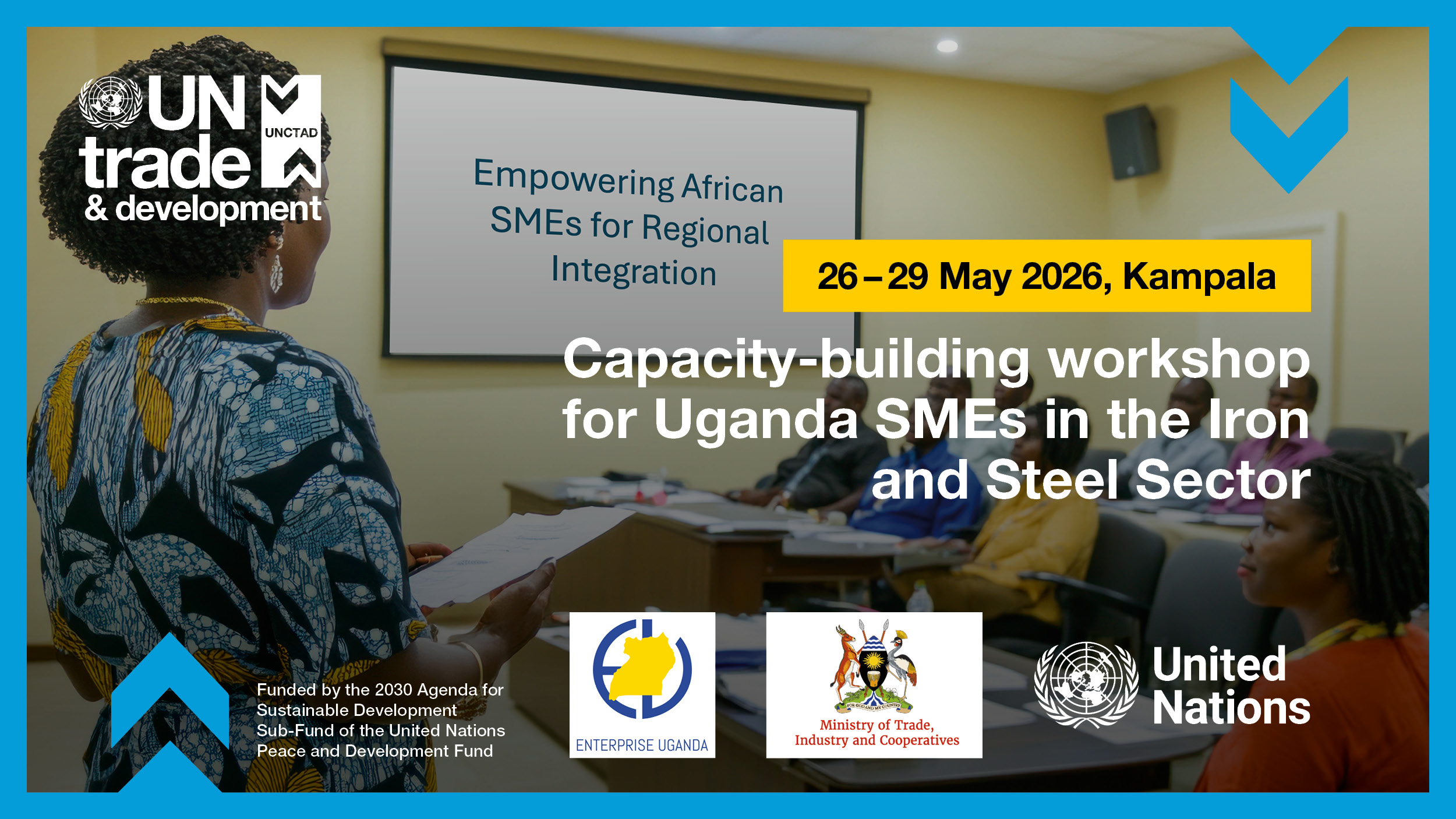
In this context, UNCTAD, in collaboration with the Ministry of Trade, Industry and Cooperatives of Uganda, the Resident Coordinator’s Office in Uganda, and the Enterprise Uganda, delivers a training workshop for Uganda SMEs in the iron and steel sectors. The training aims to strengthen the capacity of up to 20 small businesses all over Uganda to support their integration into regional and continental value chains.
Key objectives of the workshop include:
- Strengthen entrepreneurial competencies through the EMPRETEC methodology;
- Improve SMEs’ understanding of regional value chains in the EAC and AfCFTA frameworks;
- Strengthen technical capacities related to standards, certification, and quality compliance;
- Improve SMEs’ access to finance and investment readiness;
- Promote institutional support mechanisms and industrial support services for SMEs.
Participants will also benefit from post-training coaching and networking opportunities.
Participating SMEs were selected based on the following eligibility criteria:
- Small and medium-sized businesses with 5 to 100 employees
- Assets from UGX 10 to 360 million
- Companies involved in iron and steel sector activities, including mining, steel fabrication & metal works, machinery components, welding, machining, & metal processing, recovering, remanufacturing & recycling, industrial maintenance & metal services
- Interested/engaged in cross-border trade (EAC or under the AfCFTA)
- Committed to attend all sessions.
