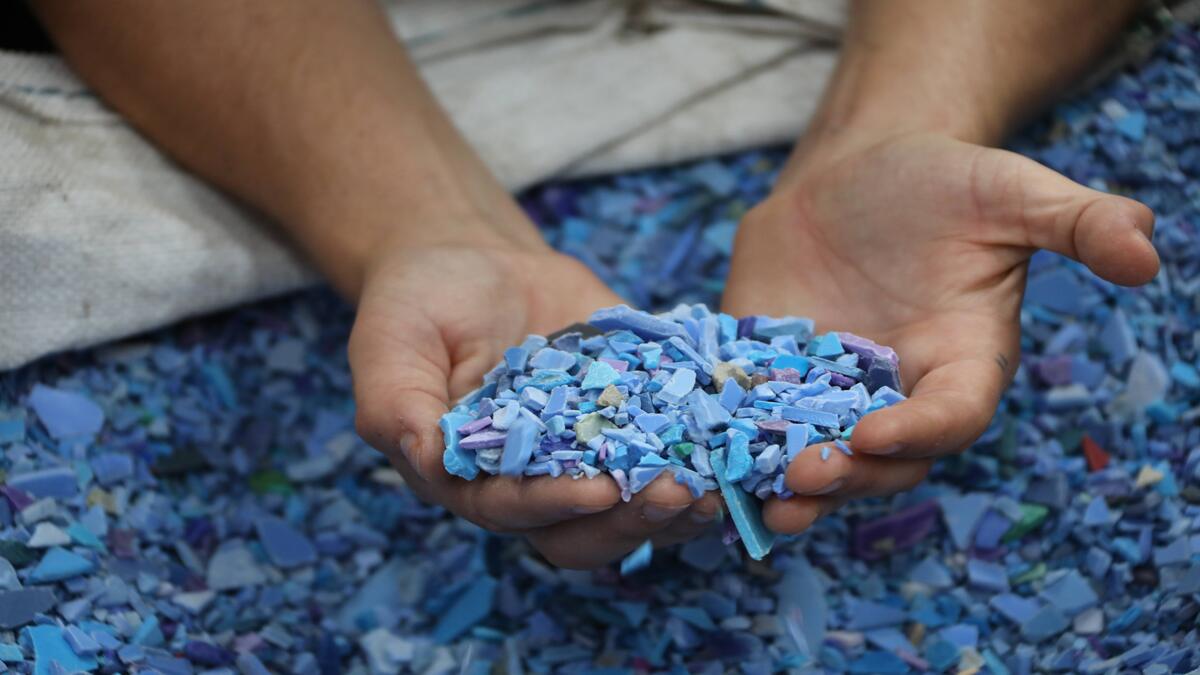
Plastic waste is a growing problem, and the need for viable, scalable recovery models is more urgent than ever. Yet the gap between ambition and implementation remains significant. With the global plastics treaty process advancing slowly, regional frameworks, trade-linked mechanisms, and national policy are increasingly where plastics governance is being shaped in practice.
Since 2020, UNCTAD’s SMEP Programme, funded by UK-FCDO, has supported plastics end-of-life interventions across Sub-Saharan Africa and South Asia, testing practical approaches to collection systems, recycling models, traceability, alternative materials development, and community integration under real-world conditions. As the programme approaches its conclusion, this three-part webinar series brings together some of the practitioners, policymakers, and technical experts involved in that work to share what they have learned.
The aim is to examine which approaches are most likely to be viable, which require ongoing support, and what evidence from these projects can contribute to wider debates on plastics governance, funding design, and circular economy practice.
Series Objectives
The series aims to:
- Share practical learning from SMEP-supported projects, with an emphasis on which approaches are most likely to be viable, which require ongoing support, and what practitioners would do differently;
- Examine what traceability, standards, and regulatory alignment can realistically deliver for small enterprises in low-capacity contexts;
- Explore the policy infrastructure needed to bring innovation in plastic substitutes and alternatives to scale, and the risks of unintended consequences where that infrastructure is absent;
- Connect implementation experience to wider regional and multilateral governance discussions, including trade-linked approaches and biodiversity linkages, and;
- Offer evidence for donors and programme designers on how flexible, adaptive funding enables learning and iteration.
The Sessions and Speakers
Session 1 – Making plastics recovery models viable | 7 May
For anyone designing, funding, or operating plastics recovery systems, one of the hardest questions is where genuine commercial viability ends and subsidy-dependence begins. This session draws on enterprise experience in Kenya and Ghana alongside a regulatory perspective from Kenya’s National Environmental Management Authority (NEMA) to examine which components of plastics recovery models prove viable in practice, and what that means for how programmes and funders structure their support.
Speakers:
– Mr. Christian Mang’eli, Mr Green Africa, Kenya
– Mr. John Adelegan, RiverRecycle, Ghana
– Mr. David Ong’are, Director of Compliance, Kenya National Environmental Management Authority (NEMA)
Session 2 – Traceability, standards and regulatory alignment | 13 May
Rigorous traceability can be the difference between accessing carbon offset markets and investment, or being locked out of them entirely. But compliance requirements can also place unrealistic burdens on small enterprises. This session brings together enterprise experience from Nigeria, a national regulatory perspective from Ghana and a standards-setting perspective from Kenya to examine what proportionate, workable traceability looks like in practice.
Speakers:
– Mr. Victor Boyle-Komolafe, Founder and CEO, GIVO, Nigeria
– Ms. Judith Osei-Kumi, Environmental Protection Agency (EPA), Ghana
– Ms. Marxine Waite, Environmental Coalition on Standards (ECOS), Kenya
Session 3 – Substitutes, compostability and regional pathways | 20 May
For policymakers and regional bodies, the challenge with plastic substitutes is rarely a shortage of innovation. It is the absence of the policy infrastructure needed to bring that innovation to scale. This session examines where substitutes and compostable materials offer genuine value, where they risk being oversold, and what the East African Community’s legislative process on single-use plastics tells us about what regional harmonisation can and cannot achieve.
Speakers:
– Ms. Faith Macharia, Partner, Africa Legal Network (ALN) Kenya
– Mr. Ebenezer Laryea, Associate Professor, Aston University / Project Director, FreshPPact SMEP Project
– Mr. Henrique Pacini, Economic Affairs Officer, UN Trade and Development (UNCTAD)
All sessions will be moderated by Ms. Zoë Lenkiewicz, Founder of Global Waste Lab and Lead Author of the UN Global Waste Management Outlook 2024.
