
For three decades, the UN Trade and Development TrainForTrade Port Management Programme has supported port communities in developing countries in building more efficient and competitive ports for the future. Through its English-, French- and Spanish-speaking networks, the Programme has reached countries across Africa, Asia, Europe, and Latin America and the Caribbean, supported by a network of port partners.
The Programme connects port professionals across regions, providing a platform for knowledge exchange, peer learning, and South–South and Triangular cooperation. At the heart of the Programme are case studies developed by participants to address real-world challenges within their ports, making them not only recipients of solutions, but actors in the construction of their own future. These case studies require research, analytical, communication, and creative skills and aim to develop concrete solutions while considering the future sustainability of ports. Collectively, they contribute practical solutions towards achieving the United Nations Sustainable Development Goals (SDGs).
This session will bring together representatives from the three linguistic networks to showcase relevant case studies and how their recommendations have been implemented in practice. Participants will share achievements, challenges, and lessons learned, demonstrating how solutions and experiences born in one port can inform and inspire others across the wider network.
Existing Members, Partners, and Financial Contributors:
General
- IAPH
- IHMA
- WISTA
English-speaking Network
- Ghana – Ghana Ports and Harbours Authority (GPHA)
- Kenya – Kenya Ports Authority (KPA)
- Maldives – Maldives Port Limited (MPL)
- Namibia – Namibian Ports Authority (NAMPORT)
- Nigeria – Nigerian Ports Authority (NPA)
- Philippines – Philippines Port Authority (PPA)
- United Republic of Tanzania – Tanzania Ports Authority (TPA)
- United Kingdom – Belfast Harbour Commissioners
- Ireland – Dublin Port Company
- Ireland – Port of Cork Company
- Ireland – Irish Aid
French-speaking Network
- Cameroon (2) – Port Autonome de Douala (PAD), Port Autonome de Kribi (PAK)
- Cote d’Ivoire – Port Autonome d’Abidjan (PAA)
- Gabon – Office des Ports et Rades du Gabon (OPRAG)
- Guinea – Port Autonome de Conakry (PAC)
- Haiti – Autorité Portuaire Nationale (APN)
- Mauritania – Port Autonome de Nouakchott, Port de l’Amitié (PANPA), Port de Ndiago
- Senegal – Port Autonome de Dakar (PAD)
- Togo – Port Autonome de Lomé (PAL), Conseil National des Chargeurs du Togo (CNCT), Chambre de Commerce et d’Industrie du Togo (CCIT)
- Tunisia – Office de la Marine Marchande et des Ports (OMMP)
- French government (at inception)
- France – Port de Marseille Fos
- France – Nantes Saint-Nazaire Port
- France – HAROPA Port
Spanish-speaking Network
- Argentina – Agencia Nacional de Puertos y Navegación (ANPYN), Puerto Comodoro Rivadavia, Puerto Bahia Blanca, Puerto Madryn
- Bolivia – Puerto Jennefer, DGIMFLMM - Ministerio de Defensa
- Dominican Republic – Haina International Terminals (HIT), Puerto Santo Domingo Sansouci
- Peru – Autoridad Portuaria Nacional (APN)- Ministerio de Comercio Exterior y Turismo (MINCETUR)
- Panama – Maritime Policy Bureau (MPB)
- Uruguay – Centro de Navegación (CENNAVE), Instituto Nacional de Logística (INALOG)
- Guatemala – Comisión Portuaria Nacional (CPN)
- México – Secretaría de Marina, Administración del Sistema Portuario Nacional Veracruz, Ensenada, Manzanillo y Lazaro Cardenas
- Spain – Gijon Port Authority
- Spain – Valencia Port Authority
- Spain – Las Palmas Port Authority
- Spain – Cartagena Port Authority
- Spain – Vigo Port Authority
- Spain – Santander Port Authority
- Spain – Puertos del Estado (Regulator for the 28 Port Authorities of Spain)
- Spain – Ministry of Economy, Trade and Enterprise, Spain (MINECO)
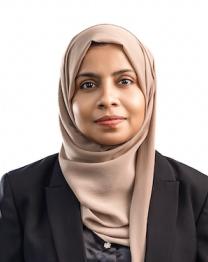
Ms. Aishath Shimla is the Chief Learning & Development Officer at Maldives Ports Limited (MPL), where she leads initiatives focused on workforce development, institutional capacity building, and professional training.
Prior to her current role, Ms. Shimla served as a lecturer at the MPL Port Training Center from 2012, delivering port management modules and supporting the development of training programmes for both the port and corporate sectors. During her career with MPL, she has also overseen the development of two regional port projects and held a range of operational and administrative leadership positions, including responsibility for the Cargo Clearance Department. She began her career with Maldives Ports Limited in 2001 as an Assistant Secretary and progressed through multiple managerial roles over more than two decades of service.
Ms. Shimla holds an MSc in Maritime Affairs (Port Management) from the World Maritime University, as well as postgraduate degrees in Business Administration and Human Resource Management.
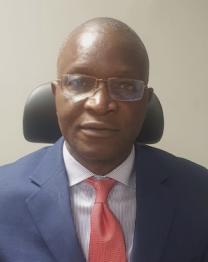
Adegbite Joseph Adewumi is the Assistant General Manager, Planning and Monitoring, in the Corporate and Strategic Planning Division of the Nigerian Ports Authority, where he supervises and coordinates strategic planning, traffic and revenue modelling, management reporting, operational performance monitoring, and the tracking of programmes, policies, and capital projects to support management decision-making.
Prior to his current role, he served in a variety of functions across the Nigerian Ports Authority, including assignments in Corporate and Strategic Planning, Special Duties, Monitoring and Regulatory Services, Operations, and Tariff and Billing. He also served as Personal Assistant to the Executive Director Marine and Operations, Personal Assistant to the Managing Director, and Special Assistant to the General Manager, Eastern Ports. He joined the Authority in 1992 as a Commercial Officer.
Mr. Adewumi holds a degree in Economics from the University of Ibadan, Nigeria. He has also completed extensive professional training and certifications in port management, shipping, environmental protection, organizational transformation, corporate governance, public-private partnerships, and leadership development, including programmes delivered by the Institute for Infrastructural, Hydraulic and Environmental Engineering (IHE Delft), the Lloyd’s Maritime Academy, the World Maritime University, the United Nations Trade and Development (UNCTAD), and the Japan International Cooperation Agency (JICA).
