

Key points
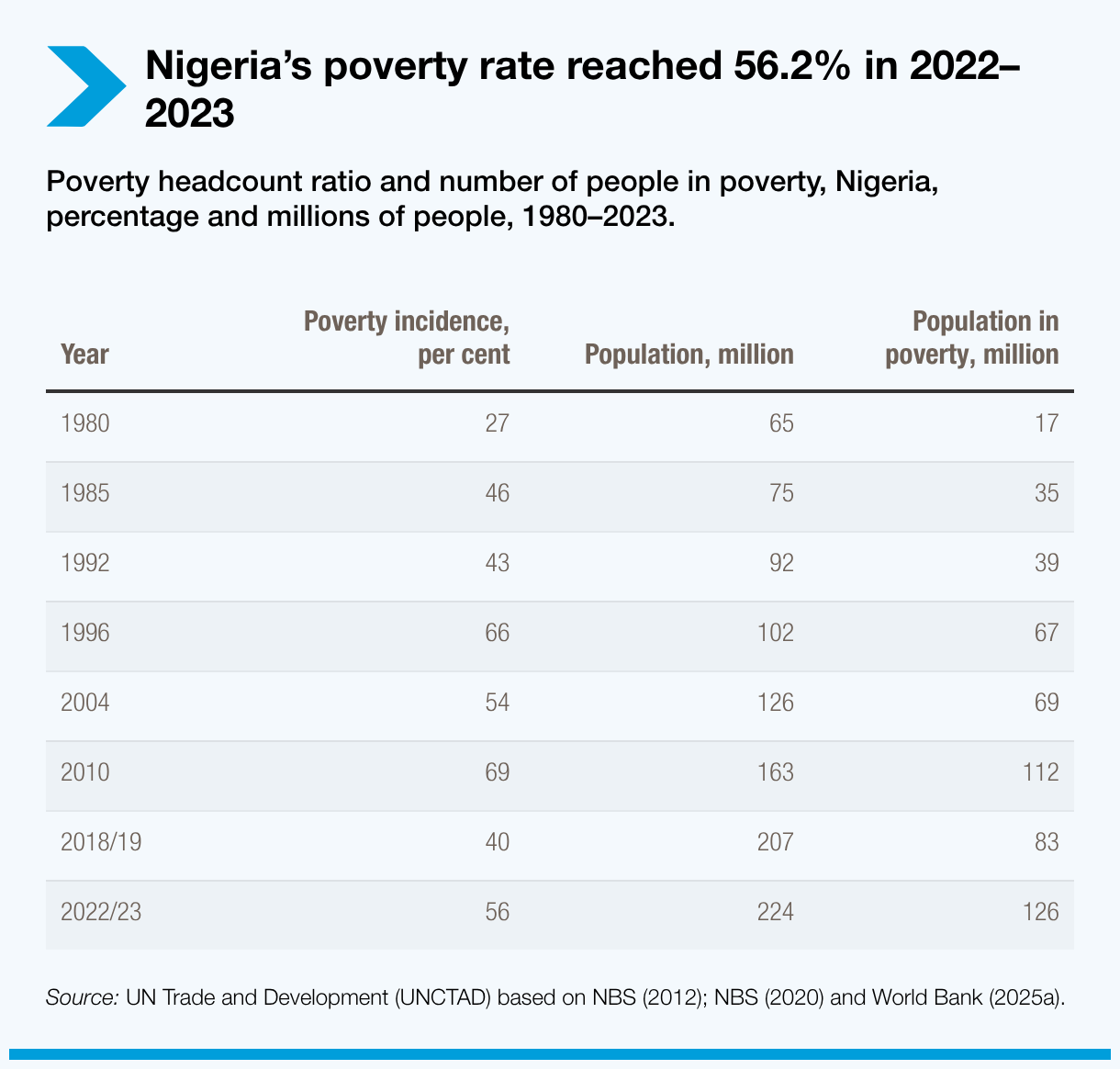
- Poverty rose from 40.1% to 56.2% between 2018–2019 and 2022–2023, leaving 126 million people below the national poverty line.
- Extreme poverty is well above the lower-middle-income average. In 2022, 41.8% of Nigerians lived below $3 a day, versus 14.4%.
- Multidimensional poverty is more widespread in rural and northern Nigeria. In 2022, 72% of rural residents were multidimensionally poor, versus 42% of urban residents.
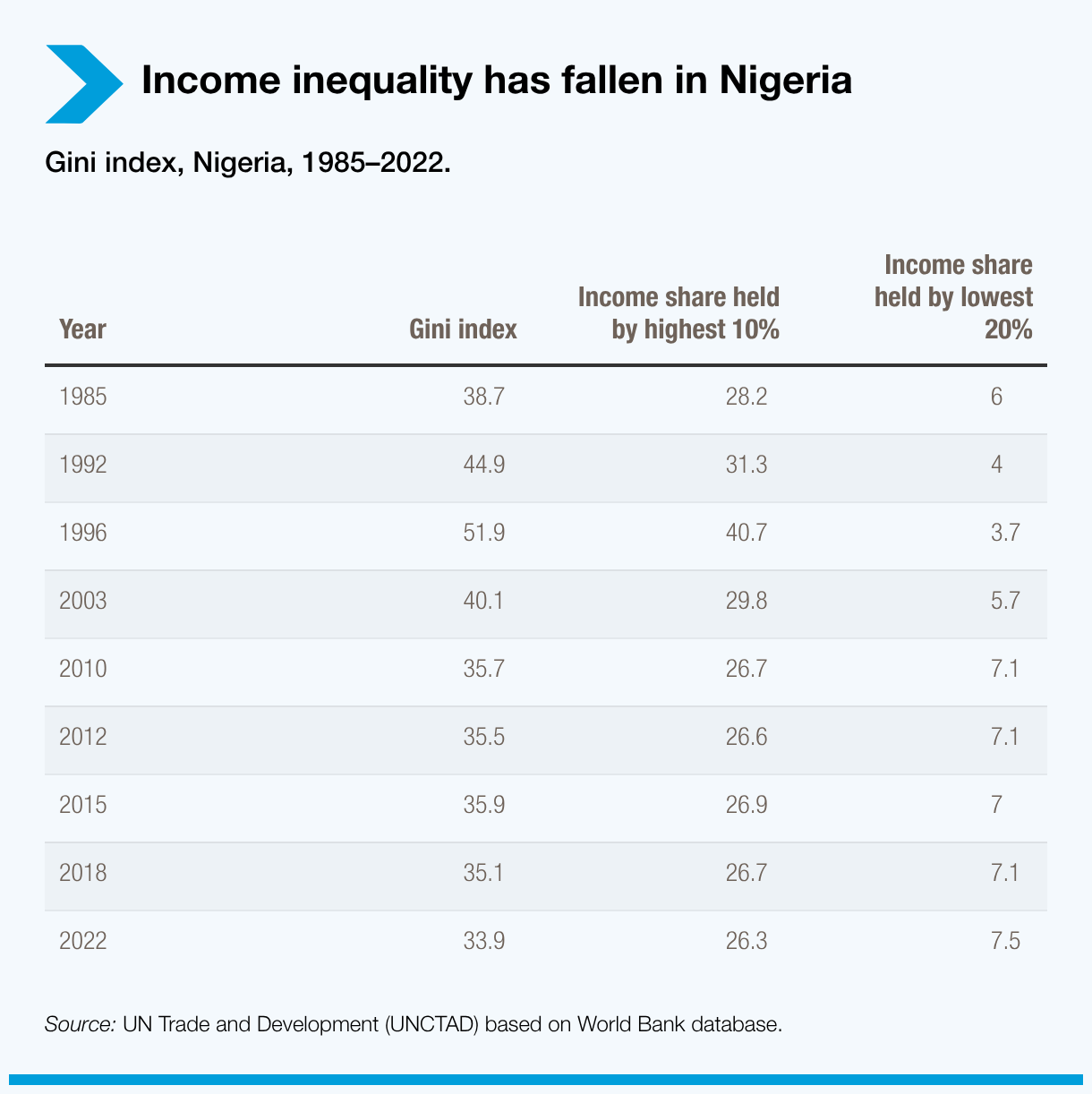
- Inequality has fallen over time, even as poverty remains high. The Gini coefficient declined from 51.9 in 1996 to 33.9 in 2022.
- Nigeria has many programmes to reduce poverty. The challenge is to implement them effectively, expand their reach and secure long-term funding.
Poverty remains widespread in Nigeria despite the country's considerable economic potential. Inequality has declined over time, but poverty has risen in recent years.
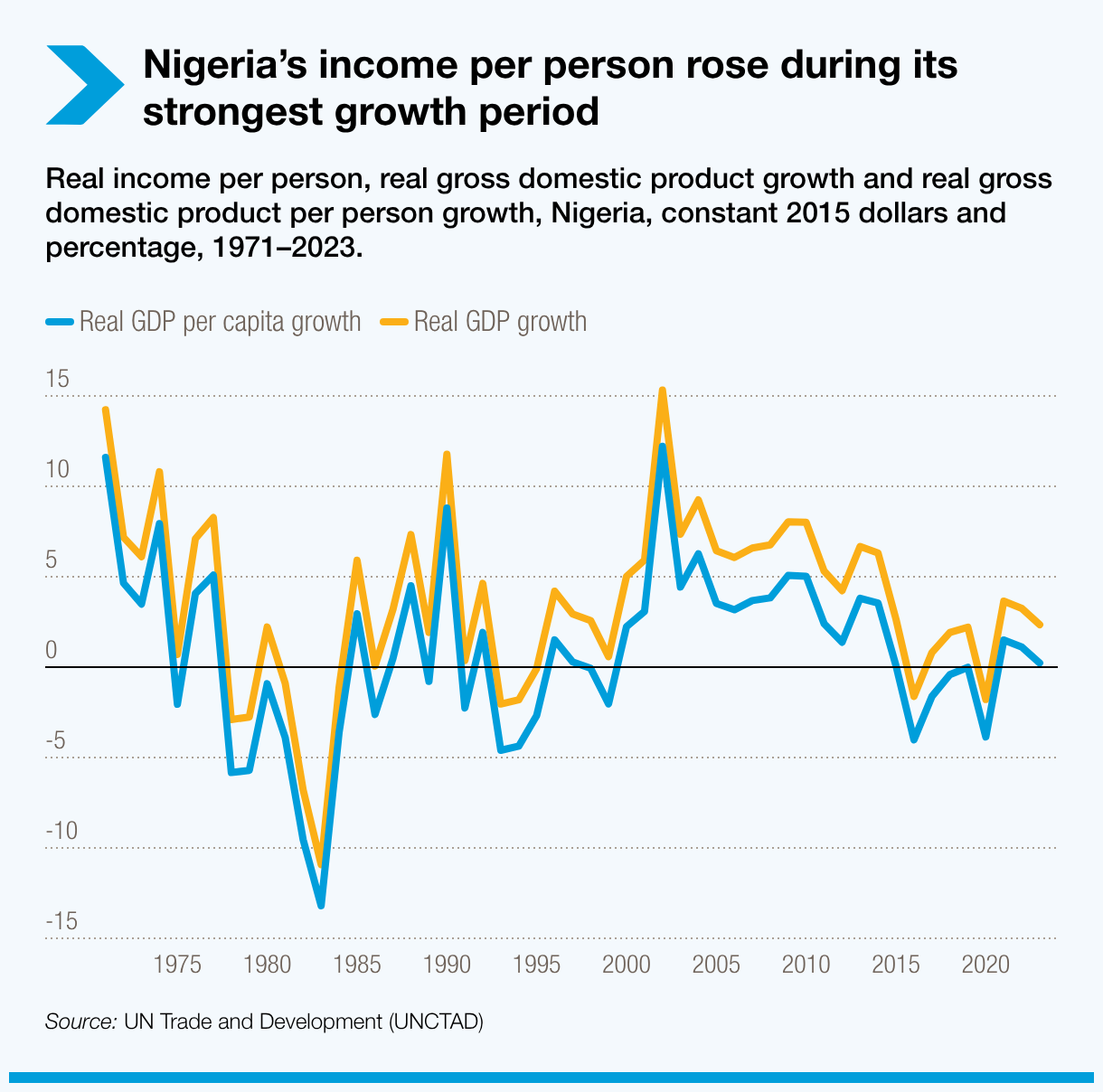
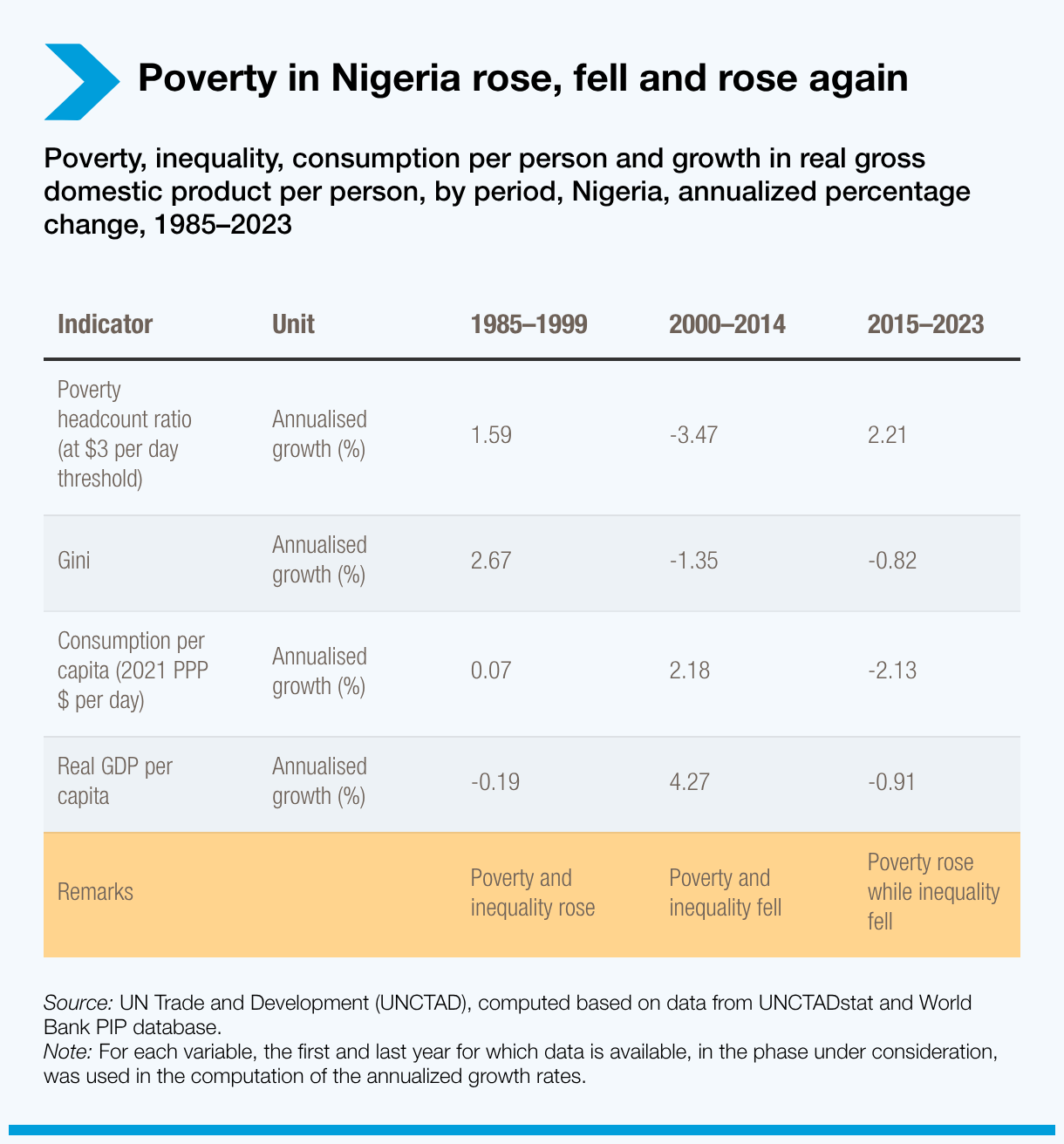
The report links these trends to economic performance. Average annual real gross domestic product (GDP) growth was 7.15% between 2000 and 2014, when poverty and inequality both fell. It slowed to 1.97% between 2015 and 2023, while real GDP per person declined by an average of 0.35% a year. Poverty rose during this period, even as inequality continued to fall.
The report identifies weaker growth as the likely main driver of rising poverty.
Poverty is rising again after earlier gains
Recent household survey data show a marked deterioration:
- Poverty at the national poverty line rose from 40.1% in 2018–2019 to 56.2% in 2022–2023
- The number of people living in poverty increased to 126 million
- Extreme poverty reached 41.8% in 2022, based on the international poverty line of $3 a day
The report links the latest increase in poverty to slower economic growth, declining consumption per person and shocks including the COVID-19 pandemic, supply disruptions and rising inflation. It calls for stronger productive capacities – the resources, skills and production links that enable an economy to produce goods and services – as well as more effective social protection and better-targeted support.
Poverty is concentrated in rural areas and the north
The multidimensional poverty index, which measures deprivation across four dimensions – health, education, living standards and work and shocks – indicates that 62.9% of Nigerians, or about 133 million people, were multidimensionally poor in 2022.
The incidence of multidimensional poverty was 72% in rural areas, compared with 42% in urban areas. The north-east and north-west recorded the highest multidimensional poverty index scores, while the incidence reached 91% in Sokoto.
The report links these differences to economic activities, household size, education, infrastructure, urbanization, fiscal capacity, insecurity and conflict. It calls for better education, infrastructure and economic opportunities, particularly in poorer regions.
Inequality has fallen, but poverty remains high
One positive finding is that income inequality has declined over time. The Gini coefficient, a measure of income inequality, rose from 38.7 in 1985 to 51.9 in 1996, before falling to 33.9 in 2022.
The report identifies a striking recent contrast: from 2015 to 2023, poverty rose while inequality fell. It says slower economic growth was likely the main driver of rising poverty, while the improvement in income distribution dampened the impact of weaker growth.
The challenge is turning programmes into results
Nigeria has adopted numerous development plans and anti-poverty initiatives. The report concludes that the country is not short of programmes.
The report identifies weaknesses in implementation, scale, coverage, targeting, coordination and sustainable financing. It recommends building productive capacities, raising agricultural productivity, improving social protection, broadening political participation and representation for vulnerable groups, strengthening local governments and improving mechanisms for identifying people living in poverty.