

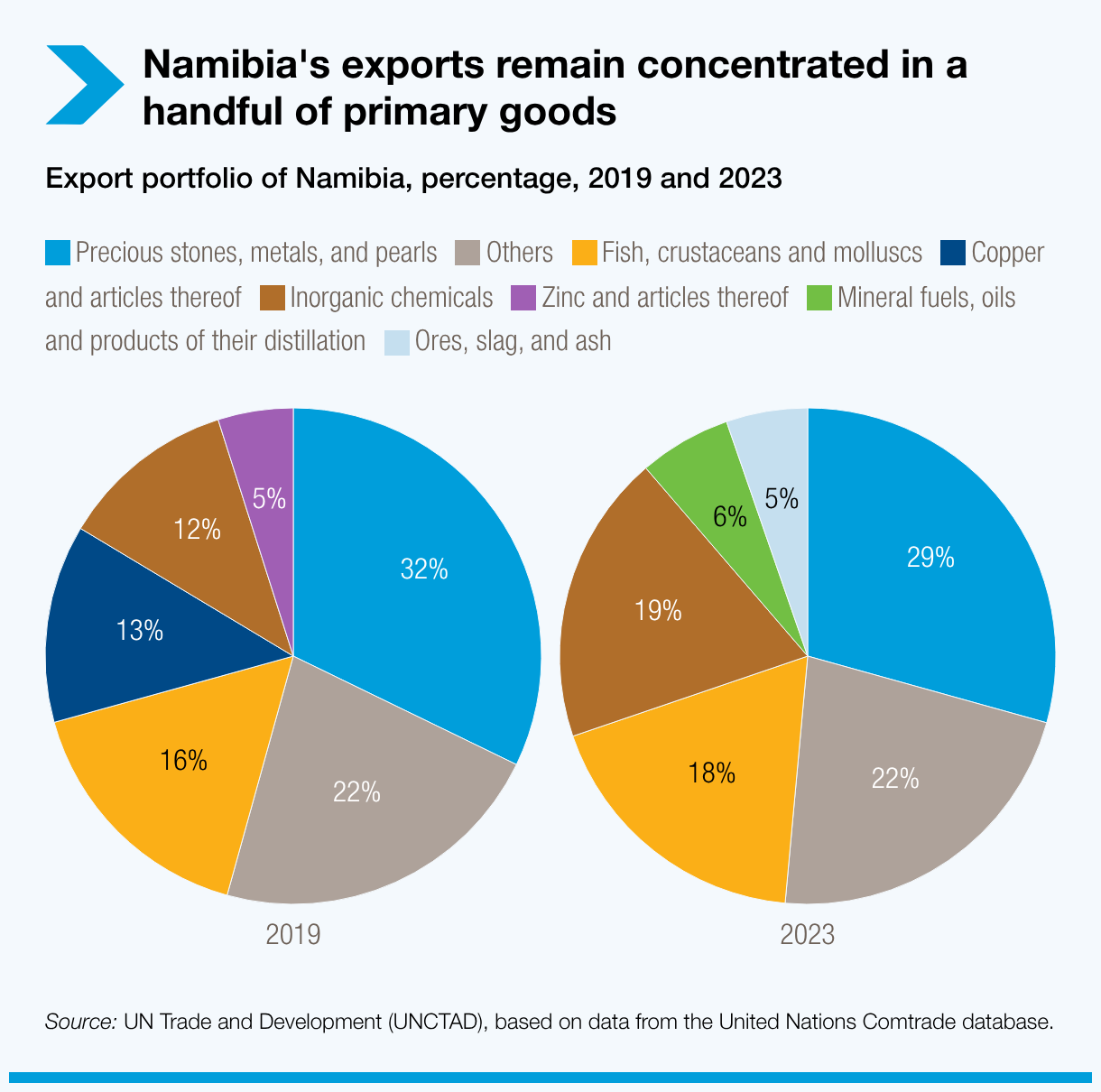
Namibia’s economy remains heavily dependent on a narrow set of primary commodity exports. This leaves it exposed to external shocks and price volatility.
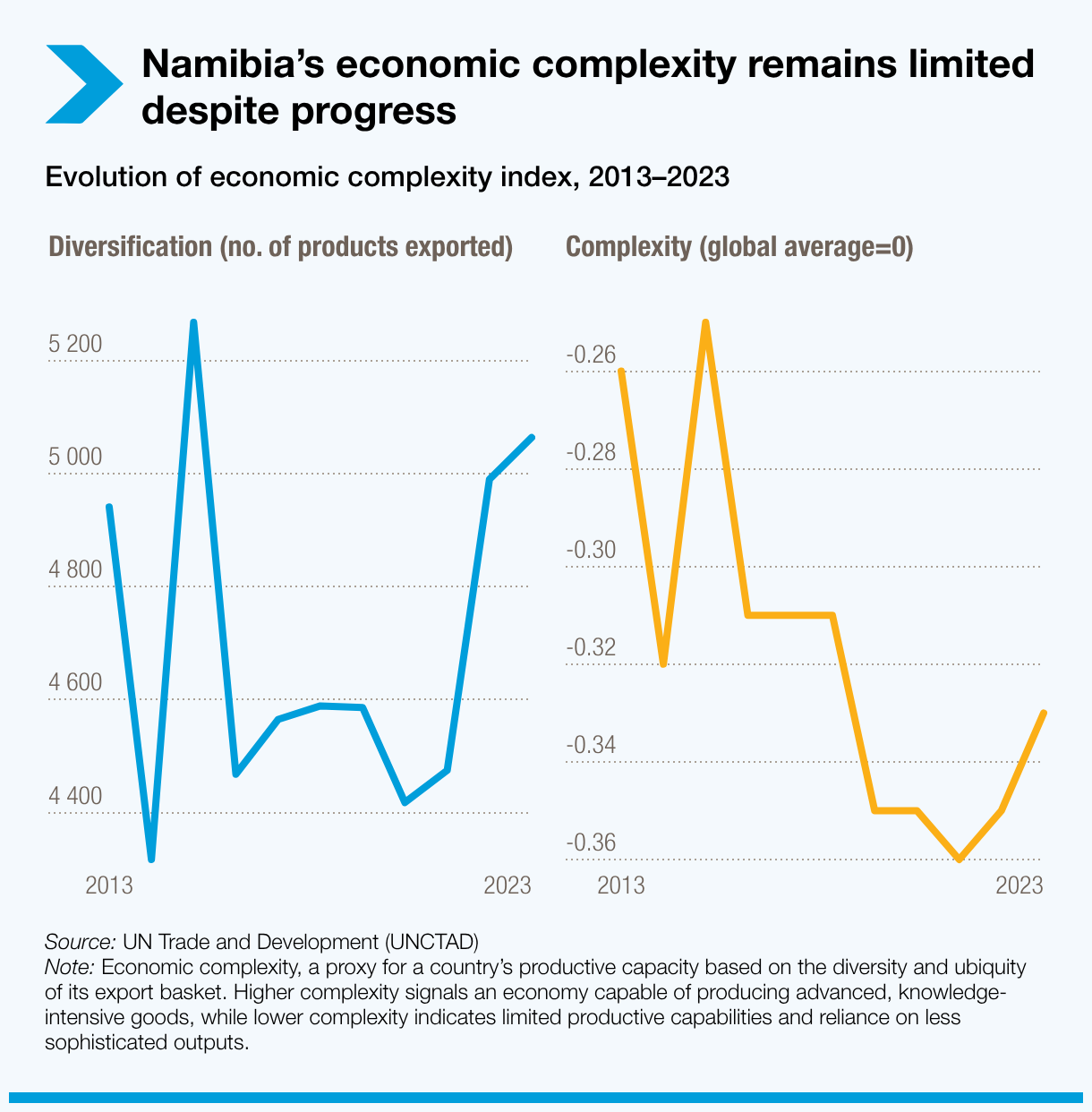
In this report, UN Trade and Development (UNCTAD) sets out an evidence-based roadmap to help the country leverage its critical energy transition minerals – including uranium and rare earths – to drive value addition, industrial upgrading and broader economic diversification.
Using economic complexity and product space analysis, combined with stakeholder consultations, the study identifies concrete product-level opportunities within and beyond critical energy transition minerals value chains.
It proposes a sequenced, capability-based strategy to strengthen domestic processing, expand manufacturing and create jobs. Sustainability and regional integration are embedded at the core of the strategy.
353 product opportunities highlight diversification potential
The analysis identifies 353 promising diversification opportunities aligned with Namibia’s existing productive capacities. These include products linked to critical energy transition minerals, as well as complementary sectors such as chemicals, iron and steel, and machinery and mechanical appliances. These sectors can help build capabilities needed for deeper upgrading over time.
Regional markets offer strong potential. Within the Southern African Development Community (SADC), key destinations – South Africa, the United Republic of Tanzania and the Democratic Republic of the Congo – represent $334.5 million in potential exports. Beyond SADC, Egypt, Morocco and Nigeria are identified as important partners. Import substitution opportunities are also significant, with 68 products valued at $116.8 million across 14 sectors.
To turn potential into results, the report recommends prioritizing high-potential products. Product-specific action plans should address standards, finance, skills and infrastructure. The 300+ product dataset can serve as a practical tool for investment promotion and industrial policymaking.
Systemic capacity gaps limit scale-up
Namibia’s challenge is not a lack of opportunities. It is a set of systemic capacity gaps.
- Access to finance is the most binding constraint, affecting 7% of validated products.
- Access to machinery and technology constrains 5%
- Market access and competitiveness affect 1%.
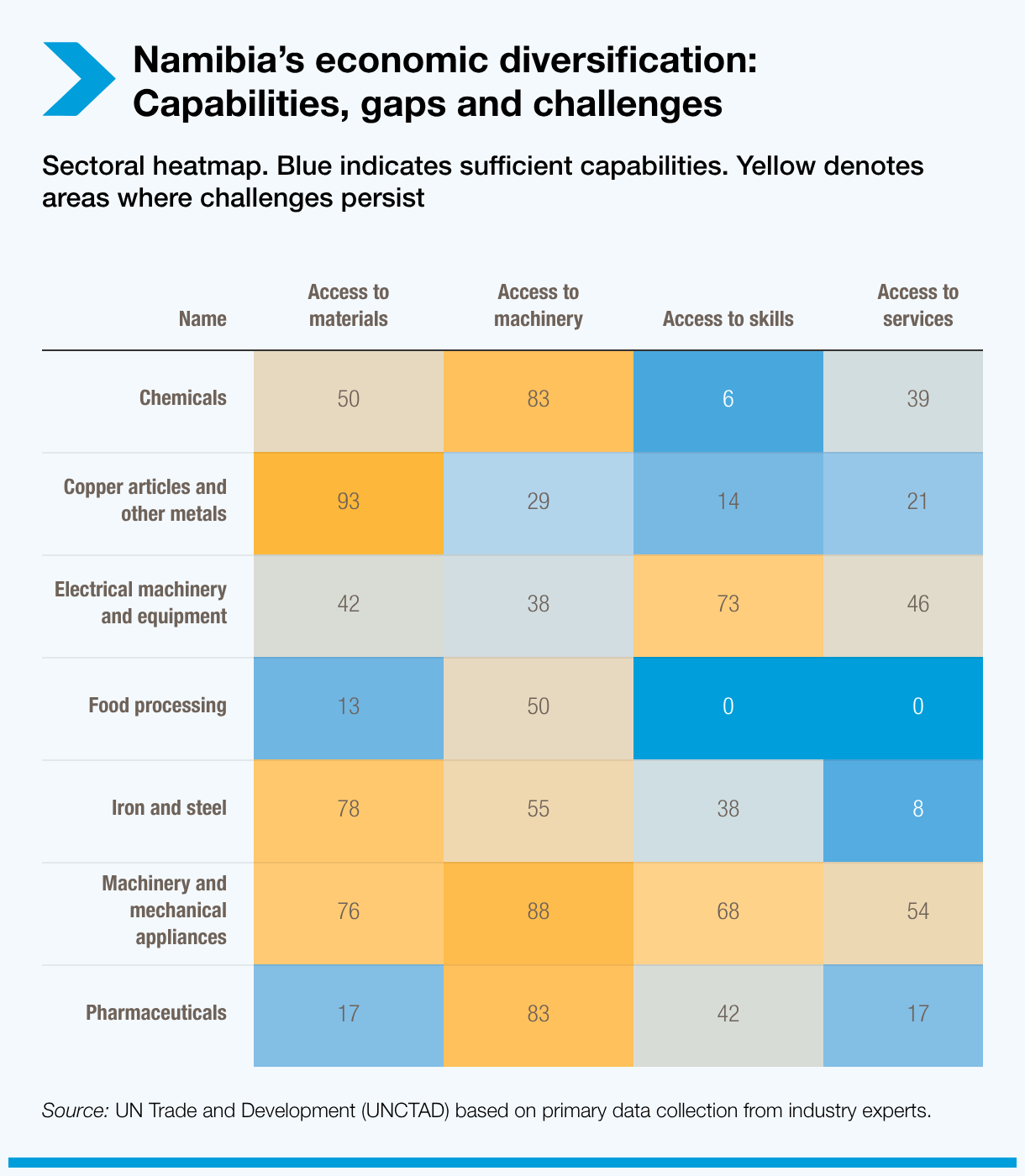
Skills shortages are particularly acute in technologically intensive sectors. Access to qualified labour is cited as a barrier for 73.1% of electrical equipment products and 68.3% of machinery products. Capital-intensive sectors such as pharmaceuticals, machinery and iron and steel face overlapping constraints in finance, inputs and technology.
The report calls for coordinated, cluster-based policy packages. These should jointly address skills, finance, technology, services and infrastructure. Dedicated investment facilitation mechanisms – including public–private task forces – can help de-risk projects. Strategic infrastructure, co-investment models and streamlined regulatory approvals are key.
Targeted policy instruments can unlock production
Rather than creating new institutions, the report proposes operationalizing existing frameworks through targeted instruments. These focus on five binding areas:
- Skills and applied training
- R&D and technology access
- Patient and de-risked finance
- Services and trade support
- Spatial industrial infrastructure
Public procurement and sustainability act as cross-cutting levers.
More than 30 skills interventions are outlined. These include strengthened apprenticeships, dual training systems and advanced technical specializations in areas such as mechatronics, computer numerical control (CNC) machining and pharmaceuticals.
An integrated, industry-aligned skills ecosystem is essential. Universities, TVET centres and firms must work together to ensure curricula match industrial needs.
On finance, the report highlights blended mechanisms, diversification bonds and designated facilities. These can mobilize capital for higher-risk, high-impact projects, including green refining, recycling hubs and circular-economy pilots.
Export finance and development bank credit lines can help firms invest in green machinery, robotics and digital monitoring technologies.
Sustainability and regional integration are central
Industrial expansion brings environmental risks. Water and soil pollution are particularly acute in pharmaceuticals and electrical machinery. Biodiversity pressures are notable in chemicals and electrical equipment.
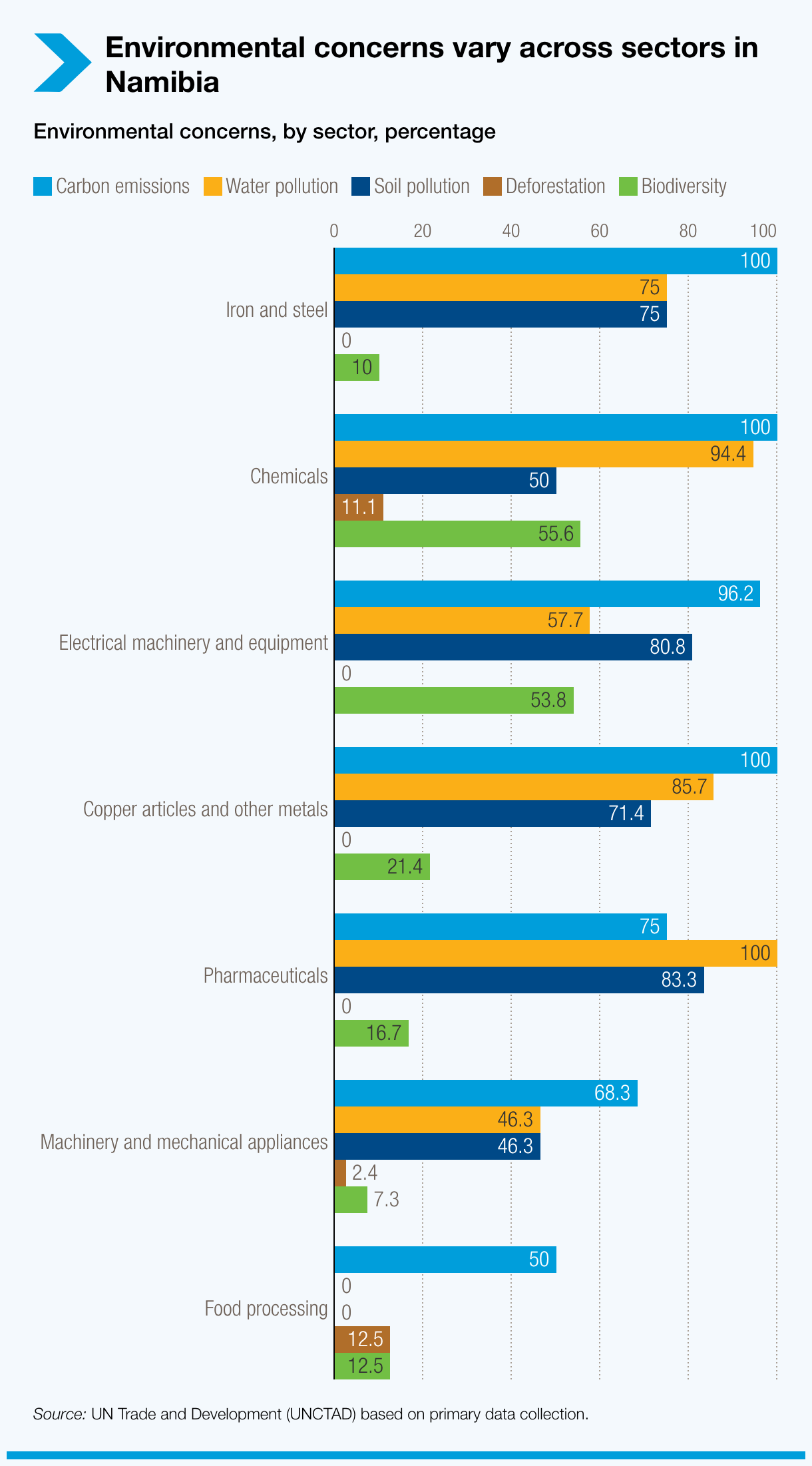
Circularity – including recycling, reuse and waste reduction – must be integrated across value chains. This includes e-waste regulations and reverse logistics systems.
Gender equity, SME participation and regional integration must also be embedded. Strengthening intra-African trade under SADC and the African Continental Free Trade Area can position Namibia as a regional supplier of value-added products rather than a raw material exporter.
By combining data-driven analysis with stakeholder validation, the report provides a practical roadmap for diversification. Closing capability gaps, prioritizing strategic product clusters and coordinating delivery through a time-bound, multi-institutional platform can help transform mineral wealth into sustained, diversified and inclusive growth.