
Building capacities for implementation of globally recognized sustainability disclosure requirements
UNCTAD's Intergovernmental Working Group of Experts on International Standards of Accounting and Reporting (ISAR) hosts annual workshops to enhance corporate transparency, focusing on IFRS implementation, sustainability reporting, and SME needs.
These sessions, held in Geneva, provide practical guidance for developing countries, focusing on capacity-building, high-quality standards, and harmonization to promote investment.
Substantive agenda item for the workshop:
- Practical implementation of climate-related disclosure by entities in the public sector.
- Inter-regional exchange of experiences: Strengthening sustainability reporting to foster sustainable finance and investment in selected developing countries in Asia and Latin America.
Registration
Online registration is mandatory for all those wishing to attend the meeting and is required for inclusion in the list of participants.
Logistics
The session will be held with physical participation in Room XVI, Building A of the Palais des Nations.
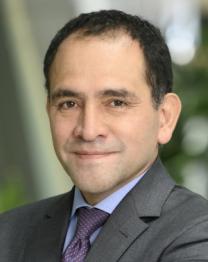
Arturo Herrera is the Global Director for Governance, World Bank.
Mr. Herrera, a Mexican National, has extensive experience in governance, as a practitioner and from the development and academic perspectives. He joined the World Bank in 2010 as Senior Public Sector Management Specialist in the Latin America and the Caribbean (LAC) region. He held various positions in the Bank including as Sector Manager in LAC, Practice Manager in Governance Global Practice for the LAC and East Asia and the Pacific regions in the Global Unit before leaving the World Bank Group in 2018.
Between 2018 and 2021 he has held leadership positions in the Government of Mexico as Co-Head of the Finance Team in Presidential Transition Team, Deputy Finance Minister and, most recently, as Minister of Finance and Public Credit. He was also the Chairman of Mexico’s Exchange Commission and Member of the Board of the Central Bank.
As Global Director for Governance, Mr. Herrera’s priorities include leading the formulation of strategy and engagement of the Bank’s work on public institutions and country-level governance, especially in fragile, conflict and violent settings; maximizing the effectiveness of operational support for public financial management and public procurement; fostering excellence in the Governance Practice’s work on public sector administration and operational support for legal and judicial reforms.
Mr. Herrera has also taught Monetary and Banking and Macro and Micro Economics at both El Colegio de Mexico and New York University where he completed his doctoral studies in Economics.
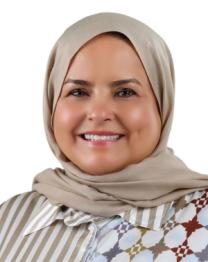
Ms. Al-Sahli is a senior financial management and public-sector governance professional with more than 30 years of experience in accounting, auditing, financial control, and public-sector administration in the State of Kuwait. She currently serves as President and Acting Vice President of the State Bureau for Financial Control, with senior leadership responsibilities in the financial oversight of government ministries and public institutions.
Prior to joining the Bureau, Ms. Al-Sahli spent more than 20 years at the Ministry of Finance, where she held progressively senior positions, including Financial Controller, Senior Financial Controller, Director of the Financial Control Department, and Director of the Financial Controllers’ Office. Her areas of expertise include financial oversight, budgeting, financial reporting, auditing, institutional governance, and digital transformation. She chairs several Bureau committees, including those responsible for final accounts, budget preparation, and organizational development, and serves on its Digital Transformation Steering Committee. She holds a bachelor's degree in accounting from Kuwait University.

Celine Chan leads the development of sustainability reporting standards at the International Public Sector Accounting Standards Board (IPSASB). She supports strategic initiatives to deliver the IPSASB strategy and the development of the first international Climate-related Disclosures Standard for the public sector, the IPSASB SRS 1, which was issued in January 2026 and becomes effective January 1, 2028. The Board continues development of its next standard, reporting on climate-related outcomes of public policy.
Prior to joining the IPSASB, Celine was in Accounting Policy and Advisory at one of Canada’s major banks and started her accounting career at Deloitte.
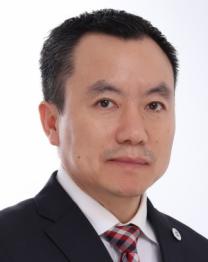
Karma Tenzin is Assistant Director General at the INTOSAI Development Initiative (IDI), where he leads efforts to strengthen sustainable, high-quality, and impactful audit practices across Supreme Audit Institutions (SAIs). He oversees initiatives on Sustainable Audit Practices, Audit Quality Management Systems, and cooperative audits on critical themes such as the SDGs, climate action, public debt, and inclusion. Karma also spearheads IDI’s work on audit and assurance of sustainability reporting in the public sector. He manages IDI’s collaboration with ASOSAI to advance regional capacity development.
Before joining IDI, Karma served for 13 years at SAI of Bhutan, where he held key roles as Assistant Auditor General, Head of the Policy and Planning Division, and a member secretary of the SAI Audit Committee. As a member of the Accounting and Auditing Standards Board of Bhutan (AASBB), Karma contributed significantly to the adoption of International Financial Reporting Standards (IFRS), IFRS for SMEs and International Standards on Auditing (ISAs). He also chaired the Technical Working Committee of AASBB, guiding critical reforms in public sector financial reporting. Karma is a Fellow of the Association of Chartered Certified Accountants (FCCA), United Kingdom.
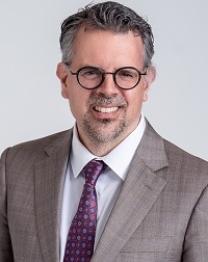
Bailey has served as the Partner leading KPMG’s Public Sector Accounting Advisory service line for Canada since 2015 and has more than 25 years of experience advising the public sector on complex accounting and reporting matters. Bailey leads KPMG’s Public Sector ESG Centre of Expertise, and the Global International Public Sector Accounting Standards Working Group. Bailey is driving KPMG’s response to IPSASB’s climate disclosures and tangible natural resources standards, and collaborations with governments around the world to prepare for voluntary implementation.
Bailey has worked with more than 300 governments on sustainability reporting for climate and biodiversity. Through his work Bailey has developed adaptations of the International Sustainability Standards Board guidance specific to the public sector.
Bailey is a board member of the Natural Assets Initiative. Bailey led the collaborations between KPMG, the Natural Assets Initiative, and the Intact Centre on Climate Change, and more than 50 industry partners to develop a voluntary disclosure framework designed to align with the Taskforce on Nature Related Financial Disclosures.
Educational Background
- NYU Stern Center for Sustainable Business, Executive Certificate in Advancing Sustainability (March 2022)
- Certified Internal Auditor (CIA), The Institute of Internal Auditors, 2004
- CPA Ontario/ Institute of Chartered Accountants of Ontario (appointed Fellow by CPA Ontario in 2024)
- BComm, Queens University – 1996
Connect with Bailey Church at KPMG in Canada.
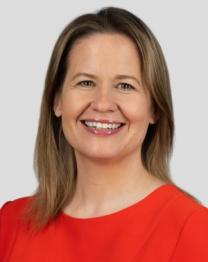
Emmeline is Head of Sustainability in ACCA’s Policy and Insights team, where she leads international research, events and strategic projects focused on climate action, sustainable supply chains, climate technology, and green and ethical finance.
She brings extensive experience in sustainability, policy and professional education, translating global sustainability challenges into practical action for business and finance professionals. Her work spans international climate engagement, including ACCA’s participation at successive COPs, green finance research, climate technology and climate finance, as well as professional learning initiatives with leading global organisations.
Emmeline has chaired high-level discussions with regulators, policymakers and business leaders and led international climate action summits across Vietnam, Cambodia and Turkey. She is a regular speaker on sustainable business, finance and climate action.
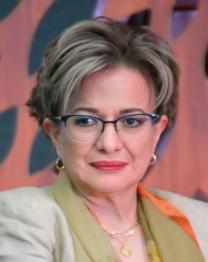
Elsa Beatriz García Bojorges is the President of the Mexican Financial and Sustainability Reporting Standards Board – CINIF (Mexico). She also was Chair of the Intergovernmental Working Group of Experts on International Standards of Accounting and Reporting (ISAR Group) 38th Session and Chair of Latin American Regional Partnership for the promotion of sustainability and SDG reporting, in 2022. She was a CINIF representative at the Sustainability Standards Advisory Forum (SSAF) of ISSB – IFRS Foundation; she is the CINIF representative at the Emerging Economies Group of IASB – IFRS Foundation. She was a Board Member of Group of Latin American Standards Setters (GLASS). She has been an Independent Board Member of several public and private companies.

Oscar Nuñez del Arco is a senior executive with more than 25 years of experience, leading multidisciplinary teams and projects in international companies and important government entities in private and public sectors.
International consultant, university professor, speaker at national and international events, MBA, Master in Finance, Certified Public Accountant, Postgraduate Diploma in Public Management and International Certification of IFRS, IPSAS and GRI, among other studies..
Currently, he works as the General Director of General Direction of Public Accounting in Ministry of Finance in Peru; and also, as President of Accounting Standards Council.
He also acts as President of the Regional Alliance for Sustainability Reporting (ARL) in Latin America.

Cintia Catota holds a degree in Accounting and Auditing and a Master's degree in Auditing and Finance. She is certified in International Public Sector Accounting Standards by CIPFA and in SAP ERP Procurement.
Since 2019, she has served as the National Director of Non-Financial Assets and Inventories at the Undersecretariat of Government Accounting. She has participated in the implementation of the Fixed Assets and Inventories Module and in the convergence to IPSAS for the Ecuadorian Public Sector.
She represented Ecuador in the Intergovernmental Group of Experts on International Standards of Accounting and Reporting (ISAR) from 2022 to 2023.
She has been invited to speak at national and international conferences at universities, accounting associations, and other organizations.
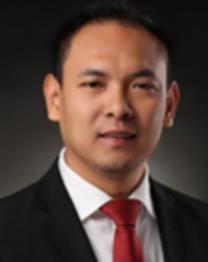
Atty. Joseph Anthony Siapno Perez is an experienced legal professional based in Manila, Philippines. He holds a Bachelor of Laws and a degree in AB Legal Management from the University of the East.
He currently serves as Chief of Staff in the Office of Commissioner Rogelio V. Quevedo at the Securities and Exchange Commission (SEC), where, among other duties, he manages administrative operations, conducts legal research, and reviews contracts. His extensive career spans public and international service. Before he was appointed as SEC Chief of Staff, he served as Deputy Chief of Staff and Legal Assistant at the SEC, Court Legal Researcher for the Supreme Court of the Philippines, and Consular Assistant at the Canadian Embassy in the UAE.
He is also an Alumnus of the 6th ASEAN+ Financial Regulators’ Executive Programme (AFREP+), a high-level capacity-building initiative designed for senior regulatory officials across Southeast Asia.
AFREP+ is a joint project supported by the Monetary Authority of Singapore (MAS), Temasek Foundation and the Lee Kuan Yew School of Public Policy (LKYSPP). The Programme focuses on strengthening institutional governance, central bank policy coordination, and regulatory oversight across the ASEAN Region.
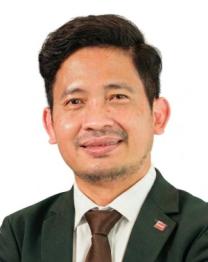
Sim Chankiriroth advises the Accounting and Auditing Regulator of Cambodia (ACAR) on national financial reporting standard-setting and digital reporting infrastructure. He serves as Assistant to the Prime Minister of Cambodia on financial technology and private sector finance, is a member of the ASEAN MSME Advisory Board, and contributes to global SME discussions through the ACCA Global Forum for SMEs. As founder of BanhJi, a digital finance platform with financial reporting layer serving MSMEs, he brings practitioner perspective on how proportional standards interact with the digital infrastructure required to operationalize them at scale.
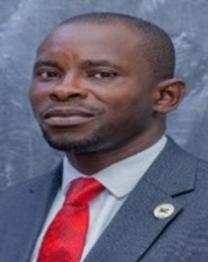
Oladele Oladejo is a financial and sustainability reporting expert with nearly 20 years of experience in IFRS, sustainability reporting, regulatory compliance, capacity development, and strengthening national corporate reporting systems. He is a Fellow of the Institute of Chartered Accountants of Nigeria (ICAN), holds the ACCA Diploma in International Financial Reporting, and is an alumnus of Lagos Business School (Pan-Atlantic University) and the University of Ibadan.
He is currently the Head of Strategic Projects at the Financial Reporting Council of Nigeria (FRC Nigeria) and Project Manager of Nigeria’s Accounting Development Tool (ADT) initiative, implemented in collaboration with UNCTAD-ISAR. In 2025, he was appointed to the Africa Regional Partnership on Sustainability and SDG Reporting, contributing to regional efforts to advance sustainability and SDG reporting and the implementation of international reporting standards.
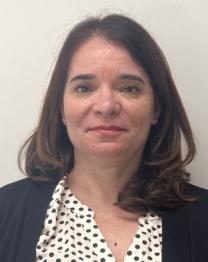
Flavia Fernández Arizmendi is Vice President of the Colegio de Contadores, Economistas y Administradores del Uruguay (CCEAU) and Chair of its Commission on Management and Sustainability Reporting. She is Associate Professor of Accounting and Taxation and Director of the Center for Graduate Studies at the Faculty of Economics and Administration, Universidad de la República, Uruguay.
She is a Certified Public Accountant and holds an MBA and postgraduate qualifications in Cost and Management Accounting, Agribusiness and Food Management, and Sustainability Reporting.
Her work focuses on sustainability, corporate reporting, management, and emerging technologies. She has contributed to capacity-building initiatives and guidance for implementing international sustainability disclosure standards in Uruguay and participates in regional and international initiatives linked to UNCTAD-ISAR, IFAC and GLENIF.
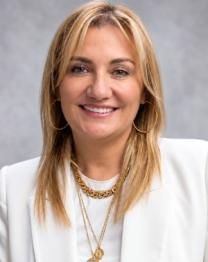
Sara Porras Mora represents the Costa Rican Institute of Certified Public Accountants before the Group of Latin American Accounting Standard Setters (GLENIF) and the Latin American Regional Sustainability Association (ARL). She has served as General Auditor of a financial institution that promotes SME development in Costa Rica since 2010 and has more than 30 years of experience in financial, operational, and risk auditing in the public and financial sectors. She is a Certified Public Accountant, holds a Master’s degree in Public Accounting, and specializes in IFRS and IPSAS, corporate governance, internal control, sustainability, and risk management. She holds international certifications in risk management and GRC, along with specialized training in sustainability, and has experience in international consulting and university teaching.

Professor Kelly Mua Kingsly is a Cameroonian finance engineer, public-finance expert and international financial governance practitioner, with over two decades of experience spanning sovereign finance, financial markets, sustainable finance and development. He serves as Chairman of the Board of the African Trade & Investment Development Insurance (ATIDI), Director of Finance Operations of the State at Cameroon’s Ministry of Finance, and Cameroon’s representative to regional financial-market institutions. He has contributed to public-finance reform, debt resilience, climate-finance mobilisation and sustainable-finance frameworks, linking fiscal policy, investment and accountability. A public-finance specialist, professor, researcher and author, he has published on green financing, ESG-oriented public financial management and sustainable development. His work focuses on translating global sustainability standards into practical institutional and financial systems for developing economies.
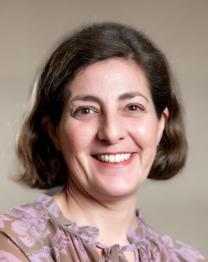
Luisa E. Bernal is a Senior Policy and Partnerships Adviser at UNDP's Sustainable Finance Hub. She is an international development professional with experience in sustainable finance, trade, and inclusive growth. She has been closely involved in the development and launch of the Taskforce on Inequality and Social-related Financial Disclosures (TISFD), leading policy engagement, partnerships, and resource mobilization efforts. Her work focuses on sustainable finance taxonomies, disclosure frameworks, and stakeholder engagement to support more inclusive and sustainable financial systems globally.

Yuyu Chen is a Programme Analyst at the United Nations Research Institute for Social Development (UNRISD), working at the intersection of sustainability measurement and reporting, AI governance, social and solidarity economies, youth leadership and sustainable development. Her work focuses on translating research and policy frameworks into practical tools, partnerships and international initiatives that connect governments, UN entities, academia, the private sector and civil society.
She contributes to UNRISD’s work on the Sustainable Development Performance Indicators (SDPI), which advances a context-based approach to sustainability measurement and reporting. Rather than assessing corporate performance primarily through relative improvements or comparisons with peers, SDPI examines performance in relation to broader social, economic and environmental thresholds and transformation objectives. Her work supports the communication, dissemination and application of SDPI, as well as engagement with partners in the sustainability reporting and sustainable finance ecosystem.
Yuyu also works on UNRISD’s AI for Equity and Inclusion initiatives and coordinates international programmes connecting technological change with questions of equity, accountability and social development. She has contributed to initiatives including the Research Coalition on AI for Equity and Inclusion and the International Forum “We, the Youth” (IFWY), which has engaged more than 26,000 young people from over 160 countries. Across these areas, her work explores how measurement frameworks, emerging technologies and new forms of economic organization can contribute to more equitable and sustainable development.
