
REGISTER HERE (In-person only)
About the event
As part of the National Plastic Summit 2026 in Abuja, UNCTAD is organizing a session bringing together policy makers, industry and practitioners to discuss regional approaches to single-use plastics controls in West Africa, material standards (such as biodegradation and compostability standards), as well as plastic substitution roadmaps for key sectors.
The summit will bring together government, industry, finance, civil society, innovators and other actors from the plastics value chain to advance practical pathways for plastics circularity in Nigeria and across Africa.
The National Plastic Summit 2026 is convened by the Nigeria National Plastic Action Partnership, hosted by the Policy Innovation Centre, with the Government of Nigeria through the Federal Ministry of Environment, and with strategic support from the Global Plastic Action Partnership, hosted by the World Economic Forum. Selected sessions are being co-developed with partners, including UNIDO and the Sustainable Manufacturing and Environmental Pollution Programme, supported by the United Kingdom and implemented in partnership with UN Trade and Development (UNCTAD).
UNCTAD’s Session 2,“Building a West African plastics governance architecture,” will focus on regional approaches to the control of unnecessary and problematic single-use plastics, the development and adoption of material standards for plastic alternatives, and the role of plastic substitution roadmaps in supporting a practical transition away from avoidable plastic use.
Why this session matters
Plastic pollution is one of the most urgent environmental and development challenges facing West Africa. Single-use plastics accumulate in coastal areas, rivers, urban waterways and waste systems, creating environmental risks and economic costs for fisheries, tourism, agriculture and public services. While several countries in the region have adopted national measures to address plastic pollution, fragmented policy approaches can limit their effectiveness, particularly where plastics and plastic products move through regional and cross-border trade.
The session will explore how a more coordinated West African plastics governance architecture could help close regulatory gaps, reduce the circulation of non-compliant products, strengthen incentives for industry compliance and create economies of scale for sustainable alternatives. It will examine how regional cooperation can support national implementation while helping to build a more predictable market for circular and substitute materials.
The discussion will also focus on three enabling conditions for a durable transition: controls on unnecessary and avoidable plastics, agreed material standards and clear substitution roadmaps. Standards for biodegradable and compostable materials are essential to ensure that alternatives perform as claimed, do not create new environmental risks and can be recognized across borders. Substitution roadmaps can translate policy ambition into sector-specific transition pathways, identifying which products can be substituted, on what timeline and under what enabling conditions.
Building on UNCTAD and SMEP programme experience
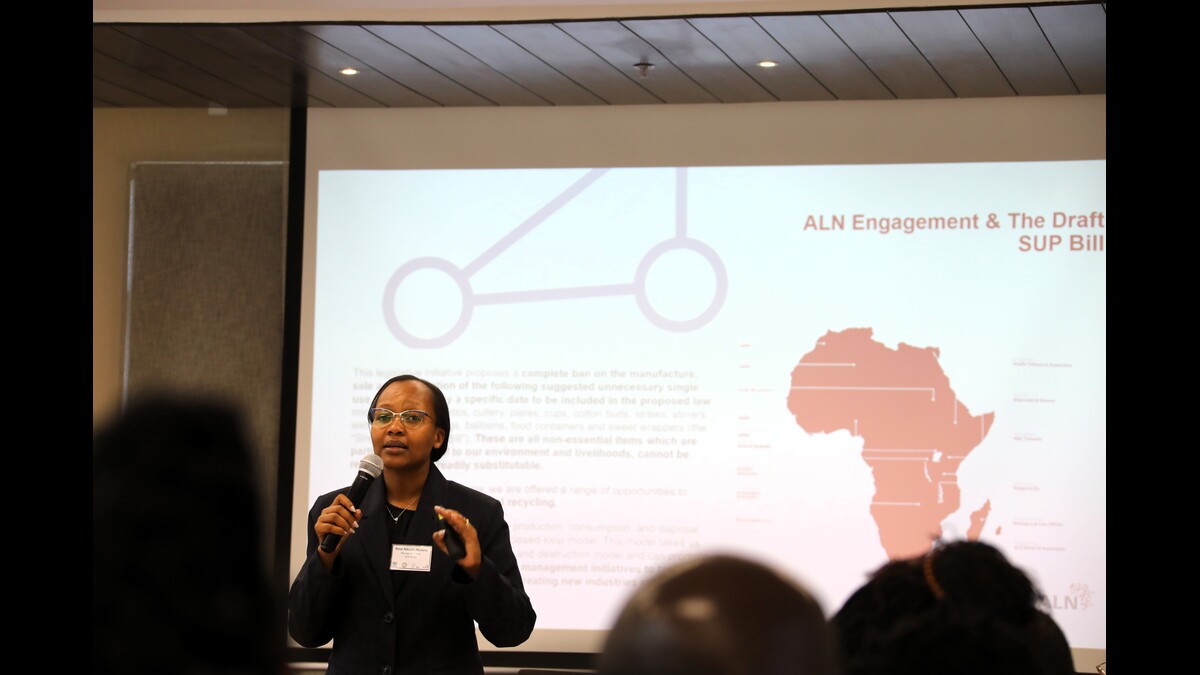
The session builds on UNCTAD and SMEP Programme work supporting regional and national efforts to reduce plastic pollution and promote circular economy solutions. In East Africa, UNCTAD, in collaboration with FlipFlopi Project and the Africa Legal Network, has supported dialogue on harmonized approaches to single-use plastics, including through a 2023 workshop in Nairobi that brought together officials, parliamentarians and policymakers from seven East African Community member countries to discuss national laws, regional policy harmonization, plastic substitutes, plastic trade and a draft bill to harmonize controls on unnecessary single-use plastic items.
The session also draws on UNCTAD’s support to work on biodegradation and compostability standards in Kenya, Nigeria and Ghana. A 2024 UNCTAD workshop convened national standards bodies, environmental regulators and other stakeholders to discuss policy and standards frameworks for biodegradable and compostable plastics and alternative materials, with a view to strengthening cross-border cooperation and regulatory harmonization.
In West Africa, the session will draw lessons from the FreshPPact project, supported under the SMEP Programme, which helped catalyse Ghana’s national policy blueprint for plastic alternatives and non-plastic substitutes. The blueprint, launched in Accra in April 2025, provides a strategic framework to support Ghana’s transition towards locally produced and sustainable alternatives, including biodegradable packaging and other substitute materials.
Objectives
The session aims to generate concrete, actionable proposals to support follow-up work on plastics regulation harmonization, material standards and targeted substitution opportunities in West Africa. It also seeks to support dialogue between East and West African countries to share regulatory and implementation experiences.
Specifically, it will seek to advance discussion on:
- possible instruments for ECOWAS-level harmonization of single-use plastics controls, drawing lessons from the East African experience;
- priority material standards for biodegradable, compostable and other alternative materials that could be developed, adopted or recognized at regional or continental level;
- how national plastic substitution roadmap methodologies, including the FreshPPact experience in Ghana, could be extended to additional West African countries and eventually coordinated at regional level.
Programme
June 4th, 12:00–13:00
Scene-setting: The case for a West African plastics governance architecture
Ms. Marxine Waite, Environmental Coalition on Standards (ECOS) - First speaker and moderator
From national blueprint to regional model
Mr. Ebenezer Laryea, Aston University / FreshPPact Project Director, UNCTAD SMEP grantee, Ghana
Nigeria's national perspective
Mr. Chukwudi Nwabuisiaku, Deputy Director, Inspection & Enforcement Department, National Environmental Standards and Regulations Enforcement Agency (NESREA), Nigeria
Insights from the private sector
Mr. Sameer Mohinani, Head of Business Operations, Mohinani Group, Nigeria
Ms. Victoria N’dee Uwadoka, Public Relations, Public Affairs & Sustainability Lead, Nigeria, Nestlé
Open floor discussion
Questions and discussion
