


Background
The 30th Conference of the Parties to the UN Framework Convention on Climate Change (COP30) took place in Belém, Brazil, in November 2025. Progress was achieved in several critical areas for developing countries, including the establishment of annual dialogues on trade and climate; a commitment to triple adaptation finance, alongside new work programmes on climate finance and aligning financial flows with low greenhouse gas emissions and climate-resilient development; and agreement to establish a new Just Transition Mechanism to enhance international cooperation. These outcomes set the stage for further advancements at COP31 in Antalya, Türkiye, in 2026, as well as other related intergovernmental forums throughout the year.
The Geneva Consensus agreed at the 16th session of the United Nations Conference on Trade and Development (UNCTAD 16) highlights UNCTAD’s role in contributing to the implementation of the UNFCCC and Paris Agreement. It calls on UNCTAD to support developing countries in identifying relevant trade and investment policies that support implementation of Nationally Determined Contributions (NDCs) and environmental goals of the 2030 Agenda; advance analytical work on the impact of trade-related environmental measures on developing countries' economies and their trade, investment flows, and current frameworks that facilitate access to technologies for sustainable development; and assist developing countries to leverage climate finance to contribute to the attainment of climate goals, address economic vulnerabilities and build sustainable productive capacities resilient to shocks caused by climate change and extreme weather events. This mandate uniquely positions UNCTAD to support member states to operationalize the COP30 outcomes and strengthen the achievement of both climate and development goals.
The event will examine key takeaways from COP30 and how these can be built upon in 2026 and beyond, with particular attention to UNCTAD’s role as the UN system’s focal point for the integrated treatment of trade, development, and interrelated issues in finance, technology, investment, and sustainable development. It is also the first opportunity to explore how the UNCTAD 16 mandate related to climate change can be operationalized in the context of multilateral climate discussions.
Format
The event will consist of three thematic panels and an opening and closing session: the first three will focus on relevant outcomes at COP30, namely around trade and investment, climate finance, and international cooperation for just transitions; while the closing session will reflect on 2026’s key moments and COP31. The event will be held in person in the Palais des Nations, Geneva and an online connection will be established for virtual speakers.
Schedule
09h30 – 10h30 : Arrivals
10h00 – 10h30 : Opening
10h30 – 11h45 : Panel 1: trade and investment
11h45 – 13h00 : Panel 2: climate finance
13h00 – 15h00 : Lunch break
15h00 – 16h00 : Panel 3: international cooperation for just transitions
16h00 – 17h00 : Closing: Looking ahead
Panel 1: trade and investment
The first panel will delve into the trade discussions in the UNFCCC. What role did trade issues play at COP30? What do the new annual dialogues mean for bringing trade and climate issues together? What contribution can UNCTAD make to ensure trade and investment can serve climate and development in line with the principles of the UNFCCC and Paris Agreement? What is the role of partnership in mobilizing investment for climate adaptation and mitigation.
Panel 2: climate finance
The second panel will focus on the main outcomes related to climate finance with particular attention to the new workstreams developed to strengthen implementation and scale climate finance. How were developed and developing countries’ needs accomodated in the final text? What are the key opportunities for developing countries emerging from these outcomes? How can implementation of climate finance-related commitments be further strengthened?
Panel 3: international cooperation for just transitions
The third panel will explore several elements across different UNFCCC workstreams which together have the potential to accelerate the capacity for countries to deliver just transitions, including the agreement to establish an institutional mechanism on just transition, a technology implementation programme, and a work programme that will explore cross-border impacts from climate-related measures. What are the next steps for these different outcomes? How can they best serve the needs and priorities of developing countries? How can synergies be sought across related intergovernmental processes to bring coherence to the pursuit of just transitions?
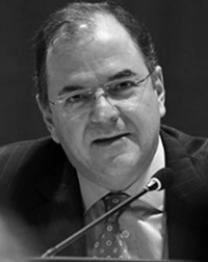
Guilherme de Aguiar Patriota as Permanent Representative of Brazil to the World Trade Organization and other economic organizations based in Geneva.
He was previously the Consul General of Brazil in Tokyo (2021-2023) and Consul General of Brazil in Mumbai (2019-2021). Mr. Patriota served as the Special Representative of Brazil to the Conference on Disarmament in Geneva (2018-2019), and before that the Deputy Permanent Representative of Brazil to the United Nations and other International Organizations in Geneva (2015-2018). A career diplomat since 1983, he has been a delegate of Brazil accredited to the Organization of American States in Washington from 1990 to 1994, the Latin American Integration Association, in Montevideo from 1994 to 1997, the Embassy of Brazil in New Zealand from 1997 to 2000, the Delegation of Brazil to the WTO and the World Intellectual Property Organization, in Geneva from 2005 to 2008, and was twice posted at the Permanent Mission of Brazil to the United Nations in New York from 2008 to 10 and from 2013 to 2015. He was International Advisor to the Brazilian Minister for Science and Technology from 2003 to 2004 and Deputy Foreign Policy Advisor to the President of the Republic from 2010 to 2013.
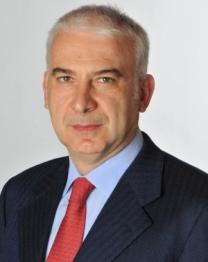
The Programmes Coordination provides strategic direction and oversight to the work of the Programmes department of the UNFCCC, comprised of the four programme divisions (Adaptation, Means of Implementation, Mitigation and Transparency). It ensures strategic, substantive and administrative coherence and synergy in the delivery of their work programmes, including in relation to the established intergovernmental processes and constituted bodies.
Prior to his current position, he was Director of the Means of Implementation (MoI) Division overseeing the areas of climate finance, technology development and transfer, and capacity building. He served as Chief of Staff for seven years, supporting two Executive Secretaries and he was also Coordinator for the United Nations Secretary-General's High-level Advisory Group on Climate Change Financing (AGF) at the United Nations Headquarters in New York. He has extensive experience on carbon markets and he served as Secretary to the CDM Executive Board (EB) as Manager in the SDM Programme at the UNFCCC secretariat.

Mr. Pedro Manuel Moreno of Spain is the Deputy Secretary-General and Acting Secretary-General of UN Trade and Development (UNCTAD).
He has over 20 years of experience of working for multilateral and intergovernmental organizations in programme, management and strategic positions both in the field and at headquarters.
He was Deputy Secretary-General of the Communication for Development Committee at the Spanish National Commission with the United Nations Educational, Scientific and Cultural Organization (1999-2004), and for the United Nations Development Programme, at the Country Office in Ecuador and, in New York City, as part of the Human Development Report team, at the Regional Bureau for Latin America and the Caribbean and at the Executive Office.
In 2014, he was appointed Chief of Staff of the Ibero-American Conference in Madrid, where he coordinated key political processes and South-South cooperation projects.
In September 2021, he was named Chief of Staff and Director of the Office of the Secretary-General of UNCTAD.
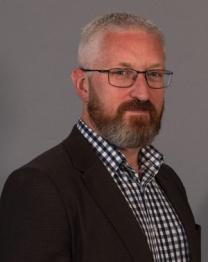
Damian Doyle is Counsellor (Climate and Energy) at the Embassy of Australia in Washington, DC, representing the Department of Climate Change, Energy, the Environment and Water (DCCEEW). He leads Australia’s climate and energy engagement with the United States across federal and subnational levels, and also covers broader environment and water policy issues. Prior to his posting, Damian worked in DCCEEW’s Net Zero Industries Division.

Rana is the Director of the Division of Energy and Climate Action at the United Nations Industrial Development Organization (UNIDO) where she oversees the organization's strategy and programmes in promoting a low carbon infrastructure powering industrialization and supporting the decarbonisation of industry in developing and emerging economies.
She has a long standing experience of 21 years in designing and implementing programmes in the energy sector in Africa and the MENA region. She also coordinates the organization’s engagement and partnerships in global energy fora. She also leads on behalf of UNIDO global initiatives such as the Clean Energy Ministerial’s industrial deep Decarbonisation initiative (IDDI).
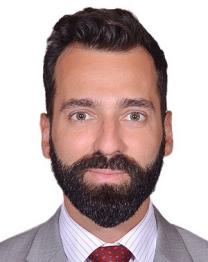
Luiz de Andrade Filho is a Brazilian diplomat and currently serves as the COP30 Presidency’s Climate Finance Coordinator.
He previously coordinated the G20 Task Force on Global Mobilization against Climate Change (2024) and the Baku to Belém Roadmap to 1.3T process (2025), advancing international efforts to scale up climate finance. He has held diplomatic postings at Brazil’s missions in New Delhi (2019–2022) and Paris (2022–2025). Between 2016 and 2019, he served as Brazil’s lead negotiator on Article 6 of the Paris Agreement, forests (REDD+), and international aviation (ICAO) and maritime (IMO) emissions reduction strategies.
Luiz holds an M.Phil. in Development Studies from the University of Cambridge and a Bachelor’s degree in International Relations from the University of Brasília.
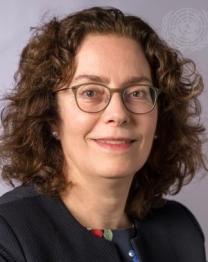
Ambassador Laura Dupuy Lasserre is a career diplomat with more than three decades of experience in multilateral, regional, and bilateral diplomacy, currently serving as the Permanent Representative of Uruguay to the United Nations in New York and as Chair of the Group of 77 and China.
She has previously served as Ambassador to the Kingdom of the Netherlands (2018–2021), Permanent Representative to the Organisation for the Prohibition of Chemical Weapons, and Permanent Representative to the United Nations and other specialized organizations in Geneva, where she became the first woman to preside over the UN Human Rights Council (2011–2012).
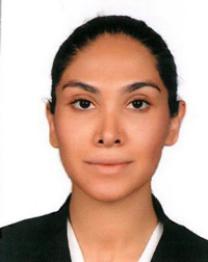
Yas Farjad is an aquaculture specialist working at the General Directorate of Maritime Affairs, Fisheries and Aquaculture within the French Ministry responsible for fisheries and aquaculture. In her current role, she is in charge of European and international affairs, as well as the economic development of the aquaculture sector.
Prior to joining the public sector, she founded and managed a company dedicated to aquaculture production and consulting services for seafood products. In this role, she worked with institutions and partners across several countries to support market analysis and identify commercial opportunities for sustainable aquaculture products.
In parallel with her professional activities, she has also contributed to scientific publications related to marine ecosystems and biodiversity, with a particular interest in microalgal communities. She holds a double master’s degree, one in marine biology and the other in fisheries and aquaculture sciences, obtained from the engineering school Agrocampus Ouest in France.
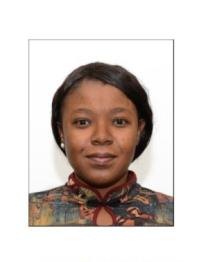
Pheladi Thalakgale is a South African Diplomat currently serving as the Deputy Director of Climate Change and Environment at the Department of International Relations and Cooperation in South Africa, where she leads the Departments work, providing Foreign Policy guidance and coordination on issues of Climate Change, Energy and Just Transitions.
Ms Thalakgale is an experienced diplomat who has served the Republic of South Africa for over 15 years including at various Embassies abroad. She is an expert on issues of Climate Change and the Environment with a substantive track record in government policy, UNFCCC diplomacy and negotiations, policy development and multilateral cooperation at the global level.
Ms Thalakgale has been at the centre of critical negotiations to address Climate Change and Just Energy Transitions, including work related to the UN SDG Agenda. She played a decisive role in COP Negotiations and Agreements since COP23, as well as a contributing to South Africa’s Climate Change national policy positions and frameworks, as well as coordinating positions of the Africa Group, G77 and China and BASIC. She further played a key role as a focal point in the work and success of the G20 Working Groups on Environment and Climate Sustainability, Energy Transitions under South Africa’s G20 Presidency.
Working closely with National and Regional stakeholders, Ms Thalakgale, continues to render her expertise and knowledge on Just Transitions, Climate Finance, and Adaptation, while representing South Africa skillfully at various international fora, on these issues.
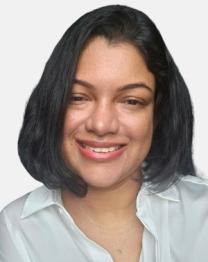
Vositha Wijenayake leads the finance negotiations for G77 and China.
A lawyer specializing in public international law with a focus on international environmental law, Vositha has close to two decades of experience in the UNFCCC and other multilateral processes and negotiations. She is also the technical lead on matters related to climate change, for the G77 and China Chair’s Office.
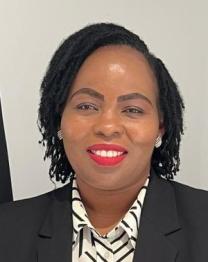
Ambassador Fancy Chepkemoi Too is the Permanent Representative of Kenya to the United Nations Office at Geneva, and is Chair of the G77 and China in Geneva this year.
Prior to her appointment in Geneva, she served in various senior positions within the Kenyan Government, including as Chairperson of Kenya’s National Environmental Complaints Committee and Director of the Kenya Revenue Authority. In 2023, she was awarded the distinguished Moran of the Order of the Burning Spear for her service. Ambassador Too is an advocate of the High Court of Kenya and has also served in several senior academic positions.
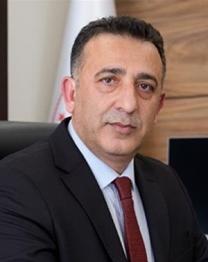
Prof. Dr. Halil HASAR is the President of Climate Change at the Ministry of Environment, Urbanization and Climate Change of the Republic of Türkiye. In this role, he leads Türkiye’s national climate policy development, coordinates the country’s engagement in international climate negotiations, and manages to advancing the COP31 Presidency preparations, including the COP31 vision and Action Agenda.
He is also closely involved in the development of Türkiye’s key climate policy instruments, including the implementation framework of the Climate Law, the establishment of the Emissions Trading System, and ongoing work on Green Taxonomy alignment. In addition, he oversees strategic efforts on climate adaptation and climate finance and strengthening resilienceoriented climate policies—supporting Türkiye’s commitment to an ambitious and implementation-driven climate agenda.
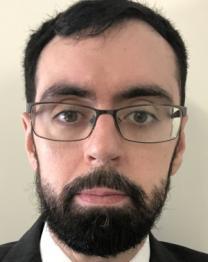
Career diplomat with the Ministry of Foreign Affairs of Brazil, Vitor is currently serving in Brasilia as Deputy Head of Climate Action.
Vitor was previously posted at the Brazilian Mission to the WTO and other Economic Organizations in Geneva, covering trade and environment. In recent years, Vitor has also worked on the Brazilian G20 Presidency, within the Task Force on a Global Mobilization against Climate Change. Assigned as part of the Brazilian delegation since COP28, he focuses on response measures, unilateral measures, and the interplay between trade and climate. Previously engaged in addressing intellectual property, pandemic responses and market access at the WTO.

Isobel Bartholomew is a climate finance specialist representing the United Kingdom in international negotiations.
She has worked across a range of domestic and multilateral platforms to advance the delivery of climate finance, including on the UK's domestic delivery, advising UK representatives to the G7 and G20 and representing the UK in negotiations under the UNFCCC such as on the New Collective Quantified Goal (NCQG) and the Standing Committee on Finance (SCF). Isobel’s career has been dedicated to public policy, with experience spanning local government, bilateral and multilateral trade negotiations, and international climate diplomacy.
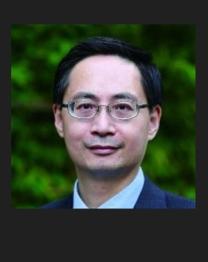
Dr. Ma is the Founder and President of Institute of Finance and Sustainability (based in Beijing).
He is also the Chairman of Green Finance Committee of China Society for Finance and Banking, Co-Chair of G20 Sustainable Finance Study Group, and Co-Chair of the Steering Committee of the Green Investment Principles for the Belt & Road.
Between 2018 and 2020, Dr Ma was the Director of Center for Finance and Development at Tsinghua University. Between 2014 and 2017, he served as the Chief Economist at the People’s Bank of China (PBOC)’s Research Bureau and a member of the central bank’s Macro-Prudential Committee. Before joining the PBOC, he worked for 13 years at Deutsche Bank, where he was Managing Director/Chief Economist/Investment Strategist for Greater China. During 1992-2000, he worked as a senior economist and economist at the World Bank and the IMF. From 1988-1990, he was a research fellow at the Development Research Center of China's State Council. Over the past decade, he provided advices to policy makers in many areas, including monetary and macro prudential policies, RMB internationalization, green finance, and the Belt & Road initiative. Dr. Ma received his Ph.D. in Economics from Georgetown University in 1994, and his master's degree in Management Science from Fudan University in 1988. He received numerous awards for his research and policy advocacy and was ranked # 1 Asia Economist by Institutional Investors for four years in a row from 2009-2012.
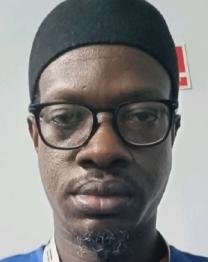
Mr Jallow, has been working for the Gambia Government for the past 14 years. First, at the National Environment Agency (NEA) as a Programme Officer for Environmental Impact Assessment, and in 2013, as the Principal Climate Change Officer at the Ministry of Environment, Climate Change, & Natural Resources. At the international level he represented his country in various climate change forums including the Clean Development Mechanisms (CDM), the Africa Carbon Forum, Regional and Global meetings as well as the Conference of Parties as one of the Gambia’s Climate change negotiators under mitigation and adaptation under the UNFCCC.
Jodie Keane is a Principal Research Fellow with the International Economic Development Group at ODI. She leads the climate, trade, and development workstream, focusing on navigating new green trade measures and other related policy spillovers, greening trade and supply chains, and developing resilient value chains. Her areas of interest also include technology transfer, critical minerals, carbon markets, and more broadly, the interaction between the climate-trade nexus.
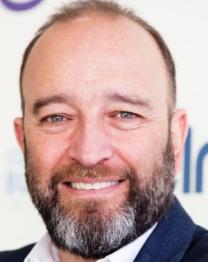
Andrew Andrea is involved in various initiatives aimed at enhancing climate action through international standards. His work includes convening the Standards Pavilion of 21 partners to discuss how standards can turn climate ambition into action. Mr. Andrea's efforts are part of a broader effort to ensure that international standards are used effectively to support climate initiatives and global goals.
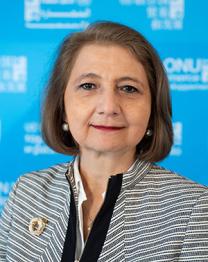
Luz Maria de la Mora is the Director of UNCTAD's Division on International Trade and Commodities. As a former Vice-Minister for International Trade and decades of government and private sector positions, Ms. de la Mora developed a career in international trade policy, negotiation, operations, and trade promotion.
During her tenure as Vice-Minister for International Trade of Mexico from 2018 to 2022, Ms. de la Mora led Mexico's trade and investment policy, overseeing fourteen free trade agreements with 51 countries. To bolster Mexico's development, she steered discussions in the World Trade Organization, the United States-Mexico-Canada Trade Agreement, Comprehensive and Progressive Agreement for Trans-Pacific Partnership, and Pacific Alliance, among others. She also coordinated policy dialogues and handled private sector consultations.
Ms. de la Mora holds a PhD in Political Science from Yale University, USA, a Master's degree in International Affairs from Carleton University, Canada, and a Bachelor's degree in International Relations from El Colegio de México, Mexico.
She is fluent in English and Spanish, and proficient in French.
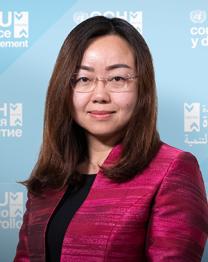
Nan has over 25 years’ experience in strategic management roles both with the United Nations and the private sector across Asia, Africa, North America and Europe. She currently leads a global team in investment and sustainable finance research, policy, investment promotion and facilitation, enterprise development, and technical assistance to governments in over 160 countries. She chairs the Governing Board of the UN Sustainable Stock Exchanges Initiative, leads the World Investment Forum and the inter-governmental Working Group on International Standards of Accounting and Reporting.
Before joining UNCTAD, she served as the Global Director of Sustainable Investments and Innovation at UNOPS, where she led a team to promote infrastructure investments in many developing countries and co-invest with DFIs and private investors. She served as UNOPS focal point in the UN Inter-agency Task Force on Financing for Development.
Previously, she served as the Head of UNDP SDG Innovative Finance and as Head of South-South Cooperation and Investment at UNDP's Asia Pacific Center in Bangkok. She led a team to engage public and private investors and developed national policy dialogues and networks on SDG investment, piloted SDG-aligned funds, bonds and projects in multiple countries. She helped to position UNDP as a pioneer in the UN on sustainable investment and innovative finance. She also held positions as Policy Specialist in Capacity Development and Public-Private Partnerships in New York and Johannesburg since 2009, overseeing a regional portfolio in Eastern and Southern Africa.
Before joining UNDP, she spent about 10 years in the private sector in China and the USA, covering market entry and investment strategy, merger and acquisition, business development and sustainability. She holds a master’s degree in business administration from Hong Kong University of Science and Technology, and participated in the Executive Leadership program at IESE, and Finance Executive program at Tsinghua University.
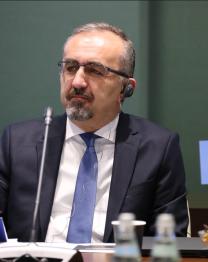
Igor Paunovic is a senior economist with degrees from the University of Zagreb, Croatia, and the New School for Social Research, New York City, USA.
Mr. Paunovic is currently with UNCTAD (United Nations Conference on Trade and Development) in Geneva working on issues related to global governance, climate change and development strategies, industrial and fiscal policy, South-South cooperation and regional integration. He is also Chief of the Climate and Development Strategy Unit. At UNCTAD, he earlier worked on economic challenges of the Least Developed Countries. Earlier, he was Chief of the Economic Development Unit of the UN Economic Commission for Latin America and the Caribbean in Mexico. Before that, Mr. Paunovic worked on fiscal issues and structural reforms in Latin American and the Caribbean countries at UN ECLAC in Santiago, Chile. At the beginning of his career, he worked as an assistant professor of economics at the University of Zagreb, Croatia
