Description
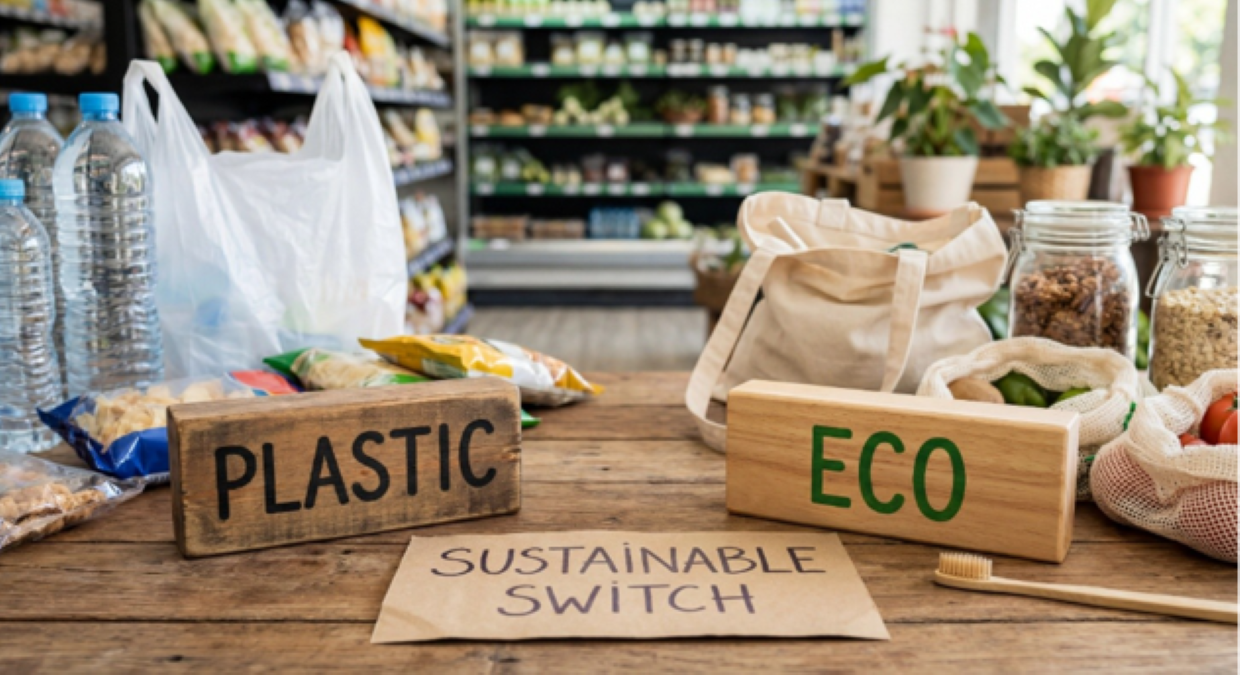
Driven by rapid economic and population growth, global plastics use has increased 230-fold between 1950 and 2019 (from 2 million tonnes to 460 Mt) and is expected to further triple by 2060, exacerbating environmental degradation. As 40-60% of all plastic packaging is single-use and quickly discarded, its growth will also continue contributing to plastic leakage and pollution with significant negative environmental and human health impacts, including the disruption of ecosystems and a wide range of species.
Addressing the impacts of single-use plastics throughout their lifecycle requires a comprehensive approach that manages plastics use and demand, considers designs for more circular economies, enhances recycling and sound waste management, and closes pathways for leakage into the environment. A specific lever to address the impacts of single-use plastics is the replacement of conventional fossil-based plastics by plastic alternatives and non-plastic substitutes. However, given the variety of alternatives and substitutes, their environmental impacts can vary significantly depending on the materials used, process and production methods employed during production and end of life management, and standards and regulatory requirements in place. This has prompted discussions around the need to avoid regrettable substitution and unintended environmental impacts, such as increased emissions from transport due to heavier product or packaging weights, or adverse biodiversity and land use impacts related to wastewater and chemical discharges, as well as additives and chemicals of concern that may be used to enhance both conventional plastics and non-plastic substitutes and alternatives.
Several international frameworks are exploring how trade can better support the transition to a circular economy of the plastics sector. For example, the WTO’s Dialogue on Plastic Pollution and Environmentally Sustainable Plastics Trade (DPP) is advancing discussions on enhancing trade cooperation on environmentally sound, safe and effective plastic alternatives and non-plastic substitutes, with a specific focus on the role of standards.
Agenda
10:15-11:15 Panel A: Key insights and trade data for understanding plastic alternatives and non-plastic substitutes replacing single-use plastics
Key Questions:
To which extent does existing data capture trade in plastics, plastic alternatives, and non-plastic substitutes, and what are the main data gaps?
What are the main technical, trade, economic, and financing barriers to scaling up sustainable plastic alternatives and non-plastic substitutes, and which incentives (such as investment and finance) could help overcome them?
Which tradable product categories are critical for plastic substitution to lower plastic pollution and leakage, how can we ensure additives and chemicals of concern are responsibly governed in plastic alternatives and substitutes, and what role could marine-based alternatives and substitutes play?
Moderator: Mr. David Vivas Eugui, Chief a.i. of the Ocean and Circular Economy Unit, Trade, Environment, Climate Change and Sustainable Development Branch, UN Trade and Development (UNCTAD)
Panelists
Mr. Michael Shaver, Director of Sustainable Materials Innovation Hub, University of Manchester
Ms. Petra Kynclova, Statistician, UN Trade and Development (UNCTAD)
Ms. Luciana Pellegrino, President, World Packaging Organization (WPO)
Mr. Adi Reza Nugroho, CEO, MYCL, Indonesia
Q&A
11:15-11:30 Coffee Break
11:30-12:30 Panel B: Distinguishing genuine progress from regrettable substitution
Key questions
What are the key environmental and human health risks and impacts associated with plastic alternatives and non-plastic substitutes across their lifecycle? How do these compare to each other and to those of fossil-based plastics?
How can the environmental performance of alternatives and substitutes be improved through standards and other measures?
Can trade in environmental services be key to reducing risks and impacts related to potentially regrettable substitution?
Moderator: Ms. Manuela Kiehl, Environmental Economist, OECD
Panelists:
Government Representative, Thailand – TBC
Ms. Sophie Huysveld, Professor at University of Ghent
Mr. Axel Marx, Deputy Director Leuven Centre for Global Governance Studies
Mr. Henrique Pacini, SMEP Programme & Circular Economy Lead, UN Trade and Development (UNCTAD)
Q&A
12:30-14:00 Lunch Break
14:00-15:30 Policy roundtable: Using trade-related policy to promote sustainable progress on plastic alternatives and non-plastic substitutes
Key questions
How can standards and regulatory measures for plastic alternatives and non-plastic substitutes (including their chemical additives) be developed, used and improved?
How can international co-operation, regional initiatives and private-public partnerships help reduce fragmentation in standards on plastic alternatives and non-plastic substitutes and reduce unnecessary trade barriers?
How can economies and regional communities use trade-related policies to support the adoption and scaling of sustainable plastic alternatives and non-plastic substitutes, as part of a broader policy package to address plastic pollution?
Moderator: DPP coordinator
Panelists
Ms. Carolyn Deere Birkbeck, Founder and Executive Director, Forum on Trade, Environment, & the SDGs (TESS)
Government representative, EU – TBC
Government representative, Costa Rica – TBC
Private Sector representative, TBC
Ms. Ieva Baršauskaitė, Lead, Trade and Green Transition, IISD
Mr. Ebenezer Laryea, Reader in Sustainable Development Law, Aston University, West African Plastics Alternative Initiative - WAPAI
Q&A
15:30 -15:45 Closing remarks: OECD, UNCTAD, DPP (5mins each)
16:00 End of Workshop
