©AdobeStock-Kalyakan
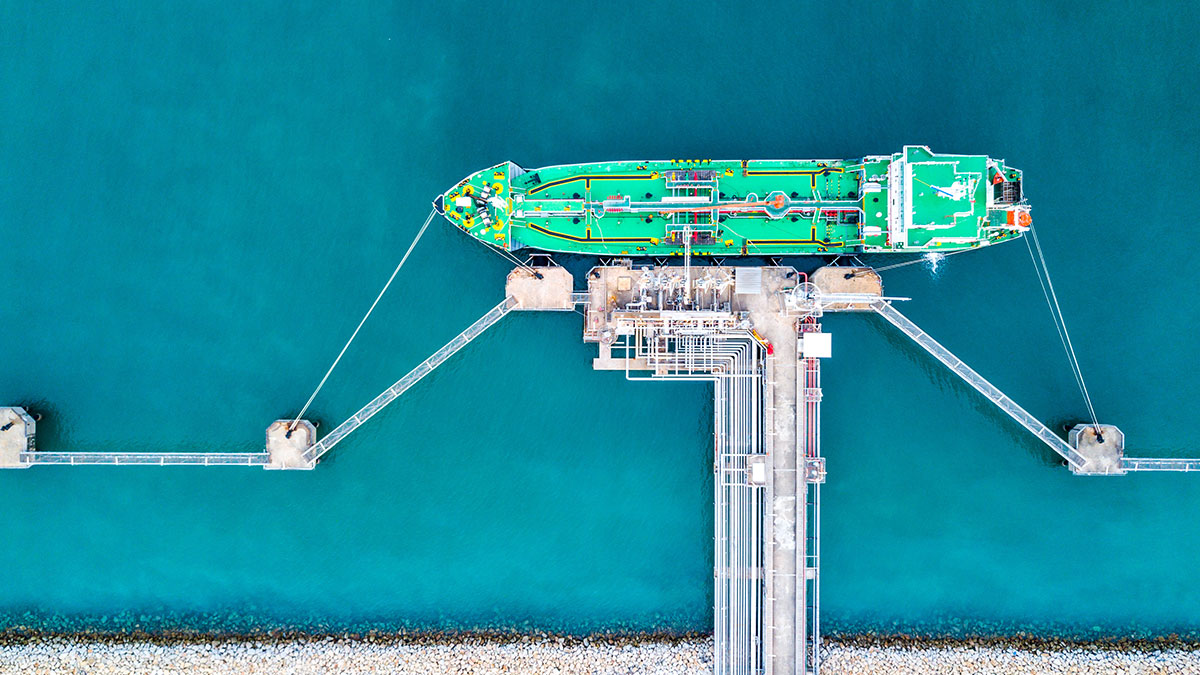
At a historical session in April 2025, the International Maritime Organization (IMO) agreed on the “Net-zero Framework” (NZF), a binding regulation that, if adopted in October 2025, will create the basis for full decarbonization of the shipping industry by 2050. Critically, the agreement combines mandatory emissions limits, GHG emissions pricing, and special support to developing countries that enable the energy transition of shipping. Nationally Determined Contributions, particularly from large fishing nations and Small Island Developing States (SIDS) also contain significant commitments to decarbonize and enable energy transition of fishing fleets and for the adaptation of the fisheries sector to climate change.
In the context created by NZF, liquified biomethane (bio-LNG) is a low-emissions fuel that may enjoy critical benefits. In fact, Bio-LNG, which can be produced out of organic waste through well-established processes, can be used as a drop-in or a replacement for Liquified Natural Gas (LNG), a fuel that already propels 6-7 % (gross tonnage) of global shipping and it is growing in prevalence.
The CEET Issue Brief on Unlocking Low-Emission Energy from Waste: A Sustainable Solution for Shipping and Fisheries in Emerging Economies highlights how megacities with proximity to major ports could improve waste management practices around their urban organic waste transforming it into bio-LNG, for use as a fuel. The brief emphasizes how, today, in many developing countries, processing urban organic waste is too costly and organic waste is often landfilled without treatment. The brief introduced the concept that climate regulations for shipping could be capitalized on to mobilize interest and finances from affluent industries.
In the first part of this webinar, we will revisit the results of the brief in light of the decarbonization framework established by the relevant climate regulation, the IMO NZF.
In the second part of this webinar, UNCTAD will discuss how the IMO NZF, or the principles contained in this breakthrough agreement and Nationally Determined Contributions (NDCs) under the Paris Agreement, may be leveraged to also support decarbonization of fisheries and the just and equitable transition for the fishing industry as its report on “Energy transition of fishing fleets: Opportunities and challenges for developing countries”
Objectives
Describe how the IMO (International Maritime Organization) Net Zero Framework (NZF) simultaneously ensures decarbonization of shipping and promotes economic development;
Update and revisit the findings of the CEET Issue Brief on Unlocking Low-Emission Energy from Waste: A Sustainable Solution for Shipping and Fisheries in Emerging Economies in light of the global carbon pricing mechanism, along with potential rewards for best performers and support for developing countries established by the IMO’s NZF;
Discuss trade and investment policy-relevant recommendations for leveraging the IMO NZF and the NDCs under the Paris Agreement to ensure the economic development, decarbonization and adaptation of the fisheries sector.
The event is part of the CEET webinar series, “Insights and Innovations for a Sustainable Energy Future,” which features webinars based on issue briefs published by the CEET as well as of the UNCTAD’s Ocean Economy and Fisheries and Trade and Climate Change Programmes research.
Audience
This webinar brings together local planners, investors, policy and technology experts to discuss the technical, financial, and policy solutions that can promote innovative solutions to integrating waste management with renewable energy to advance progress on the Sustainable Development Goals (SDGs).
Tentative Programme
Session 1:
This session is designed for a diverse audience spanning local, regional, and global stakeholders in the evolving process of the IMO Net Zero Framework, the sustainability of maritime sectors, with a particular focus on megacities.
Moderator: Ms. Semida Silveira, Professor of Systems Engineering, Cornell University
- Ms. Regina Asariotis, Chief (a.i.) of UNCTAD’s Trade Logistics Branch and Policy and Legislation Section at UNCTAD
- Capitaine Sukhjit Singh, Technical Officer, IMO
- Ms. Roberta Cenni, Issue Brief author, Head of Biofuels at the Mærsk Mc-Kinney Møller Center for Zero Carbon Shipping, and CEET member
- Mr. Alessandro Sanches Pereira, Executive Director, Instituto 17, Brazil & Associated Researcher, Curtin University Policy Institute, Australia.
Session 2 (Panel discussion):
With a workforce of ~ 60 million people, mostly in emerging economies, and a fuel consumption of over 30 million tonnes annually, including fisheries in emissions, reduction targets and just and equitable transition programs are of utmost importance. The panel will discuss how such inclusion can happen under the current regulatory frameworks or if specific initiatives are required.
Moderator: Mr. David Vivas, Chief of Section (a.i.), Ocean and Circular Economy Unit, Trade, Environment, Climate Change and Sustainable Development (TED) Branch, UNCTAD
Panelists
- Mr. Atiq Zaman, CEET and UNCTAD
- Ms. Claudia Contreras, TED Branch, UNCTAD
- Ms. Roberta Cenni, CEET
Q&A with audience OR additional discussion time
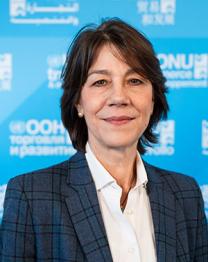
Regina Asariotis is Chief of the Policy and Legislation Section in the Division on Technology and Logistics of UNCTAD, where she is responsible for work on transport law and policy, covering a broad range of substantive issues. This includes extensive research, expert dialogue and technical cooperation, on the implications of climate change for maritime transport and trade, with a focus on climate change impacts and adaptation for seaports and other critical transport infrastructure, including in SIDS. Before joining UNCTAD in 2001, Regina was a Senior Lecturer in Maritime Law at the University of Southampton. She holds a German law degree, an LL.M, as well as a PhD from the University of Hamburg and is a Barrister (England & Wales) and Attorney at Law (Greece), as well as Member of the Chartered Institute of Arbitrators (CIArb).

Roberta Cenni is Head of Biofuels at the Mærsk Mc-Kinney Møller Center for Zero Carbon Shipping where she leads activities aiming to provide the shipping industry with alternative fuels which are sustainable, affordable and scalable in the short term.
Roberta is further a member of the UN Council of Engineers for the Energy Transition.
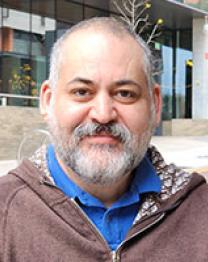
Alessandro Sanches Pereira is Executive Director and co-founder of Instituto 17, a Brazilian think-tank dedicated to applied research, capacity-building, and technical cooperation on sustainable development, bioeconomy, and climate policy.
He serves as a Member of the UN Secretary-General’s Council of Engineers for the Energy Transition (CEET), contributing to global pathways for achieving net-zero emissions by 2050.
He was also a Lead Author of the IPCC Sixth Assessment Report (Working Group III, Chapter 5). With over 25 years of experience in energy transition, sustainable finance, and the circular economy, Alessandro has advised national governments, UN agencies, and multilateral initiatives on methane mitigation, clean cooking, and low-carbon fuels.
His current work focuses on the role of biogas and biomethane in shipping, agriculture, and urban systems, bridging technical feasibility with socioeconomic and policy dimensions. He brings a developing-country perspective to international debates on climate and energy transitions.
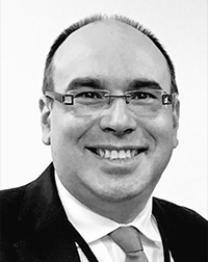
David Vivas Eugui is Chief of Ocean and Circular Economy Unit, a.i., Trade, Environment, Climate Change and Sustainable Development Branch, at UNCTAD.
Previously, he was a Senior Economic Affairs Officer in UNCTAD’s Trade Negotiations and Commercial Diplomacy Branch, Deputy Programmes Director at the International Centre for Trade and Sustainable Development (ICTSD), Senior Attorney at the Center for International Environmental Law (CIEL), Attaché for Legal Affairs at the Mission of Venezuela to the World Trade Organization (WTO) and Staff Attorney at the Venezuelan Institute of Foreign Trade. David is an international expert with more than 20 years of experience on legal and economic issues.
He has worked as an advisor and consultant for various institutions, international and national organizations and has lectured on intellectual property, trade, oceans economy and environmental law at the University of Strasbourg (CEIPI), Universidad de Buenos Aires (Argentina), Universidad Javeriana (Colombia), Maastricht University (the Netherlands), WIPO Distant Learning Academy, and University of Business and International Studies (Switzerland).
He holds a JD from the Universidad Catolica Andres Bello, an LLM from Georgetown University and a Master in Transnational Business from the Universidad Externado de Colombia.
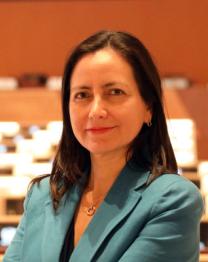
Dr. Claudia Contreras joined UNCTAD in 2013.
Since 2020, she is an Economic Affairs Officer at the Trade, Environment and Sustainable Development Branch. Her work is focused on the interlinkages between climate change, environment, and trade and development.
Formerly, Claudia was a member of the Secretariat of the United Nations Commission on Science and Technology for Development (CSTD), and worked for the Chilean government on science, technology, and innovation policy.
Claudia holds a BSc in Economics from the University of Chile and graduated with an MSc in Management Research and a PhD in Development Studies from the University of Oxford.
