

International investment to the region rose 14% to $188 billion, but announced greenfield projects, a signal of future factories and jobs, fell by a third.
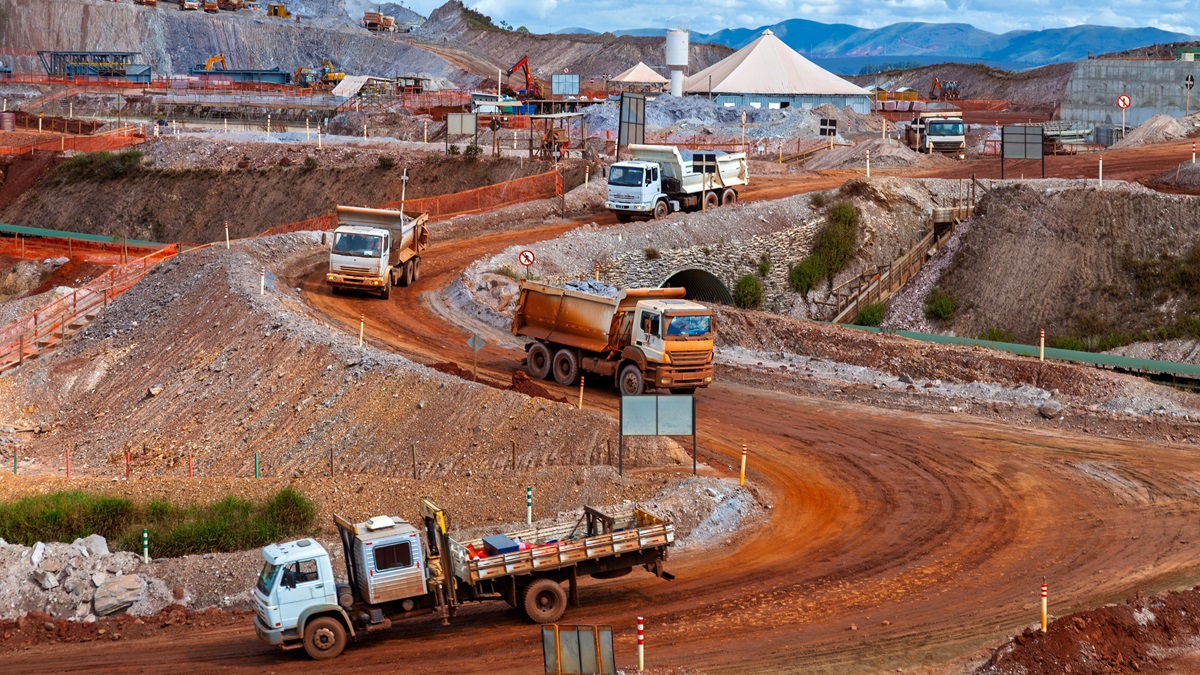
© Shutterstock/rocharibeiro | Iron ore mining in Minas Gerais, Brazil.
Latin America and the Caribbean attracted more foreign direct investment (FDI) in 2025 than the year before, despite an uncertain global economy. But the headline number hides a more complicated picture underneath.
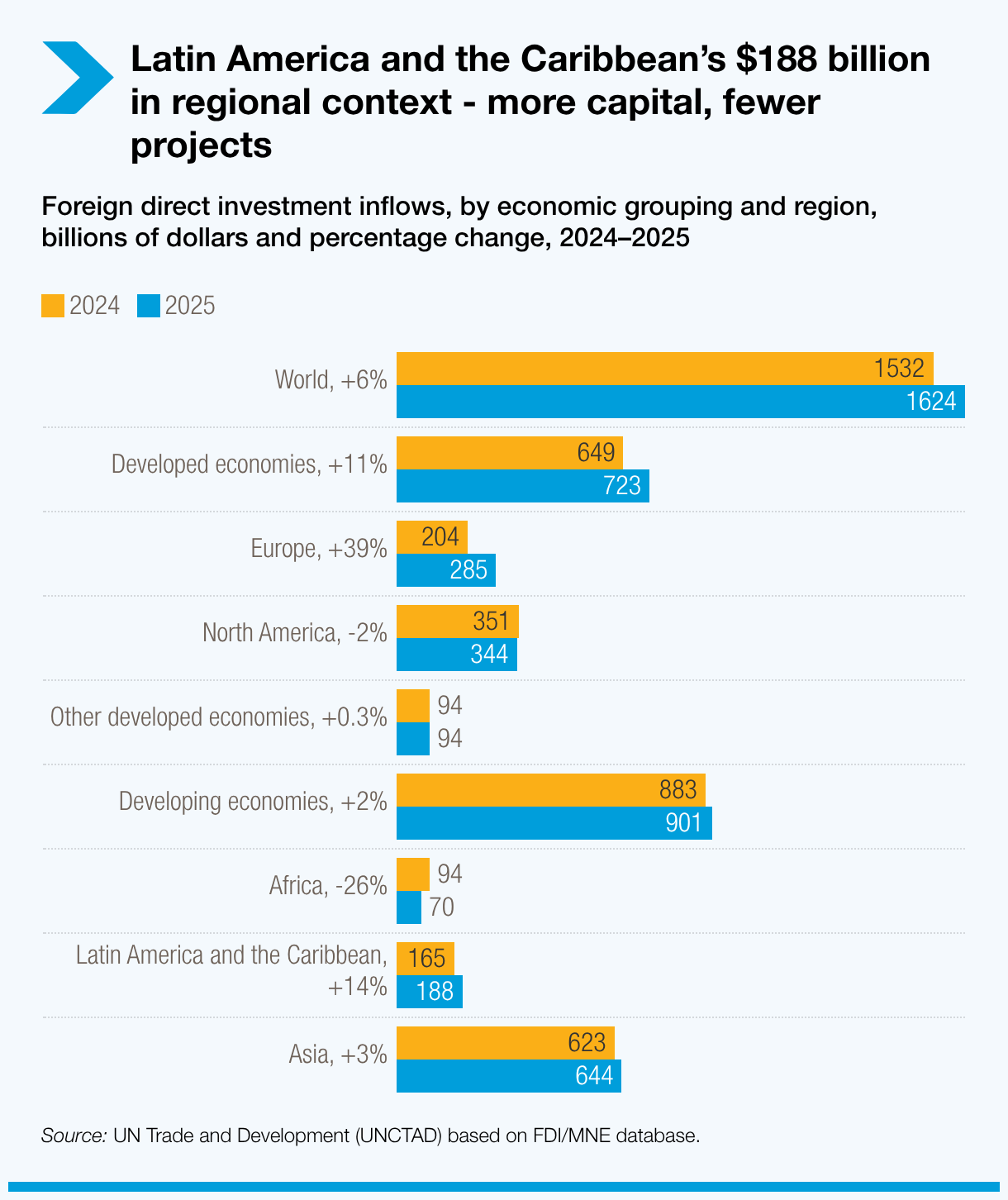
According to the World Investment Report 2026 by UN Trade and Development (UNCTAD), FDI inflows to the region, excluding Caribbean offshore financial centres, rose 14% to $188 billion, roughly a fifth of all FDI flowing to developing economies - a sharper rise than developing economies managed overall, which grew just 2% as a group in 2025.
The increase was driven largely by South America, particularly Brazil, where inflows climbed from $63 billion to $77 billion, placing it among the world's five largest recipients.
Mexico also grew, from about $38 billion to $41 billion, supported by regional production networks and continued investment in services and manufacturing.
A weaker pipeline underneath
The rebound was narrow. The top 10 recipient economies captured 95% of all regional inflows, and Brazil and Mexico alone accounted for roughly two-thirds of the total.
More tellingly, the value of announced greenfield projects - often the clearest signal of future factories, logistics platforms and supplier opportunities - fell by about a third, to under $120 billion.
Mexico's announced project values dropped from $44 billion to $24 billion amid trade and industrial-policy uncertainty. Argentina's fell from about $37 billion to just $1.4 billion.
In other words, more capital arrived in 2025, but less of it was committed to building new productive capacity.
Even so, the region continues to offer real advantages, including abundant natural resources, growing renewable energy potential and strategic proximity to major trading partners.
The report points to what closes that gap: stronger investment facilitation and aftercare, better logistics and energy infrastructure, supplier development, and regional integration that connects smaller economies to larger markets and value chains.
Countries rich in minerals or renewable energy also need strategies that add more value locally rather than relying on commodity-linked inflows alone.
World Investment Forum 2026
Turning investor interest into bankable, productive projects is exactly the work the World Investment Forum puts on the table. Registration is open on the forum’s official website.
The forum, organized by UNCTAD in Doha, Qatar from 25 to 27 October under the theme "Investing in the Future," runs an Investment Policy Dialogue track dedicated to adapting investment policies to attract and retain quality investment, including a session on risk sharing and collaboration in a turbulent investment era, alongside an Investment Promotion and Special Economic Zones track session on accelerating the energy transition project pipeline - the exact gap Latin America's own numbers are now raising: not whether capital shows up, but whether it builds something that lasts.