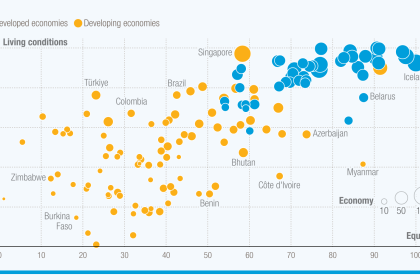
Policies focusing on purely economic gain, using metrics such as GDP, are insufficient to monitor the multidimensional nature of sustainable development, particularly in addressing inclusivity, wellbeing, sustainability and intergenerational equity. This narrow focus leads to policies that overlook social and environmental priorities, disproportionately harming marginalized groups like women and persons with disabilities. The problem is especially acute in developing countries, which often lack the tools, data, and institutional capacity to design policies beyond economic growth. Myopic metrics and the absence of disaggregated data further constrain efforts to create inclusive and sustainable development strategies.
Objective of the Project
The project addresses the limitations of GDP as the sole measure of societal progress, recognizing the need for multidimensional indicators that reflect economic, social, and environmental well-being. The project will support a High-Level Expert Group to develop and recommend a set of adaptable, country-owned metrics that go beyond GDP. It will facilitate expert consultations, identify data and capacity gaps, and pilot in at least three pilot countries to test indicators and measurement strategies for a beyond-GDP dashboard. The project will lay the groundwork for more comprehensive and inclusive development measurement, advancing SDG 17 (target 19).
Activities
The project will address the problem through a two-phase approach:
- Phase 1 will develop a globally coherent yet locally relevant set of indicators through a High-Level Expert Group and broad consultations with Member States and stakeholders. This phase will produce draft recommendations and indicators, refine them through inclusive dialogue, and outline a forward-looking UN Data Agenda for future capacity needs.
- Phase 2 will pilot these indicators in selected countries to bridge the implementation gap. This includes practical guidance on compiling and using beyond-GDP metrics, leveraging AI and innovative data sources, and building national capacity through workshops, expert consultations, and case studies to ensure long-term sustainability. Pilot countries will be encouraged to disaggregate data by sex, disability status and other breakdowns as relevant, to inform inclusive policy design.
Intended Outcomes
- Outcome 1: Enhanced framework and metrics to enable evidence-based policy by governments to progress beyond GDP, considering data and capacity gaps, including on gender equality and disability inclusion.
- Outcome 2: Strengthened capacity of national authorities in developing and least developed countries to compile, analyse, and operationalize beyond-GDP metrics that reflect multidimensional progress, including gender and disability dimensions.
- Outcome 3: Increased adoption of beyond-GDP metrics in national policymaking and academic research to design and implement inclusive and sustainable strategies.
Link to the SDGs
This project directly supports the implementation of the 2030 Agenda for Sustainable Development, particularly SDG Target 17.19, which calls for the development of complementary measures of progress beyond GDP and the strengthening of statistical capacity in developing countries.
Monitoring and Evaluation
DESA will lead and coordinate the project, ensuring strategic direction, coherence across both phases, and alignment with the UN development agenda. It will engage member States, UN partners, and stakeholders, and oversee Phase 1 implementation in collaboration with UNCTAD and UNDP.
UNCTAD will lead implementation of phase 2, consolidate inputs from pilot countries, and report findings to DESA for future work.
Continuous engagement with national counterparts and civil society will inform progress and identify bottlenecks. Lessons learned will guide scaling and replication. A final independent joint evaluation, managed by DESA, will assess relevance, efficiency, impact, sustainability, and integration of gender and disability.
Related:



Project Code
TOAZ
Partners
UNDESA, UNCTAD, UNDP
Donors
China, 2030 Agenda for Sustainable Development Sub-Fund of the UN Peace and Development Fund
Beneficiaries
Costa Rica, Morocco, Peru, Senegal

Duration
2025-2028