
This project supports sustainable trade, economic diversification and resilience in São Tomé and Príncipe through the development of an evidence-based Ocean Economy and Trade Strategy (OETS).
It aims to strengthen national capacities to assess the economic, environmental, social, digital and institutional dimensions of marine and coastal tourism and to identify practical policy options for its sustainable development. The project will also explore opportunities to strengthen linkages between tourism and domestic value chains, including fisheries, aquaculture, cocoa, coffee, agri-food products, handicrafts and natural fibres, while aligning tourism development with national climate and biodiversity priorities.
Scope
The project focuses on international marine and coastal tourism and the environmental and digital services that support its competitiveness, sustainability and resilience. This focus was agreed with the Government of São Tomé and Príncipe to complement existing initiatives in fisheries, port rehabilitation and vessels.
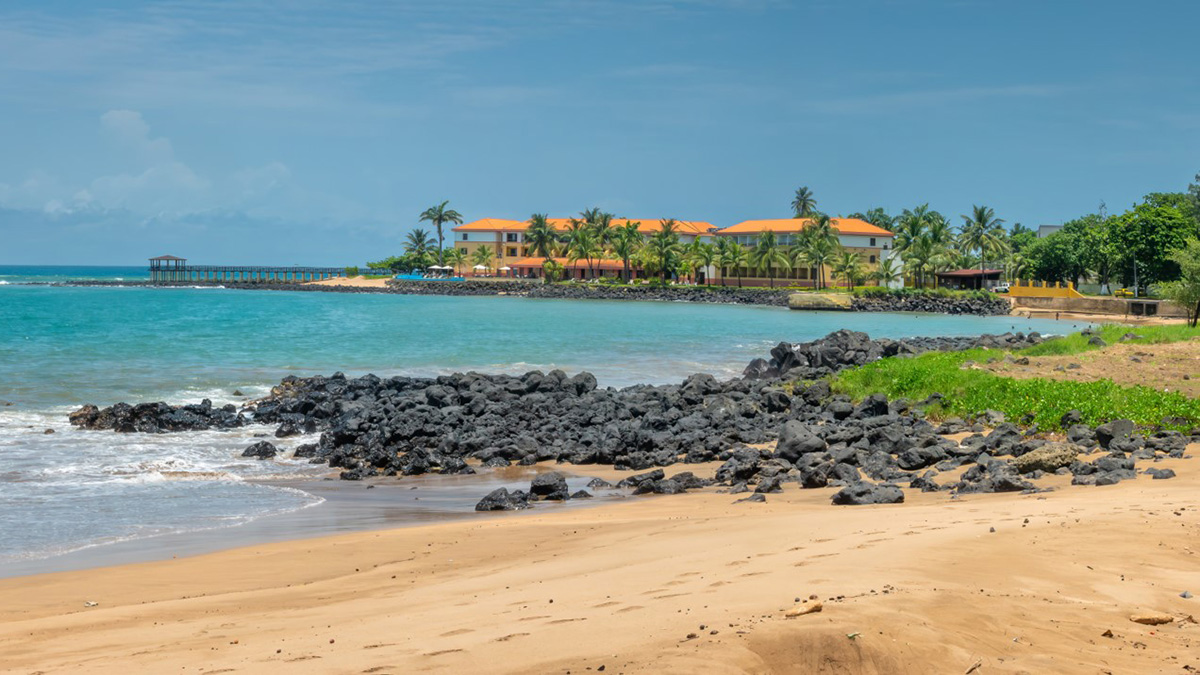
Following the designation of the Ilha de São Tomé Biosphere Reserve in 2025, complementing the Príncipe Biosphere Reserve, São Tomé and Príncipe became the first country whose entire territory is covered by sites included in UNESCO’s World Network of Biosphere Reserves. This provides a unique foundation for sustainable tourism and biodiversity-based economic opportunities.
Using UNCTAD’s OETS methodology, the assessment will cover five interconnected areas:
- Economic and trade opportunities, tourism competitiveness and domestic value-chain linkages.
- Environmental sustainability, including plastic substitutes, wastewater treatment, water reuse and environmental standards.
- Employment, skills, gender and the participation of young people and coastal communities.
- Digital payments, bookings, marketing, data use and tools to showcase and monitor natural capital and biodiversity.
- Regulatory coherence, institutional coordination and incentives for sustainable investment.
The project seeks to strengthen the evidence base and national capacities needed to develop a competitive, inclusive and resilient tourism economy while conserving the natural assets on which it depends.
Outputs and Activities
The project will employ a participatory and country-owned approach, combining research, data analysis, stakeholder consultations, capacity-building and policy dialogue.
Output 1: Initial consultation and analytical framework
Output: An initial national consultation and an agreed analytical framework identifying the issues, indicators, data requirements, sources and stakeholders needed to assess marine and coastal tourism and related environmental and digital services.
Activities
- Conduct an initial national consultation with relevant stakeholders.
- Produce a country fact sheet with basic data and information on the selected sectors.
- Prepare an annotated outline for the OETS report.
- Review available evidence and existing analyses.
- Identify relevant institutions, policies, legislation, indicators, data gaps and stakeholders needed for the assessment.
Output 2: Draft Ocean Economy and Trade Strategy
Output: A comprehensive draft OETS report assessing the five pillars and presenting key findings, strategic directions and a proposed Strategy and Action Plan with prioritized policy options.
Activities
- Assess opportunities and constraints across the economic, environmental, social, digital and institutional dimensions of marine and coastal tourism.
- Examine tourism competitiveness, sustainability challenges and domestic value-chain opportunities.
- Develop a draft Strategy and Action Plan.
- Identify priority policy options to support sustainable, inclusive and trade-oriented tourism development.
Output 3: Final OETS report and policy recommendations
Output: A peer-reviewed and nationally tailored OETS report incorporating comments from UNCTAD, national focal points and relevant stakeholders, including no more than ten priority policy options.
Activities
- Submit the draft assessment, Strategy and Action Plan for review by UNCTAD, national focal points and stakeholders.
- Incorporate comments and recommendations received through the review process.
- Finalize a nationally tailored OETS report.
- Present a concise set of priority policy options for implementation.
Output 4: National validation and policy uptake
Output: An online national validation workshop in São Tomé and Príncipe to review the findings, recommendations, Strategy and Action Plan, inform final revisions and support subsequent policy uptake.
Activities
- Organize an online national validation workshop involving government institutions, private-sector stakeholders, civil society and development partners.
- Present and discuss the findings, recommendations, Strategy and Action Plan.
- Gather feedback to inform final revisions prior to publication.
- Support national ownership and uptake of the strategy and its recommendations.
Contribution to the Sustainable Development Goals
The project contributes directly to Sustainable Development Goal 14 (Life Below Water) by promoting economic benefits from the sustainable use of marine resources, including through sustainable tourism.
It also supports employment and enterprise development, the participation of women and young people, circular economy approaches, climate-policy integration, digital transformation and stronger institutional capacities.
The project aligns with the Antigua and Barbuda Agenda for SIDS and UNCTAD’s work in support of Small Island Developing States.

Project Code
T7BS.05 and THBD
Partners
Government of the Democratic Republic of São Tomé and Príncipe
Donors
Portugal and the United Kingdom Foreign, Commonwealth and Development Office
Beneficiaries
São Tomé and Príncipe

Duration
2026-2027
Budget
$ 60,000
Contact
David Vivas Eugui
Chief (a.i.), Ocean and Circular Economy
[email protected]
Henrique Pacini
Economic Affairs Officer
[email protected]
Bruno Antunes
Economic Affairs Officer
[email protected]
Ludovic Arnaud
Associate Economic Affairs Officer
[email protected]