

The “Transforming Indonesia's seaweed sector” is a project implemented under the United Nations Expertise on Demand initiative, which gives countries rapid access to specialized expertise from across the UN system. The project supports Indonesia in strengthening its seaweed by-product sector and advancing value addition within the seaweed economy.
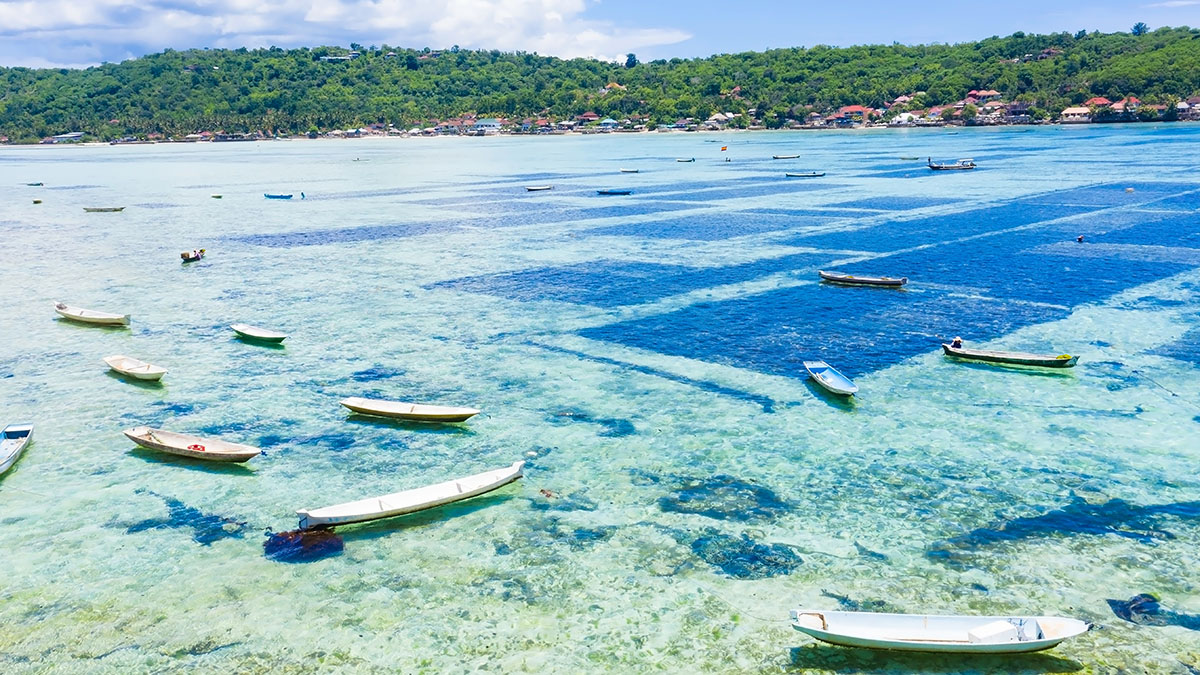
Indonesia plays a central role in the global seaweed economy, but nearly two-thirds of its seaweed exports are raw seaweed. This limits the value captured domestically. Addressing bottlenecks and barriers towards higher-value production, processing and trade is critical for Indonesia to increase domestic value creation, strengthen competitiveness and generate wider social and environmental benefits.
Objective
The project will identify and assess policy and regulatory options to increase domestic value addition in Indonesia's seaweed sector, promote downstream processing of seaweed-derived products, improve market access and strengthen the competitiveness of small and medium-sized enterprises.
The project will focus on higher-value seaweed-derived products, including biopolymers, bioplastics and bio-packaging. Where feasible, it will also consider biostimulants and fertilizers.
Expected outputs
To achieve this objective, the project will carry out a rapid assessment of Indonesia's seaweed value chain, trade performance and enabling regulatory environment. The assessment will align with Indonesia's national development priorities and consider international market opportunities, standards and regulatory requirements within the framework of the UN Global Seaweed Initiative (UNGSI).
The project will deliver four key outputs:
- Output 1: Rapid seaweed value chain and trade diagnostics. A rapid assessment of selected downstream seaweed value chains and trade opportunities, focusing on biopolymers, bioplastics and bio-packaging solutions. Where feasible, the assessment will also cover biostimulants and fertilizers. It will also consider women's participation and gender-related constraints where information is available.
- Output 2: Policy and regulatory study. A mapping of relevant regulations, standards and policy frameworks governing the selected value chains. It will identify opportunities and challenges for sector development and, where information is available, implications for women's economic participation and empowerment.
- Output 3: Stakeholder engagement and online validation. A validation webinar with various stakeholders to discuss and refine the findings, priorities and recommendations emerging from the assessment.
- Output 4: Analytical deliverable. A policy memo and presentation with key findings and actionable recommendations to improve the competitiveness, value addition, trade potential and inclusiveness of Indonesia's downstream seaweed value chain. The recommendations will incorporate gender equality considerations and links to UNGSI priority actions.
Activities
The project will be jointly coordinated by UN Trade and Development (UNCTAD), the UN Resident Coordinator Office in Indonesia and international consultants based in Indonesia, with direct involvement from key stakeholders.
The project will conduct a fact-finding mission to Indonesia and consult government entities, producers, associations and other key stakeholders in the seaweed value chain. The consultations will inform the assessment of key challenges and opportunities for downstream processing, value addition and market development. Based on these consultations and desk research, the project will produce Outputs 1 and 2.
The findings will then be validated and refined through Output 3, a webinar with stakeholders including, where feasible, government entities, small-scale producers, associations and cooperatives, processors and exporters.
Drawing on the findings and stakeholder feedback, the project will produce Output 4, with actionable recommendations to support Indonesia's future programming, policy dialogue and investment discussions. The project will disseminate information about its activities andits findings through UNCTAD's Sustainable Ocean and Blue Economy webpage and other relevant platforms and events.
Link to the SDGs
The project contributes directly to several SDG targets including 14.7, 14.b, and 8.2. It’s also aligned with the objectives and functions of UNGSI, of which Indonesia is a founding member.

Project Code
TQAK
Partners
UN Resident Coordinator Office in Indonesia; partners in the UN Global Seaweed Initiative (UNGSI), including the UN Industrial Development Organization, Food and Agriculture Organization, UN Global Compact and Global Seaweed Coalition.
Donors
United Nations Joint SDG Fund
Beneficiaries
Indonesia

Duration
2026-2027
Budget
$ 53,460
Contact
UNCTAD
David Vivas Eugui
Chief (a.i.) Ocean and Circular Economy
[email protected]
Lorena Jaramillo
Economic Affairs Officer
[email protected]
Ludovic Arnaud
Associate Economic Affairs Officer
[email protected]
UN Resident Coordinator Office in Indonesia
Gita Sabharwal
UN Resident Coordinator in Indonesia
[email protected]