
Key points
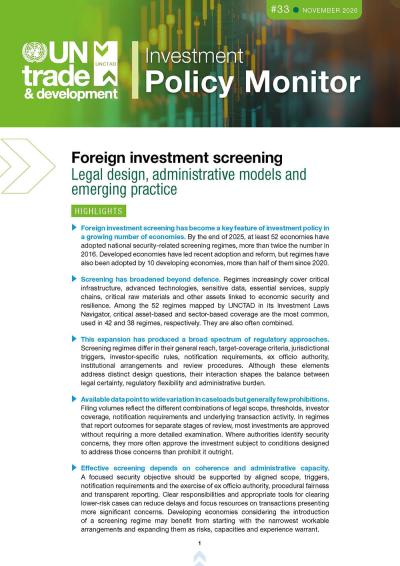
- By the end of 2025, at least 52 economies had adopted legal frameworks to screen foreign investments for security risks – more than twice as many as in 2016.
- Screening now extends beyond defence to critical infrastructure, advanced technologies, sensitive data, essential services, supply chains and critical raw materials.
- Rules may target particular critical assets, economic sectors, investments across sectors or individual entities.
- Available data show that the number of investments reviewed varies widely, but few are blocked.
- Effective screening depends on coherent rules, adequate administrative capacity, procedural fairness and transparency.
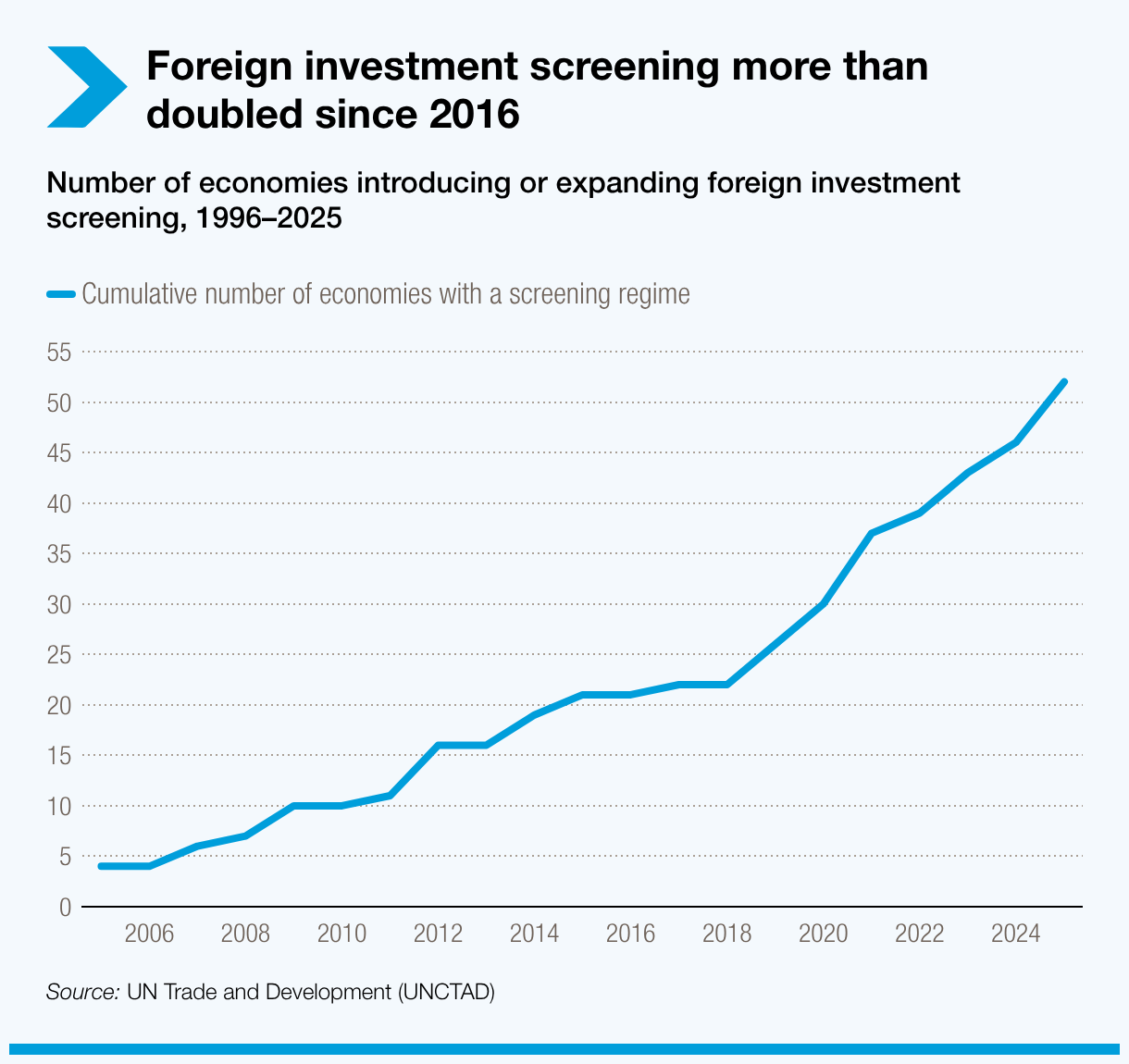
Foreign investment screening allows governments to review investments from abroad for potential national security risks. The number of economies with such screening regimes more than doubled over the past decade to at least 52.
Developed economies account for most screening frameworks and recent reforms. But screening is also gaining ground in developing economies. By the end of 2025, 10 had adopted screening regimes, more than half of them since 2020.
Coverage has widened across sectors, assets and technologies
Screening has expanded beyond defence to cover critical infrastructure, advanced technologies, sensitive data, essential services, supply chains, critical raw materials and other assets linked to economic security and resilience.
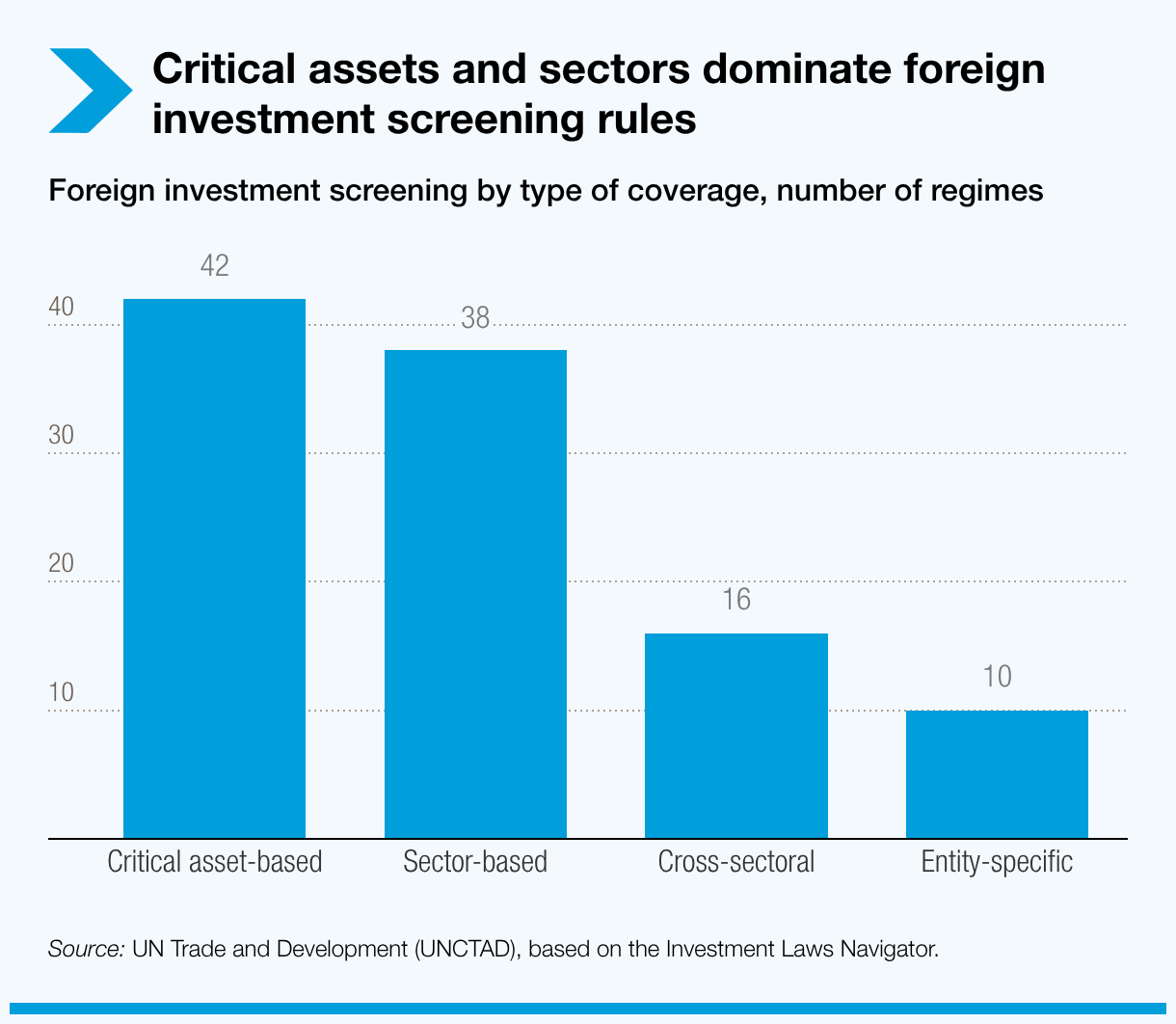
Rules may target particular critical assets, specific economic sectors, investments across sectors or individual entities.
Of the 52 screening regimes examined, 42 cover critical assets, 38 target specific economic sectors, 16 apply across sectors and 10 target individual entities. These categories often overlap, with some frameworks combining several approaches.
Caseloads vary widely, but prohibitions are generally rare
The number of investments reviewed varies widely across screening regimes. This reflects differences in the scope of the rules, the thresholds that trigger a review, which investors are covered, notification requirements and the number of transactions taking place.
These figures are not directly comparable measures of security risk or how restrictive the rules are.
In several countries, most foreign investments subject to screening are cleared during the initial review. When further examination raises security concerns, authorities are more likely to impose conditions than block an investment.
Early consultations, simplified notification procedures, decisions on whether an investment is subject to screening, exemptions and reviews carried out in stages can help authorities focus their resources on higher-risk cases.
Clear rules and effective administration matter
There is no single model for foreign investment screening. Regimes differ in which investments they cover, what triggers a review, which investors are subject to the rules, when investors must notify authorities, which institutions are responsible and how reviews are conducted.
These differences affect how predictable the rules are for investors, how much flexibility regulators have and the administrative burden.
The report identifies five considerations for effective screening:
- Keep the objective focused on security risks.
- Ensure rules are clear and legally coherent.
- Align procedures and administrative resources with anticipated cases.
- Ensure fair treatment of investors and protect confidential information.
- Make procedures transparent and review them regularly.
Economies introducing screening may benefit from first assessing their main security risks, particularly where transaction volumes, institutional resources or access to specialist expertise are limited.
They may also benefit from starting with the narrowest workable legal and institutional arrangements, expanding them as experience and evolving risks demonstrate a need.