Global investment rises as new projects decline
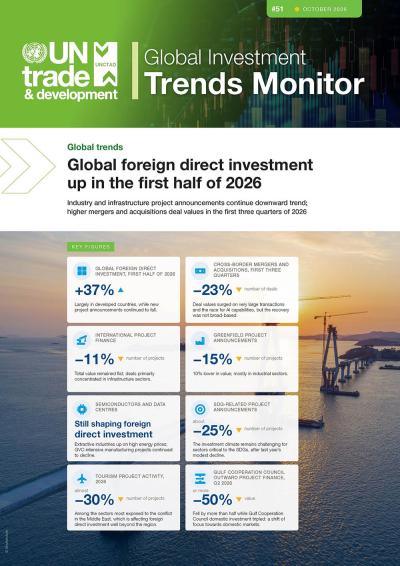
- Foreign direct investment rose 37% in the first half of 2026, largely in developed economies, against the average half-year level in 2025.
- Cross-border merger and acquisition values rose 57% to $494 billion in the first nine months of 2026, while deal numbers fell 23%.
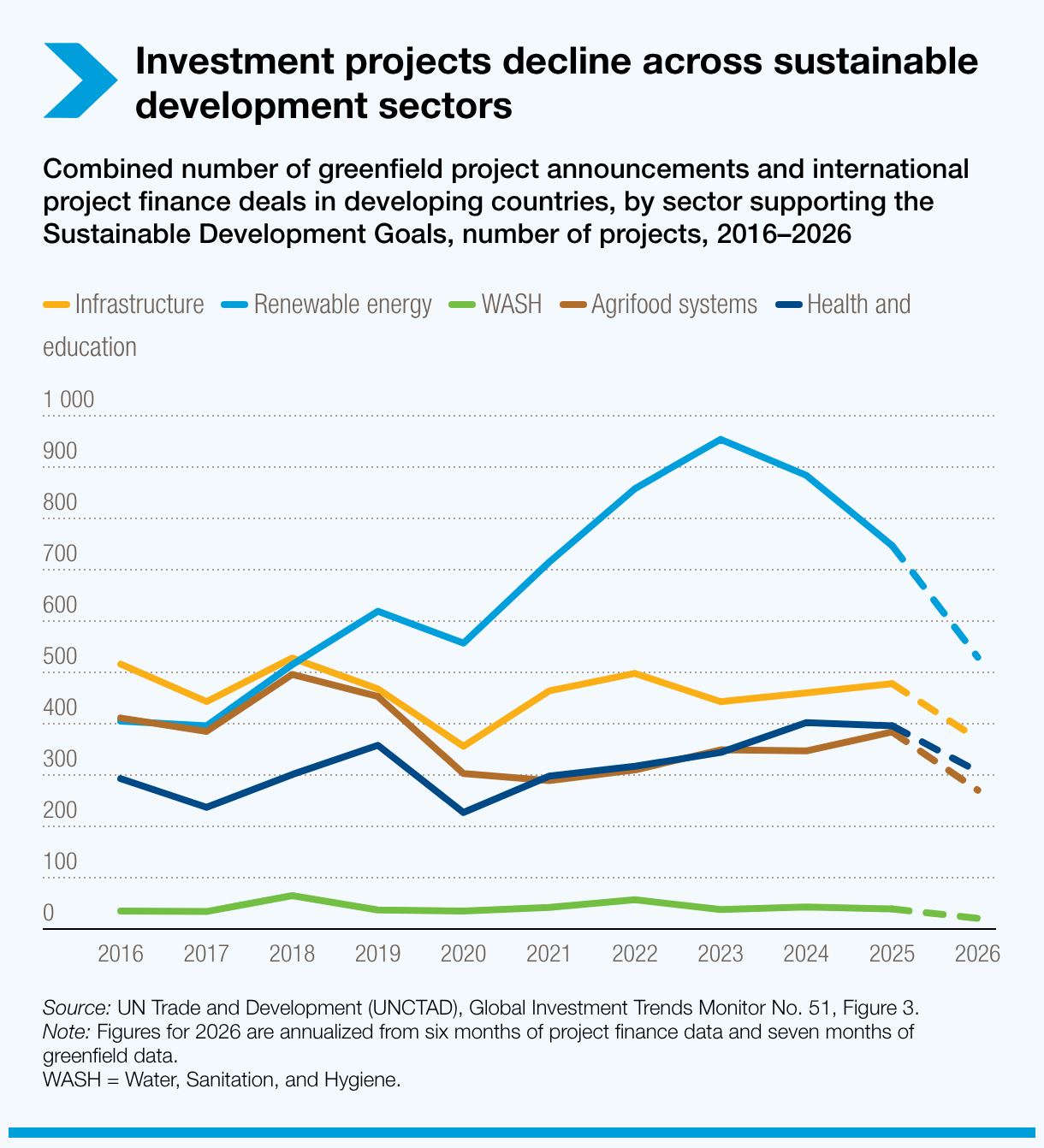
- Sustainable development project announcements fell by more than 25% in developing countries, according to early 2026 estimates.
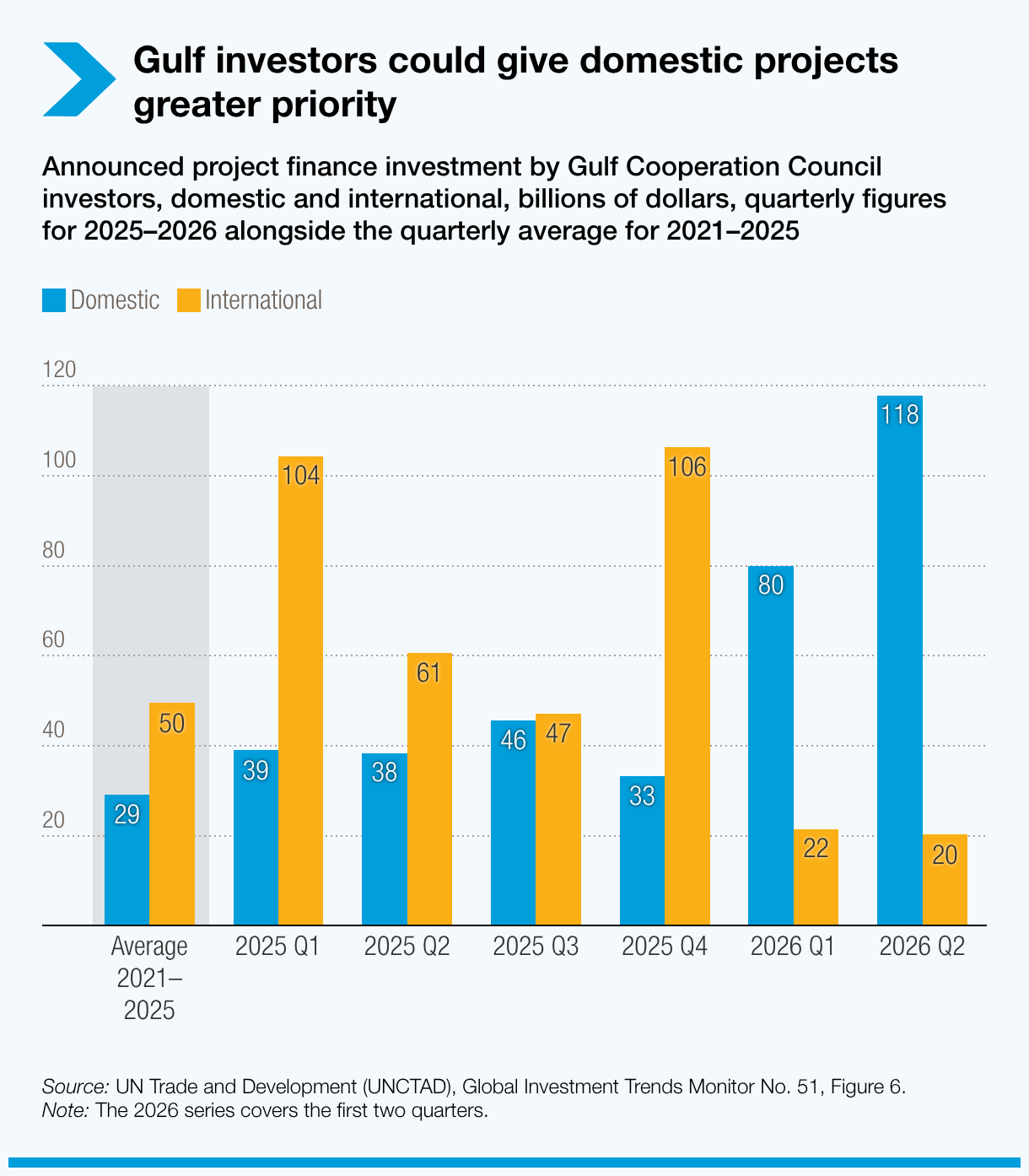
- Gulf investors’ outward project finance investment more than halved in the second quarter of 2026 compared with a year earlier.
Preliminary data show higher global investment values alongside declining new project announcements. Large transactions, megaprojects and financial flows can sustain headline values even as activity weakens.
Unless stated otherwise, project growth rates compare annualized estimates based on the first six to nine months of 2026 with 2025. Digital infrastructure investment may be becoming more concentrated in high-income economies, while the Middle East conflict adds cost and uncertainty pressures.
Large transactions sustain values as activity weakens
Foreign direct investment flows to developed economies rose by more than 70% in the first half of 2026 against the average half-year level in 2025. This was driven almost entirely by fluctuations in financial flows channelled through Benelux countries and a near-doubling of inflows to the United States.
In the first nine months of 2026, merger and acquisition values rose 40% in developed economies and more than fivefold to $70 billion in developing economies. AI-related sectors accounted for more than 40% of announced greenfield investment value in the United States. One example was Taiwan Semiconductor Manufacturing Company’s announced $76.5 billion expansion there.
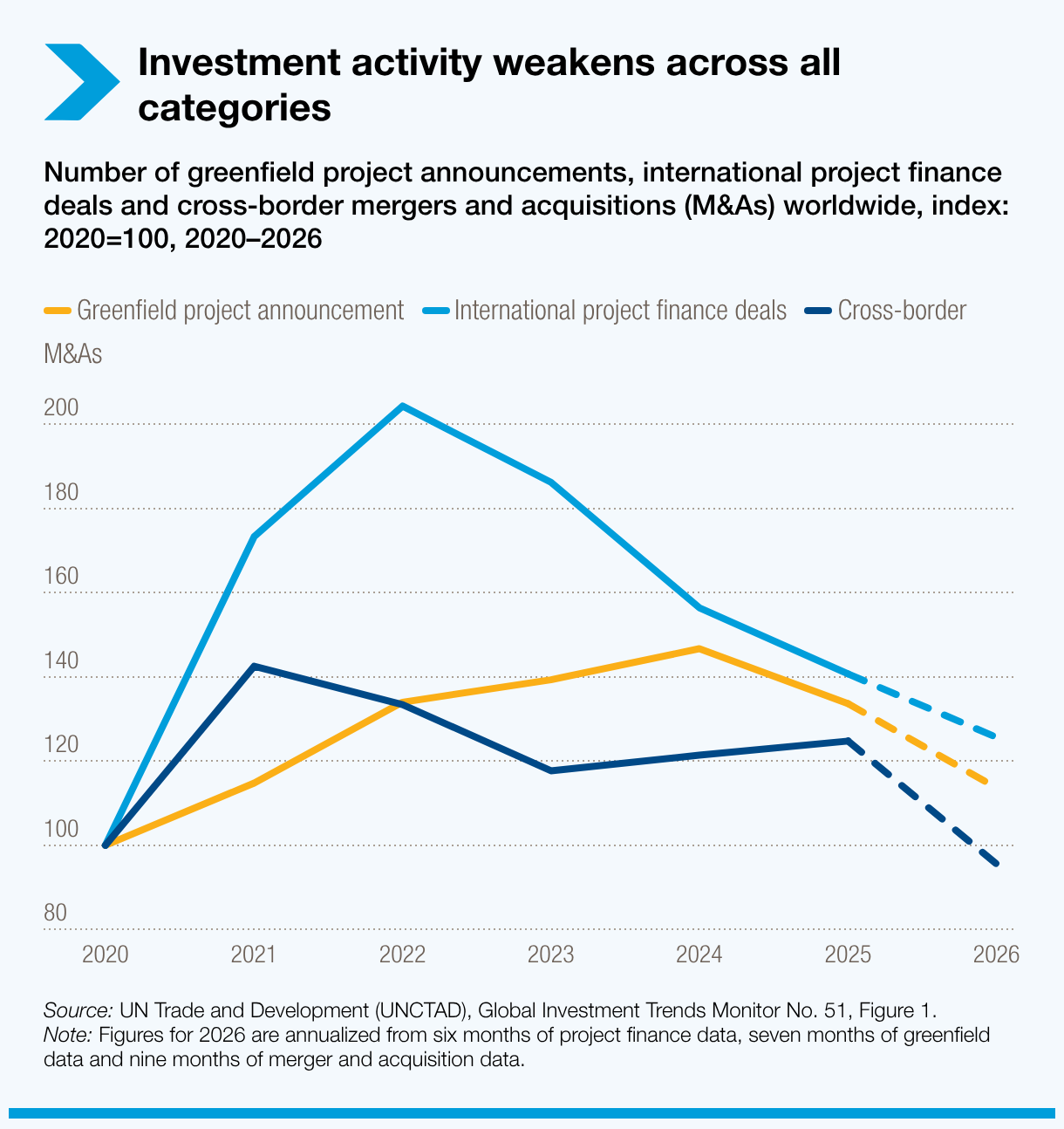
Greenfield announcements reflect intentions to invest in new operations or facilities. Activity weakened across investment types:
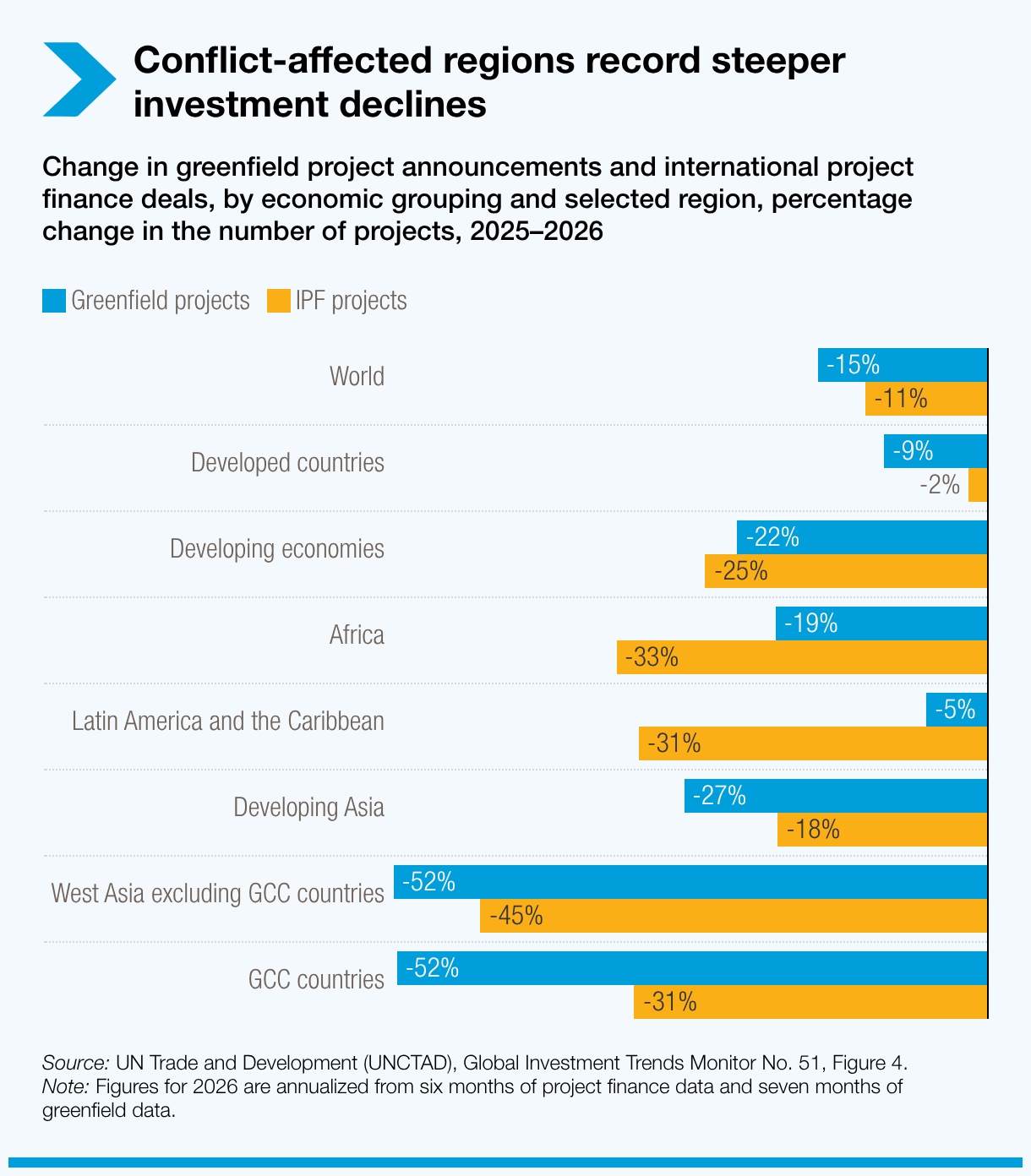
- Greenfield project announcements fell 15%.
- International project finance deals fell 11%.
- Cross-border merger and acquisition deals fell 23%.
Manufacturing project numbers fell 5%, driven by a 10% decline in developing economies. The report identifies project numbers as a more reliable indicator of manufacturing investment activity than values.
Developing economies face falling investment in essential sectors
Foreign direct investment to developing economies rose 8% in the first half of 2026 against the average half-year level in 2025. All developing regions recorded increases, yet greenfield project announcements fell by more than one-fifth.
Sustainable Development Goal project announcements fell by more than 25% in developing countries. Renewable energy project finance activity fell by about a third, against 4% in developed economies. High capital costs and economic and geopolitical uncertainty continued to constrain international project finance.
Announced greenfield investment in data centres in developing economies fell by $32 billion. The report says this suggests further concentration of digital infrastructure investment in high-income economies.
Middle East pressures extend beyond the conflict zone
West Asia’s greenfield project announcements fell by 52%. Worldwide, announcements in the first half of 2026 fell compared with the same period in 2025:
- Tourism projects fell 28%.
- Transportation and storage projects fell 22%.
The report describes these sectoral declines as consistent with conflict-related cost and uncertainty pressures.
Gulf Cooperation Council investors’ announced renewable energy and infrastructure project finance commitments exceeded $93 billion in 2025. Their outward project finance investment more than halved in the second quarter of 2026, against both a year earlier and the previous five-year average.
Domestic project finance investment more than tripled year on year, reaching four times the 2021 to 2025 average. Most of the surge came from one nearly $55 billion Emaar project in Dubai. The conflict could prompt Gulf investors to delay or scale back sustainable development projects in developing economies.
Large projects may sustain flows as pressures persist
Investment flows could remain concentrated in a few high-income economies and investment hubs. Geopolitical tensions, rising borrowing costs and energy-price pressures continue to weigh on new announcements.