

Gulf investment grows as regional disruption tests its global role
- Gulf Cooperation Council (GCC) countries are emerging as an investment bridge linking Asian capital and production networks with markets in Africa, Europe and North America.
- Outward foreign direct investment from GCC countries rose 11% to $130 billion in 2025.
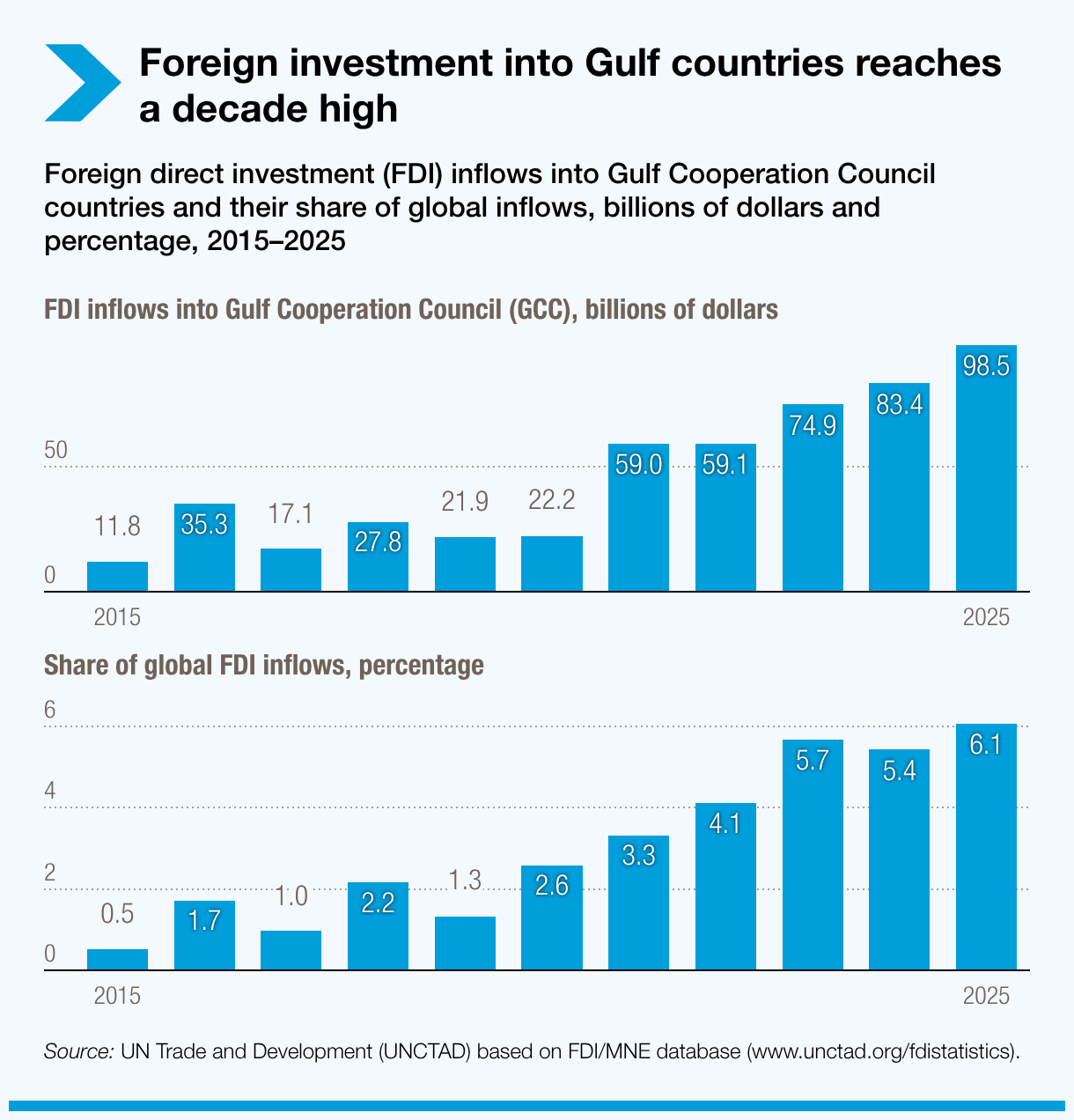
- Foreign direct investment into GCC countries rose 18% to about $99 billion in 2025, a decade high.
- Announced greenfield investment in the countries rose 66% to around $78 billion in 2025, while project numbers increased 12%.
- International project finance value in them rose 65% in 2025, despite 16% fewer deals.
Gulf Cooperation Council (GCC) countries are strengthening their role as an investment destination and a source of capital. Foreign direct investment (FDI) inflows to the GCC countries rose 18% to around $99 billion in 2025, compared with 6% globally.
In 2025, outward FDI increased 11% and exceeded inflows by almost $31 billion.
But the Strait of Hormuz crisis is testing that expansion. Preliminary indicators for the first half of 2026 point to a sharp, region-wide weakening of investment activity.
Investment gains remain concentrated
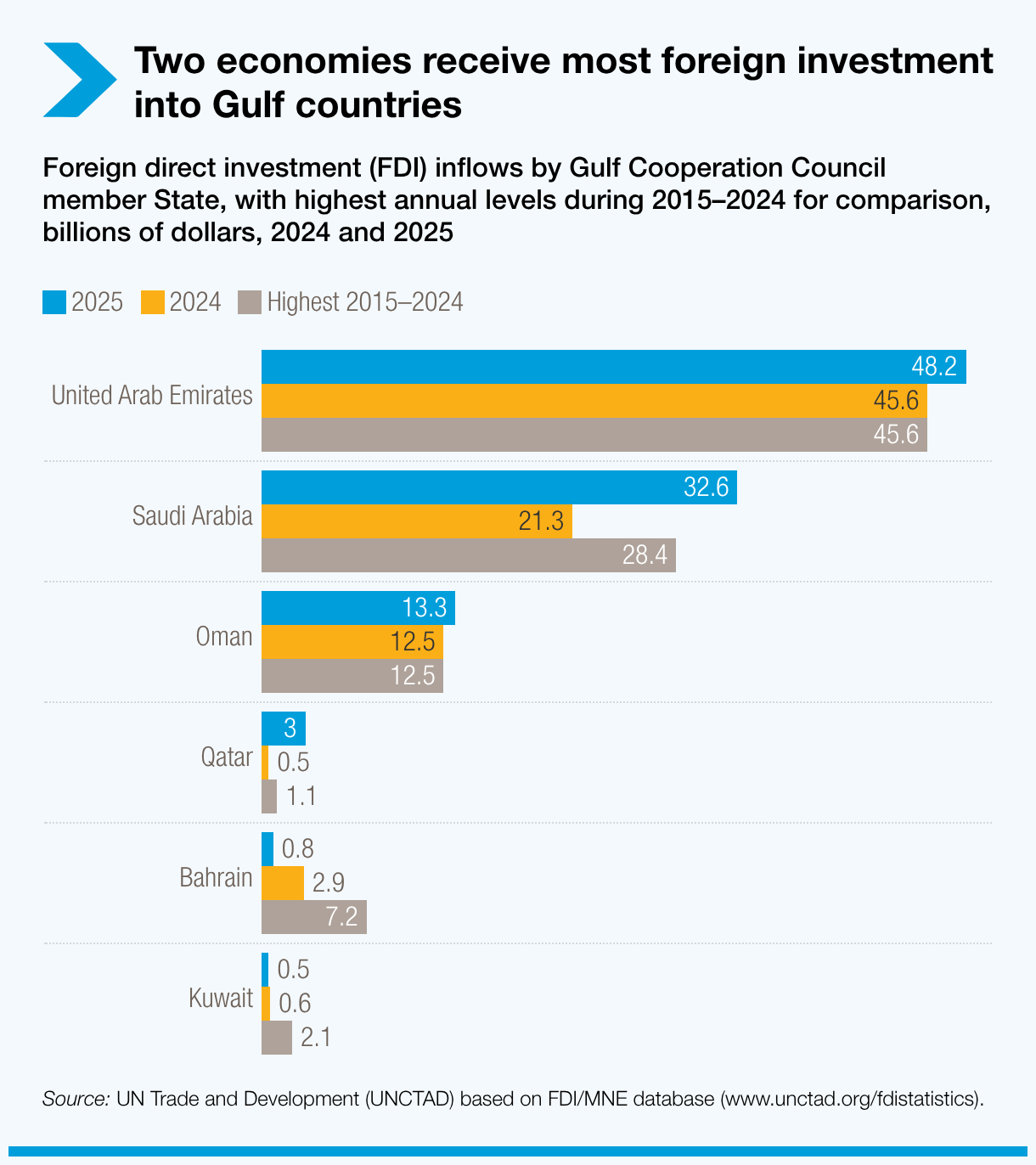
The United Arab Emirates remained the largest recipient, attracting around $48 billion. Saudi Arabia accounted for about three-quarters of the regional increase.
Together, the two economies received more than four fifths of GCC inflows. Differences reflect market size and international connectivity. They also reflect how diversification and investment reforms create opportunities for foreign investors.
Digital and industrial activities attract new investment plans
Greenfield announcements capture plans to establish or expand operations. Their value reached around $78 billion in 2025. Project numbers rose 12%, against a 10% global fall. The information and communication industry attracted the most announced value. Automotive and construction investment each rose more than five-fold.
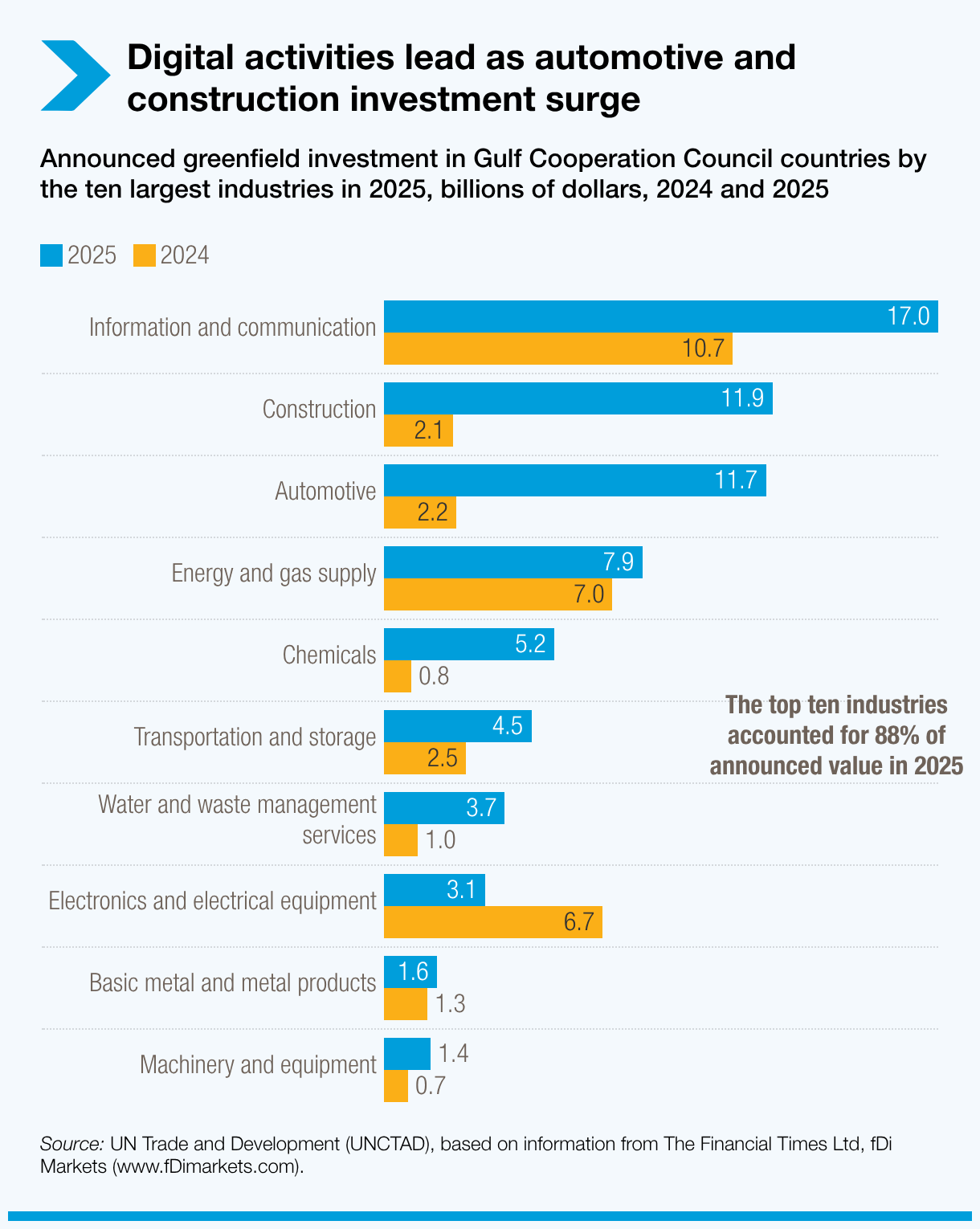
More automotive investment does not necessarily mean deeper manufacturing integration. Many projects in industries associated with global supply chains involve retail, distribution and other downstream activities rather than manufacturing.
Project finance shifts towards fewer, larger and more digital deals
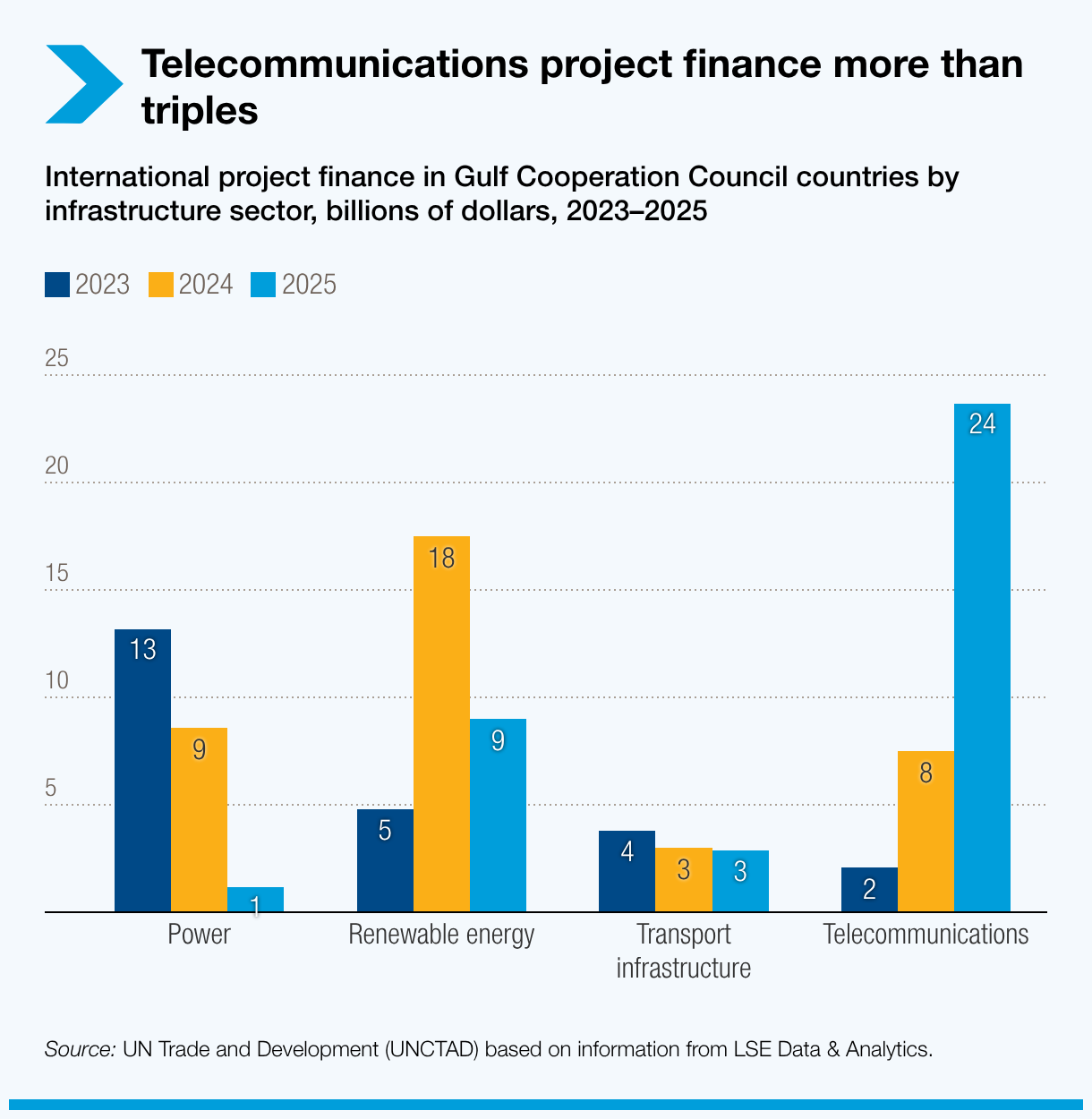
Announced international project finance value rose 65% to $114 billion in 2025, despite 16% fewer deals. International project finance for telecommunications infrastructure more than tripled to almost $24 billion. The $20 billion Stargate UAE artificial intelligence data-centre project accounted for much of the increase.
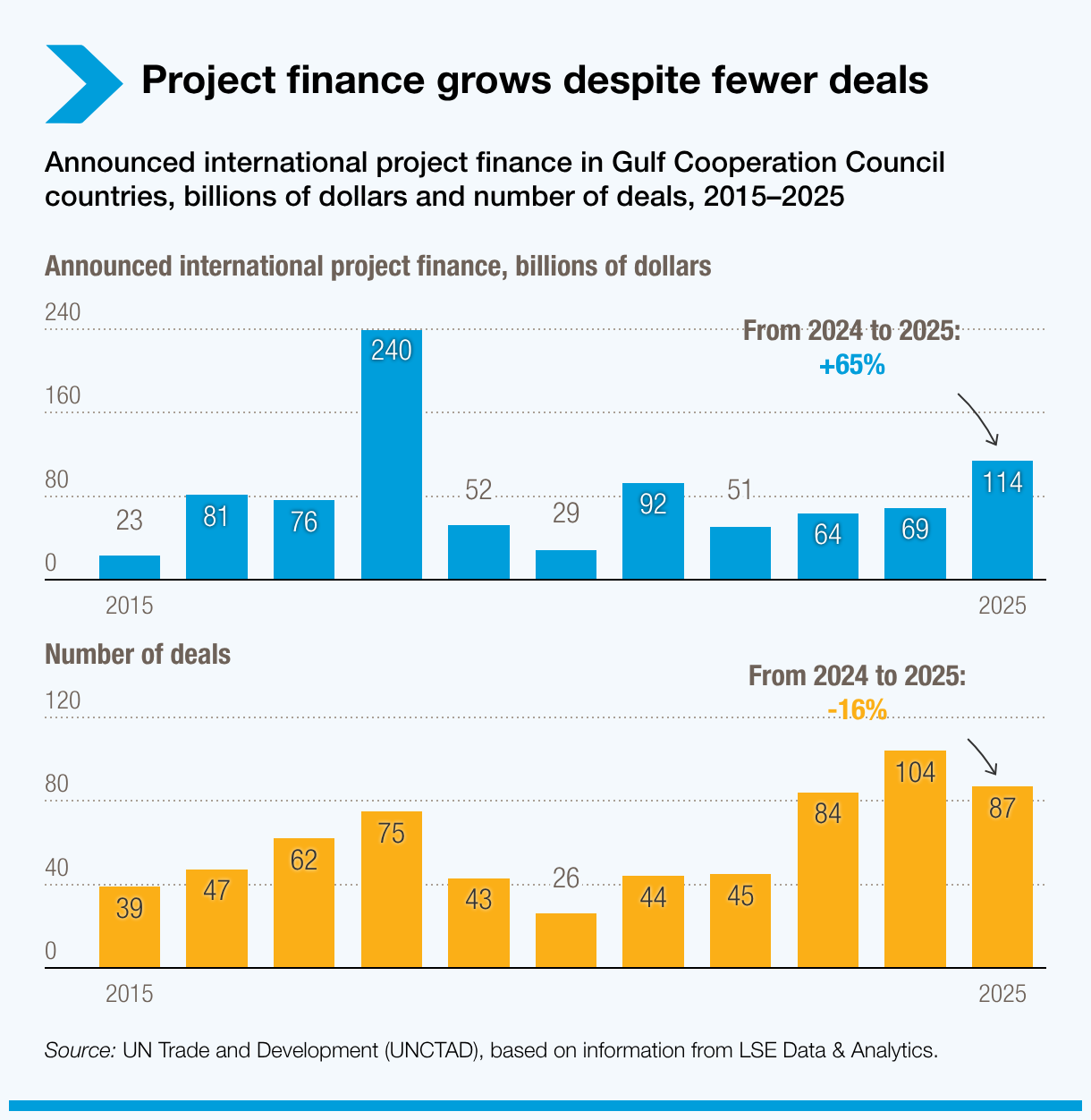
Cloud and artificial intelligence infrastructure require exceptionally large financing commitments. The surge also reflects GCC economies’ efforts to become regional and global digital hubs, particularly in Saudi Arabia and the United Arab Emirates.
Gulf investors expand abroad and connect major regions
Outward FDI reached $130 billion in 2025. Separately, announced greenfield investment outside the GCC more than tripled, from $139 billion in 2016–2020 to $461 billion in 2021–2025. Egypt and the United States were the leading destinations in 2021–2025.
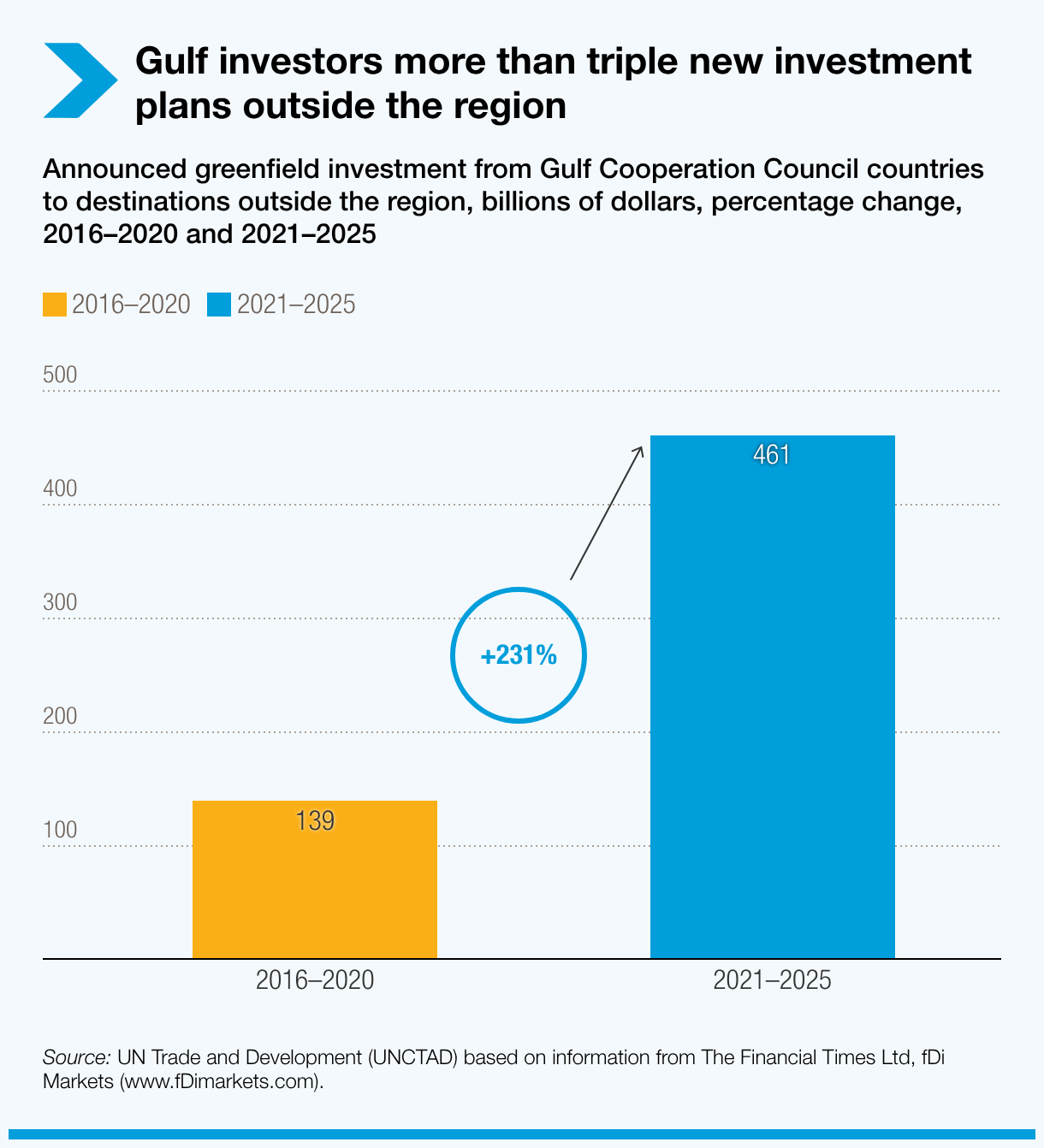
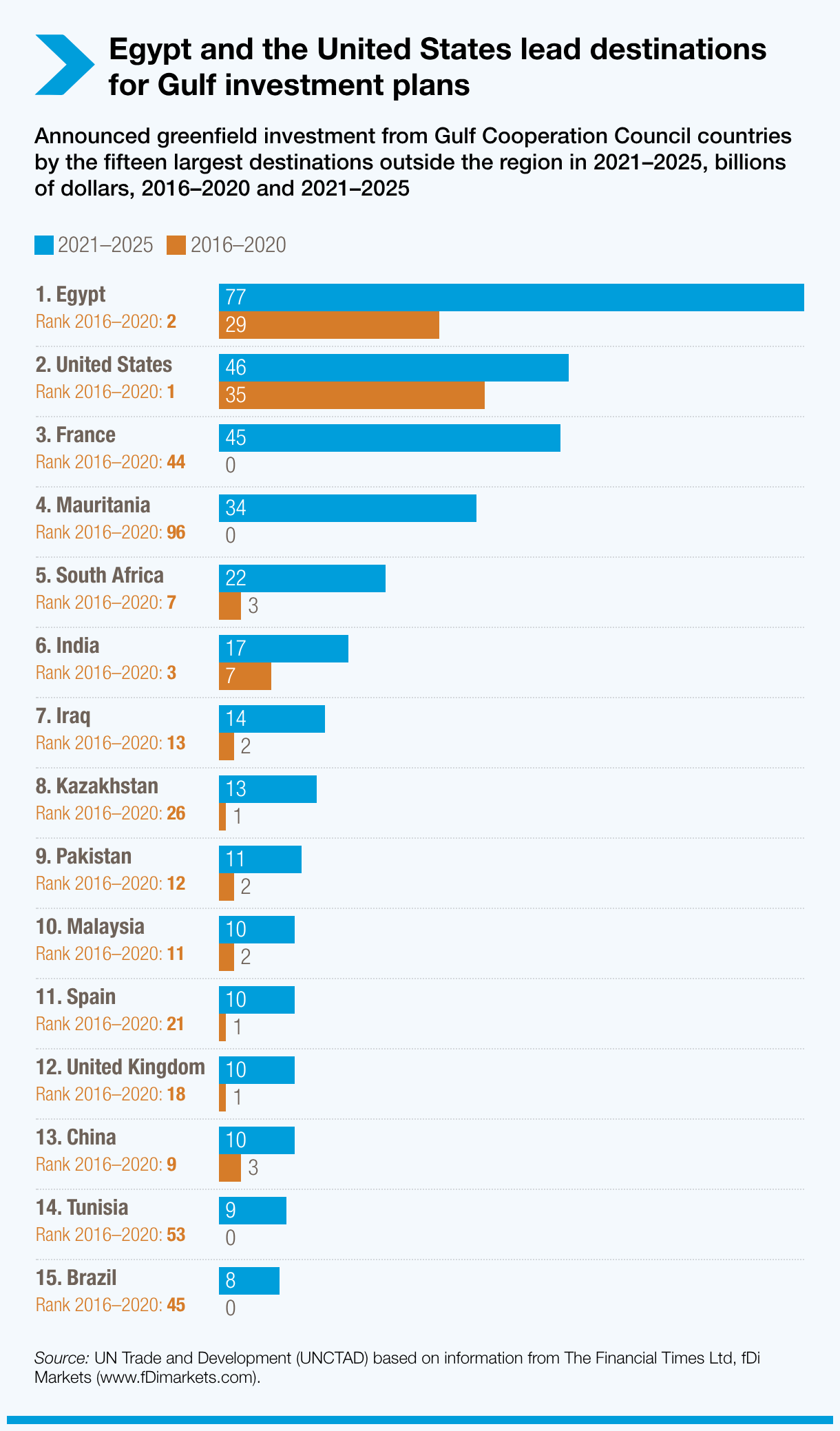
China and India have gained importance as sources of investment into the GCC, while Gulf investors have expanded abroad. Together, these trends strengthen the region’s role as an investment bridge linking Asian capital and production networks with markets in Africa, Europe and North America.
GCC investors provide significant capital to developing economies, particularly in Africa and parts of Asia and Central Asia. Their role matters for infrastructure and the energy transition, where financing gaps are large.
Reliable connections underpin future investment
Prolonged disruption could encourage sovereign investors and state-linked companies to prioritize domestic resilience, infrastructure and diversification projects. Long-term international investment programmes nevertheless remain substantial. Delayed overseas investment could affect infrastructure and renewable-energy projects in developing countries.
Stronger transport links and alternatives to vulnerable maritime routes can support resilience. A better investment environment, deeper regional integration and investment in skills, technology and domestic suppliers remain important to sustaining diversification.