


Global trade is expanding again, but the forces shaping it are undergoing significant change. Geopolitical tensions, evolving trade policies and rising uncertainty are altering trade patterns and restructuring global value chains. Fragmentation and uneven trajectories across regions and sectors are becoming defining characteristics of trade patterns.
The report shows that trade reached a new high in 2025, even as these structural shifts continue. Understanding these trends is essential for navigating a more complex and less predictable global economy.
Global trade reaches a record, driven mainly by goods
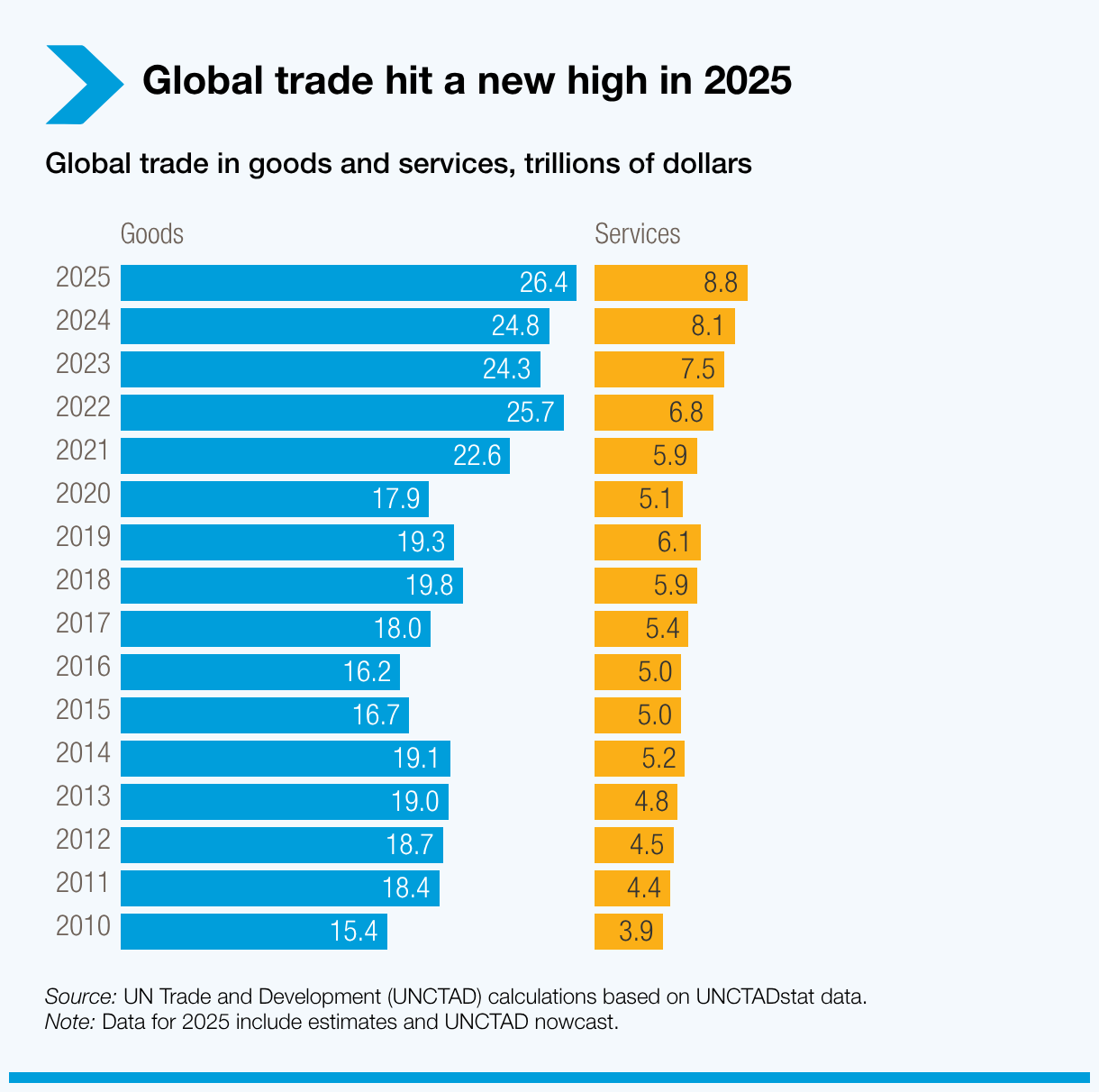
Global trade in goods and services surpassed $35 trillion in 2025 – a new all-time high. Goods made up roughly three quarters of the total. Services accounted for the remainder.
Growth in 2025 was strong across both:
- Goods trade grew by about 6.5% and drove most of the increase.
- Services grew faster, at almost 9%, continuing a long-term trend.
- Higher volumes rather than higher prices were behind most of the growth.
Services have more than doubled since 2010. This reflects the rise of digital services, e-commerce and the recovery of travel and tourism.
Globalization rebounds, but fragmentation is rising
After two years of decline, globalization strengthened in 2025, with the trade-to-GDP ratio rising again.
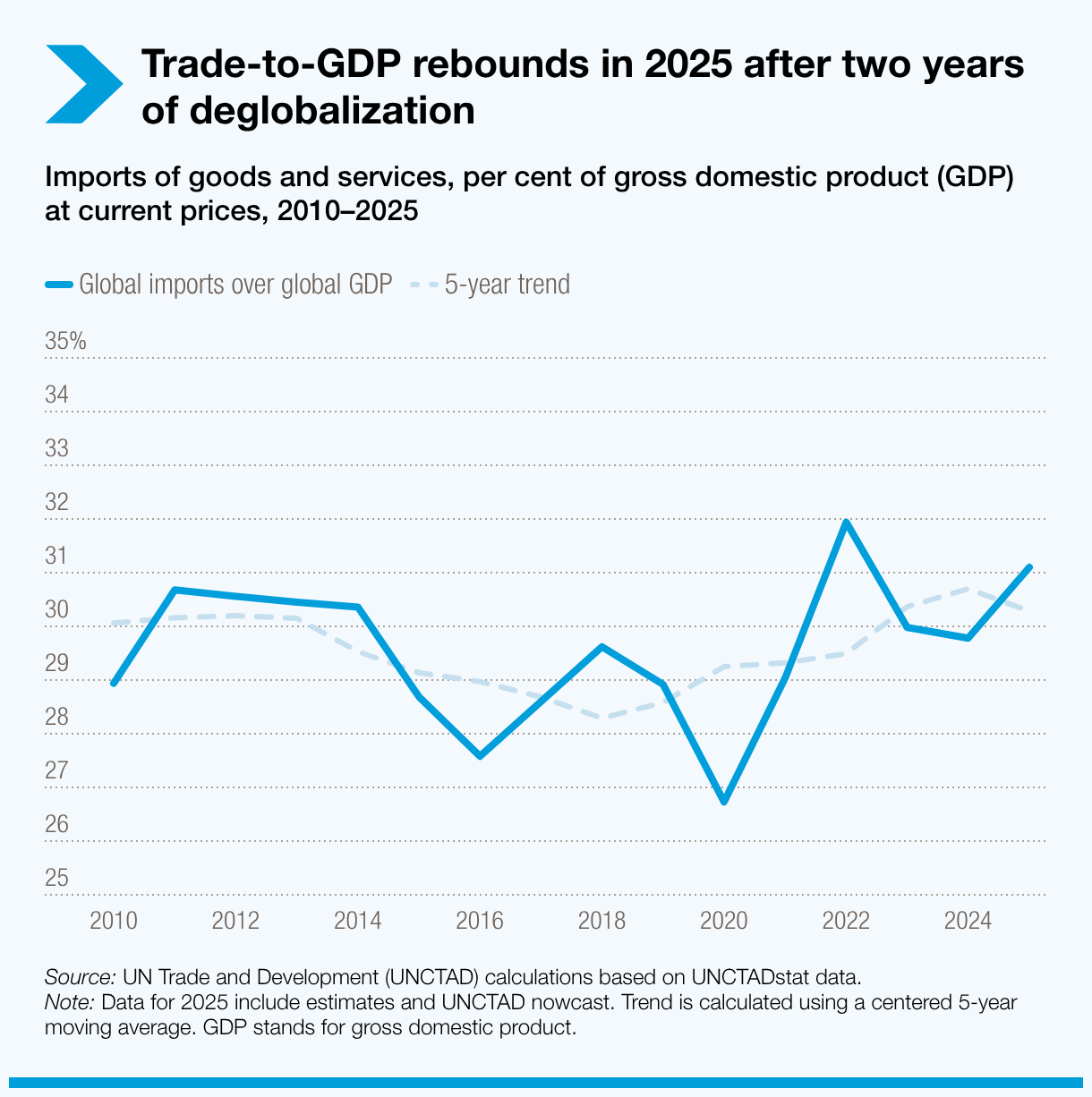
At the same time, trade patterns are shifting:
- Trade concentration increased, with faster growth in large economies.
- Long-distance trade trends stabilized, while closer trade links grew slightly faster.
- Policy changes and geopolitical tensions continue to reshape trade flows.
These shifts point to a system that is less uniform and more fragmented, with a growing focus on resilience.
Developing economies drive growth, but gaps remain
Developing economies are now the main drivers of global growth in trade in goods, especially through trade among themselves.
Key trends include:
- South-South trade exceeded $6 trillion in 2024, about one quarter of global goods trade.
- Developing economies recorded around 5% growth in exports and imports.
- But developed economies still dominate overall trade, with 54% of global exports and 58% of global imports.
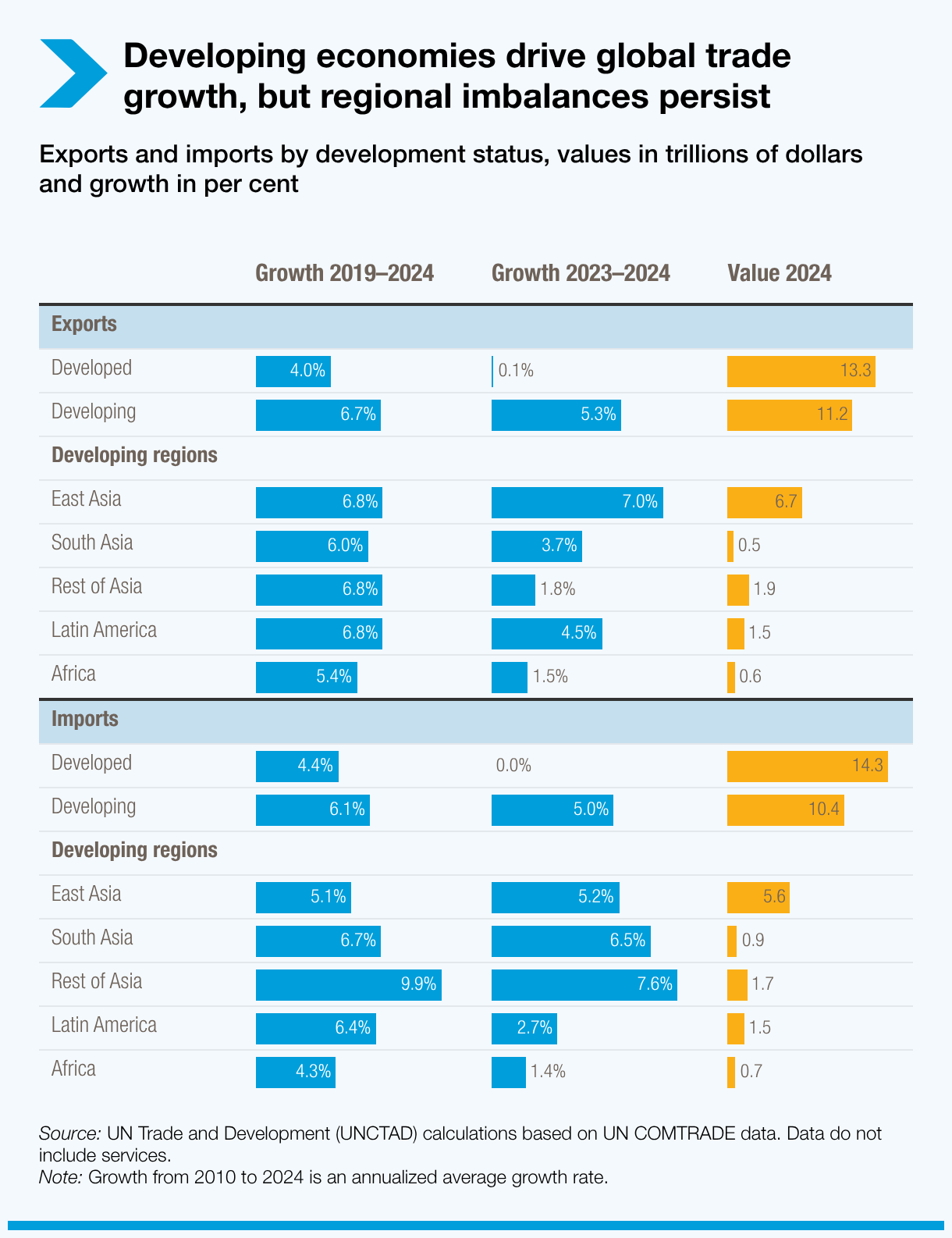
Trade remains concentrated in a few regions. Developing East Asia alone accounts for around 60% of developing-country exports. This shows both the growing role of the global South and the persistence of regional imbalances.
Sector trends show strong services growth and shifting goods trade
Trade patterns vary across sectors. Services were the fastest-growing component in 2024, expanding by about 8%. Meanwhile, trade in natural resources declined by 6%.
Within goods trade:
- Intermediate goods remained the largest category, at 41% of total.
- Capital and consumer goods reached record levels.
- Processed goods expanded, while primary goods declined.
At a more detailed level:
- Machinery and precision instruments led manufacturing growth.
- Coffee, tea, spices and prepared foods drove agricultural trade.
- Mineral fuels declined, mainly due to falling prices.
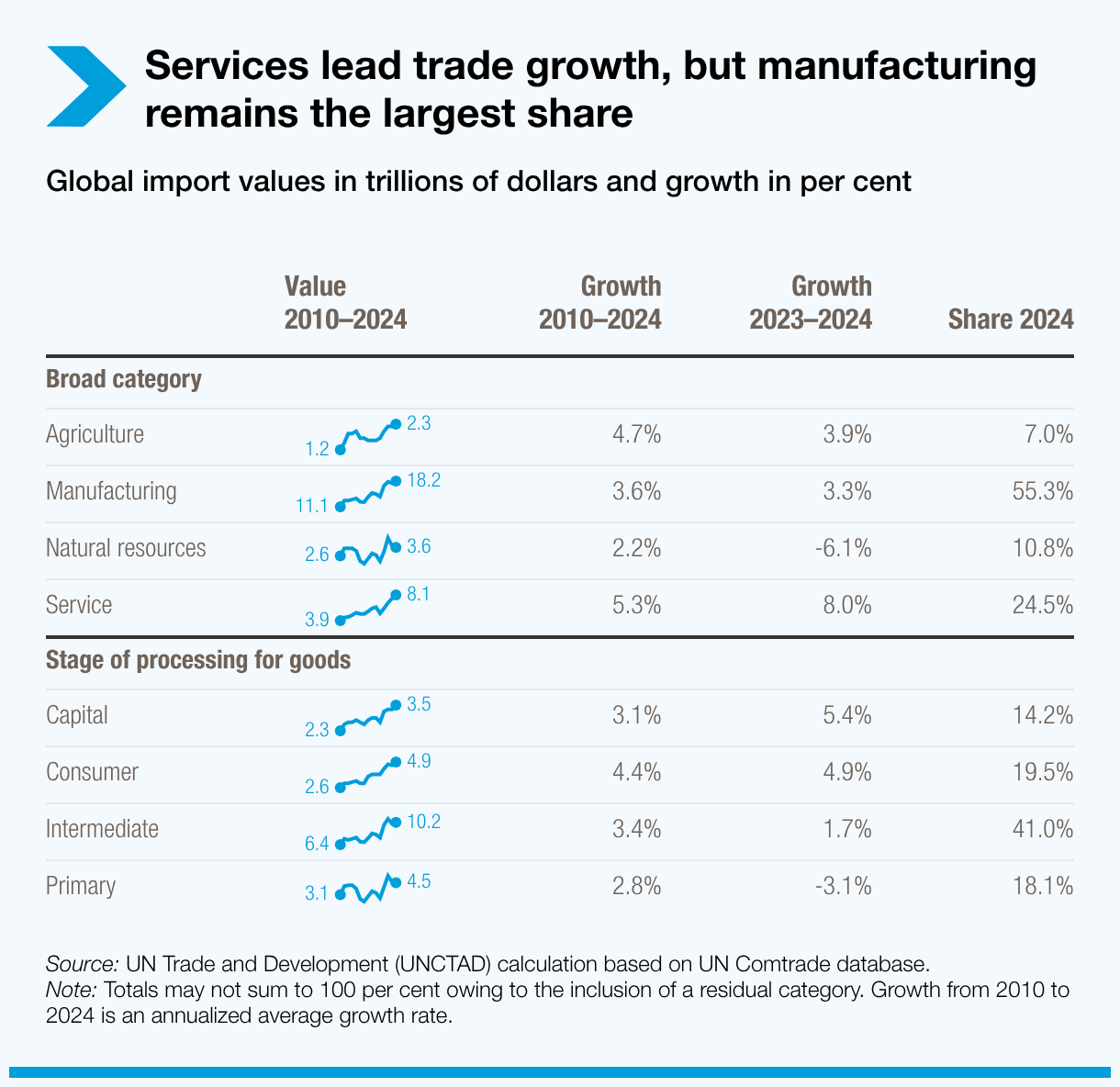
These trends reflect changes in demand, along with price movements in key commodities.
Trade networks remain uneven and less integrated
Global trade networks remain uneven across regions and sectors. Integration is strongest in developed economies and East Asia. It is weaker in other regions.
Key patterns include:
- International integration has declined across most manufacturing sectors since 2019.
- Regional integration remains strongest in developed economies and East Asia.
- Africa and Latin America continue to exhibit weak regional integration.
- Extra-regional partners remain the primary trade destination for most developing regions, rather than intra-regional markets.
Conclusion: Growth continues, but the system is shifting
Global trade reached a new peak in 2025, but the underlying structure of the system is changing. Fragmentation, regionalization and uneven integration are becoming more pronounced features of global commerce.
Developing economies are taking on a larger role in driving growth, even as long-standing imbalances persist. Meanwhile, geopolitical tensions, evolving trade policies and structural shifts in production continue to redirect trade flows and reshape global value chains.
This changing landscape is more complex and less predictable than in previous decades. To stay competitive and capture future gains, countries will need to adapt – by strengthening resilience, deepening regional ties where beneficial and positioning themselves within the evolving architecture of global trade.