




Ministers of finance and central bank governors of developing countries convened on 15 April in Washington, DC on the margins of the IMF-World Bank Spring Meetings to launch the platform.
The opening segment was streamed live on UNTV and featured statements by:
- António Guterres, Secretary-General of the United Nations
- Mia Amor Mottley, Prime Minister of Barbados
- Ahmed Kouchouck, Minister of Finance of Egypt
- Muhammad Aurangzeb, Federal Minister for Finance and Revenue of Pakistan
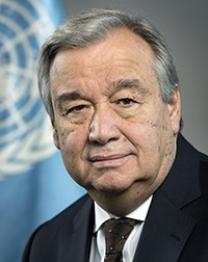
I believe the creation of the Borrowers' Platform is an essential instrument in order
for a change in power relations to be possible in the future, and that changing
power relations is absolutely essential to have a fair international financial
architecture.
Member state views

We are confident that the meaningful participation of borrowing countries in the governance of the international financial system will ensure that rules are written with us, not for us.

Sudan joins this Platform with a clear message: borrowing countries must no longer face systemic vulnerabilities alone.
Through this collective effort, we can build a more equitable, transparent, and development-aligned global financial system—one that supports resilience, recovery, and sustainable development for all.
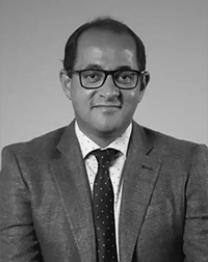
There is nothing more powerful than an idea whose time has come.
Today’s achievement reaffirms our shared commitment to multilateralism – one that is genuinely inclusive, cooperative, and reflective of all its members.
What was once a long-standing aspiration of developing countries has now become a concrete and collective step forward.
Today stands as a strong statement of intent: the voices of borrowing nations and countries belong at the very center of the global financial dialogue.

The institutions that govern sovereign finance today were built at a specific moment, by a specific set of actors. Most of us were not in that room – not incidentally, but structurally.
The methodologies that have calcified around those institutions – the frameworks that determine creditworthiness and the models that price sovereign risk – bear the imprint of that origin.
They were not designed to see us accurately. They were designed to manage us prudently.