


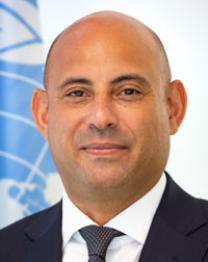
United Nations Secretary-General António Guterres announced on 15 August 2022 the appointment of Simon Stiell of Grenada as Executive Secretary of the United Nations Framework Convention on Climate Change (UNFCCC). The appointment has been made after consultation with the Conference of Parties through its Bureau.
He will succeed Patricia Espinosa of Mexico to whom the Secretary-General is grateful for her commitment and dedicated service to the Organization. The Secretary-General also wishes to extend his appreciation to the Executive Secretary of the United Nations Convention to Combat Desertification, Ibrahim Thiaw, who will continue to serve as Acting Executive Secretary of UNFCCC until Mr. Stiell assumes this position.
Mr. Stiell, a true champion for formulating creative approaches for our collective global response to the climate crisis, brings to the position a unique skillset developed over a thirty-three year career, coupled with vast experience in bilateral, regional and multilateral affairs.
Mr. Stiell served as senior minister in the Government of Grenada from 2013 through June 2022, holding the portfolio of Minister for Climate Resilience and the Environment for five years. He previously served as Minister for Education and Human Resource Development, Minister of State with responsibility for human resource development and the environment and as a Parliamentary Secretary within the Ministry of Agriculture, Lands, Forestry and Fisheries. He also served as a member of Grenada’s Upper House of Parliament, the Senate, where he served as Leader of Government Business.
Prior to joining government, Mr. Stiell’s career spanned some fourteen years within the technology sector, holding senior executive positions in a number of industry leading companies, from Silicon Valley based technology start-ups to major corporations, including Nokia and GEC Plessey Telecommunications.
Mr. Stiell originally trained as an engineer at London Metropolitan University and College of North West London, and holds a Master of Business Administration from the University of Westminster in the United Kingdom.
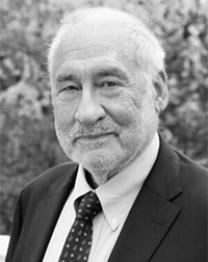
Joseph E. Stiglitz is an American economist and a professor at Columbia University. He is also the co-chair of the High-Level Expert Group on the Measurement of Economic Performance and Social Progress at the OECD, and the Chief Economist of the Roosevelt Institute. A recipient of the Nobel Memorial Prize in Economic Sciences (2001) and the John Bates Clark Medal (1979), he is a former senior vice president and chief economist of the World Bank and a former member and chairman of the (US president's) Council of Economic Advisers.
In 2000, Stiglitz founded the Initiative for Policy Dialogue, a think tank on international development based at Columbia University. He has been a member of the Columbia faculty since 2001 and received that university's highest academic rank (university professor) in 2003. In 2011 Stiglitz was named by Time magazine as one of the 100 most influential people in the world. Known for his pioneering work on asymmetric information, Stiglitz's work focuses on income distribution, risk, corporate governance, public policy, macroeconomics and globalization. He is the author of numerous books, and several bestsellers. His most recent titles are People, Power, and Profits, Rewriting the Rules of the European Economy, Globalization and Its Discontents Revisited, The Euro and Rewriting the Rules of the American Economy.


Susan heads the Emerging Policy Issues Division at the Trade and Agriculture Directorate of the OECD. Ms. Stone has worked extensively in the area of trade policy and its interaction with employment, production networks, poverty reduction, investment, regulation and the environment. Her work has been published as national and multinational government reports, edited volumes, as well as in peer-reviewed journals. Susan has a PhD in international trade and finance from Drexel University.
Peter Stoute-King is currently Fintech Practice Lead at Techstars, where he is responsible for developing and managing the industry solutions practice, including driving innovation partnerships, thought leadership, service delivery, and business development with leading global financial services firms.
He previously led the Investment Network team at Convergence where he was responsible for building out a matchmaking platform that connected public, private, and philanthropic investors to scale up blended finance investments in emerging and frontier markets.
Peter has also held other finance roles including with the World Economic Forum, and as an investment officer with the Inter-American Development Bank (IDB), executing structured and project finance transactions across Latin America and the Caribbean.

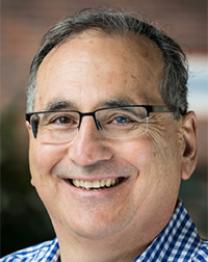
Kenneth Strzepek is Research Scientist, Center for Sustainability Science and Strategy, Massachusetts Institute of Technology (MIT)Massachusetts Institute of Technology (MIT), and Professor Emeritus of Civil, Environmental, and Architectural Engineering, University of Boulder at Colorado.
Kenneth Strzepek has spent 30 years as a researcher and practitioner at the nexus of engineering, environmental and economics systems, primarily related to water resource planning and management, river basin planning, and modeling of agricultural, environmental, and water resources systems. His work includes applications of operations research, engineering economics, micro-economics and environmental economics to a broad range applications: from project scale to national and global investment policy studies. He has worked for a range of national governments as well as the United Nations, the World Bank, the USAID. He is Professor Emeritus of Civil, Environmental and Architectural Engineering at the University of Colorado at Boulder, and recently a Visiting Professor of Economics and Affiliated Professor in College of Architecture and Planning at the University of Colorado at Boulder. He is a Visiting Senior Research Fellow at the International Food Policy Research Institute as well as an International Fellow at the Center for Environmental Economics and Policy for Africa and Examiner in the Department of Agricultural Economics at the University of Pretoria, South Africa. He has been a contributing author to the Second IPCC assessment, the Millennium Ecosystem Assessment, the World Water Vision, and the UN World Water Development Report. He is currently the USAID Scientific Liaison Office on Water and Climate Change to the CGIAR. Prof. Strzepek has a PhD in Water Resources Systems Analysis from MIT, an MA in Economics from the University of Colorado and is currently a PhD candidate in the Department of Economics at the University of Hamburg, Germany.
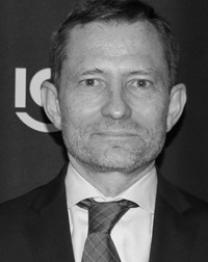
Roberto Suárez Santos was appointed Secretary-General of the International Organisation of Employers (IOE) on 26 October 2018, having held the post of Deputy Secretary-General since December 2012.
Prior to joining the IOE, Roberto was ILO Programme Director for the promotion of youth employment in the Maghreb region. He previously worked at the Spanish Confederation of Employers’ Organisations in areas ranging from comparative labour policies and labour relations to youth unemployment and social and employment policy. He was BUSINESSEUROPE’s Vice President for Labour Affairs for several years. He also was Vice-President of Business at OECD’s Employment and Labour Affairs Committee, and a member of various follow-up committees for the European Social Fund and the EU Economic and Social Committee.
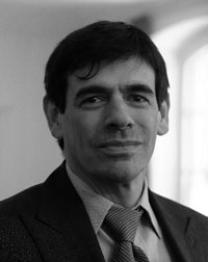
A veteran diplomat, he has served as Panama’s Ambassador to UNCTAD, the WTO and WIPO for 18 years. He was also Panama’s alternate representative on the UN Security Council. He began his diplomatic career as Legal Council for Panama’s Embassy in Washington, DC.
He has played a long and active role with UNCTAD, including as Chair of the Trade and Development Board and the Committee of the Whole for UNCTAD XIV in Nairobi.
He has a BA in Comparative Literature form Wesleyan University in Connecticut, USA, and an MA in Comparative Literature form Columbia University, in New York. He studied law at Tulane University and the University of Regensburg.
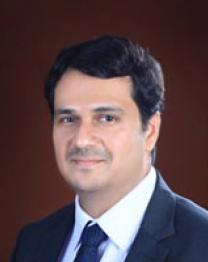
Mahesh Sugathan is an independent expert on sustainable trade based in Geneva, Switzerland. He also serves as Senior Policy Fellow at the Forum on Trade, Environment and the SDGs at the Graduate Institute in Geneva.
His work focuses on research and analysis of trade and investment policies, negotiations and agreements (WTO, regional and bilateral trade negotiations and agreements) relevant to sustainable development issues such as environmental technologies and services, plastic pollution and plastic substitutes, climate change, agriculture, biodiversity, clean energy, environmental pollution, circular economy, product standards and labelling.
He has been a consultant for a range of international organisations including the World Bank, the International Trade Centre (ITC), United Nations Conference on Trade and Development (UNCTAD), the United Nations Environment Programme (UNEP) and the ACP Secretariat.