

UNCTAD Supply Chain Innovation Challenge 2026
The 2nd UNCTAD Supply Chain Innovation Challenge is a key part of the 2nd Global Supply Chain Forum (GSCF).
Marylyn Gathiru and Godfrey Noel, from the Kenyan social enterprise Kilimora, won the challenge. Their proposal, AgriKonnekt: Cooperative Verification Infrastructure, aims to strengthen agricultural supply chains in sub-Saharan Africa.
Under the theme “Frontier technology in countering supply chain disruptions,” the challenge invited innovators worldwide to propose ways to use frontier technologies to strengthen global supply chain resilience.
They were asked to submit an original proposal in English, between 1,500 and 3,000 words, showing how frontier technology could help prepare for and counter supply chain disruptions. Individuals and teams of up to four could apply. Proposals had to include:
- A clear problem statement
- A detailed description of the proposed solution
- The solution’s anticipated impact
- A feasibility assessment showing how the solution could work in practice
UNCTAD received 623 proposals from around the world, with ideas for using frontier technologies to anticipate, respond to and recover from supply chain disruptions.
Six proposals were selected for the final stage based on five criteria:
- Innovation
- Feasibility
- Scalability
- Sustainability
- Resilience
The winner was announced at a virtual award ceremony on 15 October 2026, during which all finalists presented their solutions.
Prize
The winner of the 2nd UNCTAD Supply Chain Innovation Challenge will have the opportunity to participate in the 2nd Global Supply Chain Forum in Riyadh, Saudi Arabia, and present their solution to an international audience of policymakers, industry leaders and supply chain experts.
All finalists received a certificate of appreciation.
Meet the Challenge’s Winners and Finalists
Winners
Cooperative Edge: How dual-layer satellite and IoT verification infrastructure can anticipate, withstand, and recover from agricultural supply chain disruptions in sub-Saharan Africa

Marylyn Gathiru
Research and Editorial Lead
Kilimora Company Limited by Guarantee
Marylyn Gathiru leads evidence generation, monitoring and evaluation, and policy documentation for AgriKonnekt at Kilimora, a Kenyan social enterprise building digital infrastructure for smallholder agriculture across Africa. She supports the development of systems that combine agricultural, environmental, and market data to strengthen supply chains, measure impact, and improve access to agricultural and climate finance. An analytical chemist and postgraduate researcher at Kenyatta University, Marylyn has a background in nanotechnology, water, sanitation and hygiene (WASH), and environmental research in Africa.
The expertise of Marylyn includes research methodology, soil health analysis, farmer outcome tracking, and monitoring, evaluation and learning. She translates research findings into evidence reports and policy briefs to support institutional adoption. She is a 2026 WILD Network Leadership for Social Impact Forum Fellow and is affiliated with the Organization for Women in Science for the Developing World (OWSD). Her work brings together scientific research, evidence-based decision-making, and inclusive development to advance sustainable solutions for communities.
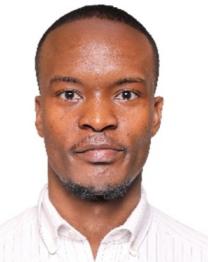
Godfrey is the founder and Strategy Lead at Kilimora Company Limited by Guarantee, a Kenyan social enterprise building digital infrastructure for smallholder agriculture across Africa. He is a Gold Award winner of the Global AgriInno Challenge 2026. He leads the development of AgriKonnekt, a digital platform that connects farmers and agricultural organisations to verified production, environmental, market, and sustainability data. AgriKonnekt uses satellite intelligence, IoT sensors, and digital tools to strengthen supply chain visibility and create pathways to markets, agricultural finance, and climate finance.
Godfrey brings experience in grants management, partnerships, business development, and technology enabled financial inclusion. He has supported the mobilisation of over USD 1.2 million in funding and works with partners across agriculture, technology, finance, and development. He has served as a World Food Forum Youth Representative and was a beVisioneers: The Mercedes-Benz Pioneer Fellow.
Finalists
Smart foldable container: A frontier technology solution for greener and more resilient global supply chains

Veronica is an International Trade Analyst professional and entrepreneur based in the United Arab Emirates, working at the intersection of global trade, supply chains, technology and industrial innovation.
With a background in international trade and entrepreneurship, Veronica has worked on technology-driven ventures, including robotics and industrial solutions. She is particularly interested in identifying structural inefficiencies within traditional systems and transforming them into opportunities for innovation, greater efficiency and resilience. Veronica is currently involved with Smart Future Labs, contributing to the development of innovative industrial technologies addressing real-world challenges across global supply chains. Her current focus is the Smart Foldable Container project, which combines foldable engineering, automation and digital technologies to rethink how empty-container logistics can be managed.
Based in the UAE, Veronica is focused on developing and scaling frontier technologies from the GCC to international markets, with the broader ambition of contributing to more sustainable, resilient and intelligent global supply chains.
CONNECTAINER adaptive container infrastructure for resilient, sustainable and inclusive global supply chains
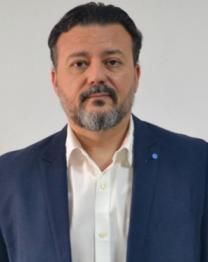
Jesús García López is a Spanish maritime and logistics professional with more than 20 years of experience across shipping, freight forwarding, port agency, road transport and quality management. Much of his career has been spent close to real operational challenges, where equipment availability, process design and day-to-day constraints directly affect the movement of cargo. That experience has shaped his interest in practical innovation: solutions that improve the way logistics work without depending on major changes to the infrastructure already in place.
He is one of the three co-inventors of CONNECTAINER and is directly involved in its ongoing development and international positioning. The concept was created to address a specific problem in container logistics: the mismatch between available 20-foot and 40-foot equipment and the cargo demand at each location.
His main areas of interest are supply chain resilience, maritime decarbonization, equipment efficiency and practical technologies for global logistics.
A digitized and traceable supply chain platform

Tamir is the founder of Obortech and creator of the Smart Hub platform, under his leadership, Obortech’s Smart Hub has earned 15 international awards and recognitions from prestigious global organizations and initiatives, including UNCCD’s COP17, Microsoft, Google, PwC Brussels, the World Bank, EIT Food, China’s Largest Agrifood Innovation Conference, Poland Prize, Berlin Partner, and Fruit Logistica.
He brings over 15 years of experience leading sustainability-focused international initiatives. His track record includes managing the U.S. government-funded Energy and Environment Project—focused on combating air pollution through renewable energy and energy-efficient technologies—and the Swiss government-funded Sustainable Mining Project, which promoted responsible mining, inclusive community building, and the development of an international knowledge hub for industry best practices. Additionally, he offers over 20 years of expertise in digital product design, highlighted by winning Adidas’s Global Product Design Contest.
A distributed immune system for global food supply chains: 15-minute, phone-read pathogen detection from farm to table

Reem Mahrat is the Founder and CEO of EazeBio, Inc., a California company putting a clinical lab in every hand: lab-grade biomarker testing at home, with results in minutes and AI that turns each result into insight. A chemical engineer by training, Reem is a four-time founder with three exits: RamanID (acquired by NomadX), Calico Bio Labs (acquired by Abcam) and Mariposa (acquired by Spring Bio, later Roche). She is a named inventor on more than 13 patent applications, and her team's work on de novo protein biosensors and rapid Tau testing is published in the Journal of Fluorescence.
Reem advises at Stanford SPARK, serves as Entrepreneur-in-Residence at Daybreak Labs, and was named a Marquis Who's Who Top Scientist in 2024. She is also the author of five books. Her mission is simple: rigor and access should never be a trade-off.
CRITICAL MASS: A digital buying cooperative enabling SMEs to access the scale advantages of global supply chains

Usman is a Supply Chain Management professional with 27 years of experience driving operational excellence across manufacturing, healthcare, retail and technology. His work centers on AI-driven analytics, Lean culture and Six Sigma, helping organizations cut costs, improve efficiency and build genuinely data-driven decision-making into their supply chains. More recently he has focused on Agentic AI for digital transformation, applying AI-based decision-making across supply chain and broader business processes.
He serves as Group Head of Supply Chain Management at Qadri Group of Industries in Pakistan, where this experience shaped Critical Mass, a federated AI platform pooling small manufacturers' demand into the buying power large corporations usually enjoy alone.

Imad is a final-year Data Science student at the Ghulam Ishaq Khan Institute in Pakistan and Technical Lead for AI, data analytics and matching architecture on Critical Mass.
His work centers on coordination between firms that do not share data: how to pool demand across small manufacturers, match it into viable lots, and divide the savings in a way every participant accepts. He designed the platform's lot-formation and matching logic, its sealed-bid supplier scoring, and its Shapley-value rule for allocating gains, and sized the pilot against 57,384 Pakistani customs records covering 752 importers.
His final-year research tests whether pooled cross-firm order histories forecast demand better than any single firm's own.


