

- The São Paulo Round Protocol of the Global System of Trade Preferences among Developing Countries (GSTP) is one ratification away from entering into force, marking a major milestone for South–South trade cooperation after almost two decades of negotiations and preparations.
- UNCTAD estimates that implementation could generate welfare gains of up to $14 billion and tariff reductions of at least 20% on about 6,000 products.
- Participating countries represent a market of around $18 trillion and more than 4 billion people.
- Members will meet in Geneva on 20 July 2026 to review progress and prepare for implementation.
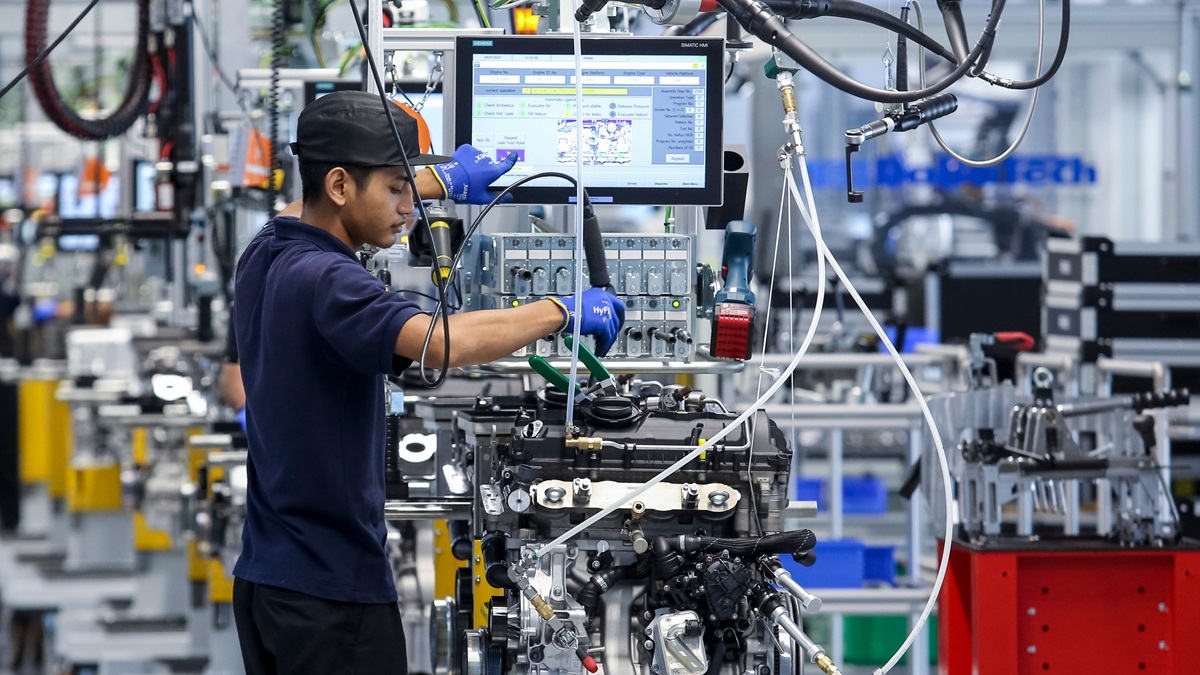
© Shutterstock/Abdul Razak Latif | Kedah State, Malaysia.
The São Paulo Round Protocol is now one ratification away from entering into force, bringing developing countries closer to realizing one of the most ambitious South–South trade agreements after nearly two decades of efforts.
At a time of growing geopolitical tensions, supply chain disruptions and economic fragmentation, the agreement offers developing countries a practical way to expand trade opportunities, diversify markets and strengthen economic resilience.
Unlocking opportunities for developing countries
UNCTAD estimates that implementation of the agreement could generate welfare gains of up to $27 billion across participating economies.
Once operational, the agreement will provide the eleven participating countries with tariff cuts of at least 20% on around 6,000 products, creating new export opportunities and strengthening regional and inter-regional value chains.
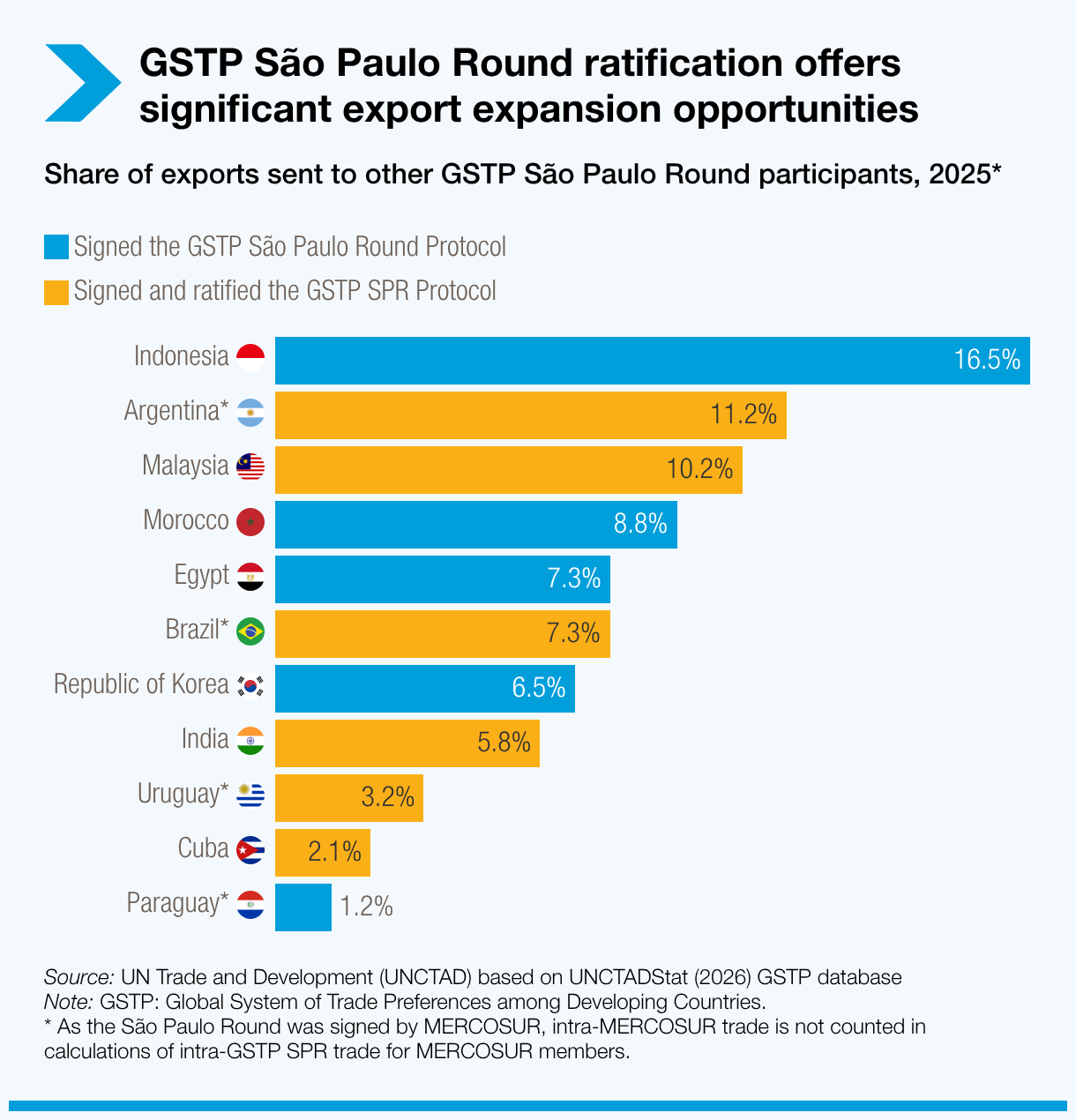
For many countries, the benefits go beyond trade. Deeper South–South economic integration can support industrial development, economic diversification and inter-regional value chains.
Why it matters now
Today, more than half of developing-country exports are destined for other developing economies.
Participating countries represent a market of approximately $18 trillion and account for nearly one fifth of global merchandise imports, underscoring the growing economic importance of the Global South.
The renewed momentum around the agreement reflects commitments made by member States during UNCTAD16, where called for accelerated efforts towards its entry into force and implementation.
Preparing for implementation
Concluded in 2010, the São Paulo Round Protocol is the most ambitious outcome under the Global System of Trade Preferences among Developing Countries, the only inter-regional trade agreement negotiated and led exclusively by developing countries.
As Secretariat of the initiative, UNCTAD is supporting participating countries in preparing for implementation through technical assistance and analytical work, including technical notes highlighting South–South trade opportunities in sectors such as agriculture and marine fisheries and aquaculture.
Participating countries to meet in Geneva
Members will gather in Geneva on 20 July 2026 at the 34th session of the Committee of Participants of the Global System of Trade Preferences among Developing Countries (GSTP COP34) .
The meeting will review progress towards entry into force, discuss implementation priorities and explore ways to further strengthen South–South trade cooperation.
Discussions are expected to cover bio-based value chains, investment, finance, technology and sustainable development.
About the agreement
Established in 1988, the Global System of Trade Preferences among Developing Countries (GSTP) is the only inter-regional trade agreement negotiated and led exclusively by developing countries and administered by UNCTAD. Learn more about the GSTP in this factsheet.