


The Global System of Trade Preferences among Developing Countries (GSTP) is gaining new momentum as it moves from negotiation to implementation.
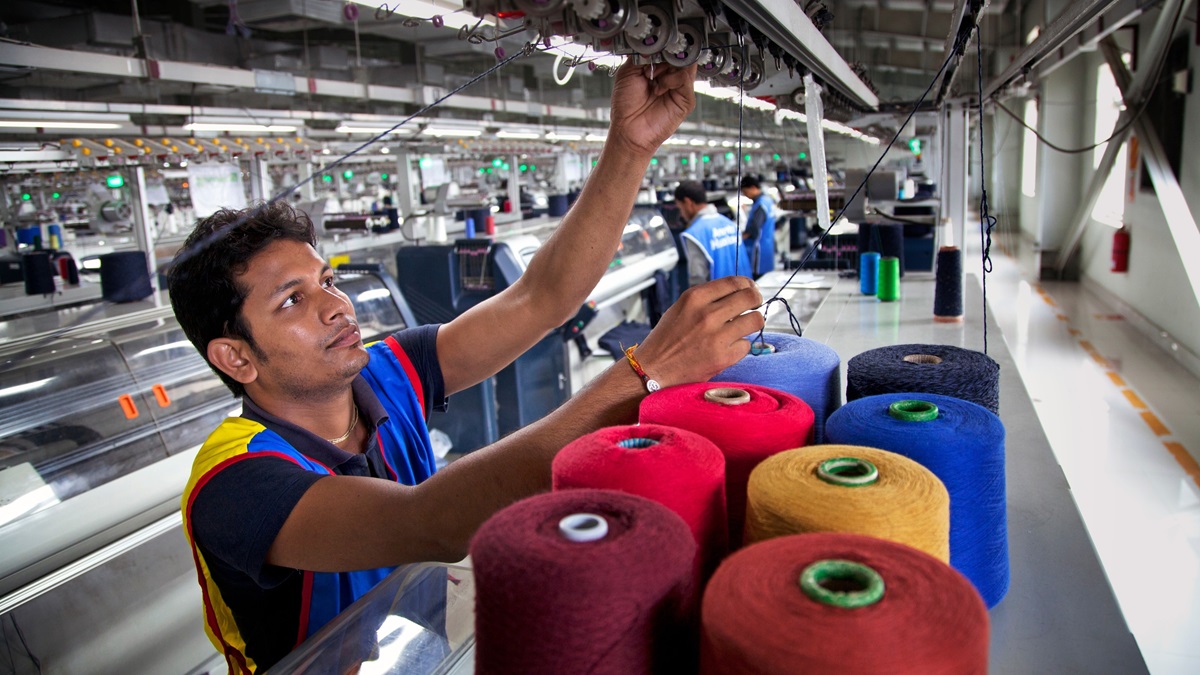
© Shutterstock/hanifphoto1 | A garment factory in Bangladesh.
A package of practical measures emerged from the 34th session of the Committee of Participants (COP34) of the Global System of Trade Preferences among Developing Countries (GSTP). These include:
- A new GSTP database with data-driven insights
- A draft Implementation Handbook and the 2026–2028 workplan, setting priorities for technical cooperation, capacity-building, analytical work and outreach
- A new technical note on natural and alternative fibres
- A redesigned GSTP website highlighting opportunities to expand sustainable South–South trade
Established in 1988, GSTP is the only interregional trade agreement negotiated and led exclusively by developing countries, with support from UN Trade and Development (UNCTAD). Learn more about the GSTP in this factsheet.
The agreement's São Paulo Round Protocol is now one ratification away from entering into force, unlocking potential welfare gains of up to $14 billion for its participating economies across Africa, Asia and Latin America. If its commitments were extended to all 42 GSTP participants, those gains could rise to as much as $27 billion.
Addressing participants at COP34, UNCTAD Acting Secretary-General Pedro Manuel Moreno called for building on the strength of South-South trade, noting that more than half of all exports from developing countries now go to other developing economies.
“GSTP is therefore, above all, a source of agency,” Mr Moreno said.
“The Global South need not wait for decisions made elsewhere to shape their future. The Global South can become a source of its own resilience.”
Over the past three decades, the value of South–South trade has grown exponentially, from about $500 billion in 1995 to $6.8 trillion in 2025.
“Trade flows are being reshaped,” said Ambassador Omar Zniber of Morocco, President of the 34th session of the GSTP Committee of Participants.
“South–South trade cooperation under the GSTP is more essential than ever,” he added.
More data-driven insights
At COP34, UNCTAD launched a new GSTP database, making information about the agreement easier to access and use.
Featuring comprehensive trade data for GSTP participants, the database enables governments, businesses and researchers to analyze trade flows by country, product and trading partner.
UNCTAD also redesigned the dedicated website to provide more user-friendly access to all GSTP resources through an integrated platform.
São Paulo Round Protocol gains renewed impetus
COP34 also reviewed the first draft of the GSTP Implementation Handbook, designed for policymakers, customs authorities and trade officials.
Prepared by UNCTAD, the handbook seeks to facilitate the application of the São Paulo Round Protocol once it enters into force.
The GSTP’s 42 participating economies represent nearly $18 trillion in trade and close to one-fifth of global merchandise imports.
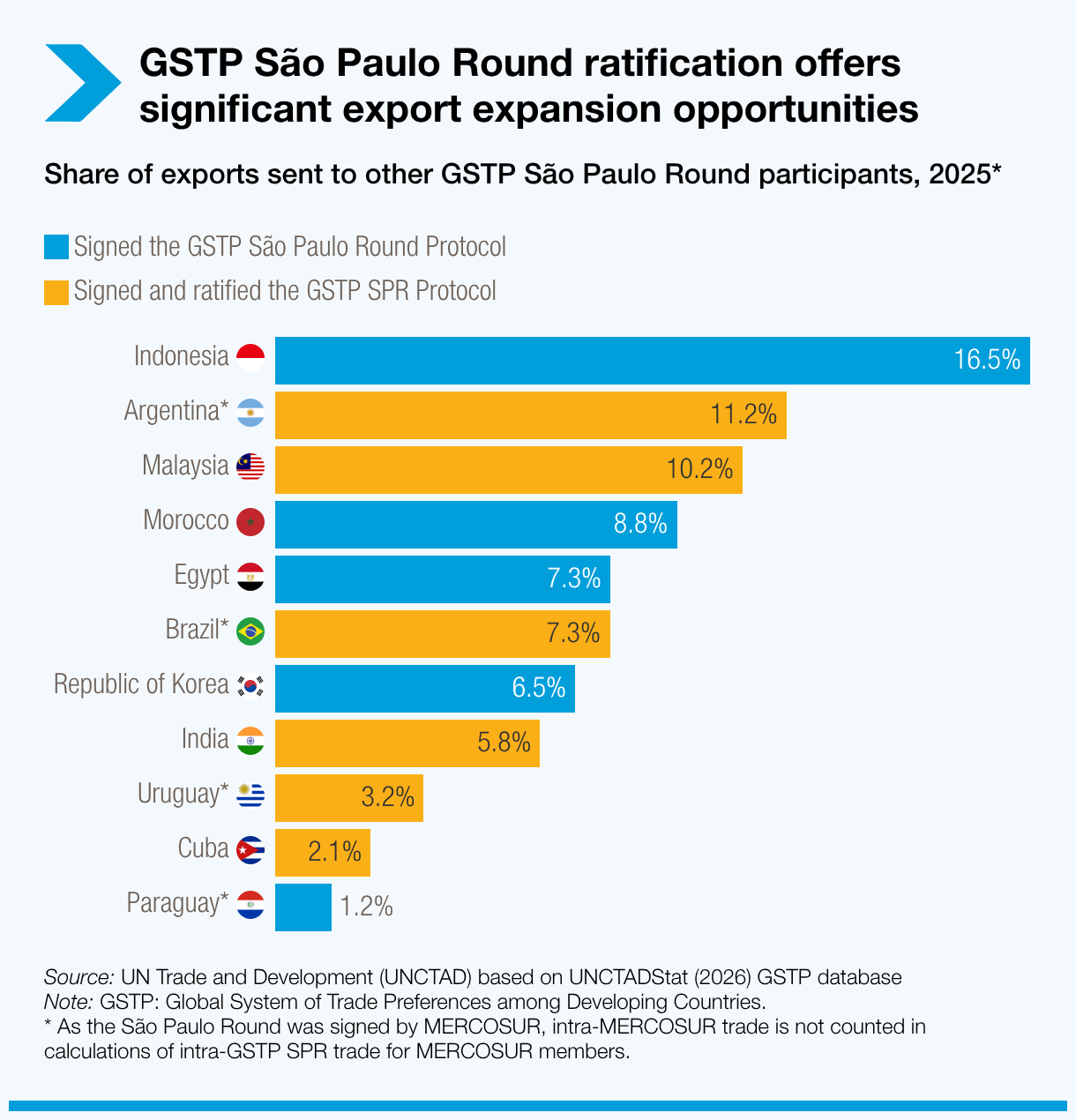
The São Paulo Round Protocol seeks to harness that scale through a 20% reduction in applied tariffs on some 47,000 products among the 11 participating economies.
Exploring trade opportunities in natural and alternative fibres
COP34 also marked the launch of a draft GSTP technical note on trade-related opportunities in natural and alternative fibres.
The forthcoming UNCTAD study identifies opportunities to expand South–South trade and increase value addition from materials such as jute, coir, seaweed, banana fibre and silk waste by transforming them into fibres and other value-added products.
GSTP members, home to some 4 billion people, already account for nearly 80% of global raw plant fibre exports, underscoring the potential to deepen regional value chains and promote more sustainable trade.
The study also recommends measures to strengthen tariff preferences, consolidate duty-free most-favoured-nation treatment, reduce non-tariff barriers, promote technology cooperation, and support more sustainable value chains across GSTP members.