



As Indonesia’s digital economy surges, a new UN assessment sets out how e-commerce growth can stay inclusive – and go green.
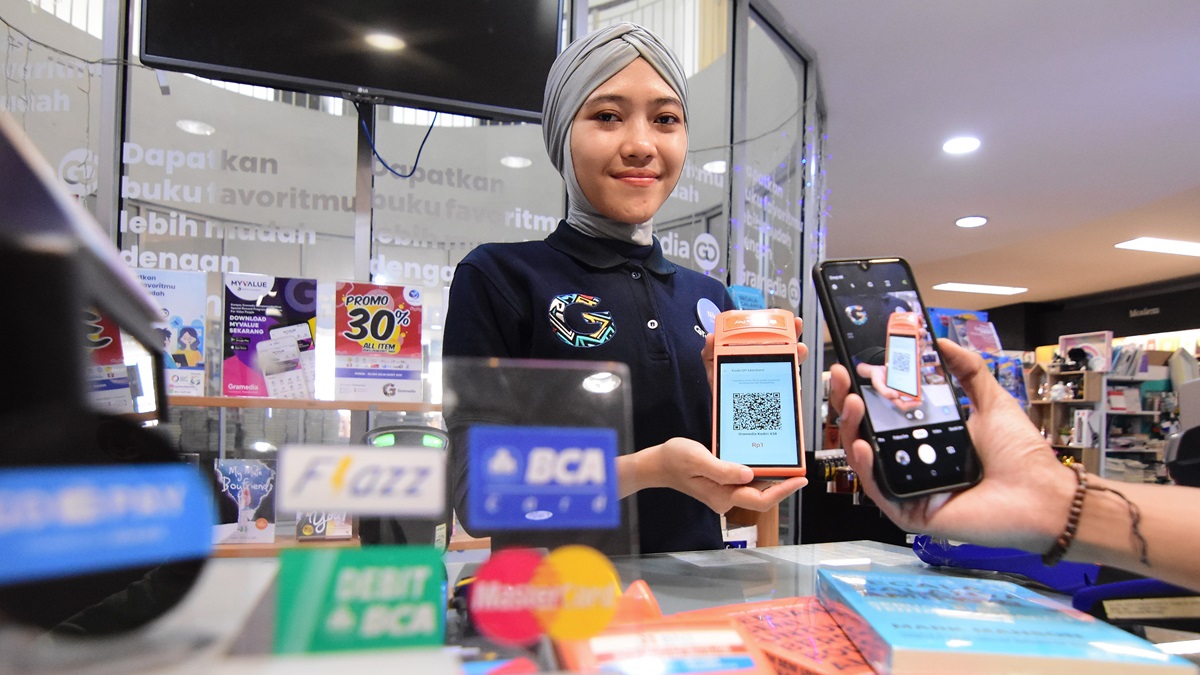
© Shutterstock/Ahmad Saifulloh | A customer uses digital payments at a bookstore in Gramedia Kediri, Indonesia.
The eTrade readiness assessment for Indonesia, released on 12 February, offers a roadmap to bolster e-commerce and the digital economy, aligning them with sustainability goals.
The assessment, led by UN Conference on Trade and Development (UNCTAD) in partnership with the Indonesian Ministry of Foreign Affairs, is the first one conducted in a G20 country. It’s also the first to examine the environmental sustainability of e-commerce and digital trade.
A sizable digital economy in Southeast Asia, Indonesia’s progress offers lessons for other nations seeking inclusive and sustainable digital development.
“Indonesia has one of the most dynamic digital economies in today’s world,” said Pedro Manuel Moreno, Deputy Secretary-General of UNCTAD.
“The eTrade Readiness assessment offers a practical roadmap to transform rapid growth of the digital economy into long-term, inclusive development gains”.
Ditya Agung Nurdianto, Director of International Trade of Indonesia’s Ministry of Foreign Affairs said: “The findings of this assessment will help guide Indonesia’s efforts to strengthen its e-commerce and digital trade ecosystem and foster greater alignment, so that Indonesia’s digital economy grows not only faster, but also fairer, safer, and more resilient.”
“Through close collaboration and coordinated action with UNCTAD and national stakeholders, Indonesia is committed to advancing a digital economy that is inclusive, sustainable and resilient.”
Main findings and recommendations
The eTrade readiness assessment evaluates Indonesia’s digital trade landscape across governance, policy, technology adoption, MSME participation, legal and regulatory frameworks, digital payments and financial inclusion.
It highlights rapid expansion in e-commerce, driven by strong political commitment, infrastructure improvements and fintech innovation.
Indonesia’s digital economy is expected to reach $300 billion by 2030, with e-commerce as a major contributor. In 2024, e-commerce transactions are projected to total $65 billion, marking a 10% increase over the previous year.
Despite progress, the assessment points to areas for improvement, including coordination across institutions, regional technology access, digital skills development – especially for women, youth, persons with disabilities, and smaller businesses.
It also flags challenges Indonesia faces in logistics and making financial services more accessible for MSMEs and vulnerable communities.
Sustainability at the forefront
A key feature of this assessment is its focus on aligning Indonesia’s digital transformation with environmental goals and responsible consumption.
It therefore recommends incentives for MSMEs and e-commerce platforms to adopt green practices, as well as strategies to address logistics, packaging, data infrastructure and energy use.
Regional impact
The assessment also offers a broader perspective for Southeast Asia, contributing to the region’s digital integration goals under the ASEAN Digital Masterplan 2026-2030.
In this context, Indonesia’s assessment provides a national framework to align innovation, sustainability and inclusivity, as the ASEAN bloc works collectively to make digitalization work for people, prosperity and the planet.