



- Services are now a key source of growth and jobs in least developed countries.
- Most service jobs remain low-productivity and informal, limiting income gains.
- Weak links to industry, exports and technology hold back development impact.
- Without targeted policies, service-led growth risks reinforcing existing inequalities.
- Skills, digital infrastructure and productive linkages are critical to unlocking better jobs.

© Shutterstock/Big blue | Luanda, Angola. Tourism delivers about one third of services exports in least developed countries, more than any other sector.
The Least Developed Countries Report 2025, released by UN Trade and Development (UNCTAD) on 10 February, finds that services are expanding rapidly across least developed countries.
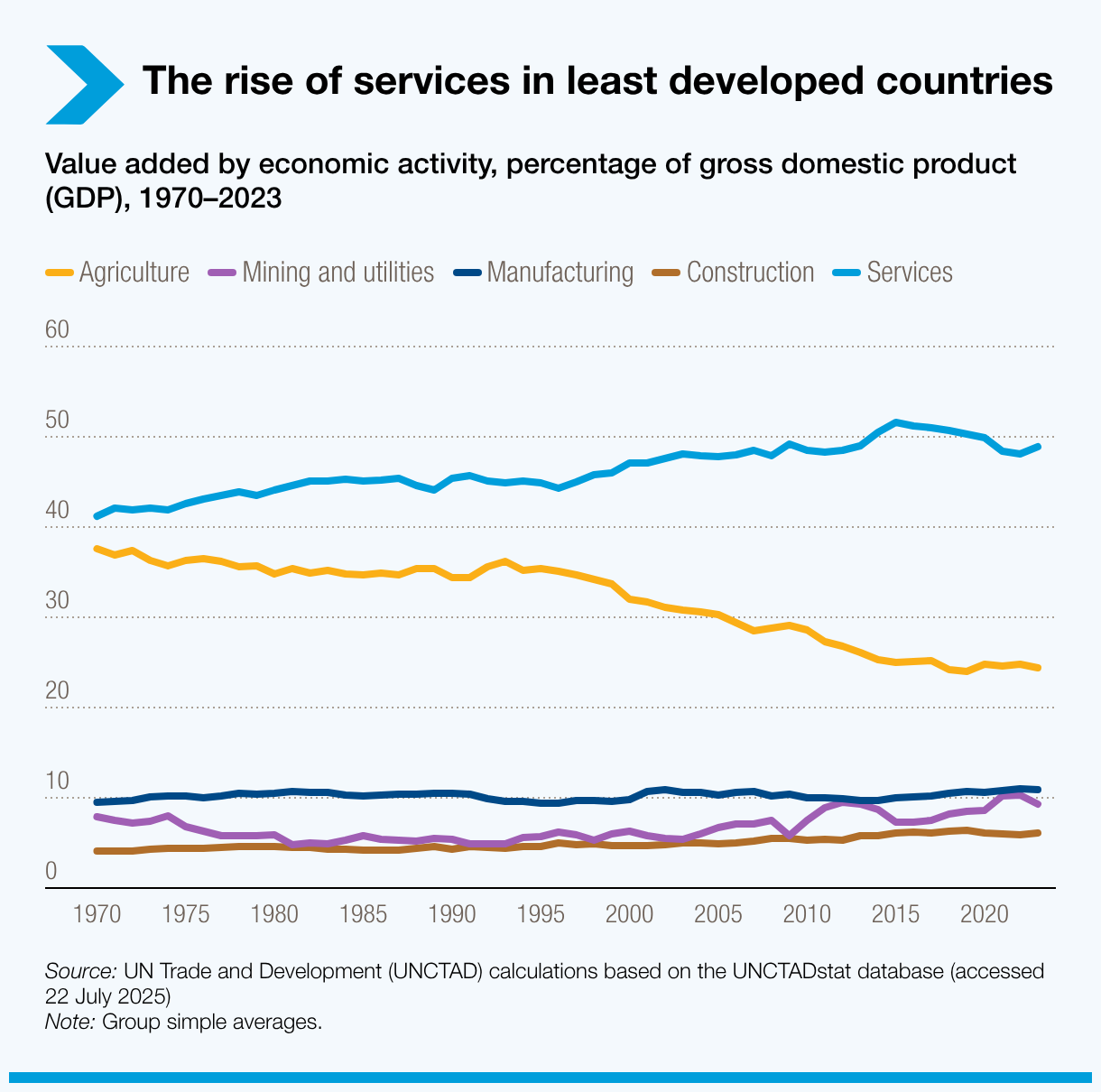
However, growth is concentrated in low-productivity activities that sustain livelihoods but do not generate prosperity at scale. Despite the growing role of services, average per capita growth in least developed countries remained weak in 2024.
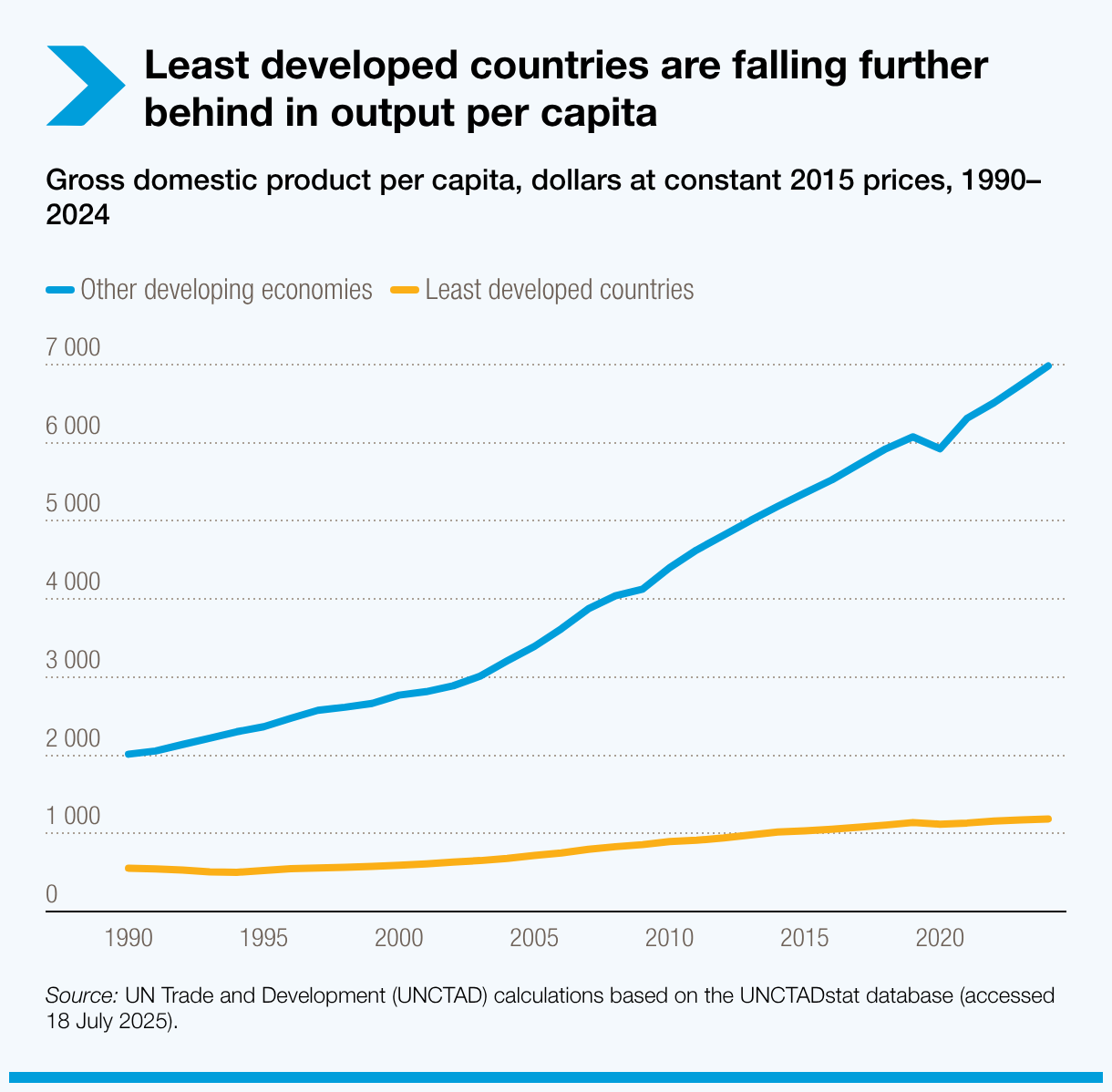
Employment is still dominated by informal retail, personal services and subsistence activities, while higher-productivity services that could support industrialization and competitiveness remain underdeveloped.
Jobs at scale – and better jobs – are the central challenge
Least developed countries face an unprecedented employment challenge. Between now and 2050, they will need to create jobs for around 13.2 million new labour market entrants every year, making employment creation a defining constraint for development strategies.
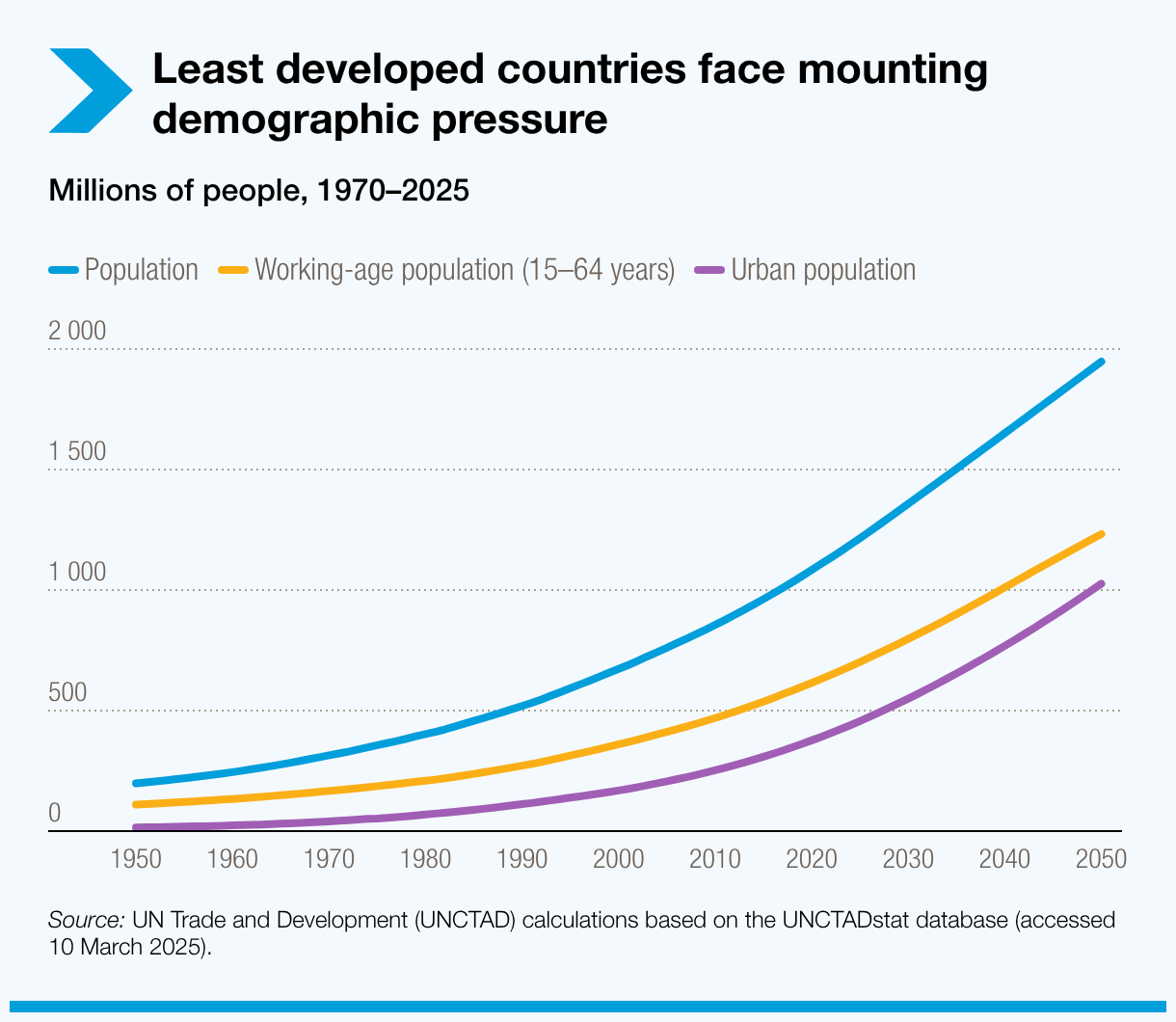
While services have absorbed much of this growing workforce, job growth has not been matched by income gains. Working poverty remains widespread, underscoring the gap between having a job and earning a decent living.
Productivity gaps limit what services can deliver
Labour productivity in the average least developed country is 11 times lower than in the median developed economy. These gaps shape the type of services countries can realistically develop and export.
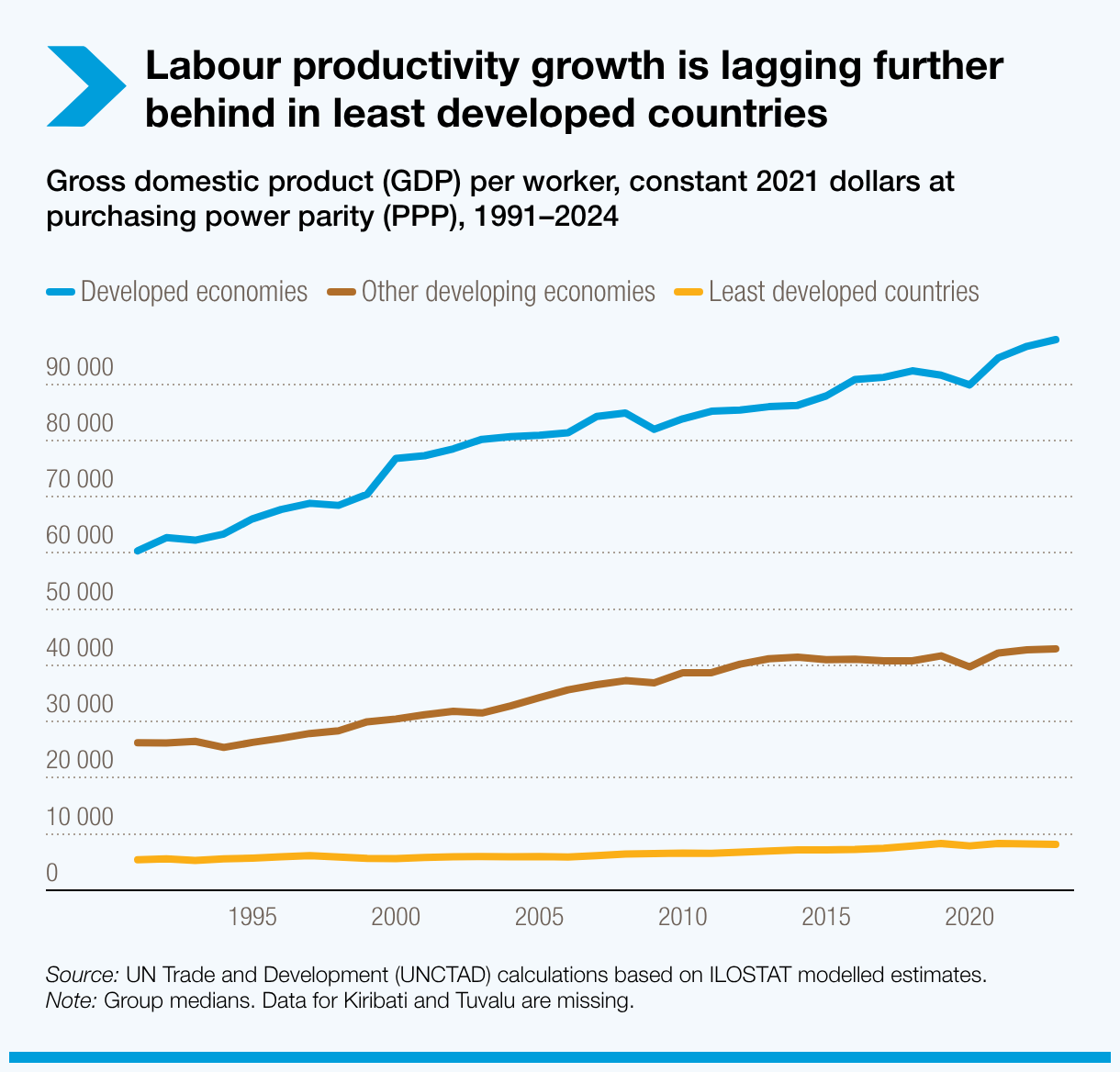
The report stresses that services can support structural transformation only when embedded in coherent national development strategies and backed by an enabling global environment. Without this, services expansion risks deepening marginalization rather than reducing it.
Tourism and digital services show promise – but results fall short
Tourism accounts for about one third of services exports from least developed countries, making it the single largest services export category. However, high tourism revenues often do not translate into substantial job creation, local value addition or economic transformation. This reflects infrastructure constraints, weak linkages and high import dependence.
By contrast, digitally deliverable services are among the most dynamic segments of global trade. Yet least developed countries account for just 0.16% of global exports in these services – the lowest share since records began.
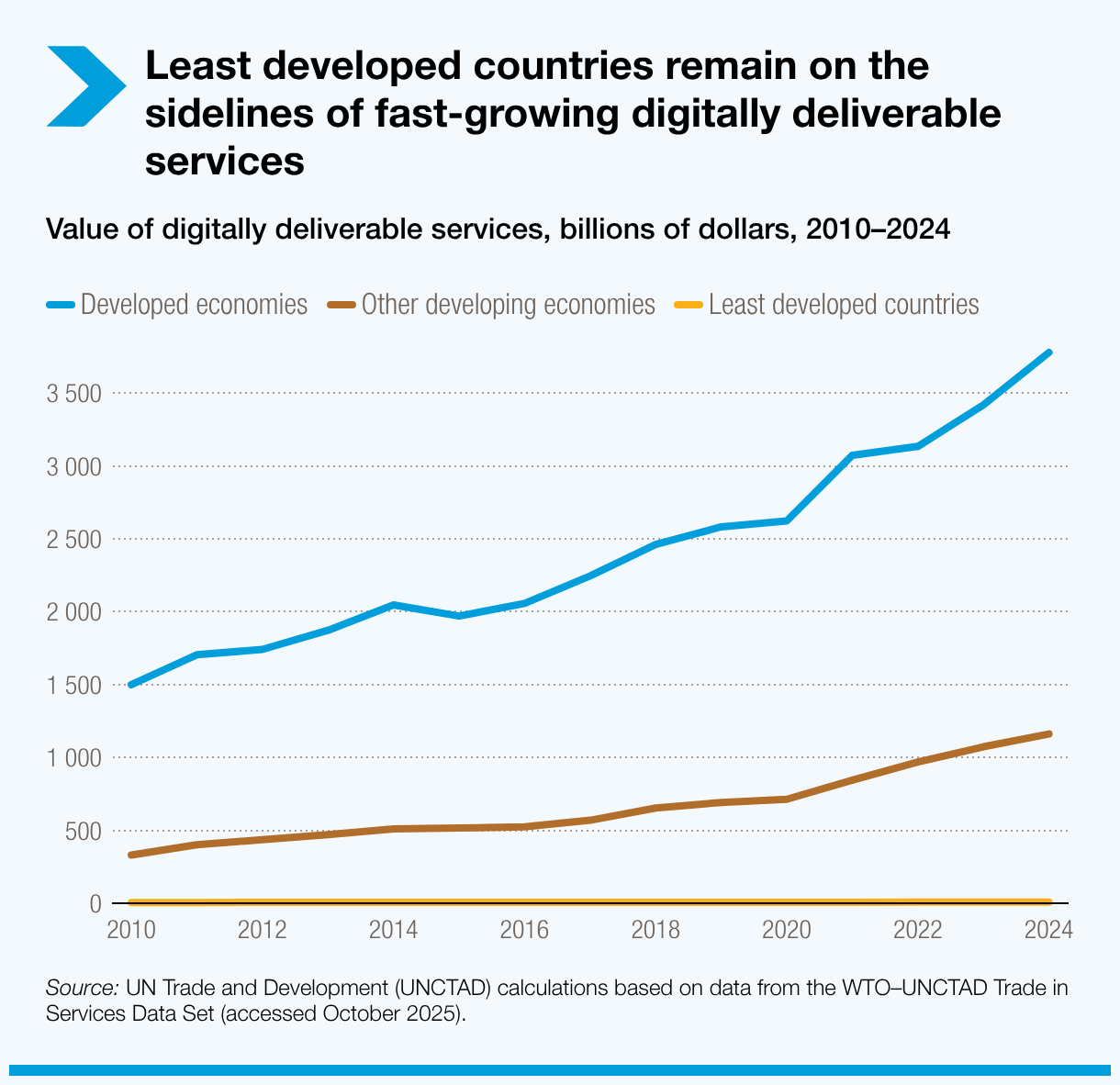
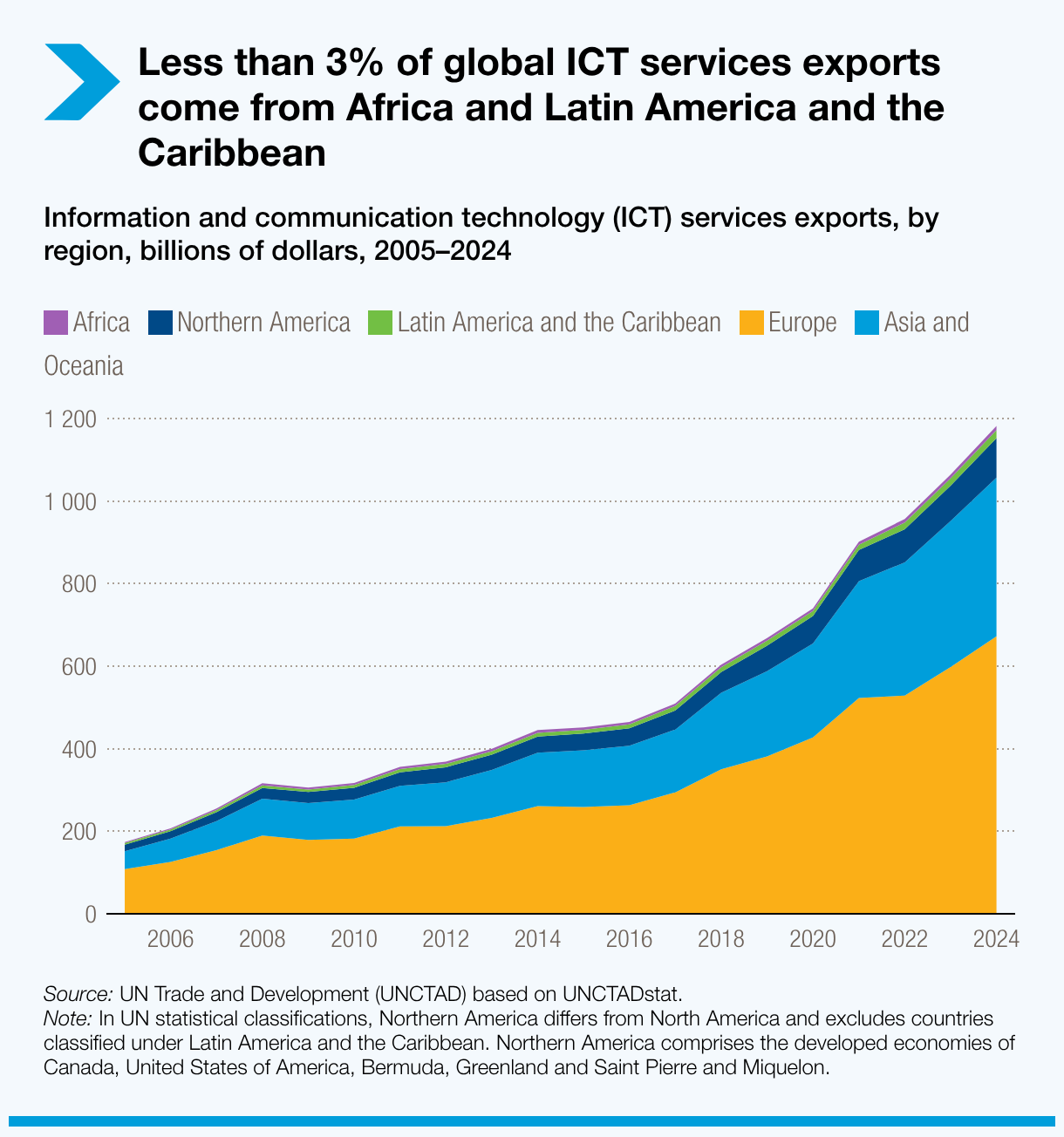
Exports remain concentrated in a small number of countries, reflecting persistent gaps in skills, connectivity and technological capacity.
Skills and digital divides are binding constraints
Digital skills are a make-or-break factor for higher-productivity services. Across least developed countries, women are 42% less likely than men to use mobile internet, while rural populations are 50% less likely than urban populations.
Targeted initiatives demonstrate what is possible. Rwanda’s Digital Ambassadors Programme has trained more than 5,000 young people to deliver digital literacy in rural communities, while Malawi’s mHub supports women-led rural businesses. However, such initiatives remain limited in scale relative to the size of the challenge.
Services-led strategies need realism and better data
Many least developed countries are adopting “hub” strategies in areas such as logistics, transport, technology and tourism to boost growth and exports.
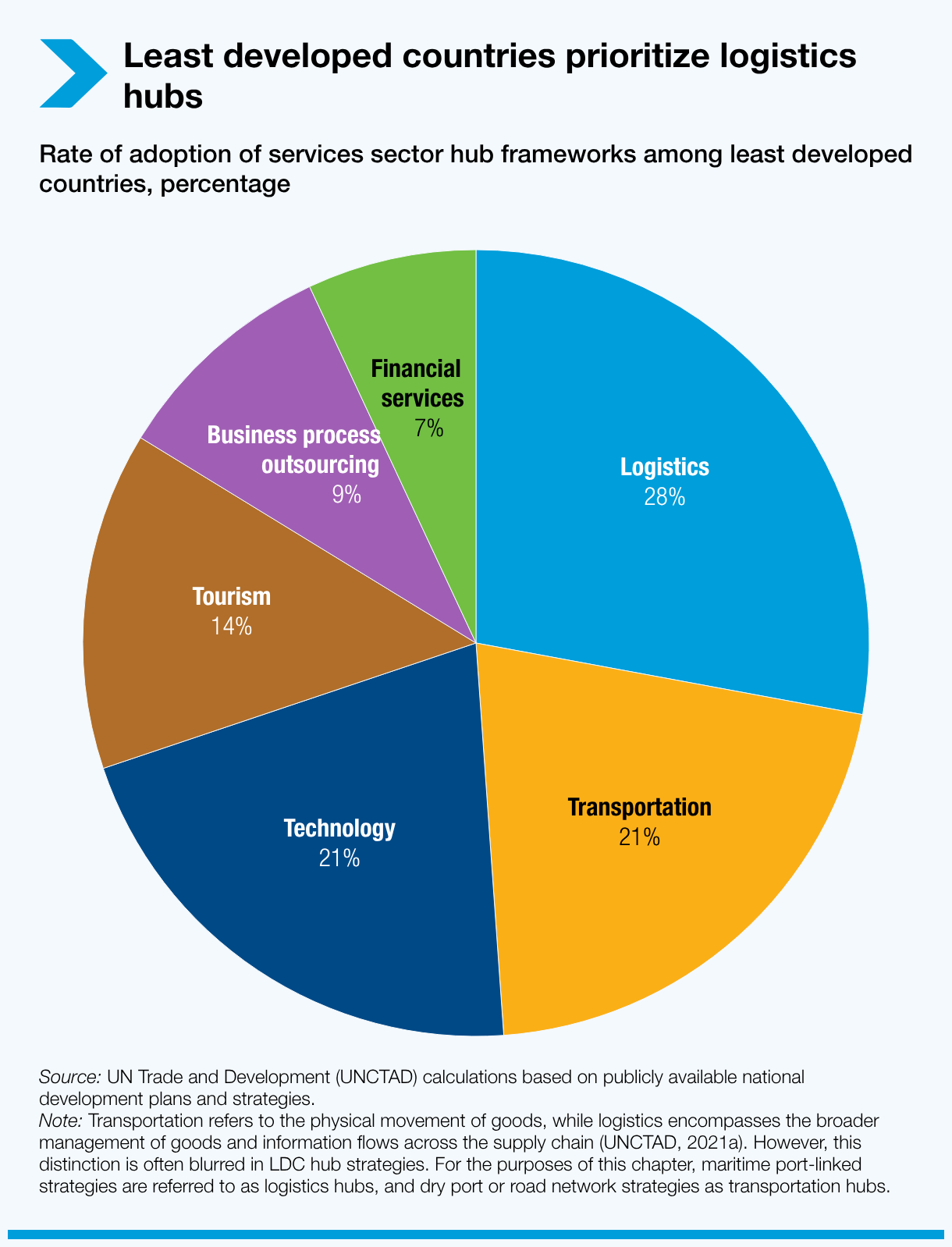
While these strategies can raise competitiveness and fiscal revenues, the report cautions that they often generate fewer direct jobs than expected and can increase risks related to debt, overcapacity and weak monitoring.
UNCTAD highlights that better services policy depends on better services data. Persistent gaps in the availability and quality of services-sector statistics continue to limit effective policymaking and the ability to assess whether services growth is delivering productivity gains and better jobs.
No shortcut to development
The report concludes that services are not a shortcut to development. Services can support industrialization and competitiveness only if they raise productivity, build strong links with manufacturing and other productive sectors, and are supported by investments in digital infrastructure, reliable energy, education and skills.
Closing digital divides, strengthening capabilities and actively supporting services exporters – particularly small and medium-sized firms – are essential if least developed countries are to compete in modern services and turn economic growth into broad-based development.
Regional cooperation can expand services trade opportunities, but least developed countries need development-aligned policy flexibility and stronger special and differential treatment. There report identifies significant gaps in the least developed countries services waiver, including the voluntary nature of its provisions, minimal actual preference margins and a mismatch between offers received and countries´ supply capacity. To make the waiver effective, requests and offers need to be updated to reflect current global services trade realities and new measures explored to extend preferences beyond its expiry after 2030.