


On his official visit to China, Acting Secretary-General Pedro Manuel Moreno urges stronger pathways for developing countries as trade, investment and industries evolve.
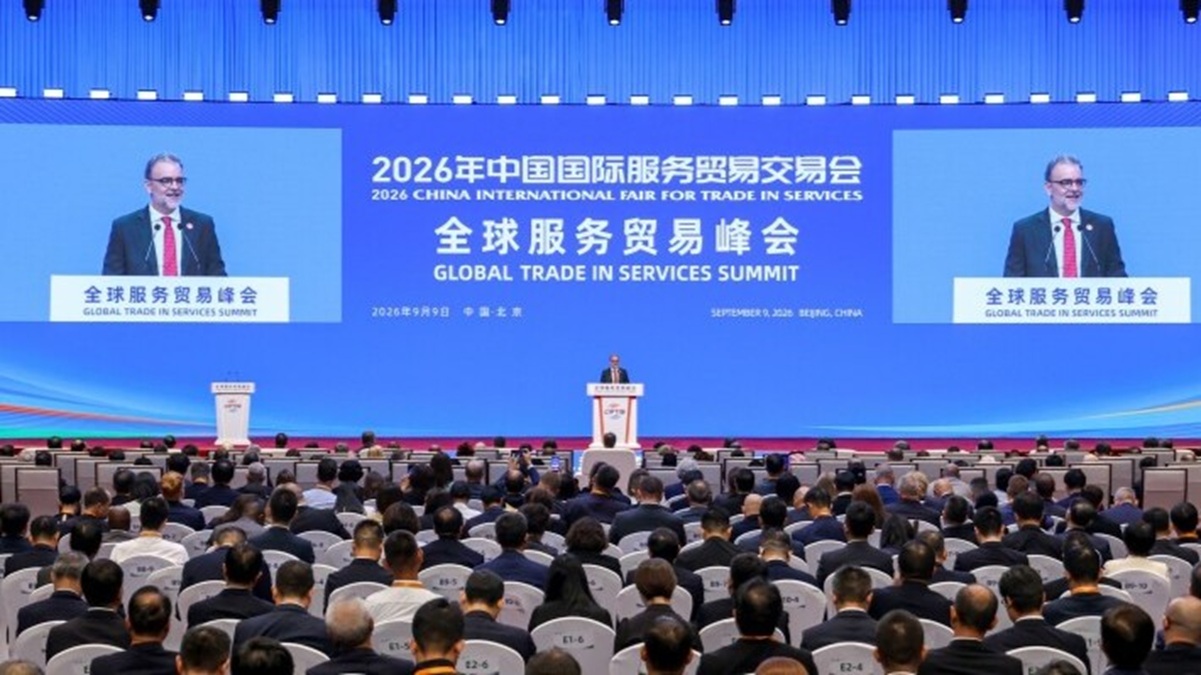
© UNCTAD Photo | Mr Moreno (at podium and on screen) speaks at the Global Trade in Services Summit in Beijing on 9 September.
Throughout the weeklong visit, from 5 to 11 September, one question remained central: where will the industries of the future be built, who will they employ and what development opportunities will they create?
Discussions underscored the need for international cooperation that enables developing countries to move beyond traditional cost-based competition, build technological and productive capabilities, attract sustainable investment and participate more fully in the industries of tomorrow.
The UNCTAD delegation, led by Acting Secretary-General Pedro Manuel Moreno, met with senior government officials, including Li Chenggang, China International Trade Representative, and Ling Ji, Vice Minister of Commerce.
The delegation also engaged with business and academic representatives on investment, innovation, trade and industrial development.
Positioning for the industries of tomorrow
The visit highlighted the growing importance for countries, particularly developing ones, to make deliberate choices about which industries to develop, which partnerships to pursue and which technologies to access.
Discussions focused on how developing countries can attract investment, strengthen domestic capabilities and secure a meaningful role in emerging industries.
Technology reshaping development and investment
A central theme was the impact of frontier technologies on the prospects of developing economies.
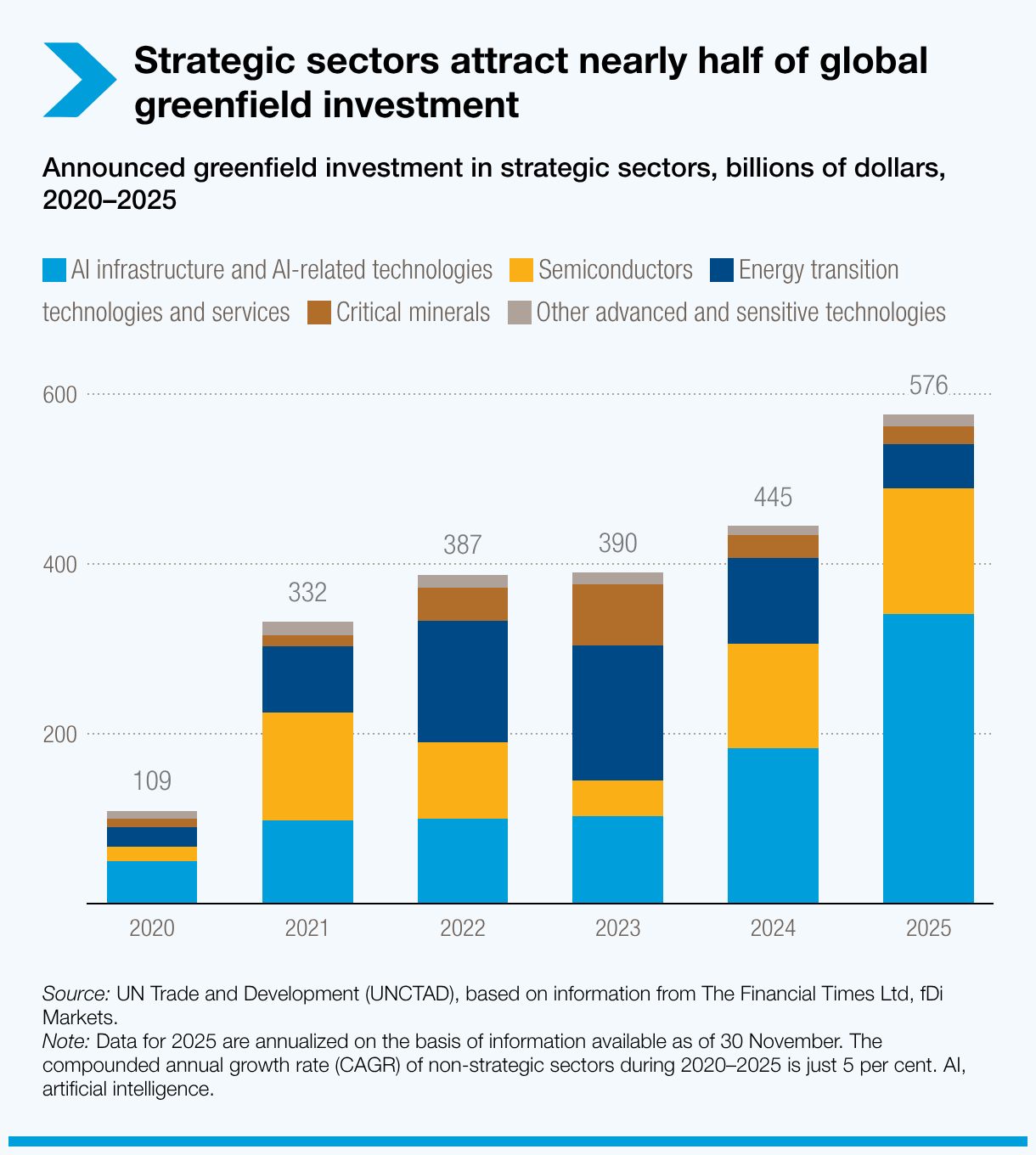
As UNCTAD analysis shows, strategic sectors – including artificial intelligence, semiconductors, critical minerals and clean energy – now account for nearly half of all new investment globally, up from 16% in 2020.
Mr Moreno described this as “a structural rewiring of the global economy in real time”, with consequences extending well beyond economics.
He noted that countries can no longer compete primarily on cost as capital flows are increasingly shaped by frontier technologies, investment screening regimes and tariffs.
“For centuries, great-power competition was spatial – geographic. That pattern is breaking,” Mr Moreno said.
“Today the decisive arena is technological. A country's position in the semiconductor value chain now shapes its strategic standing as much as its access to oil or its control of a shipping lane.”
Extensive programme
A key milestone of the visit was the inauguration of the Institute for Global Development (IGD) at Zhejiang University in Hangzhou, held on the fifth anniversary of China’s Global Development Initiative.
UNCTAD and the IGD also signed a memorandum of understanding, underscoring the role of research, education and international cooperation in addressing global development challenges.
Discussions on China’s innovation ecosystem, along with a visit to Hangzhou’s Future Science and Technology City, explored how technological innovation can support investment and create new development opportunities.
In Xiamen and Beijing, discussions focused on future investment, industrial and supply-chain cooperation, and trade in services.
The visit to Tianjin included discussions on international mining cooperation, including the sector’s role in development and global economic transformation.