


Secretary-General Rebeca Grynspan's visit centred on her participation in the annual “1+10” Dialogue in Beijing, a flagship meeting with China’s premier and the heads of major international financial and economic institutions.
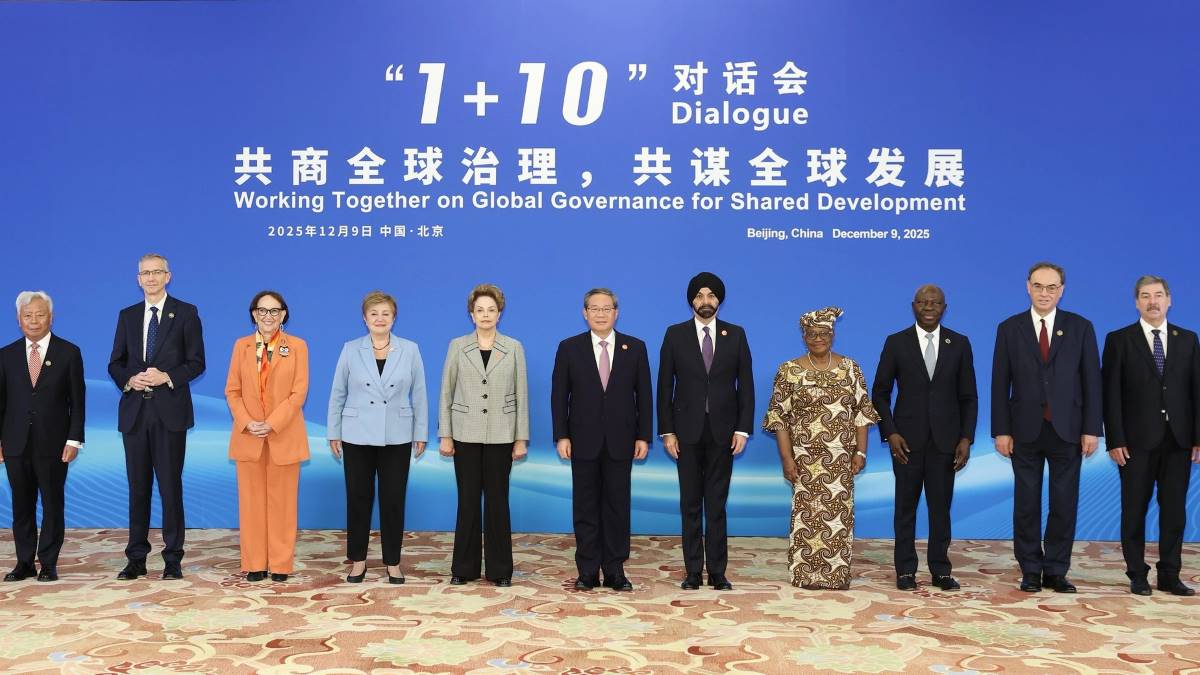
© UN Trade and Development | UNCTAD Secretary-General Rebeca Grynspan (third from left) participates in the high-level “1+10” Dialogue hosted by Chinese Premier Li Qiang (centre) in Beijing on 9 December.
UN Trade and Development (UNCTAD) Secretary-General Rebeca Grynspan has concluded a high-level visit to China from 7 to 9 December 2025, holding discussions on global economic cooperation and the trade’s role in supporting sustainable development.
The visit centred on her participation in the annual “1+10” Dialogue in Beijing, a flagship gathering convened by China that brings together the country’s premier and the heads of major international financial and economic institutions.
The forum provides a platform to exchange views on the global economic outlook and the policy actions needed to bolster multilateral cooperation.
Meeting with Premier Li Qiang
Ms. Grynspan met with Premier Li Qiang to discuss the state of the global economy, the need for renewed international coordination and opportunities to promote more resilient and inclusive growth.
Her participation underscored UNCTAD’s long-standing engagement with China in shaping development-focused trade policies and navigating the complex dynamics of a rapidly changing global economy.
China reiterates support for UNCTAD
The Secretary-General also met with Commerce Minister Wang Wentao, who reiterated the great importance China attaches to its cooperation with UNCTAD and expressed strong support for deeper collaboration.
Mr. Wang highlighted the “Export to China” initiative, designed to expand imports of high-quality goods and services from developing countries to China and facilitate their access to the Chinese market.
Call for multilateral solutions
Throughout her visit, Secretary-General Grynspan emphasized the importance of finding multilateral solutions for shared challenges – from trade fragmentation to development finance pressures.
Her discussions in Beijing reaffirmed the importance of UNCTAD’s work in helping developing countries integrate more effectively into the global trading system.