
Ports play a central role in facilitating trade, supporting economic activity, and connecting countries to global markets. Their ability to grow, adapt, and remain competitive depends on sustained investment in infrastructure and development.
Ports also play an important role in shaping the cities around them. By generating employment, trade, and economic opportunities, ports can attract people, businesses, and investment, contributing to the growth of the surrounding area. As cities expand around ports, however, tensions can emerge as port activities compete with urban needs for land, mobility, accessibility, and public space. This mutually beneficial relationship may become increasingly complex, making integrated port-city planning and coordination essential.
These interactions are further shaped by climate change, environmental pressures, risk management, security, and crisis response. Investment decisions therefore need to consider not only port performance, but also their vulnerabilities, wider economic, social, and environmental impacts. Strong cooperation between port authorities, cities, governments, the private sector, and local stakeholders can help align priorities and contribute to the Sustainable Development Goals.
This session will explore how investment and stronger port-city relationships can support sustainable and resilient development, while sharing experiences, practical approaches, and good practices.
Questions for discussion
- How can ports and cities balance competing needs for land, mobility, accessibility, and public space as both continue to grow? What approaches can support more integrated planning?
- How can legal and institutional frameworks facilitate port investment and expansion, including through effective concession agreements?
- How can port investment generate wider economic and social benefits for surrounding cities and communities? What should be considered when planning major port development projects?
- How can port-city relationships turn climate challenges into opportunities for shared resilience and progress towards the Sustainable Development Goals (SDGs)?
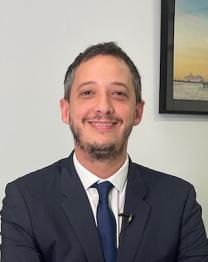
Marcelo Teper is the Director of the National Port Training Center (CENCAPOR) and serves as Argentina’s National Coordinator for the UNCTAD TrainForTrade Port Management Programme.
Prior to his current role, Mr. Teper held positions in Institutional Relations, Training, and Port Management at the Administración General de Puertos (AGP), where he has worked since 2010. Since 2022, as Director of CENCAPOR, he has been responsible for planning and coordinating port sector training programmes, national and international courses and seminars, institutional cooperation agreements, and initiatives related to port-city integration. He has also served as Argentina’s National Coordinator for the UNCTAD TrainForTrade Port Management Programme since 2016.
Mr. Teper is a graduate in Marketing from the Universidad Argentina de la Empresa (UADE) and has completed additional training in advertising copywriting. He also holds specialized postgraduate qualifications as a Training of Trainers instructor for the UNCTAD TrainForTrade Port Management Programme.

He is the Chief of the Human Resources Development Section - TrainForTrade at the UN Trade and Development (UNCTAD).
With over 25 years of experience in international trade, he leads global programmes in port management, trade statistics, e-commerce and the digital economy. He is a strong advocate for digital innovation, capacity building, and SDG 17, and he champions sustainable, inclusive trade policies and international cooperation. He started his career in the United Nations as a Junior Professional Officer for Belgium in 1998 based in West Africa.
He holds a master’s in economics from the Free University of Brussels (Belgium).
