

Transport and logistics are critical enablers of global trade and supply chain connectivity. Yet, this strategic sector is facing recurring disruptions that upend operations, raise costs, cause delays, alter trade patterns, and expose the fragility of supply chains that are transport- and logistics-intensive and focused primarily on efficiency and cost optimization. Additionally, the sector needs to decarbonize, adopt cleaner fuels and digital technologies, strengthen cybersecurity and regulatory frameworks, and support workforce development and well-being. These challenges highlight the importance of transport and logistics systems that are both sustainable and resilient by design.
Sustainable and resilient transport and logistics are particularly important for food security as disruptions affecting transportation, storage, and handling of agricultural inputs and food products can reduce food availability, accessibility, and affordability while disproportionately affecting vulnerable and import-dependent economies.
Future-proofing global supply chains depends critically on sustainable and resilient transport and logistics systems. Equally important, strengthening food supply chains is a strategic priority for food security, which is also fundamental for building resilience.
This session will bring together policymakers, industry leaders, practitioners, international organizations, the private sector and development agencies to take stock of relevant solutions and measures that can strengthen the sustainability and resilience of transport and logistics while enhancing global supply continuity and promoting food security. It will examine success factors, identify persistent gaps and challenges, and explore how lessons learned and good practices can be adapted and scaled up to strengthen the sustainability and resilience of global supply chains, with particular attention to food supply chains. The session will also seek to identify the core components of a practical toolkit to support sustainable and resilient transport and logistics systems, enhance supply chain continuity, and contribute to long-term food security.
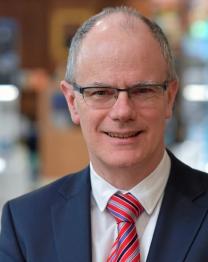
James Hookham is Secretary General and a Director of the Global Shippers Forum (GSF), the voice of cargo owners in international supply chains. He is a graduate in Environmental Science from the University of Bradford and completed a master’s degree in the safe transport of dangerous goods at the University of Manchester.
James early career was spent with Exis Technologies (now part of National Cargo Bureau) developing the world’s first remotely accessible computerised dangerous goods database and later served as deputy editor of Hazardous Cargo Bulletin.
Until 2020 James was Deputy Chief Executive of the Freight Transport Association (now Logistics UK) where he held numerous positions on UK, EU and global transport and logistics advisory bodies, as well as senior executive roles at one of the UK’s largest trade organisations.

Zera Zheng leads Maersk’s Supply Chain Resilience & Consulting globally, helping organizations strengthen supply chains against disruption and uncertainty. With a background in political economy and certifications including AMBCI and CSCP, she combines resilience expertise with practical experience in strategy and implementation.
She has helped shape Maersk’s resilience capabilities, including co-developing the Supply Chain Resilience Model and leading the development of Maersk Risk Management (MRM), a digital tool that provides real-time risk visibility and actionable insights for supply chains.
Zera received the Business Continuity Institute Award in 2020 and the Women in Supply Chain Award in 2025. She has also contributed as an expert reviewer for UNCTAD’s Port Resilience Guidebook and regularly speaks at international forums on supply chain resilience, risk visibility, and future-ready logistics.
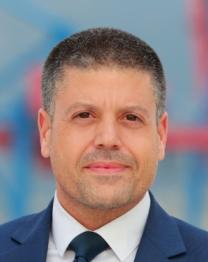
Marwan Naffi is the Chairman and General Manager of the Port of Beirut, leading a comprehensive modernization, transformation, and expansion agenda. His mandate focuses on restoring operational performance, strengthening governance, and enhancing the Port’s regional competitiveness.
With over 25 years of executive experience across the private sector in Lebanon, London, and the Gulf region, he has held leadership roles in business development, logistics, corporate structuring, and financial services. He brings extensive experience in organizational transformation and cross-sector strategic management.
At the Port of Beirut, he is driving a reform program aimed at rebuilding institutional capacity, modernizing operations, and upgrading infrastructure. He is also advancing medium- and long-term expansion priorities to reposition the Port as a leading logistics hub in the Eastern Mediterranean.
His work is centered on improving efficiency, transparency, and resilience, while reinforcing the Port’s role as a critical gateway for regional trade and economic recovery.

Kelly Blakeley is a twice-elected Global Board Director of the Business Continuity Institute and an international resilience and crisis management specialist.
With more than 15 years’ experience across the UK and Middle East, Kelly has worked across government, critical infrastructure, businesses and multi-agency environments to strengthen preparedness, crisis leadership and organisational resilience. She has held leadership roles within two government institutions, leading national capability-building programmes focused on emergency preparedness and resilience. This experience informs her perspective on how organisational capabilities, cross-sector coordination and trusted relationships contribute to national resilience.
Her background in biomedical science and emergency response informs an approach that connects analytical thinking with the practical realities of managing disruption. Her experience spans strategic advisory, resilience frameworks and complex exercises, with a particular focus on coordination across organisational and sector boundaries. She also contributes to international standards development through ISO and BSI expert committees.
At the UNCTAD Global Supply Chain Forum, Kelly represents the BCI’s global, cross-sector perspective on best practice in business continuity and resilience. She brings insights into how organisations anticipate disruption, understand dependencies, sustain critical activities and adapt to changing conditions.
Based in the UAE, Kelly is also the Founder of Flex Story, a strategic resilience and crisis management consultancy supporting organisations through advisory, capability building and immersive crisis simulations.

Frida Youssef has over 25 years of professional experience in trade, logistics, commodities, finance and sustainable development. Throughout her career, she has developed, led and managed research and technical assistance programmes supporting developing countries across a broad range of areas, including commodity supply chains and structured finance, public-private partnerships (PPPs), maritime transport and ports, trade, transit and transport corridors, as well as cross-cutting issues such as environmental sustainability, climate change, gender, resilience, finance and investment.
She is a co-author of UNCTAD’s annual Review of Maritime Transport and serves on the Steering Committee of the Global Network of Export-Import Banks and Development Finance Institutions (G-NEXID), as well as the Steering Committee of the Port Chapter of the World Association of PPP Units and Professionals (WAPPP).
Frida holds an MBA from Boston University and an MA in International Affairs from the Hautes Études Internationales in Paris.
