
The BCLME Region, or Benguela Current Large Marine Ecosystem, is a highly productive marine area in the southeast Atlantic Ocean that spans the coasts of Angola, Namibia, and South Africa. It is one of the world's significant coastal upwelling ecosystems, recognized for its rich biodiversity and abundant fisheries, which are vital to the economies of these three nations.
The countries within the BCLME region rely heavily on their marine and non-marine resources for socio-economic development. Despite ongoing management efforts at both regional and national levels, the marine environment and living resources of the BCLME continue to be significantly affected by human activities and climate change.
These combined pressures have led to drastic and, in some cases, irreversible changes. Key issues include the depletion of fish stocks, degradation of critical coastal habitats, and loss of marine biodiversity, all of which threaten the ecosystem's ability to provide essential goods and services.
Objective
The objective of this project is to promote the development of a climate-resilient Blue Economy within the framework of the updated Strategic Action Programme (SAP) for the Benguela Current Large Marine Ecosystem. In the long term, this will contribute to the restoration of depleted marine resources and degraded habitats, enhance livelihood opportunities for coastal communities, and increase the resilience of marine ecosystems and these communities to the impacts of climate change.
By strengthening policy and regulatory frameworks, enhancing institutional and private sector capacities, developing viable financing mechanisms for investment in Blue Economy initiatives, and promoting blue carbon finance, the project aims to establish regional and national frameworks that will facilitate the transition to a Blue Economy in the BCLME region.
Blue Economy is defined as the sustainable use of ocean resources for economic growth, improved livelihoods, and job creation, while preserving the health of ocean ecosystems.
The project will address obstacles to successfully transforming the region's economy through the following components:
- Improving marine and coastal management through effective Marine Spatial Planning and the establishment of marine protected areas.
- Enhancing sustainable and climate-resilient marine living resources.
- Improving management of coastal and marine pollution.
- Promoting regional and national frameworks for innovative Blue Economy financing.
- Implementing knowledge management, raising awareness, and scaling up efforts for the Blue Economy.
These activities are expected to strengthen regional cooperation and coordination, as well as increase the technical capacity of relevant institutions to sustainably manage marine and coastal resources.
Intended outcomes
It is anticipated that these efforts will lead to a reduction in pollutant discharge from land- and ocean-based activities, minimize the impacts of exploration and extraction of non-living marine resources, and generally promote a more rational use of marine and coastal resources.
All initiatives will be underpinned by a strengthened policy and regulatory framework aimed at establishing a sustainable and innovative Blue Economy. This includes improving financing opportunities that will enhance the socio-economic conditions of coastal communities.
Effective knowledge management, raising awareness, and communicating opportunities within the Blue Economy—along with the implementation of Social and Environmental Safeguards in the BCLME region—will contribute to scaling up and replicating sustainable and viable Blue Economy initiatives.
The project aims to establish new marine protected areas (MPAs) and improve the management of existing ones, totaling over 3 million hectares. It will also promote sustainable resource use practices in more than 2.3 million hectares of marine habitats, benefiting around 5,000 people, with at least 50% of those being women. Furthermore, it will contribute significantly to the GEF International Waters Focal Area, Objective 1: Accelerate joint action to support sustainable blue economic development."
Activities
UNCTAD plays a supportive role in this project, working to achieve the targets under components 2 and 4. The organization will leverage its expertise, mobilize its centers of excellence, and partner with others to support project implementation.
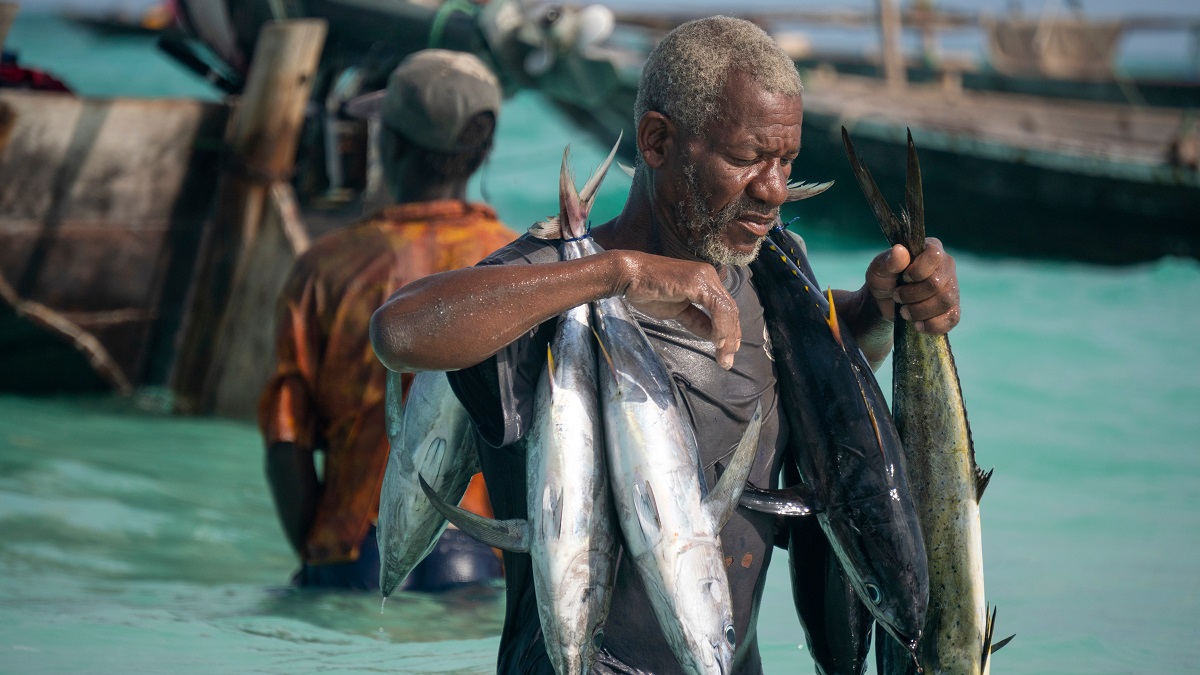
Activities will focus on enhancing sustainable and climate-resilient marine living resources and their value chains in the BCLME region. This includes developing diversification strategies, aquaculture, sustainability certification, market research and strategies for aquatic food and other marine resources, and capacity building.
The project also aims to explore and engage with new climate-resilient markets while promoting innovative financial frameworks for the Blue Economy at both regional and national levels.
UNCTAD contributions will build on earlier work undertaken to strengthen the Blue Economy capacities, particularly fisheries and aquaculture, in the countries of the BCC region.
Link to the SDGs
The project aligns with Sustainable Development Goals (SDGs) 14, 8, and 9, as well as contributes to additional goals such as SDGs 1, 2, and 5. It also supports the Kunming-Montreal Global Biodiversity Framework Targets 2, 7, 14, 15, 16, and 20.
Related:

Project Code
RAF/OT/OBC
Partners
UNDP and Benguela Current Commission Secretariat
Donors
Global Environment Facility (GEF)
Beneficiaries
Angola, Namibia, South Africa

Duration
2025-2031