
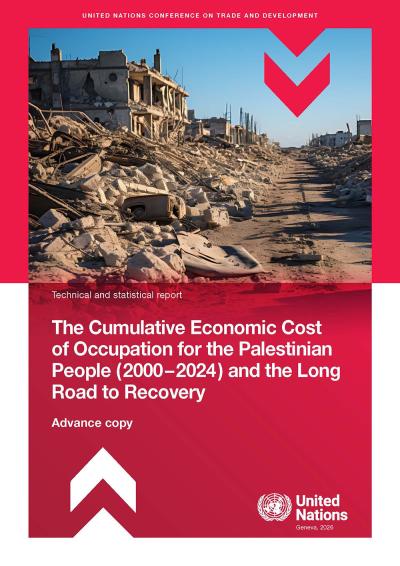
The Palestinian economy has undergone a profound transformation over the past two decades, shaped by military operations, restrictions and structural barriers linked to occupation. This study quantifies the scale of economic loss, assesses recent developments and outlines the conditions required for recovery.
The findings show an unprecedented socioeconomic collapse following the escalation of hostilities in October 2023, alongside long-term economic costs accumulated since 2000. Understanding these impacts is essential to inform policy responses, recovery strategies and efforts to support sustainable development in the Occupied Palestinian Territory.
Economic collapse and destruction of productive capacity
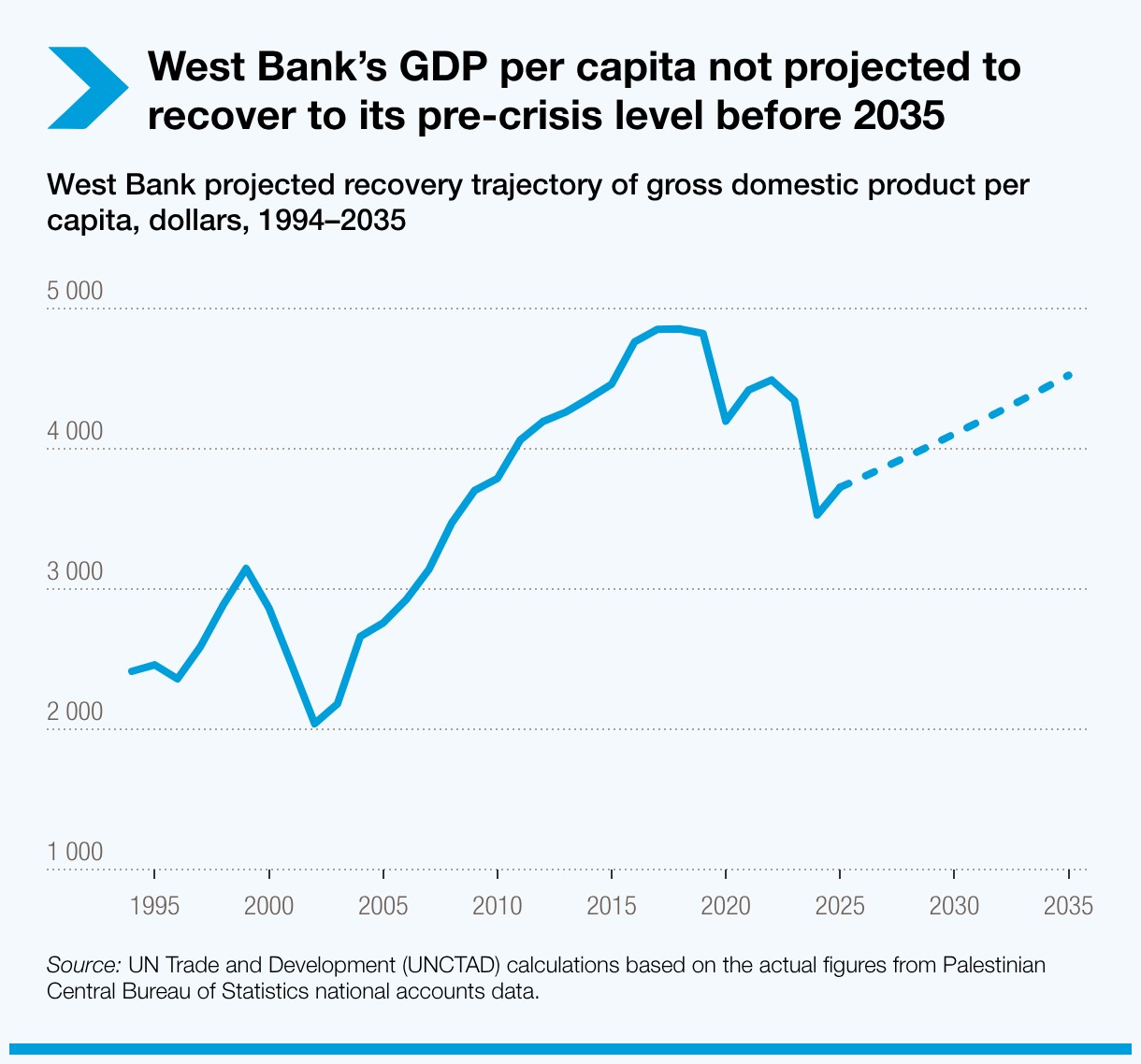
The study finds that recent military operations triggered a severe economic collapse across the Occupied Palestinian Territory. By 2024, GDP had fallen to 70% of its 2022 level, erasing 22 years of economic progress. GDP per capita declined sharply, while unemployment surged to 80% in Gaza and 35% in the West Bank, pushing Gaza’s entire population into multidimensional poverty.
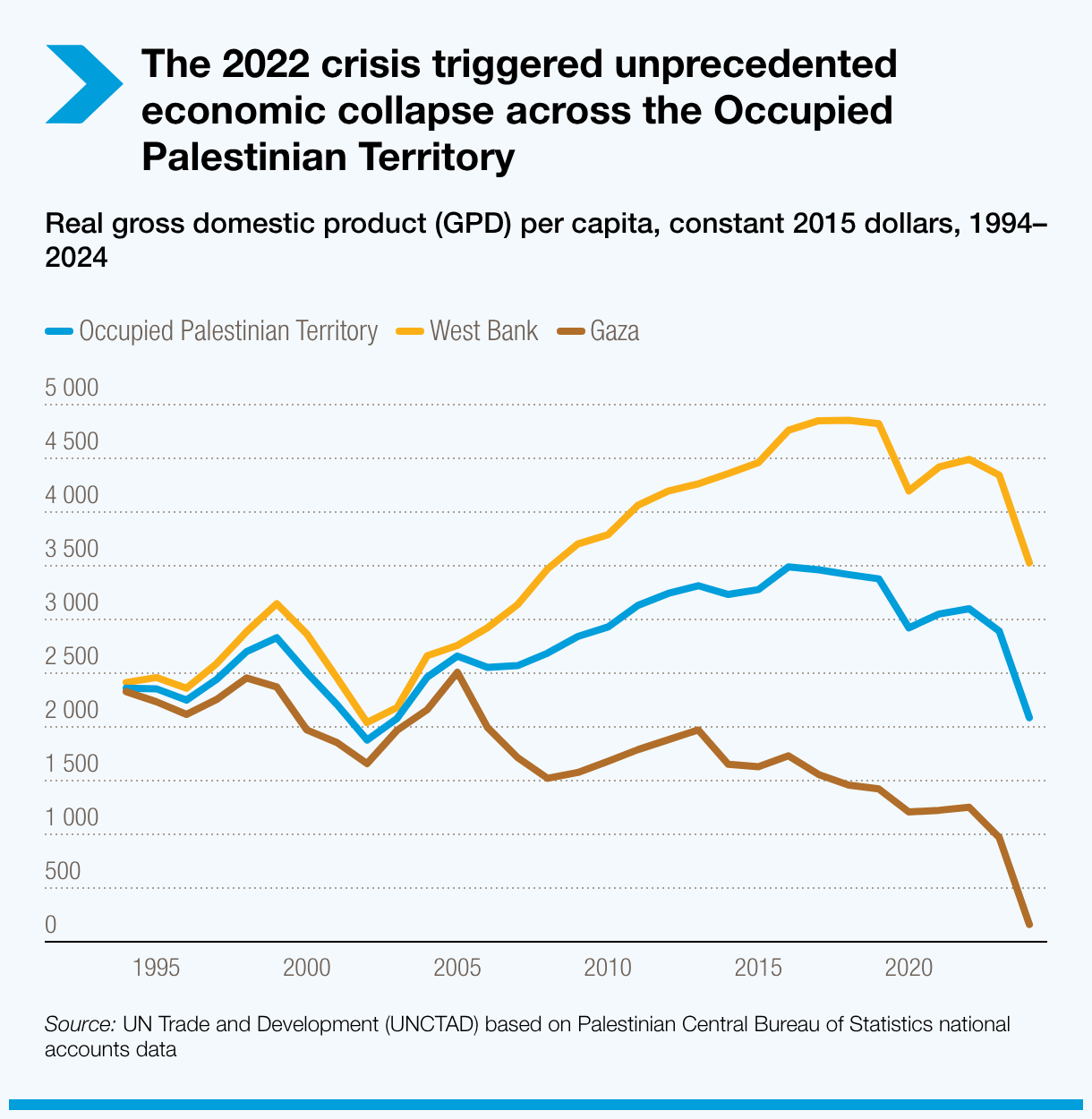
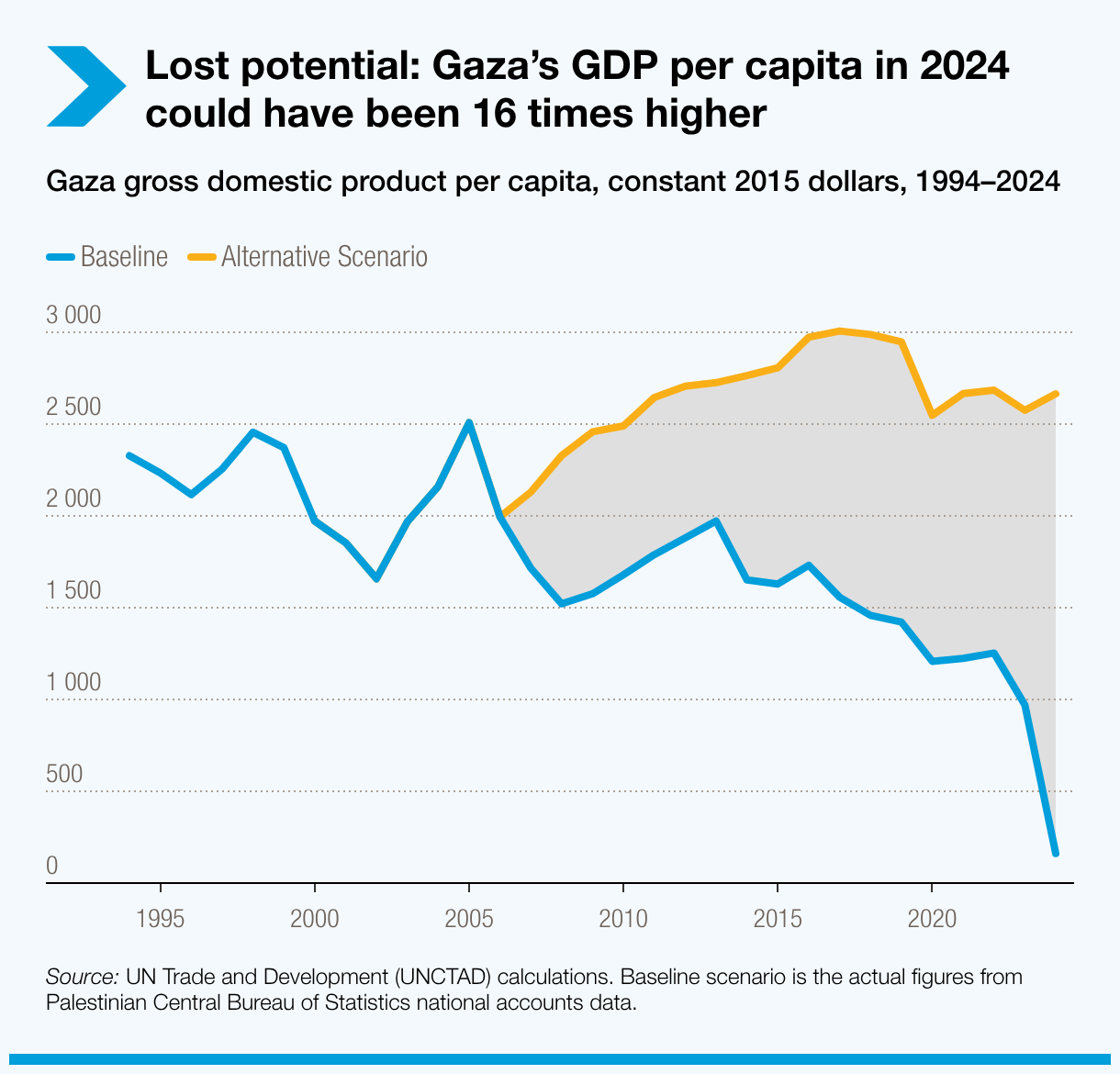
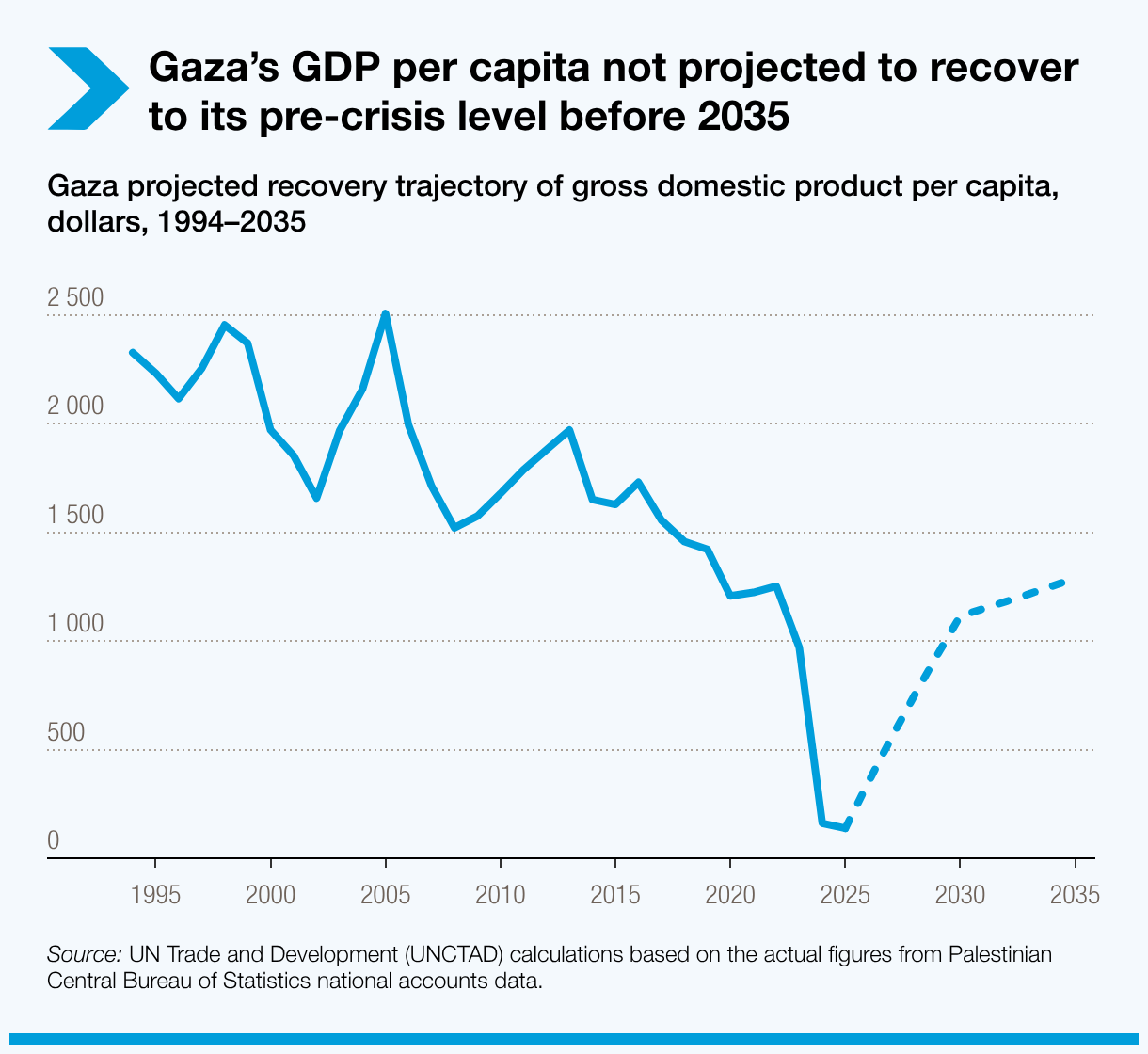
Gaza experienced the most devastating impact. Its GDP in 2024 shrank to just 13% of its 2022 level, and economic activity showed no revival in 2025. Production halted across key sectors, infrastructure was widely destroyed and most businesses ceased operations.
In the West Bank, restrictions on movement, labour access and trade disrupted supply chains, forced business closures and resulted in major losses in agriculture and private sector activity in all sectors.
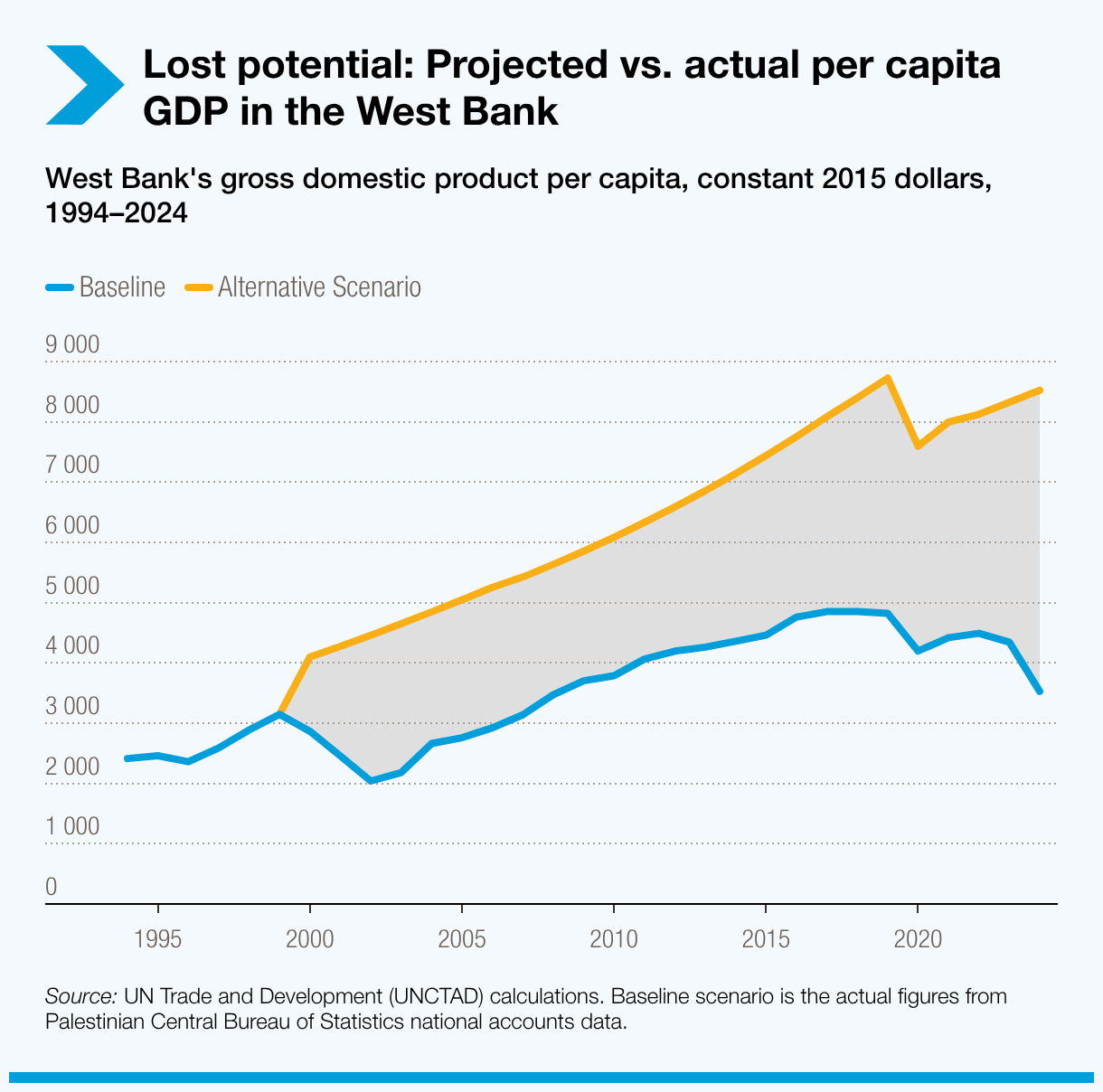
The study highlights the need to restore economic activity by easing restrictions, rebuilding infrastructure and re-establishing fiscal and trade flows. Without such measures, the downward economic spiral is likely to continue, undermining prospects for recovery.
Long-term cumulative economic losses
Beyond the immediate crisis, the study estimates part of the long-term economic cost of occupation, restrictions and military operations. Between 2000 and 2024, the Palestinian economy lost an estimated $212.2 billion in potential GDP, equivalent to 19.4 times its GDP in 2024.
The study also estimates that the economic value produced by Israeli settlements in occupied East Jerusalem and Area C of the West Bank reached $832.7 billion between 2000 and 2024, equivalent to over $1 trillion in 2024 dollars. In 2024 alone, the settlement economy was valued at $53 billion – nearly five times the size of the Palestinian economy.
These findings illustrate how structural constraints, movement restrictions and limited access to land and resources have suppressed economic potential. The study suggests that reducing restrictions, particularly in Area C, could significantly increase GDP, reduce poverty and strengthen fiscal revenues.
Structural barriers and fragmentation of the economy
The study identifies long-standing structural barriers and key drivers of economic decline: Repeated military operations, closures and movement restrictions, damaged infrastructure, inflated production costs and weakened competitiveness. Meanwhile, the fragmentation of the West Bank, Gaza and East Jerusalem into separate legal and administrative systems has further hindered the development of a cohesive, integrated economy and unified market.
In Gaza, prolonged closures, limited access to essential inputs and chronic shortages of electricity and resources have eroded productive capacity for decades. In the West Bank, checkpoints, permit regimes and restricted access to land and natural resources have constrained employment, trade and investment.
The study emphasizes that addressing these structural barriers is essential for sustainable development. Improved access to resources, enhanced mobility and stronger economic integration are identified as key steps to support growth and reduce dependence on external aid.
Recovery challenges and development priorities
The scale of the latest round of destruction presents major obstacles to recovery. More than 80% of structures in Gaza have been damaged or destroyed, and reconstruction needs are estimated at $70 billion – more than six times the Palestinian GDP in 2024. Health, education and agricultural systems have suffered widespread collapse, with long-term implications for human development and productivity.
The study stresses that recovery requires more than humanitarian assistance. Aid should be linked to long-term development objectives, including rebuilding infrastructure, stimulating local production and creating employment-intensive interventions. Coordinated international support, restoration of fiscal flows and policies that promote self-reliance are identified as critical components of recovery.
Conclusion
The study provides a comprehensive assessment of the economic impact of occupation and recent escalations on the Palestinian economy. It highlights both the scale of immediate devastation and the cumulative costs that have constrained development for decades.
The study concludes that sustainable recovery depends on fundamental changes, including an end to structural constraints and sustained international support. Linking relief efforts to long-term development and economic reconstruction is essential to enable a transition from crisis to stability and support lasting peace.