

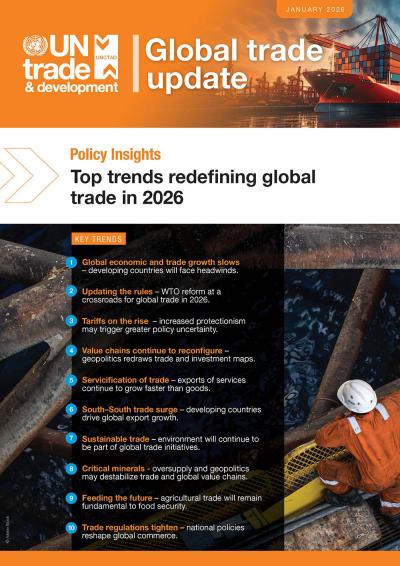
Global trade enters 2026 under mounting pressure from slower growth, geopolitical fragmentation, accelerating digital and green transitions and tighter national regulations. Together, these forces are reshaping trade flows, investment decisions and global value chains, with the greatest risks and opportunities concentrated in developing economies.
This report highlights ten trends that will define how countries trade in 2026 – and how trade policy choices could either reinforce fragmentation or support more resilient and inclusive growth.
1. Global economic and trade growth slows – developing countries will face headwinds

Global growth is projected to remain subdued at about 2.6% in 2026, while growth in developing economies excluding China slows to around 4.2%. Major trading partners, including the United States, China and Europe, are also losing momentum, weakening demand and tightening financial conditions.
For developing countries, slower growth limits investment in infrastructure and industrialisation. Stronger regional trade and diversification will be critical to build resilience.
2. Updating the rules – WTO reform at a crossroads for global trade in 2026
The World Trade Organization’s 14th ministerial conference will take place amid rising unilateral tariffs and geopolitical tensions. For developing countries, restoring a functioning dispute settlement system is essential to protect market access and enforce trade rules.
Preserving special and differential treatment remains critical to support industrialisation and food security. Decisions on agriculture, digital trade and climate-related measures will shape whether global rules support development.
3. Tariffs on the rise – increased protectionism may trigger greater policy uncertainty
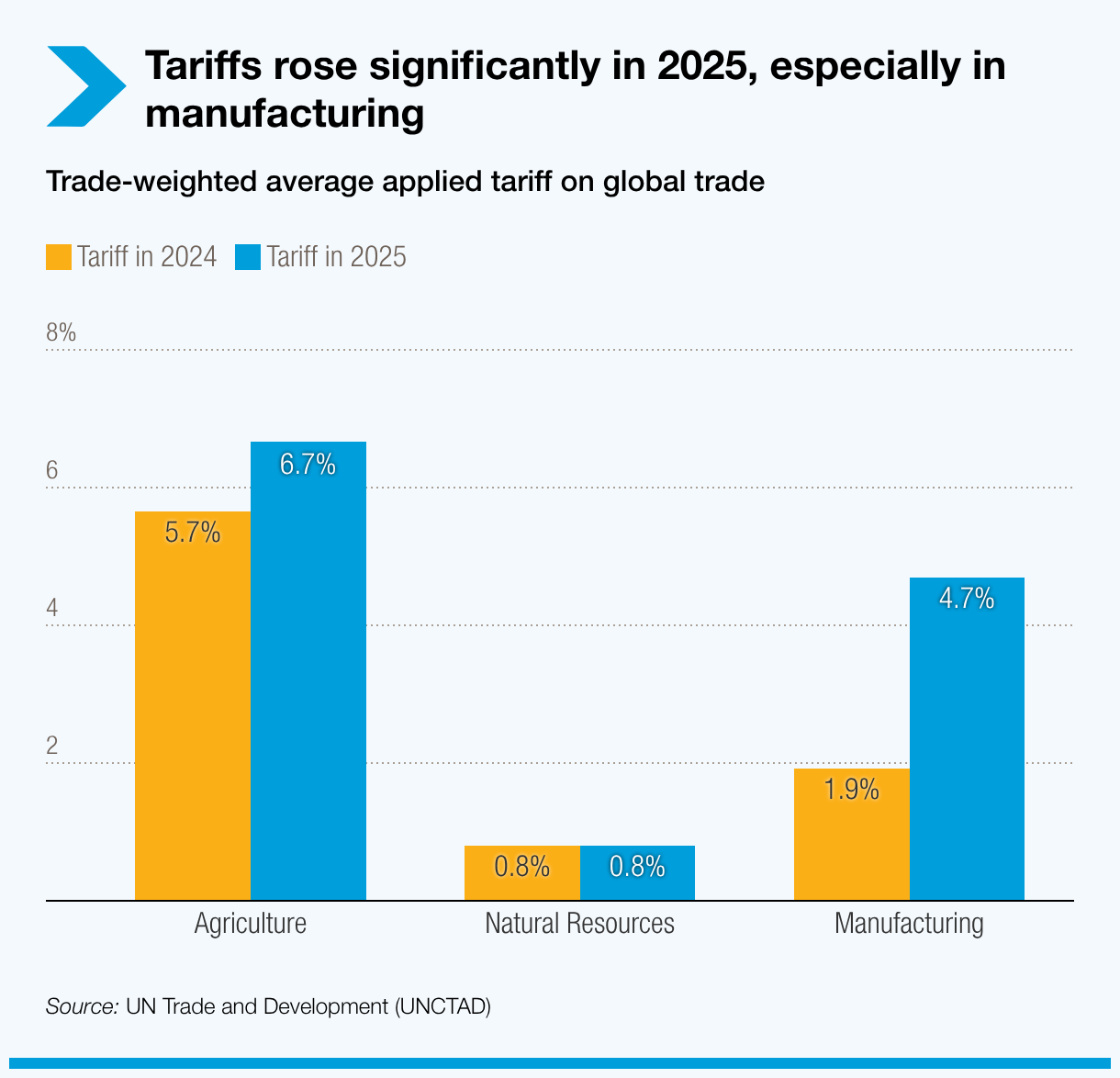
Global tariffs rose in 2025, driven largely by measures introduced by the US, with manufacturing most affected. Governments are expected to continue using tariffs in 2026 to pursue industrial and strategic objectives.
Frequent policy shifts increase uncertainty, discourage investment and disrupt supply chains. Smaller and less diversified economies are most exposed to rising costs and trade volatility.
4. Value chains continue to reconfigure – geopolitics redraw trade and investment maps
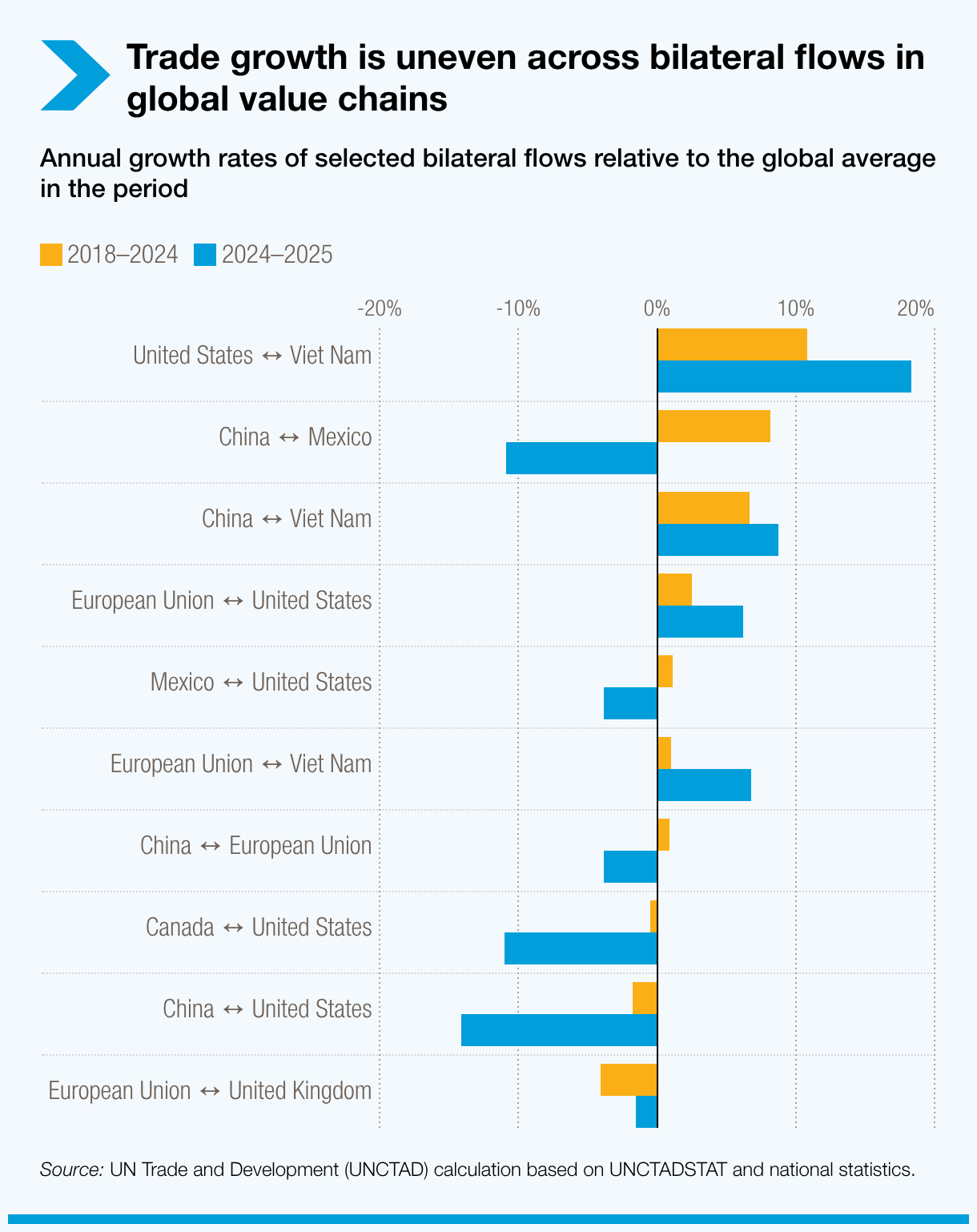
Nearly two thirds of global trade takes place within value chains that are being reshaped by geopolitical tensions, industrial policy and new technologies. Firms are diversifying suppliers and relocating production closer to key markets to reduce risk.
Countries with strong infrastructure, skills and stable policies are better placed to attract investment. More peripheral economies risk being sidelined unless they improve logistics, skills and the investment climate.
5. Servicification of trade – exports of services continue to grow faster than goods

Services exports now account for 27% of global trade and grew by about 9% in 2025, far outpacing goods. Services also dominate global intermediate inputs, underpinning manufacturing and primary sectors.
Digitally deliverable services drive much of this growth but remain limited in least developed countries. Closing the digital gap is essential for broader participation in services-led trade.
6. South–South trade surge – developing countries drive global export growth
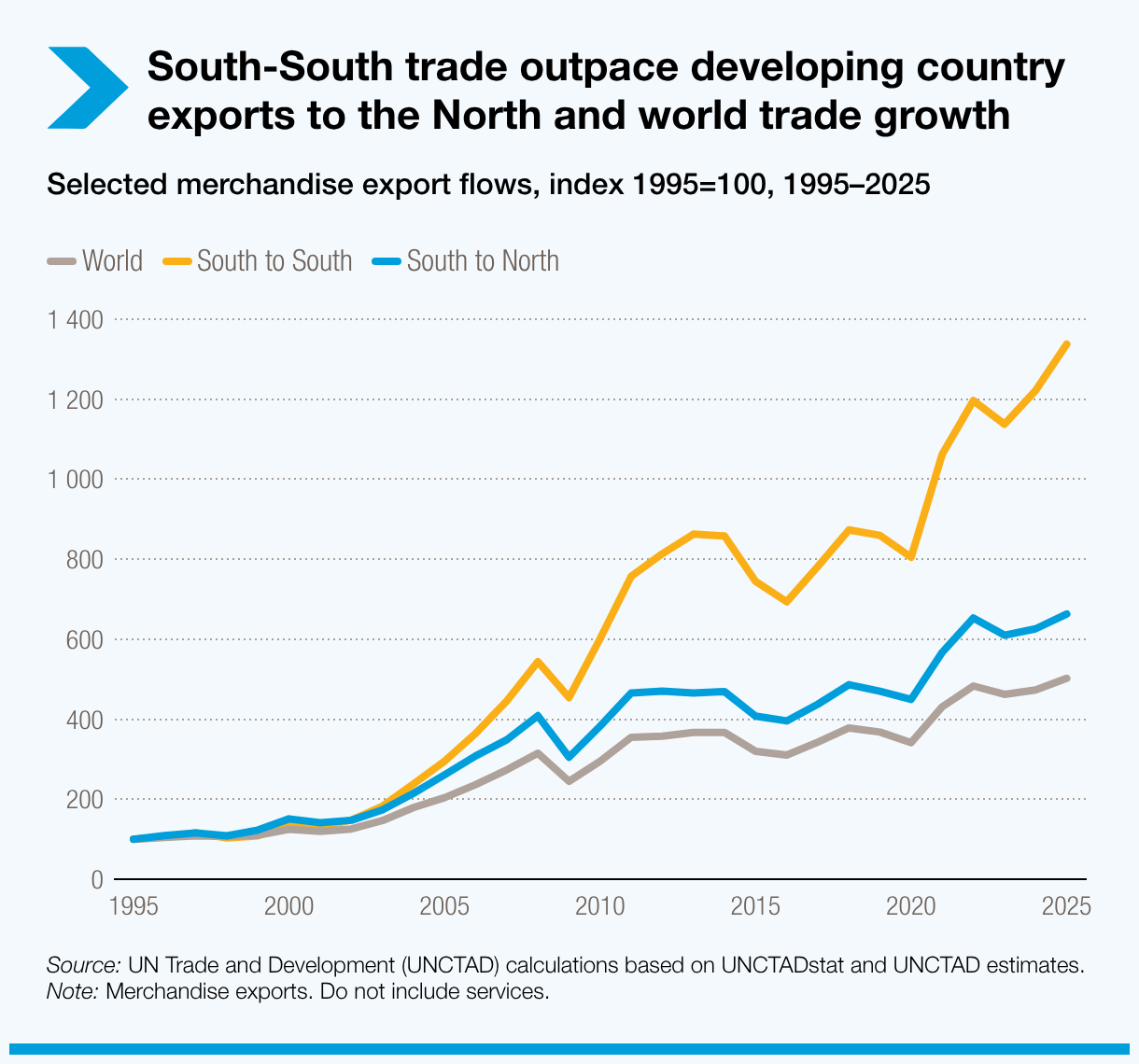
South–South merchandise exports rose from about $0.5 trillion in 1995 to $6.8 trillion in 2025. Today, 57% of developing-country exports go to other developing markets, led by Asia’s regional value chains.
Africa and Latin America are also strengthening South–South links. Deeper interregional trade can help offset weaker demand in advanced economies and boost resilience.
7. Sustainable trade – environmental priorities move from pledges to implementation
Environmental commitments are increasingly shaping trade as climate pledges move from ambition to implementation. By late 2025, pledges by 113 countries could cut emissions by about 12% by 2035.
Carbon pricing, clean-energy markets and environmental standards are redefining competitiveness. Developing countries will need access to green finance, technology and support to stay competitive.
8. Critical minerals – oversupply and geopolitics may destabilise trade and global value chains
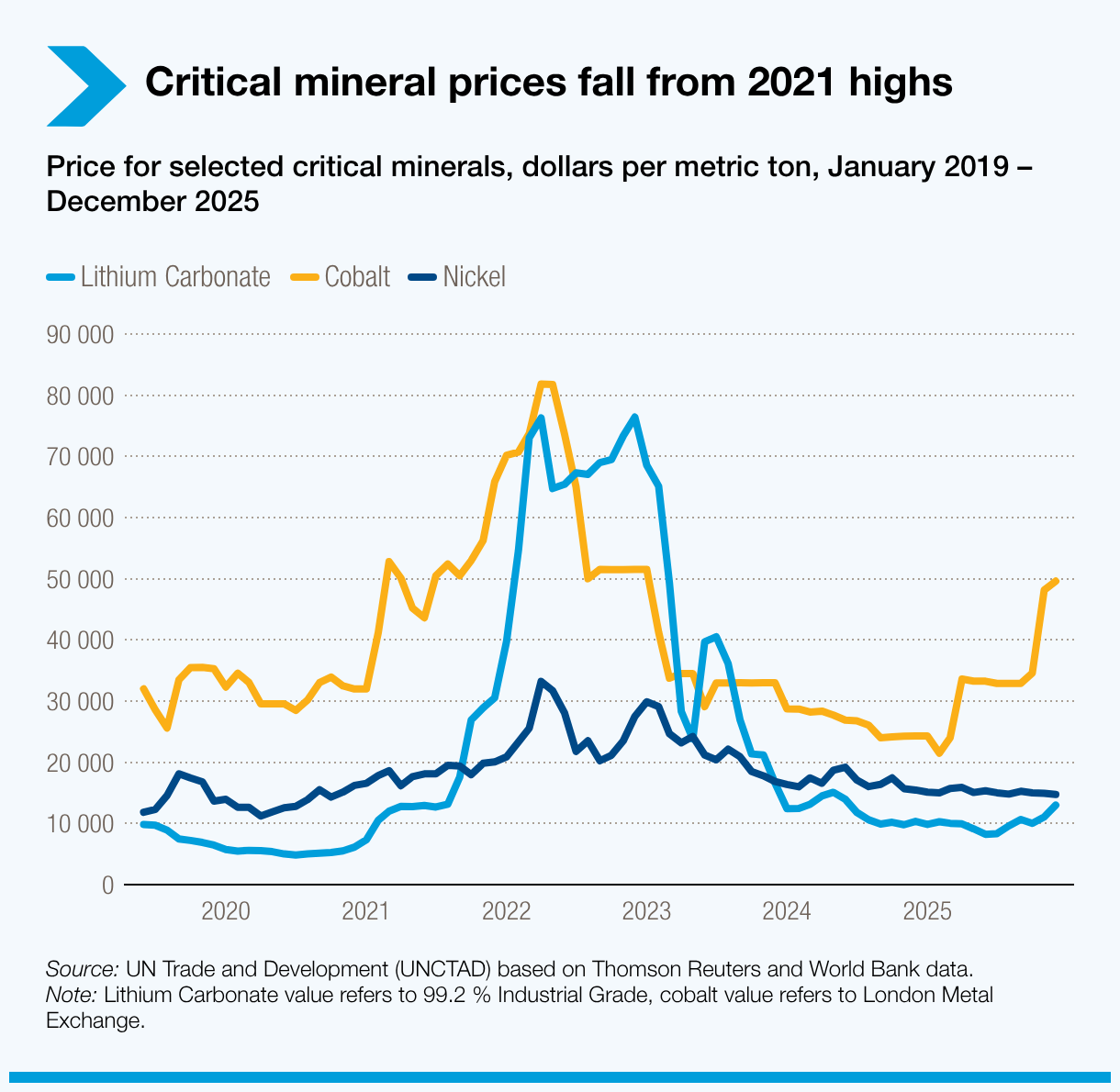
Critical minerals prices have fallen sharply after 2022 as supply expanded faster than demand, easing costs for clean technologies but weakening investment in new mining projects.
At the same time, export controls and stockpiling are tightening supply and fragmenting value chains. Managing resource security while sustaining investment will remain a key trade challenge.
9. Feeding the future – agricultural trade will remain fundamental to food security

Agricultural trade remains vital for food security, with food products accounting for nearly 87% of commodity exports. Many developing countries depend on imports to meet basic needs.
High fertilizer prices and climate shocks continue to threaten supplies. Open trade, better access to inputs and climate-resilient farming are essential to stabilise food systems.
10. Trade regulations tighten – national policies reshape global commerce
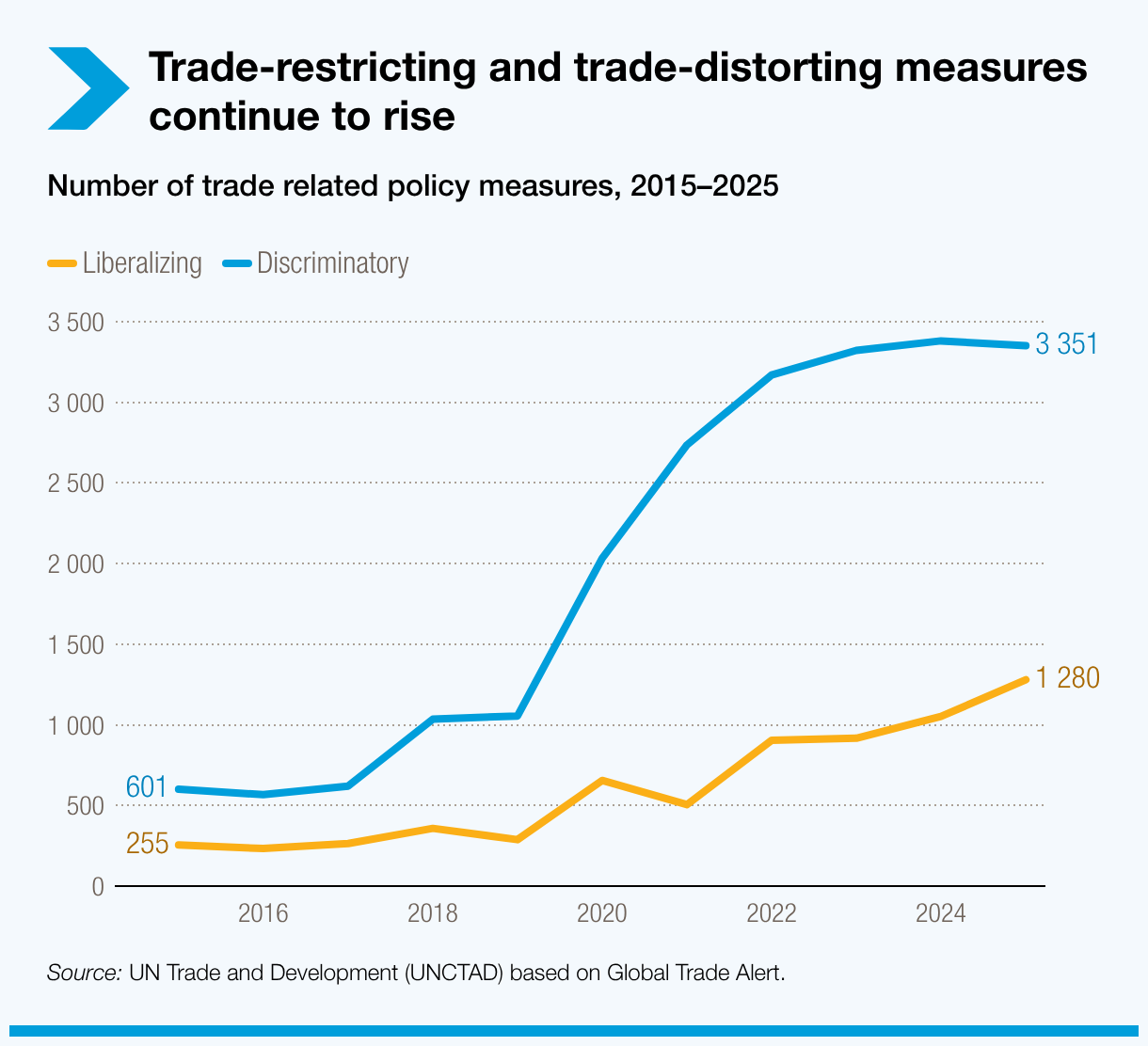
Since 2020, around 18,000 new discriminatory trade measures have been introduced. Technical regulations now affect roughly two thirds of global trade, raising compliance costs, especially for smaller exporters.
Environmental, social and security-driven rules will expand further in 2026. Flexible global rules and targeted assistance will be key to ensure inclusive trade.