
Key points
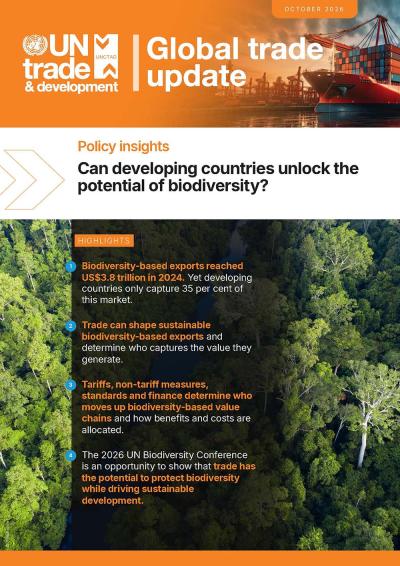
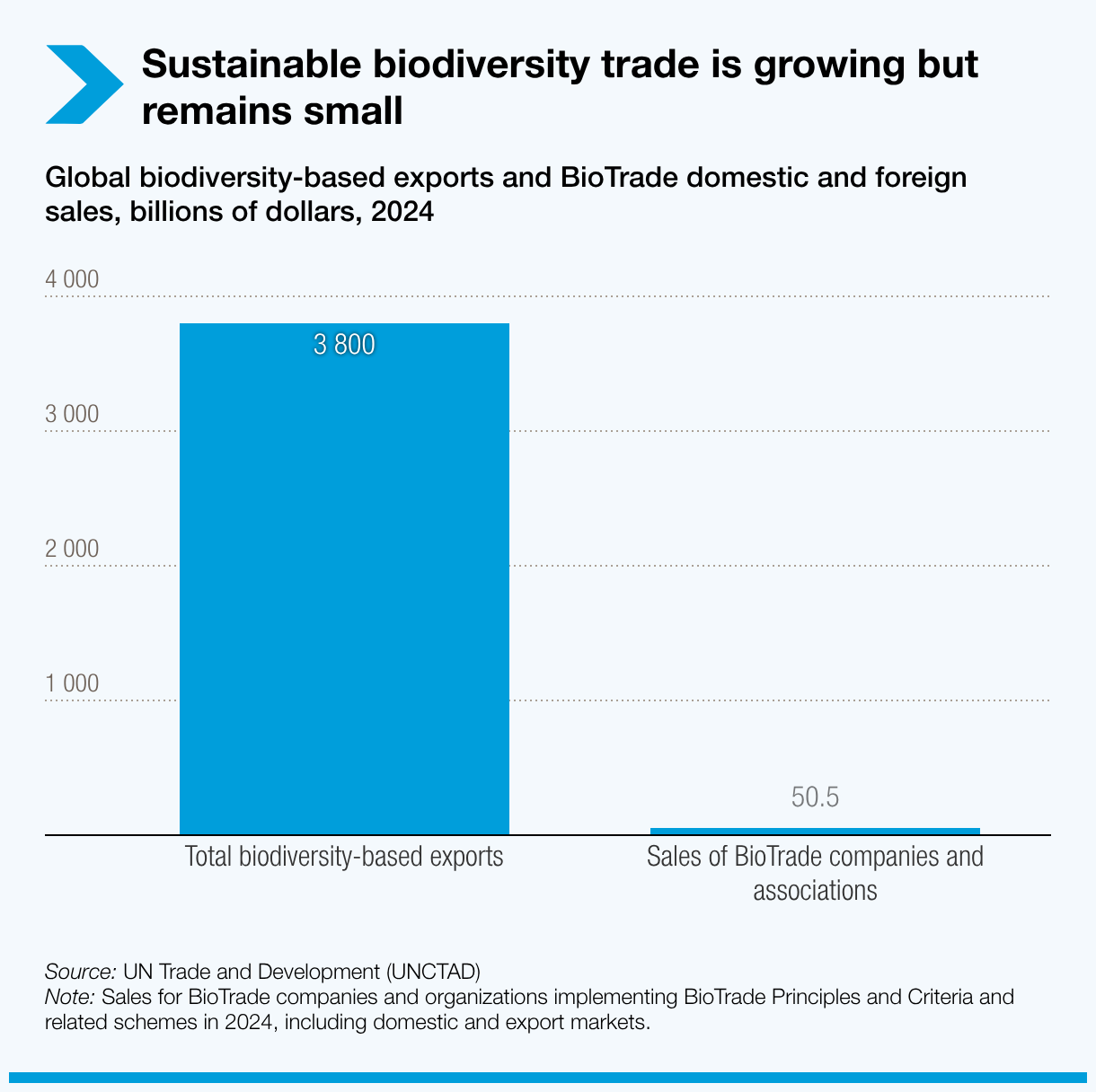
- Global biodiversity-based exports reached nearly $3.8 trillion in 2024. Yet developing countries captured only about 35%.
- Africa and Latin America and the Caribbean are home to much of the world's biodiversity but account for a relatively small share of exports.
- Trade policies, standards and access to finance strongly influence who benefits from biodiversity-based trade and who can move into higher-value activities.
- BioTrade sales reached nearly $50.5 billion in 2024, up from $40 million in 2003.
- The 2026 UN Biodiversity Conference offers an opportunity to better align trade and biodiversity goals.
The report examines how trade can help developing economies capture greater value from biodiversity while supporting sustainable development and safeguarding the biodiversity on which this trade depends.
Biodiversity-based products already account for a significant share of global trade, yet the benefits remain unevenly distributed. And trade doesn’t always contribute to biodiversity conservation and sustainable use.
The report argues that biodiversity richness alone doesn’t guarantee success. Productive capacity, market access, trade rules, standards and investment all shape whether countries remain suppliers of raw materials or move into higher-value production and processing.
Biodiversity-rich regions capture only a fraction of global exports
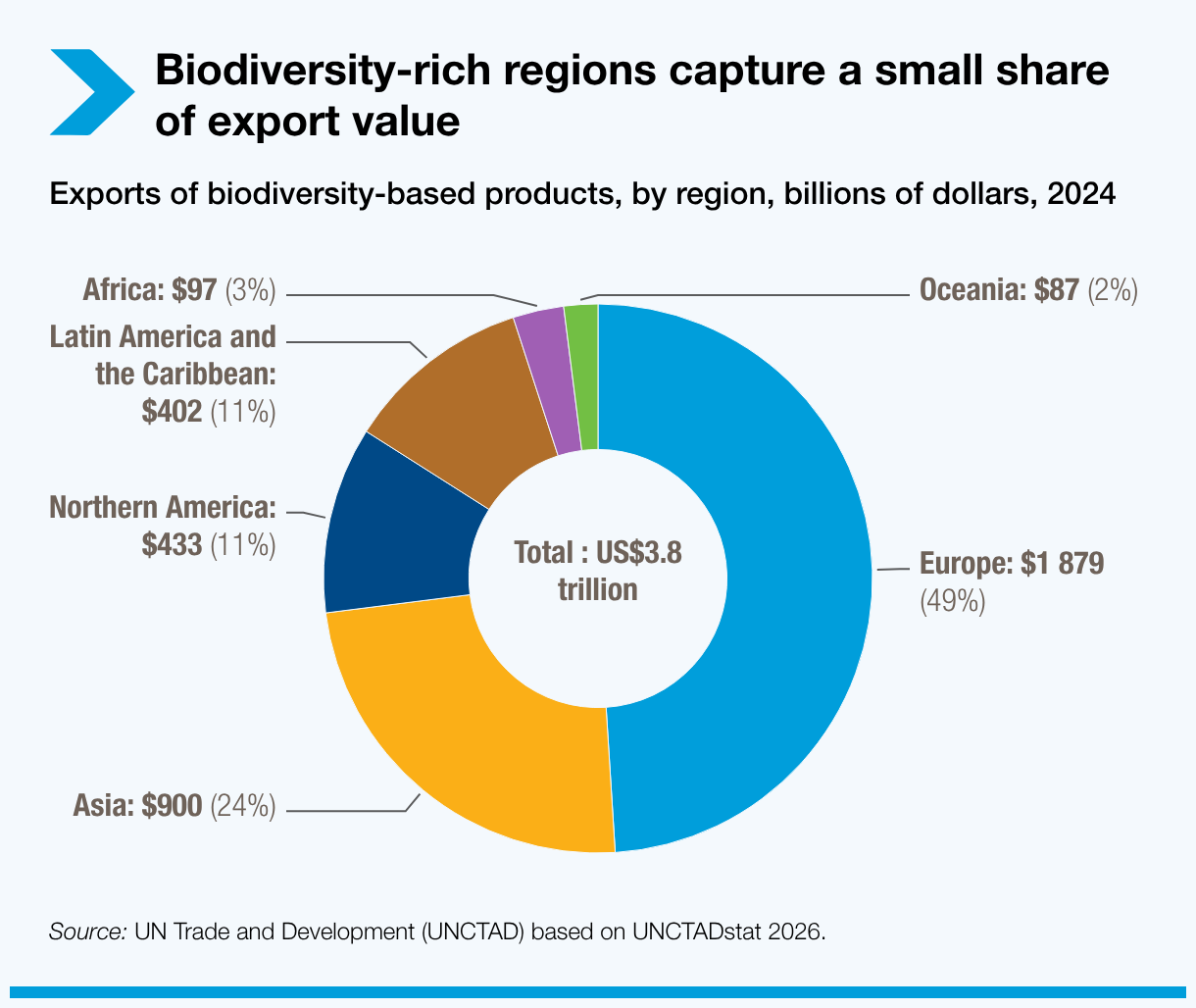
Global exports of biodiversity-based products reached nearly $3.8 trillion in 2024. Europe accounted for 49% of global exports, while developing countries accounted for around 35%. Africa contributed 3% and Latin America and the Caribbean 11%.
This gap is striking because Africa and Latin America and the Caribbean are home to roughly two-thirds of global biodiversity. And biodiversity-based products make up an important share of merchandise trade for both regions – almost one fifth in Africa and more than one quarter in Latin America and the Caribbean.
This highlights immense untapped potential to add value to and diversify their exports.
The report says the challenge isn't simply to increase trade volumes. Countries also need policies that promote value addition, job creation and sustainable production, while enabling legal access to biological and genetic resources and fair and equitable benefit-sharing.
Market barriers shape who moves up the value chain
The report finds that tariffs, non-tariff measures, standards and finance play a decisive role in determining competitiveness. Producers seeking to move into higher-value activities often face significant barriers.
One example involves natural alternatives to plastics. Cotton, jute, hemp and paper-based products can face average import tariffs of up to 16.1%, sometimes matching or exceeding tariffs applied to plastic products.
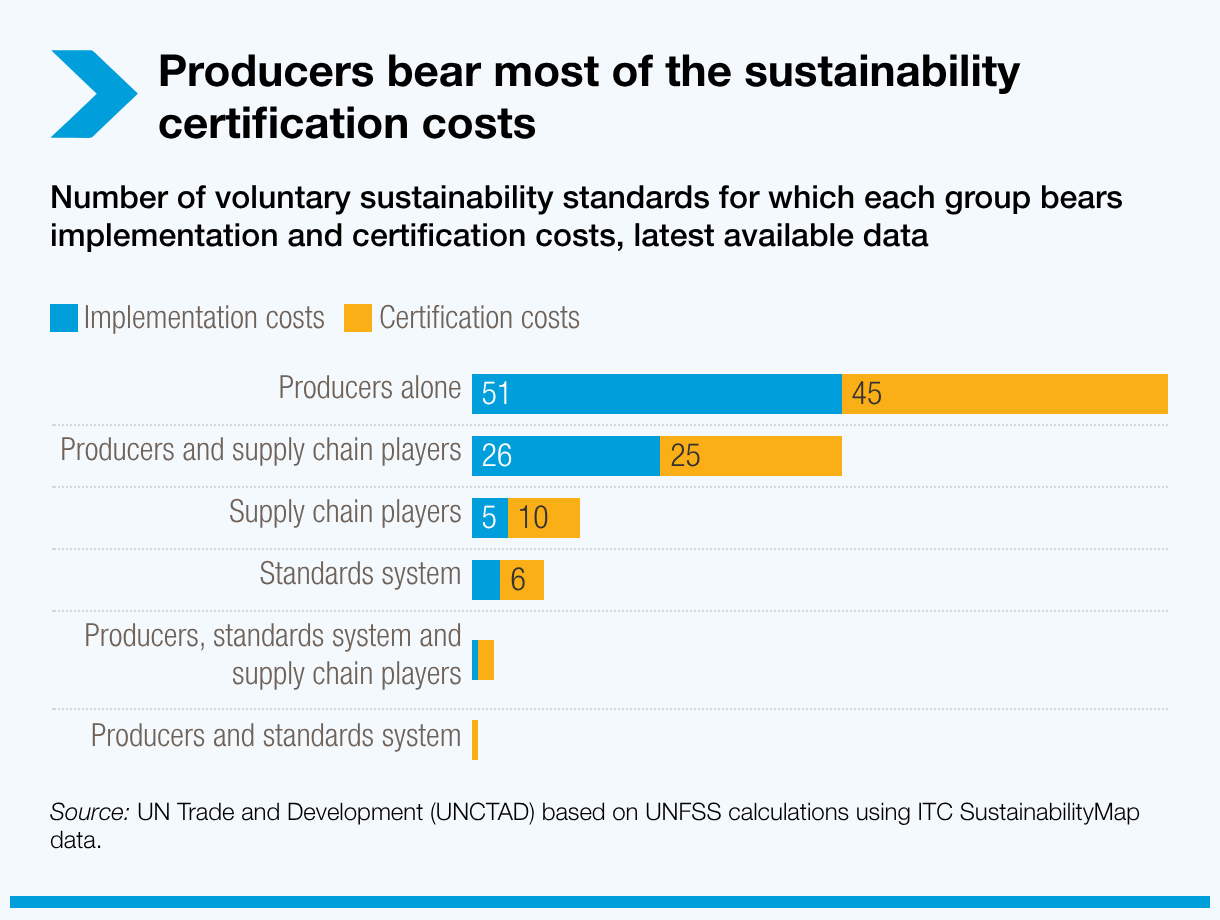
The report also highlights the burden of complying with regulations and voluntary sustainability standards. Analysis cited in the report found that producers alone bore implementation costs for 51 of 87 standards reviewed and certification costs for 45 of 89 reviewed. Expanding technical assistance, certification capacity and access to affordable finance could help smaller producers reach higher-value markets.
More value can be retained through processing and circular use
The report highlights opportunities for developing economies to generate greater value from biodiversity resources through processing and circular business models. BioTrade sales reached nearly $50.5 billion in 2024, compared with $40 million in 2003. This growth shows the potential of biodiversity-based business activity, while highlighting the need to integrate economic, environmental and social sustainability into business models.
The report also highlights examples of agricultural waste being turned into tradable products. A project in Kenya converted more than 3,300 tonnes of pineapple leaves into more than 100 tonnes of textile-grade fibre and around 800 tonnes of compost.
Trade policies can support global biodiversity goals
As countries prepare to review collective progress under the Kunming-Montreal Global Biodiversity Framework at the 2026 UN Biodiversity Conference, the report stresses that trade should be seen not only as a source of pressure on biodiversity but also as a way to support its sustainable use and development.
It calls for enhanced productive capacity, better market access, greater value addition, sustainable use, legal access and fair and equitable benefit-sharing, more affordable finance, improved traceability and certification, increased circular production and more coherent policies. The report also stresses shared responsibility across biodiversity-based value chains, with support from developed countries, development partners and leading firms.
Together, these measures could help developing economies capture more value from biodiversity-based trade while protecting the natural resources on which it depends.