


The report examines how small and medium-sized enterprises (SMEs) in Benin can better integrate into regional value chains, with a particular focus on pineapple products and the iron and steel sectors. It analyses the sectors where Beninese firms already have competitive advantages, the regional markets where demand is growing and the main obstacles that continue to hinder their development.
SMEs are at the heart of Benin’s economy. They account for more than 90% of businesses and generate between 60% and 70% of jobs. Since 2016, more than three quarters of new jobs have come from the private sector. But many firms continue to face major challenges, including limited access to finance, inadequate infrastructure, high logistics costs and difficulties complying with quality and certification standards.
The report highlights that improving SME competitiveness is essential for creating jobs, diversifying the economy and strengthening regional trade integration.
Pineapple products offer strong regional potential
Benin already exports fresh, dried and processed pineapple products. But in 2023, only 2.3% of the value of Benin’s fresh or dried pineapple exports was destined for African markets. Between 2016 and 2023, Morocco, Senegal and Togo accounted for 63% of Benin’s exports in this segment.
The report identifies new opportunities for Beninese SMEs to increase exports of fresh pineapple, fresh pineapple juice and concentrated pineapple juice within the region.
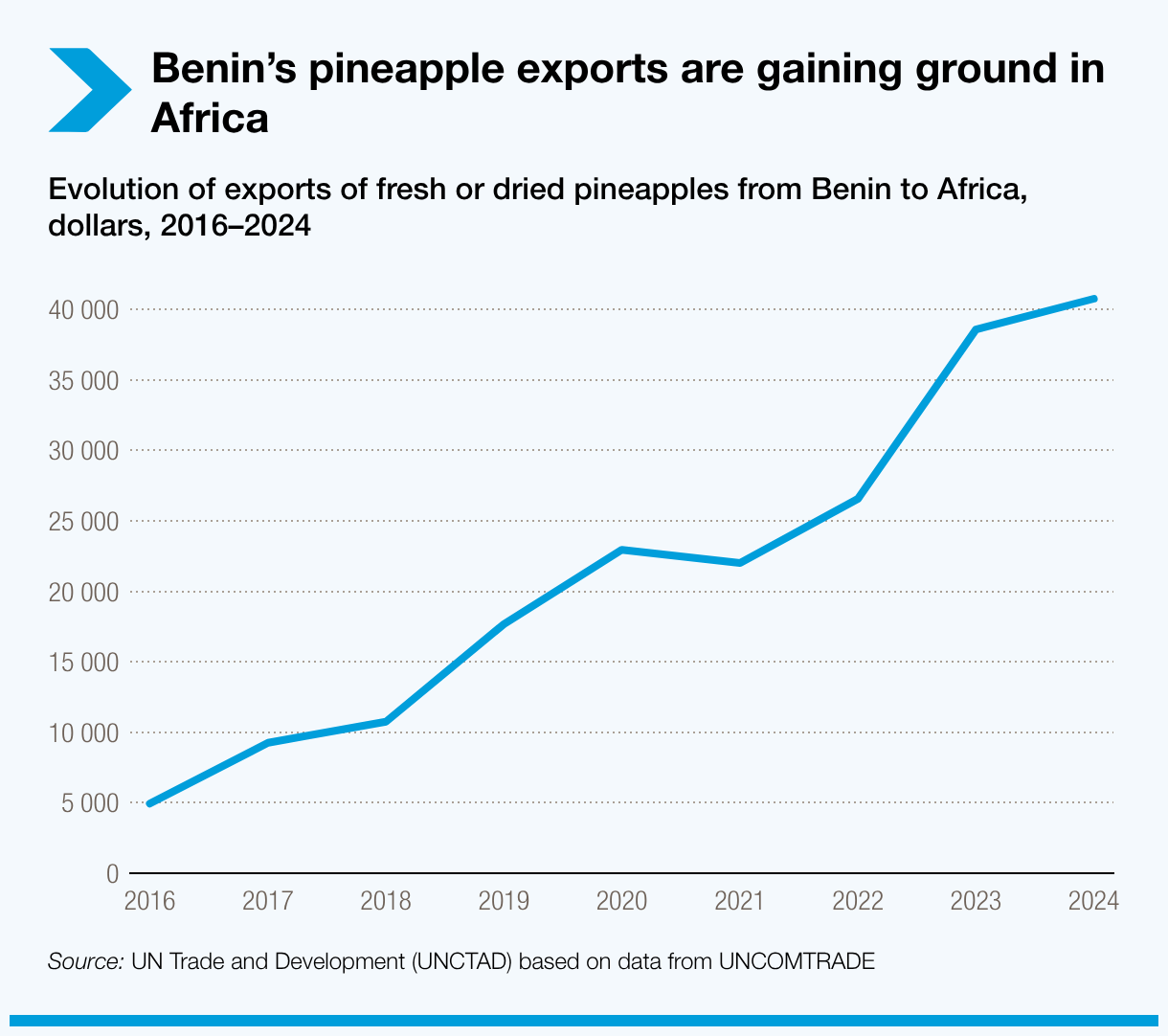
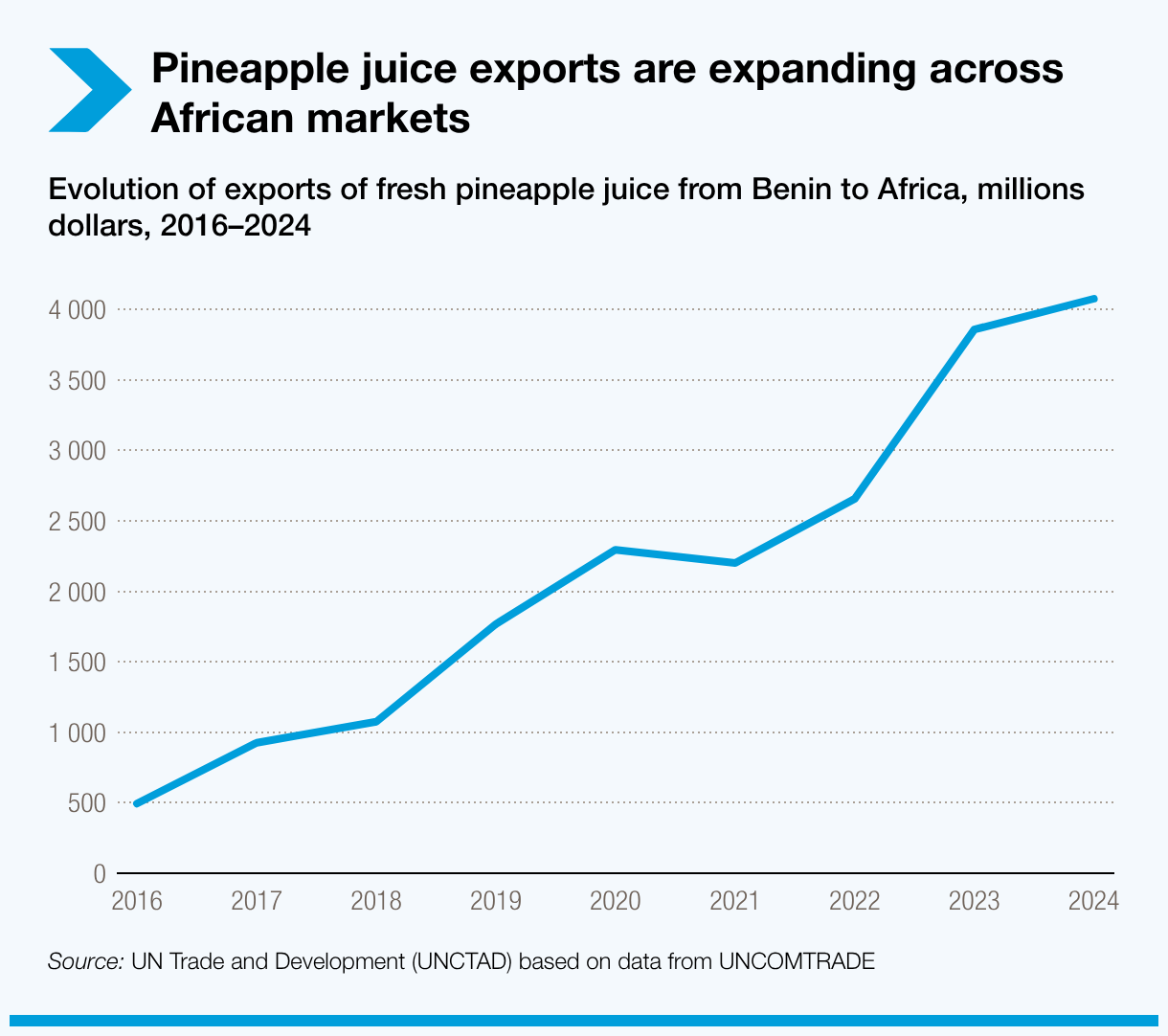
The study highlights strong demand in several African markets where Benin’s presence remains limited. It also points to opportunities for firms to move up the value chain through additional processing and higher-value products.
However, the report stresses that businesses will need stronger support to seize these opportunities. Key constraints include:
- Limited access to modern processing equipment
- Inadequate cold-chain and transport infrastructure
- Difficulties complying with regional and international standards
- Limited access to affordable finance
The report calls for targeted measures to improve production quality, strengthen logistics and expand processing capacity.
Iron and steel could create new industrial opportunities
The report also identifies opportunities for Beninese firms in regional iron and steel value chains, particularly in steel processing and the manufacture of finished products.
While opportunities remain limited in mining activities, the report finds that rolling, processing and manufacturing activities offer greater potential to create value, supply regional markets and support industrialization.
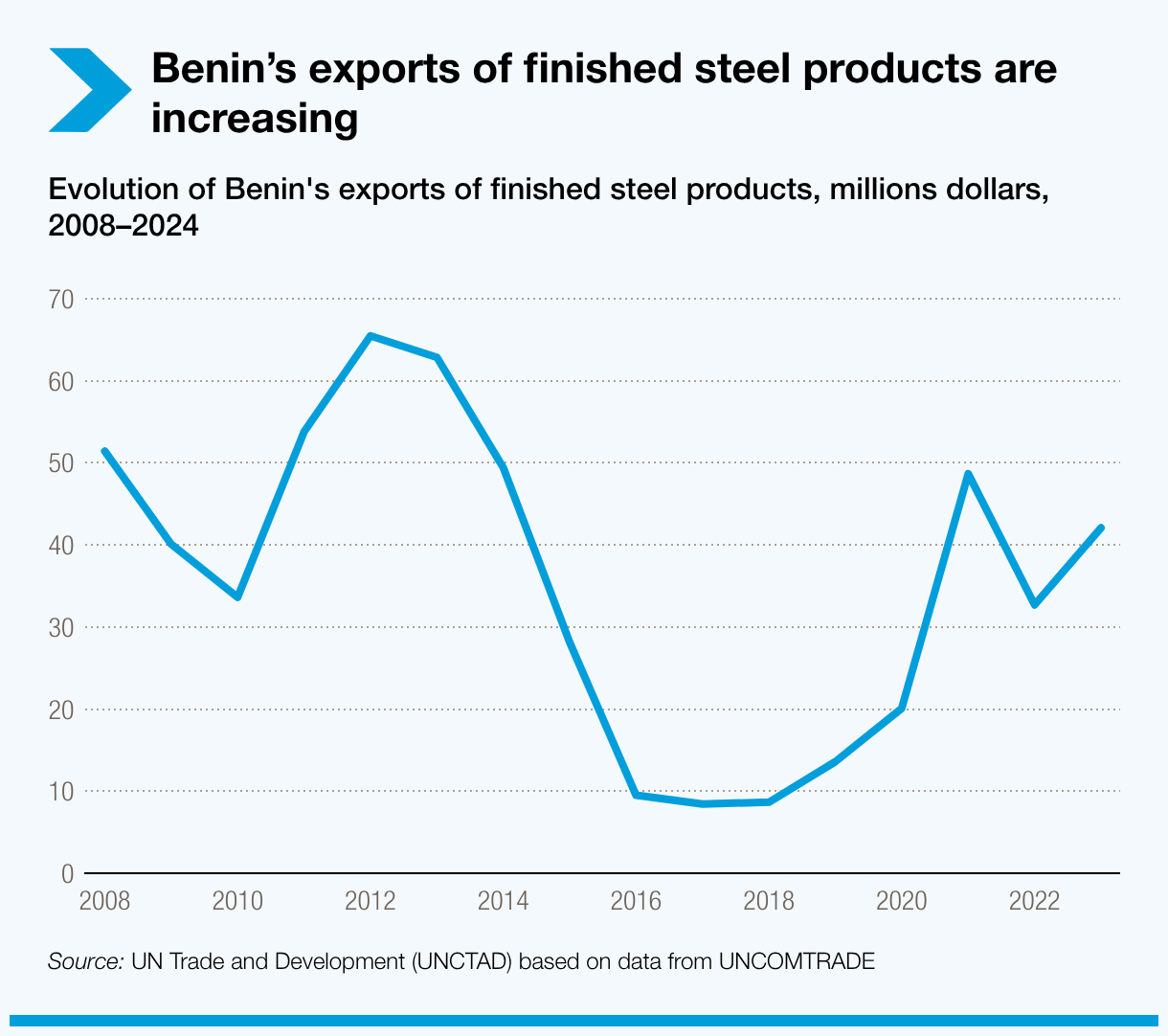
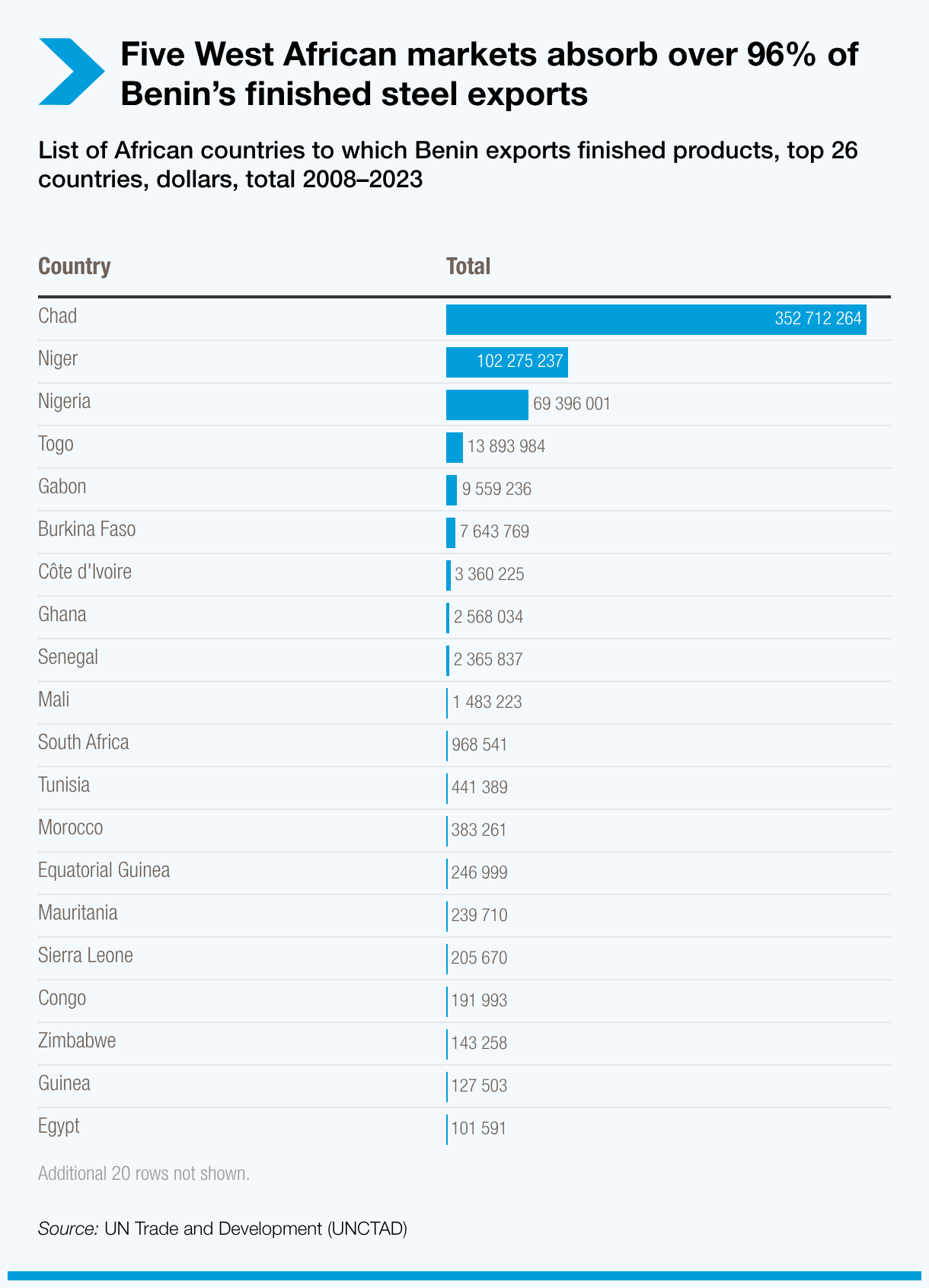
The report notes that Beninese firms continue to face major challenges related to electricity costs, infrastructure gaps and limited industrial capacity.
To strengthen participation in the sector, the report recommends:
- Expanding industrial infrastructure
- Improving access to reliable electricity
- Strengthening firms’ technical capabilities
- Aligning industrial policies more closely with regional trade opportunities
Stronger support systems will be essential
The report emphasizes that firms in both sectors face similar challenges. Businesses surveyed highlighted the need for:
- Financial support and guarantee mechanisms
- Better equipment and production infrastructure
- Technical and managerial training
- Support to comply with standards and certification requirements
The report concludes that regional value chains could become an important driver of industrial development and economic diversification in Benin. But this will require coordinated action to strengthen infrastructure, improve business support systems and help SMEs move into higher-value activities.
The report was prepared under the UN Trade and Development (UNCTAD) project titled “Strengthening the capacity of vulnerable African countries to adopt policy incentives and innovative instruments for SME participation in regional value chains”, funded by the Sustainable Development Goals Fund of the United Nations Peace and Development Trust Fund.