


Frida Youssef is the chief of the Transport Section within the Trade Logistics Branch at UNCTAD.
She has more than twenty-five years of professional experience in areas related to trade, logistics, commodities, finance, and sustainable development, which has given her the opportunity to build, lead and motivate research and technical assistance programmes, geared towards developing countries in a broad range of issues, including commodity supply chains and structured finance, public-private partnerships (PPPs), maritime transport and ports, transit transport and corridors, and cross-cutting issues such as environment, climate change, gender, finance and investment. She is a co-author of the UNCTAD's annual Review of Maritime Transport. Frida holds an MBA from Boston University and an MA in International Affairs from the Hautes Etudes Internationales - Paris.;
She is a member of the Steering Committee of the Global Network of Export-Import Banks and Development Finance Institutions (G-NEXID). She is also on the Steering Committee of the Port Chapter of the World Association of PPPs Units and Professionals (WAPPP).
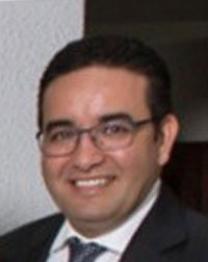
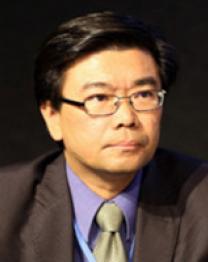
Experienced international lawyer and policy analyst with a demonstrated history of working in international trade, climate change, environment, investment, human rights, and sustainable development policy, in NGOs, academe, and intergovernmental organizations in a multicultural setting.
Strong community and social services legal professional, with progressively senior management and administrative experience, with a Master of Laws - LLM focused in International Law and Legal Studies from Georgetown University Law Center and a Bachelor of Laws and of Political Science from the University of the Philippines.

Cynthia Yue is the 2021-2022 UNA-USA Youth Observer to the United Nations.
A Tennessee native and a recent graduate of George Washington University, she has spent the past year connecting with young people across the United States about the issues that matter most to them and how they can harness their power for good. Yue has spent more than seven years as a volunteer leader at UNICEF USA and previously served on their National Council and as a UNICEF Global Youth Ambassador.
During her tenure as UN Youth Observer, she collaborated with Asian Mental Health Project on an initiative to encourage young people to communicate with their parents and elders about mental health and founded the Social Justice Series to hold conversations on advocacy, antiracism, and social justice — both locally and globally.
Yue is committed to tackling some of the world’s biggest challenges — from mental health and climate change to poverty and gender equality — to make the world a better place for all.

Dr. Jan Yves Remy is the Director of the Shridath Ramphal Centre for International Trade Law, Policy and Services (the SRC), the premier trade institution of the University of the West Indies Cave Hill Campus, Barbados, dedicated to training, research and outreach on issues of regional and international trade. She coordinates and lectures under in the SRC flagship Masters in International Trade Policy (MITP) programme and writes frequently on issues arising under Caribbean development and trade law. She holds the position of WTO Chair at the University of the West Indies (Barbados), under the WTO Chair Programme.
Jan Yves holds an undergraduate degree in law from the University of the West Indies (Hons); a masters from the University of Cambridge (Hons); and a PhD (summa cum laude) from the Graduate Institute of Development Studies on the Role of the Caribbean Court of Justice in Caribbean integration.
She previously worked as Senior Associate at Sidley Austin LLP (Geneva and Washington D.C.) and before that as Legal Officer at the Appellate Body of the WTO.

Ingrid Zabaleta currently serves as Regional Executive Assistant of the +Cotton project, an initiative of the Brazilian government and FAO for cotton producing countries in Latin America.
She has more than 13 years of experience in strategic management and mobilization of alliances for the integration of the agro-textile-clothing and sustainable fashion sector in Latin America, with a focus on the sustainability of the cotton supply chain.
Ingrid is a sociologist from the National University of Colombia. She holds a Master in International Relations and a Master in Decentralized International Cooperation, both from the University of the Basque Country- UPV; and an MBA from the Alberto Hurtado University of Chile.
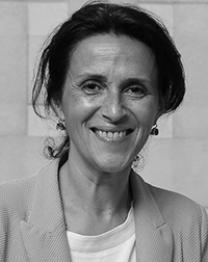
Chrysoula Zacharopoulou is a Greek-French medical doctor and politician, currently serving as Minister of State for Development, Francophonie and International Partnerships, attached to the Minister for Europe and Foreign Affairs in France.
She was elected to the European Parliament in 2019 and became a Vice-Chair of its Committee on Development.
Ahead of the European Union-African Union Summit in Brussels, she was selected as the European Parliament’s rapporteur for the drafting of the new EU-Africa strategy, holding broad consultations in several African countries to produce tangible recommendations to build a lasting, inclusive partnership between the two continents.
In the European Parliament, she also worked to defend the right of women and girls to make decisions governing their own bodies, to fight all forms of violence against them, and for an ambitious, feminist European foreign policy. She was appointed rapporteur for the third Action Plan on Gender Equality and Women’s Empowerment in External Relations (GAP III).
Chrysoula Zacharopoulou was appointed a Chevalier in the National Order of Merit in 2017.
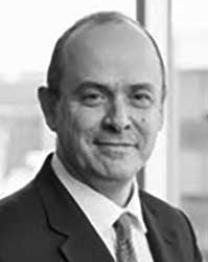
Dr Zadek is Chair of Finance for Biodiversity (F4B) and Advisor to the Taskforce on Nature-related Financial Disclosures (TNFD). He led the UN Secretary General’s Task Force on Digital Financing of the SDGs, was Finance Advisor in the Executive Office of the UN Secretary General, and led the G20 green finance secretariat under the Chinese, German and Argentinian Presidencies. He was on the International Advisory Board of Generation Investment Management, had advisory roles at the World Economic Forum, was CEO of AccountAbility, Visiting Professor at the Singapore Management University, and senior fellow at Tsinghua School of Economics and Management and Harvard`s Kennedy School of Government. He has advised corporations, governments and multi stakeholder initiatives, and published extensively, including the award-winning book, The Civil Corporation.
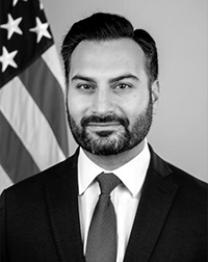
Ali Zaidi serves as Assistant to the President and National Climate Advisor. In this role, he leads the White House Climate Policy Office, which coordinates policy development and President Biden’s all-of-government approach to tackle the climate crisis, create good-paying, union jobs, and advance environmental justice. Zaidi is a longtime advisor to President Biden, having provided counsel and leadership on climate policy development, legislation, and executive action from day one of the Administration and on the Biden presidential transition and campaign. Before his current role, he served as Deputy National Climate Advisor.
Zaidi joined the Biden-Harris Administration after serving as the state of New York’s Deputy Secretary for Energy and Environment and Chairman of Climate Policy and Finance, where he led the state's efforts on climate change — driving investment into infrastructure and innovation, empowering workers and communities, and boosting economic and environmental resilience. Zaidi also taught graduate courses on technology policy and studied the fiscal and financial impacts of climate change as an adjunct professor at Stanford University. During that time, Zaidi also co-founded Lawyers for a Sustainable Economy, a Stanford-coordinated initiative that equips sustainability-focused startups with pro bono legal services.
Zaidi brings the cross-sector and multi-disciplinary experience needed to deliver a whole-of-government response to the climate crisis. During the Obama-Biden Administration, Zaidi served as Associate Director for Natural Resources, Energy, and Science for the Office of Management and Budget and as Deputy Director of Energy Policy for the Domestic Policy Council — helping to design and implement a wide range of domestic and international policies. Zaidi has advised non-profits, including as a Trustee of the Natural Resources Defense Council, and counseled the private sector, as an attorney who helped launch a sustainable investment practice.
Zaidi immigrated from Pakistan and grew up outside Erie, Pennsylvania. He received an A.B. from Harvard University and J.D. from Georgetown University.
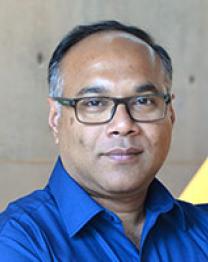
Dr Atiq Zaman is an internationally renowned expert in circular economy and zero waste practices, and the Founding Co-Director of the Global South Nexus (GSN).
He holds several prominent research leadership roles, including: Circular Economy Engagement Coordinator for the Sustainable Manufacturing and Environmental Pollution (SMEP) Programme at UN Trade and Development (UNCTAD) in Geneva, Switzerland (May–September 2025), Member of the UN Council of Engineers for the Energy Transition (CEET) (2022–2026), Curtin Node Manager of the Sustainable Communities and Waste Hub, funded by the Department of Climate Change, Energy, the Environment and Water (DCCEEW) under the National Environmental Science Programme Phase 2 (NESP2) (2021–2027), Circular Economy Research Theme Leader at the Sustainable Built Environment National Research Centre (SBEnrc) (2024–ongoing), Circular Economy Research Leader at the Curtin Institute for Energy Transition (2023–ongoing).
Dr Zaman has published around 80 peer-reviewed outputs, including authored and edited books, journal articles, and industry, technical, and policy reports. His contributions have earned him the title of the world's top zero-waste expert according to ScholarGPS and a place in the world’s top 2% of scientists by Stanford/Elsevier. His forthcoming co-edited book titled “Circular Economy: Theories, Metrics, and Global Practices” is scheduled for publication with Routledge in 2026.