

Amanda Abrom is the Program Manager of the Global Schools Program, an initiative of the United Nations Sustainable Development Solutions Network which supports a network of K12 educators and schools in 80 countries, as well as 600+ program alumni.
Previously, Amanda has held positions with the Chilean Ministry of Education and worked on the US Department of State’s international exchange programs for young leaders from Africa and the Middle East. Her interests in education and student engagement stem from various youth leadership and graduate student roles at UNICEF’s Education Cannot Wait Fund, the UN Joint SDG Fund, the Columbia Earth Institute, the United Nations Conference on Trade and Development (Youth Initiative), and the United Nations Association of the USA. She is a Fulbright Scholar recipient and a Global Ambassador for Quality Education on behalf of the UN Foundation.
Amanda is a published author and holds a Masters in International Affairs from Columbia SIPA, a Masters in Public Administration from the London School of Economics, and an Honors Degree in Economics from the University of Delaware. Her academic scholarship centered on teacher training and education for sustainable development.
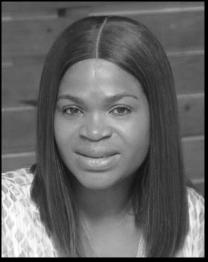
Dr Raïssa is an economist specialized on Transport matters on the African continent. She graduated from the University of Lille in France with a PhD in Industrial Economics focusing on transport policy issues and regional integration. With over a decade of experience, she has provided a number of advisory and technical assistance to the African Union member states with projects supported by reputable institutions such as UNECA, AfDB, AFD, GIZ, ITF and the EU to support Africa's economic development planning and transformation agenda. Since 2017, she is currently working as a Senior Policy Officer in charge of maritime issues at the African Union Commission, Addis Ababa, Ethiopia.
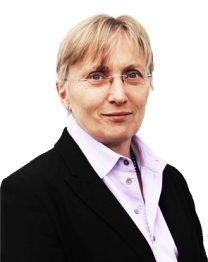
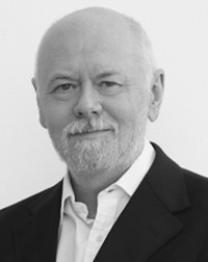
Tony Addison is a Professor of Economics in the University of Copenhagen’s Development Economics Research Group (DERG). He is also a Non-Resident Senior Research Fellow of the United Nations University’s World Institute for Development Economics Research (UNU-WIDER) in Helsinki, Finland. He was previously the Chief Economist/Deputy Director of UNU-WIDER.
He was Professor of Development Studies, Manchester University (UK) and Executive Director of the Brooks World Poverty Institute, Manchester University, and has held faculty positions at the University of Warwick (UK) and SOAS, London University. His latest book is Extractive Industries: The Management of Resources as a Driver of Sustainable Development (Oxford University Press, 2018).
He is currently working on the outlook for the extractive industries in the light of climate change and the COVID-19 pandemic.
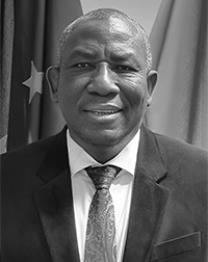
Professor Adelegan is the Secretary-General of the International Rubber Study Group (IRSG) based in Singapore, the biggest worldwide community in the Rubber Industry. He is a C-Suite Executive and an international development expert, a Professor of Practice of Environmental Science and Engineering and a practitioner-scholar in management with over three decades of distinguished professional trajectory across 24 African Countries, Europe, North America, and Asia. His work experience spans several organizations including the United Nations, development finance institutions, international organizations, government, non-governmental organizations, education, innovation, and research institutions among others. He has extensive experience in the sustainable investment, disruptive innovation, and circular economy of the elastomer products. He has held Senior Roles at the United Nations as the Team Leader at the United Nations Technology Innovation Lab, the first European Lab in Finland and as a Senior Advisor at the United Nations Office of Project Services in Denmark. Professor Adelegan was the Division Chief at the Office of the Vice President of the ECOWAS Bank for Investment and Development, an International Development Financial Institution established by ECOWAS Treaty and covering 15 ECOWAS Countries. He was a representative of Africa and the Middle East at the Climate Investment Trust Fund at the World Bank, Washington DC, United States. His portfolios have included programs and projects funded by the European Union, World Bank, Green Climate Fund, Climate Investment Fund, African Development Bank, ECOWAS, African Union, NEPAD Agency, Foreign and Commonwealth Development Office (FCDO), Australian Aid, several United Nations agencies, and funds among others. Professor Adelegan have held several board appointments, created strategic partnerships, and mobilized resources from development agencies, development finance institutions and several donor agencies. He was a Member of the World Economic Forum Global Agenda Council, Geneva, Switzerland, and Non-Executive Director of the European Sustainable Development Organization among others.
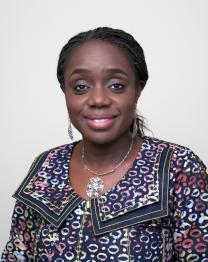
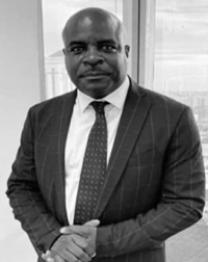
Oluseye Adepoju is the Managing Partner and CEO of Strengths Africa Limited, a people and business support company that operates from Nigeria’s capital – Abuja. Taiwo O. Adepoju has carved a niche for himself in the Personal Development and Business Strategy Space with a demonstratable track record spanning over two decades.
He is a Globally Certified Gallup Strengths Coach, also Business Strategist, and The Chief Spokes MAN for women in Africa. He is known as The Startup Specialist because of his significant exposure and experience in helping individuals and organizations overcome the fear of starting. He helps find clarity and provides support in co-creating an easily attainable plan. Oluseye leans towards performance, effectiveness, and excellence with significant engagements in Africa and focuses on:
Personal Responsibility, Entrepreneurship and Business Strategy, Social Impact Oluseye is a business coach, and management consultant that has led Corporate strategy across the financial services, hospitality, energy, tourism, haulage, and logistics space to mention a few.
He is extensively travelled and has an invaluable depth of leadership experience in the public and private sector with a knack for taking calculated risks. He has an MBA from the Business School Netherland and a first degree in Political Science at the University of Ibadan. He also has a certificate in the Science of Well-being from Yale University and Foundations of Positive Psychology from the University of Pennsylvania (Penn). He champions these feats through Strength Africa as Managing Partner and Phenomenal African Woman Foundation which he founded to Inspire, Celebrate and Empower women of African descent. He is a member of Rotary International, Toastmasters International, and IBB Golf and Country Club, Abuja, where he enjoys playing golf.
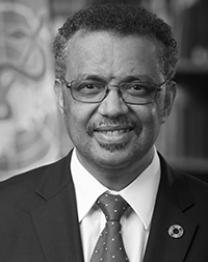
Dr Tedros Adhanom Ghebreyesus was elected WHO Director-General for a five-year term by WHO Member States at the Seventieth World Health Assembly in May 2017. In doing so, he was the first WHO Director-General elected from among multiple candidates by the World Health Assembly, and was the first person from the WHO African Region to head the world’s leading public health agency.
Born in the Eritrean city of Asmara, Dr Tedros graduated from the University of Asmara with a Bachelor of Biology, before earning a Master of Science (MSc) in Immunology of Infectious Diseases from the University of London, a Doctorate of Philosophy (PhD) in Community Health from the University of Nottingham and an Honorary Fellowship from the London School of Hygiene and Tropical Medicine.
Following his studies, Dr Tedros returned to Ethiopia to support the delivery of health services, first working as a field-level malariologist, before heading a regional health service and later serving in Ethiopia’s federal government for over a decade as Minister of Health and Minister of Foreign Affairs.
As Minister of Health from 2005 to 2012, he led a comprehensive reform of the country’s health system, built on the foundation of universal health coverage and provision of services to all people, even in the most remote areas.
Under his leadership, Ethiopia expanded its health infrastructure, developed innovative health financing mechanisms, and expanded its health workforce. A major component of reforms he drove was the creation of a primary health care extension programme that deployed 40 000 female health workers throughout the country. A significant result was an approximate 60% reduction in child and maternal mortality compared to 2000 levels.
As Minister of Foreign Affairs from 2012 to 2016, he elevated health as a political issue nationally, regionally and globally. In this role, he led efforts to negotiate the Addis Ababa Action Agenda, in which 193 countries committed to the financing necessary to achieve the Sustainable Development Goals.
Prior to his election as Director-General of WHO, Dr Tedros held many leadership positions in global health, including as Chair of the Global Fund to Fight AIDS, Tuberculosis, and Malaria, Chair of the Roll Back Malaria Partnership, and Co-chair of the Partnership for Maternal, Newborn and Child Health Board.
After taking office as WHO Director-General on 1 July 2017, Dr Tedros initiated the most significant transformation in the Organization’s history, which has generated a wide range of achievements.
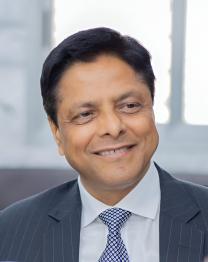
Dr. Ratnakar Adhikari is the Executive Director of the Executive Secretariat for the Enhanced Integrated Framework (EIF) at the World Trade Organization (WTO).
He also serves on the Board of the Automated System for Customs Data (ASYCUDA) at UNCTAD, Geneva, as Professorial Fellow at Aston Business School, Birmingham, and as Distinguished Fellow at the Institute for Public Value, Oxford.
His career spans leadership roles, including Chief Executive of South Asia Watch on Trade, Economics and Environment (SAWTEE) in Kathmandu, where he currently serves as Chair of the Board and Senior Adviser to Nepal's National Planning Commission. He has also worked as a Trade Programme Specialist at the United Nations Development Programme (UNDP) Regional Centre in Colombo, and as a Credit Manager at Nepal Indosuez Bank Ltd. (formerly a member of Crédit Agricole, France), Kathmandu.
He holds a Ph.D. from the University of Warwick, a Master of International Law and Economics from the World Trade Institute, and a Master of Commerce from the University of Delhi. He specializes in international trade and investment, technology and innovation, and development finance. He has co-authored eight books, numerous peer-reviewed articles, and over 200 op-eds from the perspective of the least developed countries.
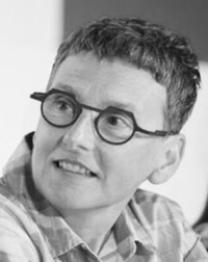
Carla Aerts is the Director of Digital Change at Hodder Education, founded Refracted!, is a member of the WEF AI expert group, a board member at Right for Education Africa and advisory board member of DEFI (Digital Futures Education Initiative) at Cambridge University.
She ran the Tmrw Institute, a catalyst and Think Tank and the Next Billion EdTech Prize. Carla was Director of Futures at UCL Institute of Education and Global Digital Director Education at Cambridge University Press.
Carla is an interdisciplinarian and international thought leader in Learning with Technologies, informed by the Learning Sciences. She has worked across the globe with EdTech start-ups, publishers, educators and academia as well as policy makers.